This plant at Exotenherz
Check the shop offer for current availability, price and what is included.
Check the shop for the price, current availability and what is included.
Your care table
| Topic | What to do | Why it helps |
|---|---|---|
| Position | Bright with filtered daylight. | The rosette needs brightness for healthy growth. |
| Water | Thoroughly wet with low-lime water or water briefly. | Humidity alone cannot replace water supply. |
| Aftercare | Allow draining and return to an open support. | Loose indoor cultivation remains easier to inspect. |
| Holder | Loose, open and without dense wet soil. | Roots and base mainly provide support. |
| Warmth | Warm and protected from cold draughts. | Cold wet conditions stress the plant. |
| Feed | Occasionally use suitable feed very moderately. | Excess salts are unfavourable on leaves. |
| Summer position | Protected outdoors, gradually increasing brightness. | Sudden sun can damage despite the silvery surface. |
| Pups | Initially leave young daughter plants with the clump. | Stronger rosettes can be grown on more reliably. |
Take the tillandsia off its support. Do not rub the leaves; preserve the delicate silvery scales.
Use low-lime water at room temperature. The care table explains whether thorough misting or a short soak is suitable.
Gently shake off the water. Tilt rosettes downwards, hang loose strands without bunching them together and allow them to dry with good airflow.
A clear shape made from many narrow leaves
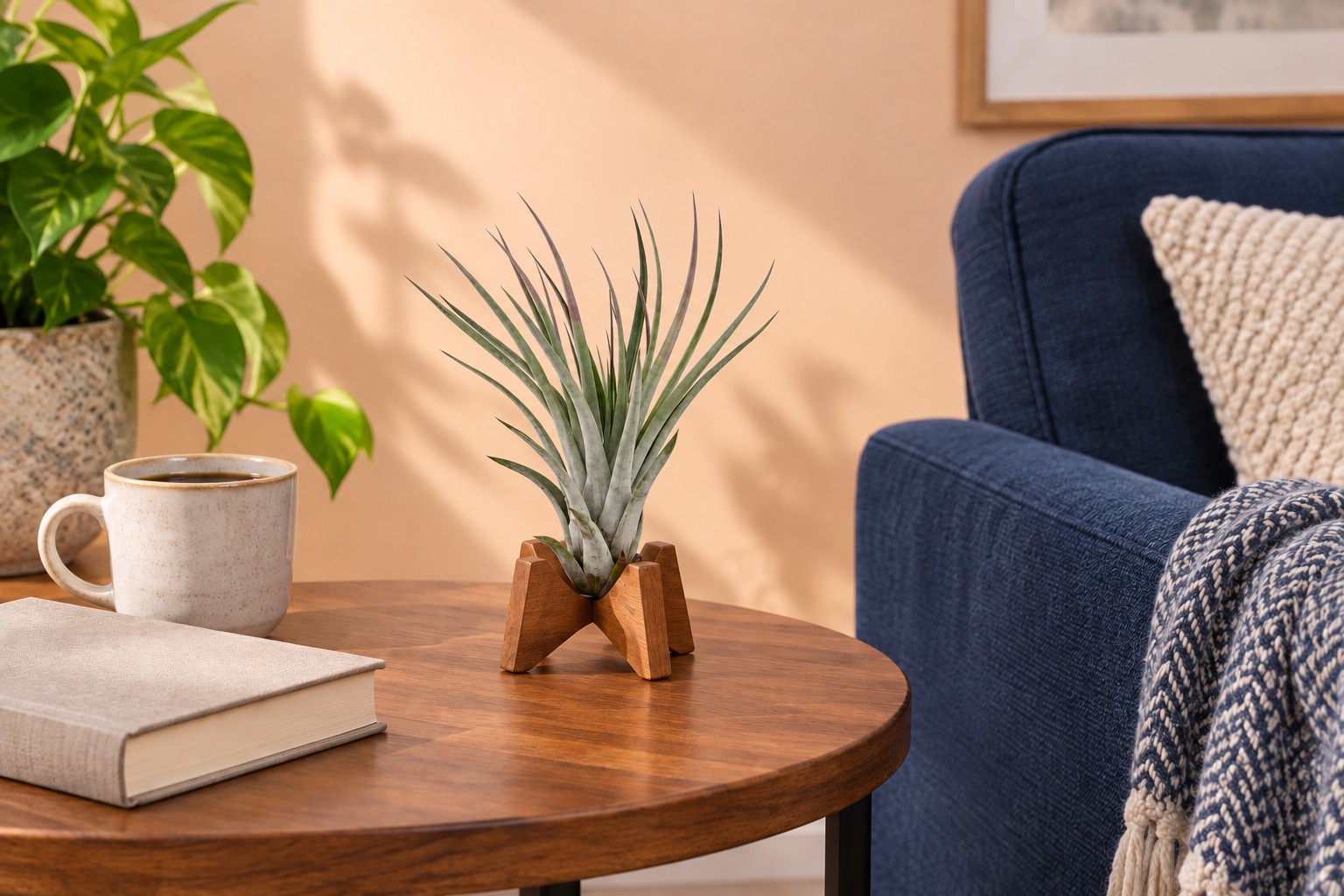
The offered tillandsia has long firm leaves standing upright and outwards from a shared base. Their grey-green surface is quieter than a striking inflorescence and combines well with simple materials. Shop size is approximately 18 to 25 cm. Large here is a size description within the tillandsia range, not metre-high room decoration. The new scene shows a young loose plant in this range. Flowers are not added because delivery contents mention no guaranteed flowering condition.
A bromeliad with a wide natural range
Tillandsia fasciculata belongs to the bromeliad family. Its natural range extends from Florida through many tropical American areas to northern Brazil. The species lives as an epiphyte; its support mainly provides anchorage. Water and nutrients are largely absorbed through leaf surfaces. Different forms and origin names appear in trade. This does not mean every plant named fasciculata is the same variety or will later have the same inflorescence. Here the shop’s stated species and the visible non-flowering rosette are retained.
An open position instead of a decorative prison
A small open holder or suitable cork piece can loosely support the base. Do not pack the plant deeply into soil or dense wet moss. It should be easy to remove for inspection and watering. Bright filtered daylight is a good starting point. During warm summer spells, a protected partly shaded outdoor place is also possible after gentle acclimatisation and without cold nights. A bathroom is only suitable if it offers enough daylight and air exchange. High humidity cannot make up for a dark position.
Bring water to the leaves, then check cultivation
For loose indoor cultivation, regularly thoroughly wet leaves with clean low-lime room-temperature water. A short bath can make even supply easier. Then carefully tilt and drain before returning to the open holder. No old water reserve should persist in cool poorly ventilated decoration. Correct frequency depends on how fast the plant dries. A warm dry room may require more frequent waterings than brighter but cooler winter cultivation. Do not leave the rosette standing in water for days.
Slow development rather than constant intervention
A healthy tillandsia need not become visibly bigger each week. Observe new leaves and rosette firmness over a longer period. During active growth occasionally use suitable tillandsia or bromeliad feed very moderately according to its label. A fixed high dose regardless of light and temperature is no good routine. Mature rosettes may flower and form pups. After flowering do not immediately discard the mother plant while it still bears vigorous parts and young offsets. Initially let pups grow together and separate only once sufficiently independent.
The base belongs to regular inspection
Carefully remove the rosette from its holder during care and check that lower parts remain firm. Soft dark patches, a musty smell and easily falling inner leaves call for checking wetness and ventilation. Old dry outer leaf remains are not automatically diseased. Neither polish off pale surface scales nor cover them with leaf shine. Dry tips may result from sun, dry air or insufficient water supply. One brown tip is no reason to remove healthy leaves completely.
One plant, several views
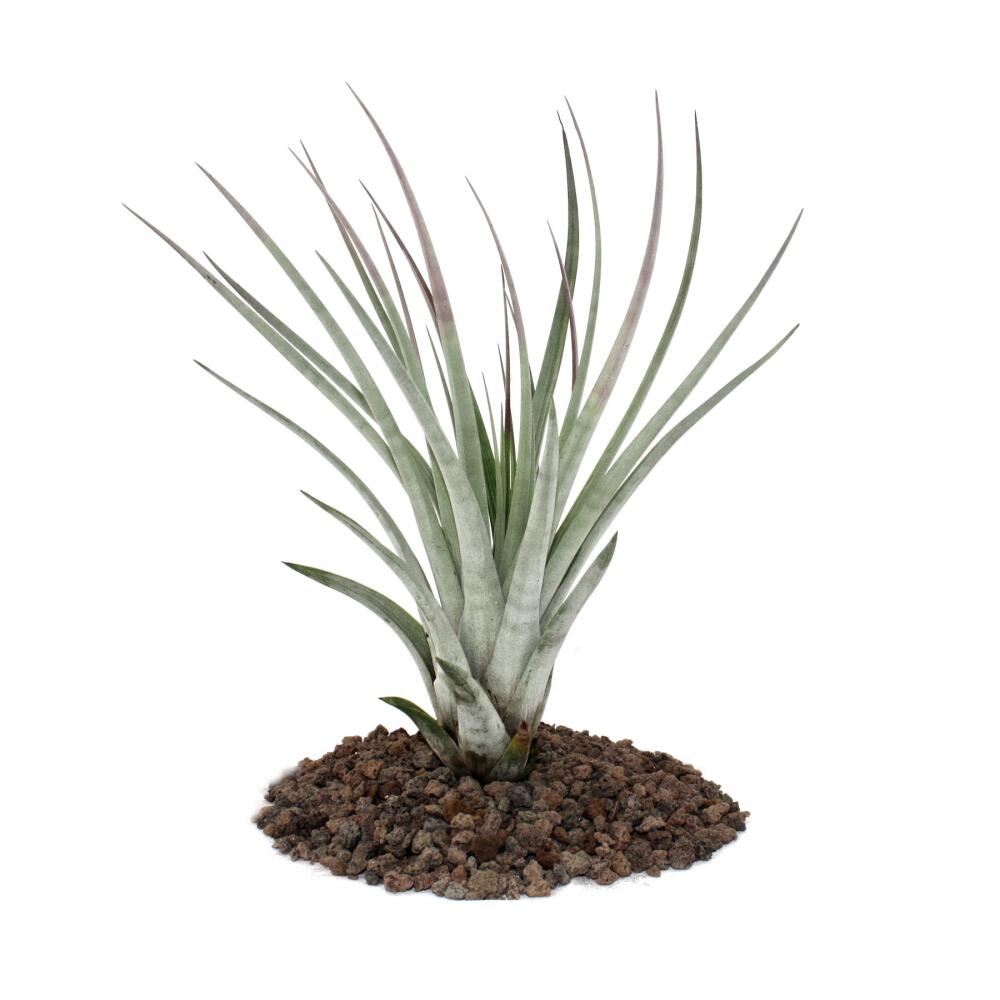
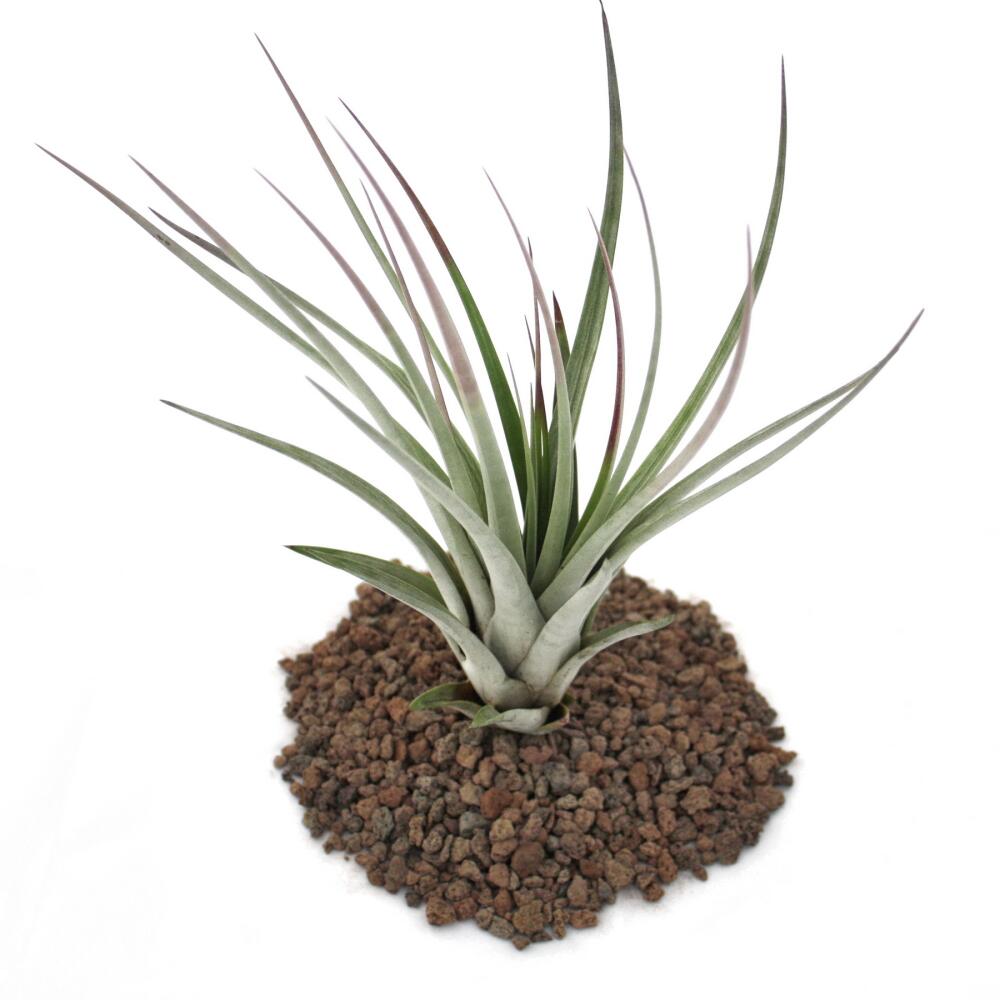
Good to know
How large is the offered large tillandsia?
The shop states approximately 18 to 25 cm plant size. A loose plant without pot is delivered.
Is a particular flower colour guaranteed?
The offer guarantees neither a named colour form nor flowering condition. The scene therefore shows a green rosette.
Is a humid bathroom enough?
Humidity alone is not reliably enough. The plant also needs sufficient light, air exchange and targeted watering.
May the rosette sit on an open wooden holder?
Yes, if held loosely, accessible for care and not permanently resting on wet material.
Sources and editorial note
- Product and delivery contents: Exotenherz
- Royal Botanic Gardens, Kew: botanical classification
- Bromeliad Society of Australia: botany and commercial forms
- Royal Horticultural Society: plant and care knowledge
Sources checked: 15 September 2026. Product information and delivery contents follow the linked offer. Care has been checked against the stated specialist sources and remains subject to plant condition, position and season.