This plant at Exotenherz
Check the shop offer for current availability, price and what is included.
Check the shop for the price, current availability and what is included.
Your care table
| Topic | What to do | Why it helps |
|---|---|---|
| Light | Bright with indirect daylight. | Upright leaves need energy without scorching. |
| Water | Use low-lime room-temperature water. | Avoid salt deposits on leaves. |
| Pot moisture | Grow loosely and let dry slightly. | Continually wet leaf bases are sensitive. |
| Leaf care | Thoroughly wet then let dry. | Moisture and air must alternate. |
| Inflorescence | Do not submerge continually. | Wet bracts may deteriorate faster. |
| Warmth | Warm room conditions without cold draughts. | The species is frost-sensitive. |
| Pups | Let small daughter plants grow on initially. | They maintain the clump after flowering. |
| Feed | Occasionally supply suitable bromeliad feed moderately. | Strong feed solutions stress the surface. |
Check the leaves, rosette base and loose growing medium. The pot must not remain constantly wet.
Thoroughly wet the leaves with lukewarm, low-lime water. Lightly moisten the airy growing medium only as needed; follow the instructions in the article.
Remove remaining water and let the rosette dry with good air circulation. Do not leave the small pot standing in a cachepot filled with water.
Bracts provide the striking colour accent
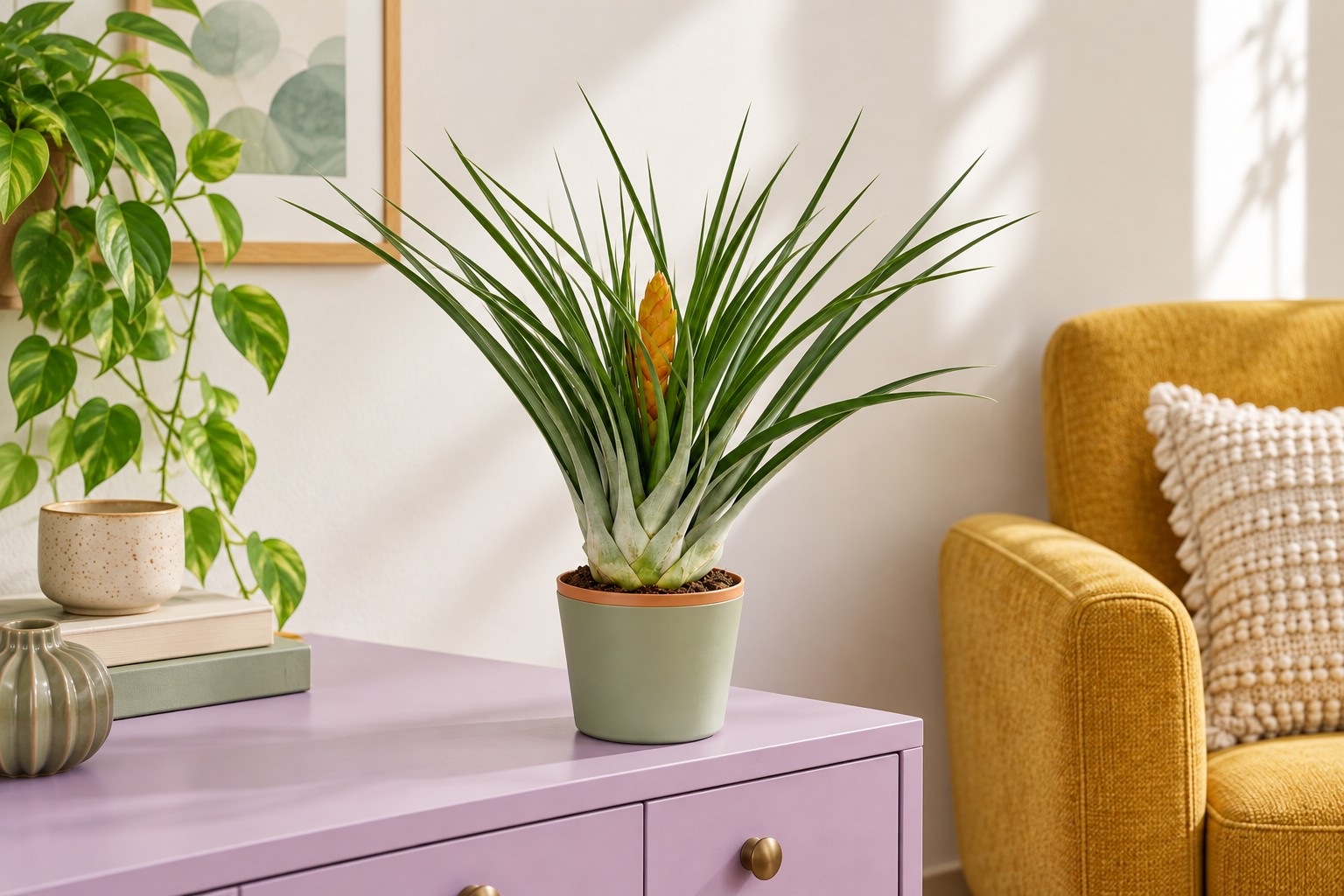
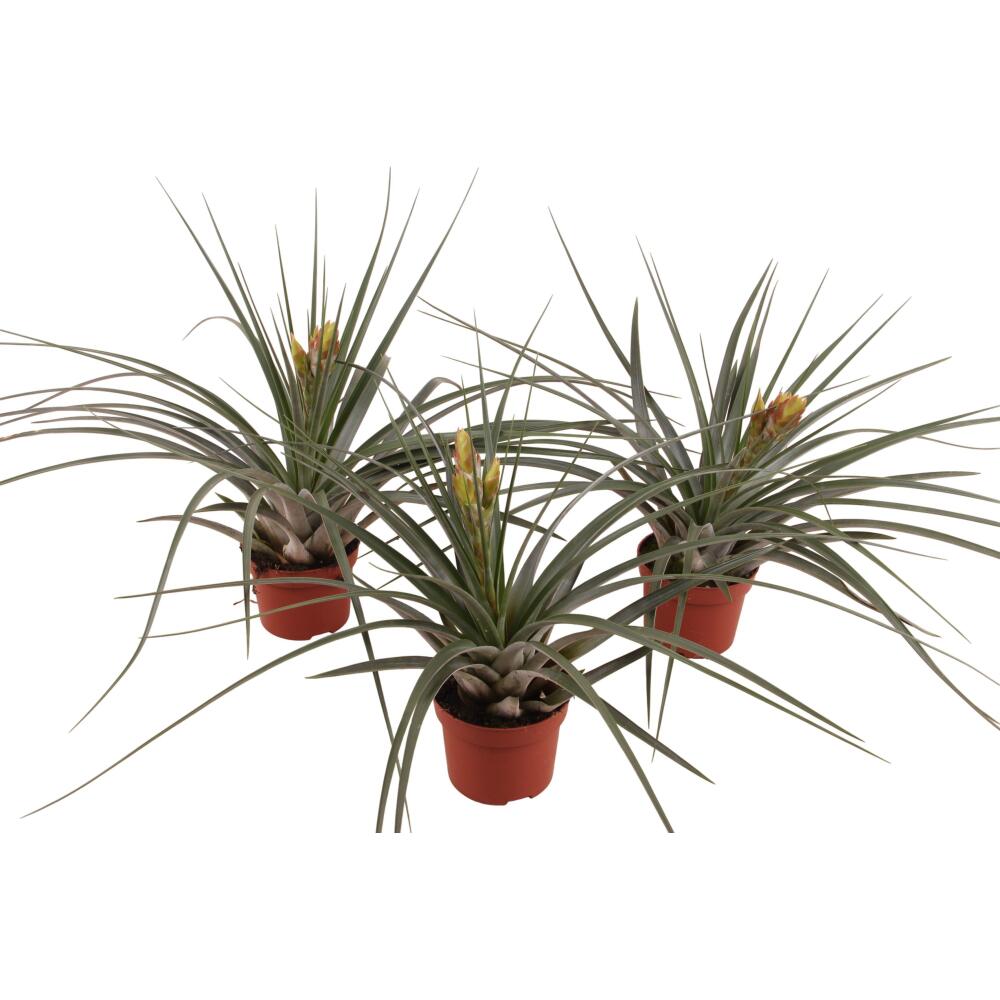
Narrow upright leaves frame a flattened inflorescence with yellowish to orange-looking bracts. Distinguish these from true flowers; violet flower parts may emerge in this species. The product image chiefly shows bracts and the new scene follows this condition. Tillandsia flavobracteata is a distinct Mexican species. The similar-sounding flabellata names a different species and is therefore not used interchangeably.
Delivery height includes plant and pot
An 11 cm pot and approximately 40 cm total height are stated. Upright leaves need clear space above the surface. A shelf immediately overhead may bend tips or hinder air movement. The scene keeps corresponding proportions. Inflorescence colour may vary between specimens and developmental stages. A decorative outer pot belongs to delivery only if expressly included in the offer. A nursery pot with free drainage remains important.
Epiphytic growth does not mean living without supply
In nature this tillandsia uses other plants for support. It belongs to the bromeliads and does not draw sap from its host like a parasite. Here it needs a bright warm position with filtered light. A closed glass dome is unfavourable because ventilation is lacking. Avoid hot direct sun behind glass and cold draughts. After watering, leaf bases and surface should dry again. A bright living-space position can work well if not directly over a dry radiator.
Assess leaf watering and pot moisture together
Thoroughly wet leaf surfaces with low-lime room-temperature water. Loose growing material may dry slightly and receives a small supply as needed. No standing water remains in pot or outer pot. The plant need not be torn from its container for this care. Do not continuously submerge an inflorescence. Check more frequently on warm dry days and water more cautiously in cooler winter. A fixed calendar without watching leaves, warmth and drying is of little help with tillandsias.
Support natural flowering
A coloured inflorescence does not remain fresh indefinitely. Once completely dry, it can be carefully removed. The flowering rosette usually produces daughter plants in its life cycle before gradually declining. This is not the immediate end of the whole clump. Let small pups first grow on the mother. For later division they need sufficient size and airy new anchorage or cultivation. During growth, occasionally use suitable bromeliad feed moderately according to the label, without letting concentrated solutions dry on leaves.
Preserve healthy leaf bases
Pale scales at the base are natural structures and no reason for scrubbing. Only gently release dry old leaves. Spreading soft brown areas instead require checking prolonged wetness and poor ventilation. Hard dry tips may result from drought stress or excessive sun. Also inspect tight leaf axils for mealybugs. The best correction starts with a concrete observation: how long does the plant remain wet after watering, and how bright and warm is its actual position?
One plant, several views

Good to know
Is Flavobracteata the same as Flabellata?
No. They are different botanical names. The specific offer is presented as Tillandsia flavobracteata.
Are the yellowish parts the true flowers?
They are mainly bracts. True flowers may emerge between them.
Must the plant be taken out of the pot?
Not for normal care. Loose growing material and leaf watering are considered together.
What happens after flowering?
The rosette may gradually decline and produce daughter plants. Continue growing healthy pups initially.
Sources and editorial note
- Product and delivery contents: Exotenherz
- Bromeliad Society of Australia: botany and commercial forms
- Royal Botanic Gardens, Kew: botanical classification
- Royal Horticultural Society: plant and care knowledge
Sources checked: 15 September 2026. Product information and delivery contents follow the linked shop offer. Care has been checked against the stated specialist sources and remains subject to plant condition, position and season.