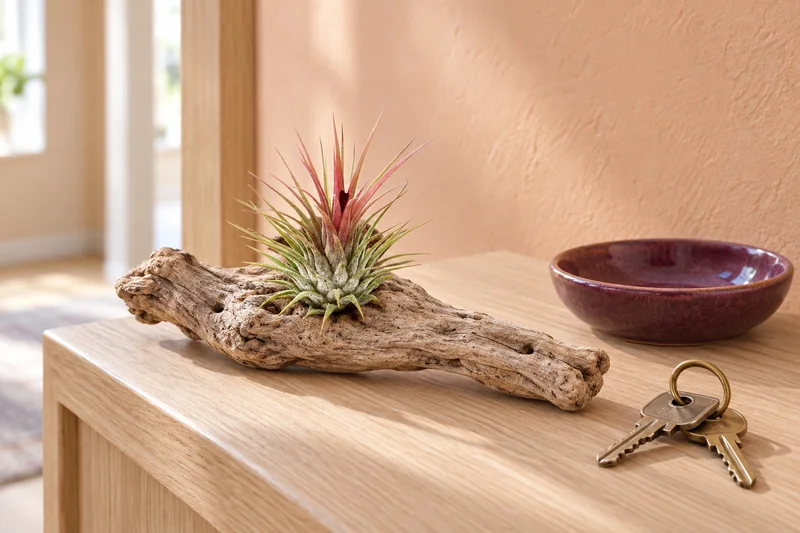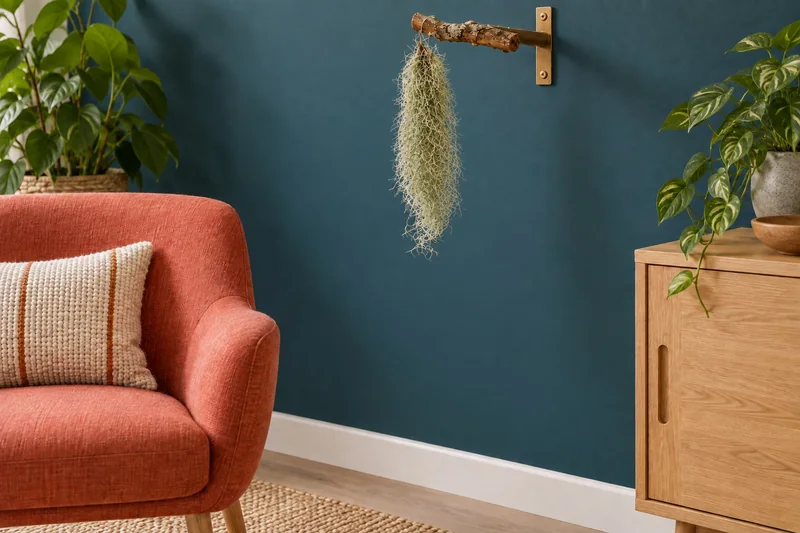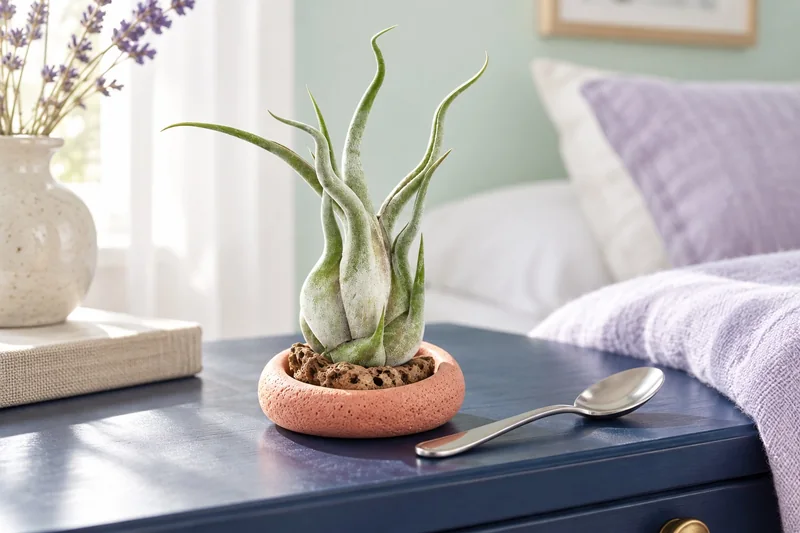
This plant at Exotenherz
Check the shop offer for current availability, price and what is included.
Check the shop for the current price, availability and offer contents.
Your care table
| Topic | What to do | Why it helps |
|---|---|---|
| Light | Place brightly and introduce stronger sunshine gradually. | The young rosette should not suddenly stand behind hot glass. |
| Water | Thoroughly wet the leaves regularly as needed with soft water. | Moisture is absorbed through the leaf surface. |
| Drainage | After watering, tilt carefully and let water run out of the centre. | The overlapping leaf bases can retain water. |
| Air | Let dry freely in an airy place between water applications. | A closed wet glass box makes drying difficult. |
| Holder | Use a loose open support; do not insert into soil or wet moss. | This delivery form needs no ordinary potted rootball. |
| Nutrients | During growth, apply a suitable fertiliser very weakly according to its label. | Concentrated salt residues burden the foliage. |
| Care | Retain firm healthy leaves; compare brown patches with the plant’s condition. | A naturally dark leaf base alone does not prove rot. |
| Winter | Display brightly and frost-free and observe water use. | Short days and heating warmth alter its needs. |
Take the tillandsia off its support. Do not rub the leaves; preserve the delicate silvery scales.
Use low-lime water at room temperature. The care table explains whether thorough misting or a short soak is suitable.
Gently shake off the water. Tilt rosettes downwards, hang loose strands without bunching them together and allow them to dry with good airflow.
Upright lines with a dark beginning
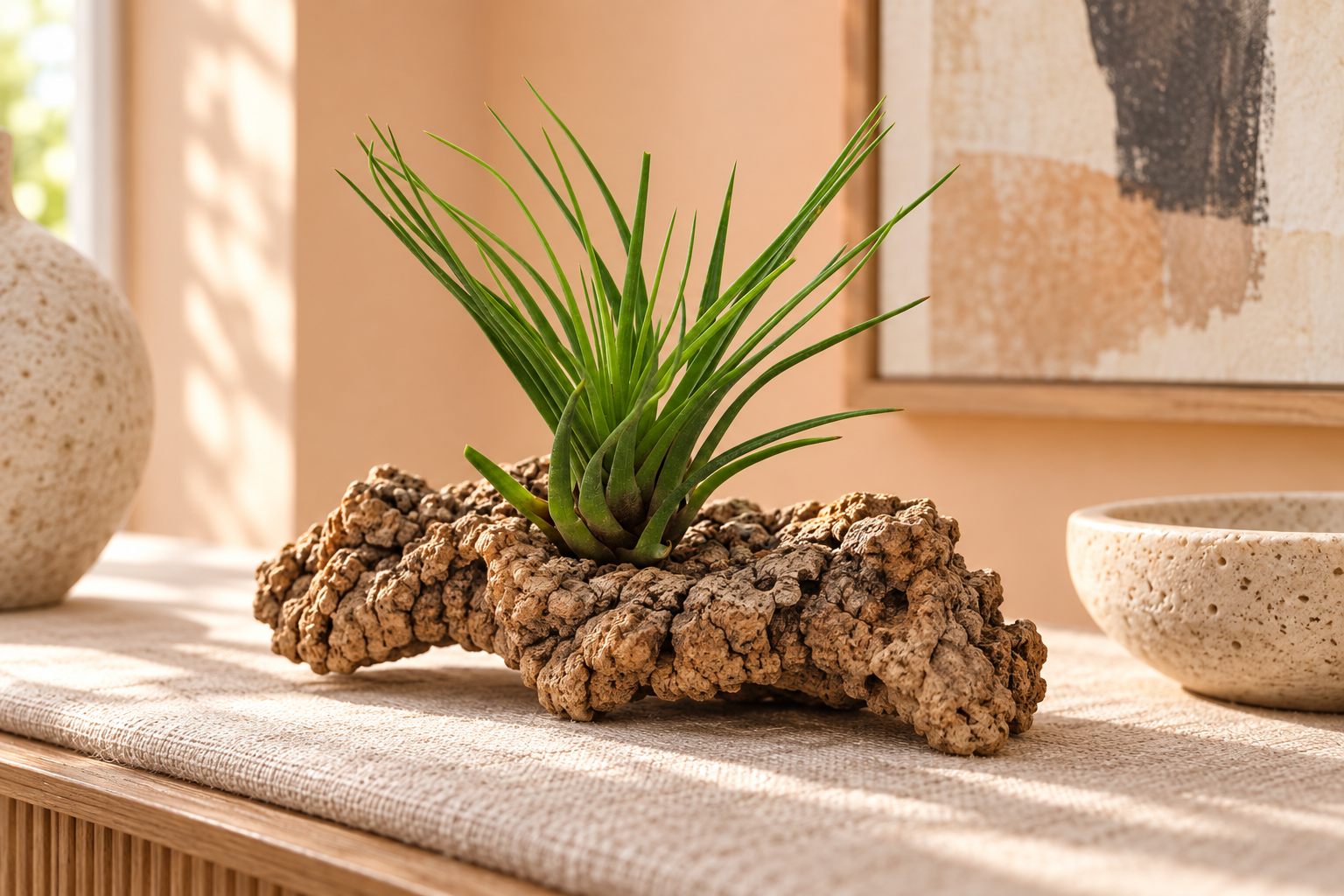
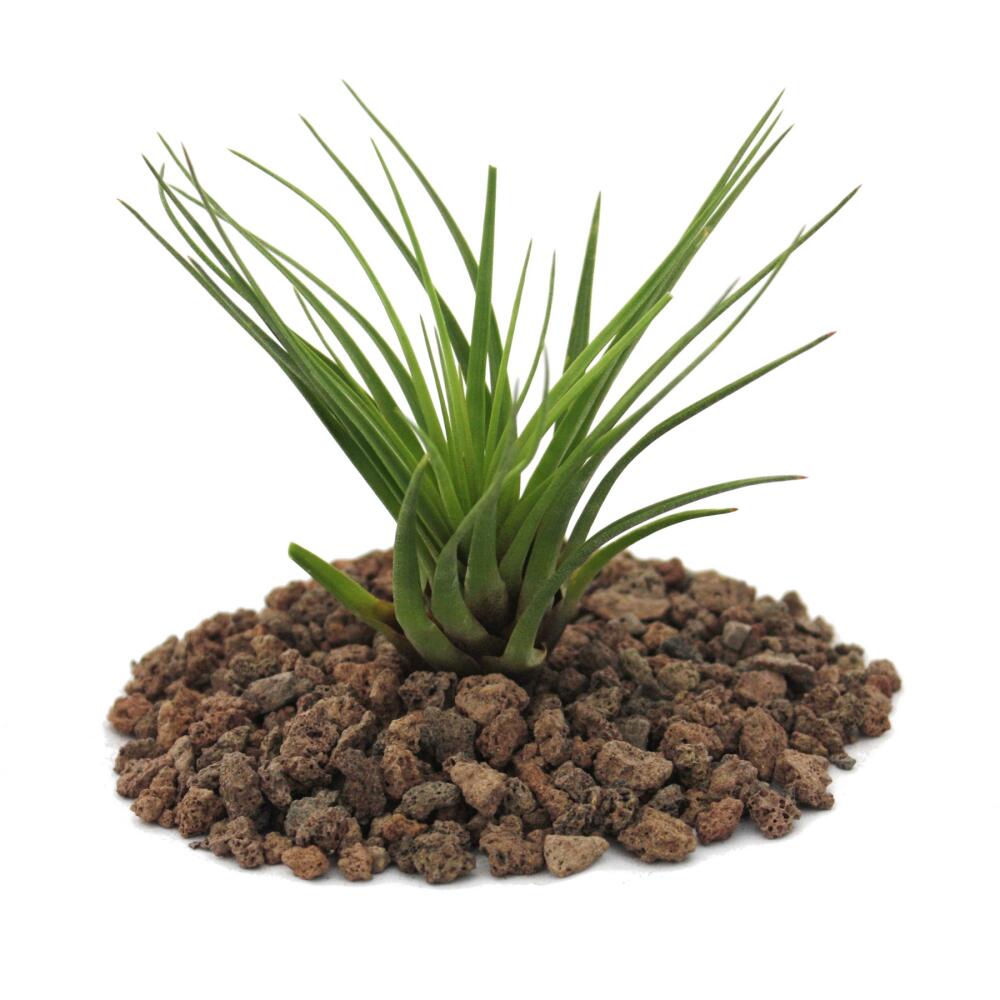
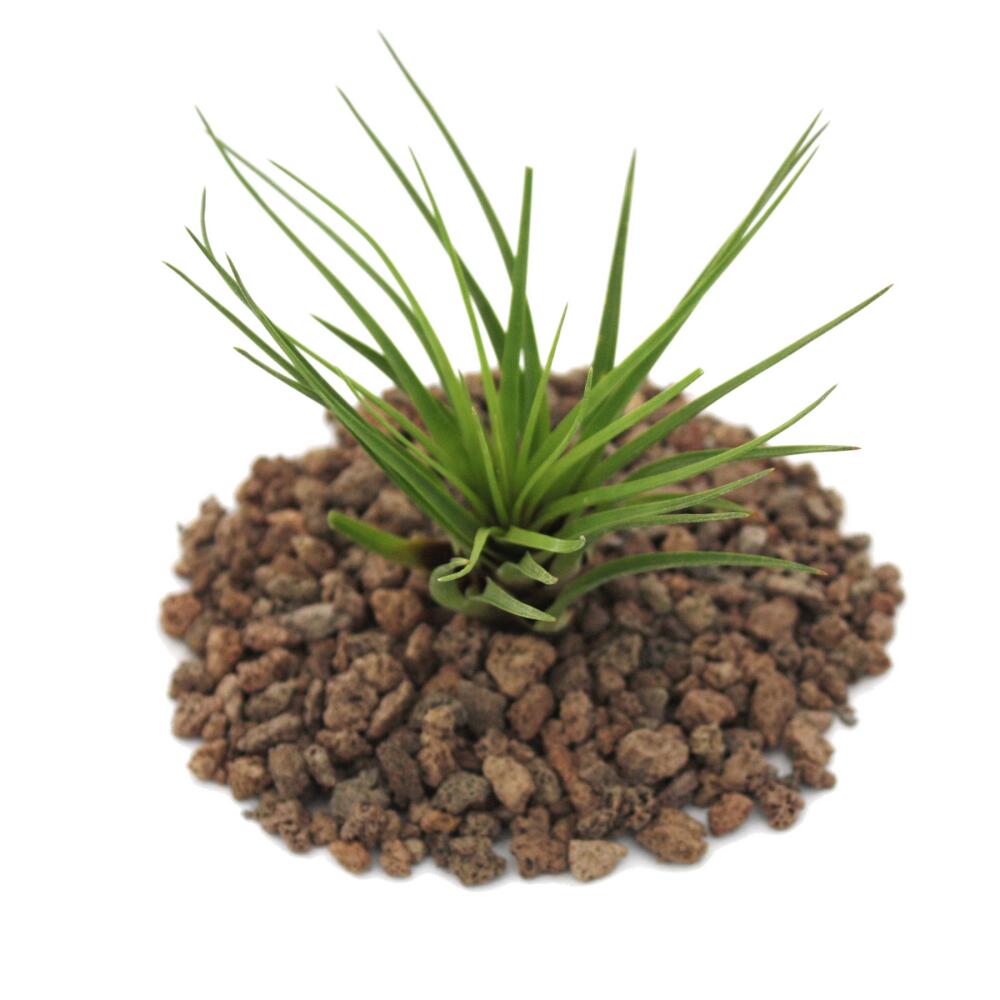
Green Tillandsia melanocrater tricolor looks more orderly and robust than a rosette of soft leaf threads. Its narrow firm leaves point upwards, taper to tips and overlap at the base. Darker areas there form an attractive contrast with the green. Both sides of its shape can be seen on an open support. We like a bright console or a well-lit shelf against a quiet background. The plant remains accessible; a decorative spot should not hide its later care behind glass or a heavy arrangement.
The shop name stays with the offer
The shop calls this plant Tillandsia melanocrater tricolor, green. Botanical and horticultural literature also uses Tillandsia tricolor var. melanocrater. That classification helps with further reading but does not change the linked offer. A loose plant about 10 to 12 cm in size is described here. The name tricolor does not guarantee a three-coloured plant on delivery or a fully developed flower spike. The original photograph shows the young green form. Cork, a container or furnishings in a scene are merely examples of how it could be displayed.
Use brightness gently
A bright position suits this tillandsia. Introduce more light gradually after shipping, rather than immediately putting the small plant in the hottest window corner. Check whether the support heats strongly and whether the lower leaf bases receive light. Side lighting on a clear console can be more suitable than a shaded spot at the very top of a bookcase. A photograph from the first day provides a comparison for later changes. Observe leaf colour and development over time; we do not try to force a colour effect through sudden sun stress.
Supply the whole rosette with water
Wet the leaves as needed with suitable soft water. Thorough spraying or a careful brief dip can supply the loose plant; excess water is removed afterwards. Its upright shape needs attention at the centre. Tilt gently without using the firm leaf tips as handles, and let water drain from the overlapping bases. Then dry in an airy place. A permanently wet base or a filled decorative container is no reserve for the following week. The routine should match actual drying, not just a fixed calendar entry.
An open support makes daily care easier
The plant has no ordinary soil rootball. A small hollow in cork or another loose, open holder supports it without wrapping up its base. Check the support after watering too. If moisture stays there for a long time, another arrangement may be useful. A closed container does not become a suitable plant position simply by looking attractive. The tillandsia should receive air all around and remain easy to remove. This allows watering without having to dismantle an entire decoration or push the leaves apart every time.
Look at the dark base correctly
Naturally dark leaf sheaths belong to the character of this form. They are not automatically diseased. Newly appearing soft black areas or unpleasant-smelling wetness, however, are checked alongside water accumulation and air exchange. Healthy leaves are retained and not cut short as a precaution. During growth, a very weak application of suitable tillandsia fertiliser according to its label can be useful. Supply it cautiously during quiet weeks with little light. The small plant does not develop healthily faster because it is suddenly offered twice the nutrients. Its position must be right first.
Flowering as development, not an order
A mature rosette may later develop a colourful flower spike. It is not guaranteed in the young green offer, and there is no reliable fixed date for indoor cultivation. After flowering, offsets can continue development; they remain attached initially and are allowed to grow stronger. In winter, continue to keep it bright and frost-free, away from dry heated air, and observe water needs. The slowly developing green structure is enjoyable too. Its clear shape shows that a small air plant can create its own quiet focal point without a large flower.
One plant, several views
Good to know
Why does the literature name Tillandsia tricolor var. melanocrater?
This is a common botanical classification. The article continues to link the checked shop offer under its own name.
Will I receive three colours?
No. The checked offer specifies a green loose plant. The name tricolor is not a colour selection.
Is the darker base damaged?
Naturally dark leaf sheaths may belong to the plant. Newly soft black patches or permanently wet areas must be checked separately.
Does it need a pot with soil?
No. The loose epiphytic rosette is kept openly.
Can water remain in the centre?
No. Tilt carefully after watering and then let dry in an airy place.
When does it flower?
That depends on maturity and cultivation. Neither a fixed flowering date nor flowering delivery is guaranteed here.
Sources and editorial note
- Exotenherz: offer and original photographs (02.10.2026)
- Dötterer nursery: Tillandsia tricolor var. melanocrater (02.10.2026)
- RHS: air plants (02.10.2026)
- Dötterer nursery: tillandsias and absorbing scales (02.10.2026)
Shop offer, article number, GTIN, availability and original photographs checked directly on 02.10.2026. Specialist sources read directly. Dimensions from the grower’s other offer not adopted. Tricolor not interpreted as a delivery colour promise. Green original and scene compared, with no artificial red colouring.