This plant at Exotenherz
Check the shop offer for current availability, price and what is included.
Check the shop for the current price, availability and offer contents.
Your care table
| Topic | What to do | Why it helps |
|---|---|---|
| Arrival | Unpack and choose a bright airy position. | The loose rosette should remain visible and accessible. |
| Light | Bright filtered illumination rather than hot midday sun. | Long leaves need light without sudden sun changes. |
| Watering | Thoroughly wet with rainwater or dip temporarily. | Humidity and fine mist alone do not replace watering. |
| Drying | Gently shake out water and drain upside down. | No persistent wetness between overlapping leaf bases. |
| Holder | Attach openly and removably without crushing leaves. | Air must reach the base; the plant remains accessible for watering. |
| Supply | Occasionally give suitable fertiliser during growth according to instructions. | Nutrients reach the soilless plant through leaf surfaces. |
| Winter | Keep very bright and warm; check actual demand. | Coolness and slow-drying leaves require adjusted provision. |
| Offsets | Allow strong growth first; check size before separating. | About one third of mother size is a horticultural guide. |
Take the tillandsia off its support. Do not rub the leaves; preserve the delicate silvery scales.
Use low-lime water at room temperature. The care table explains whether thorough misting or a short soak is suitable.
Gently shake off the water. Tilt rosettes downwards, hang loose strands without bunching them together and allow them to dry with good airflow.
A green rosette with an upright centre
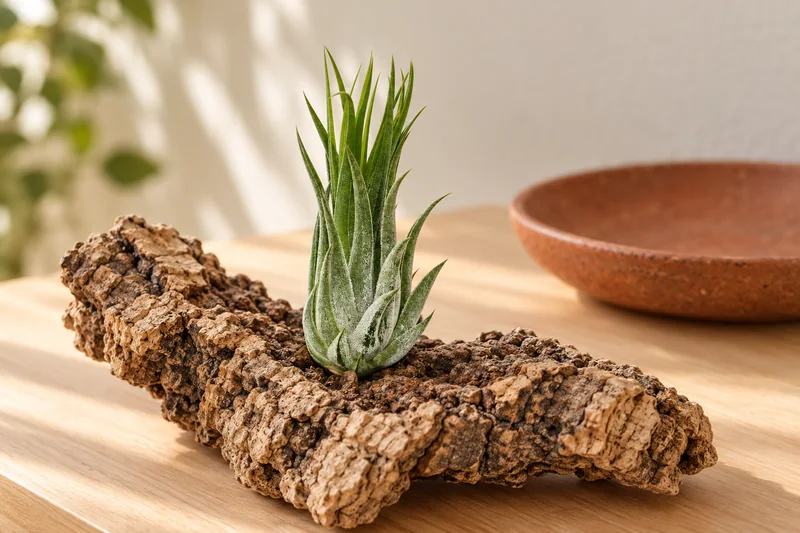
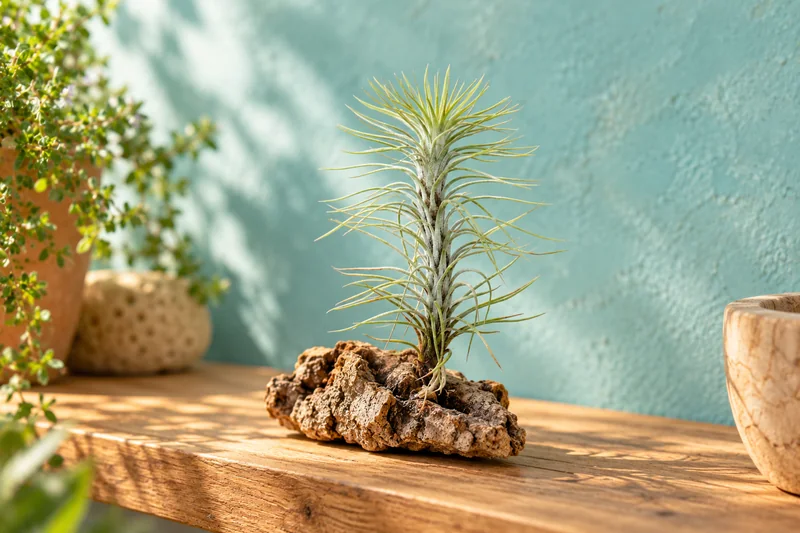
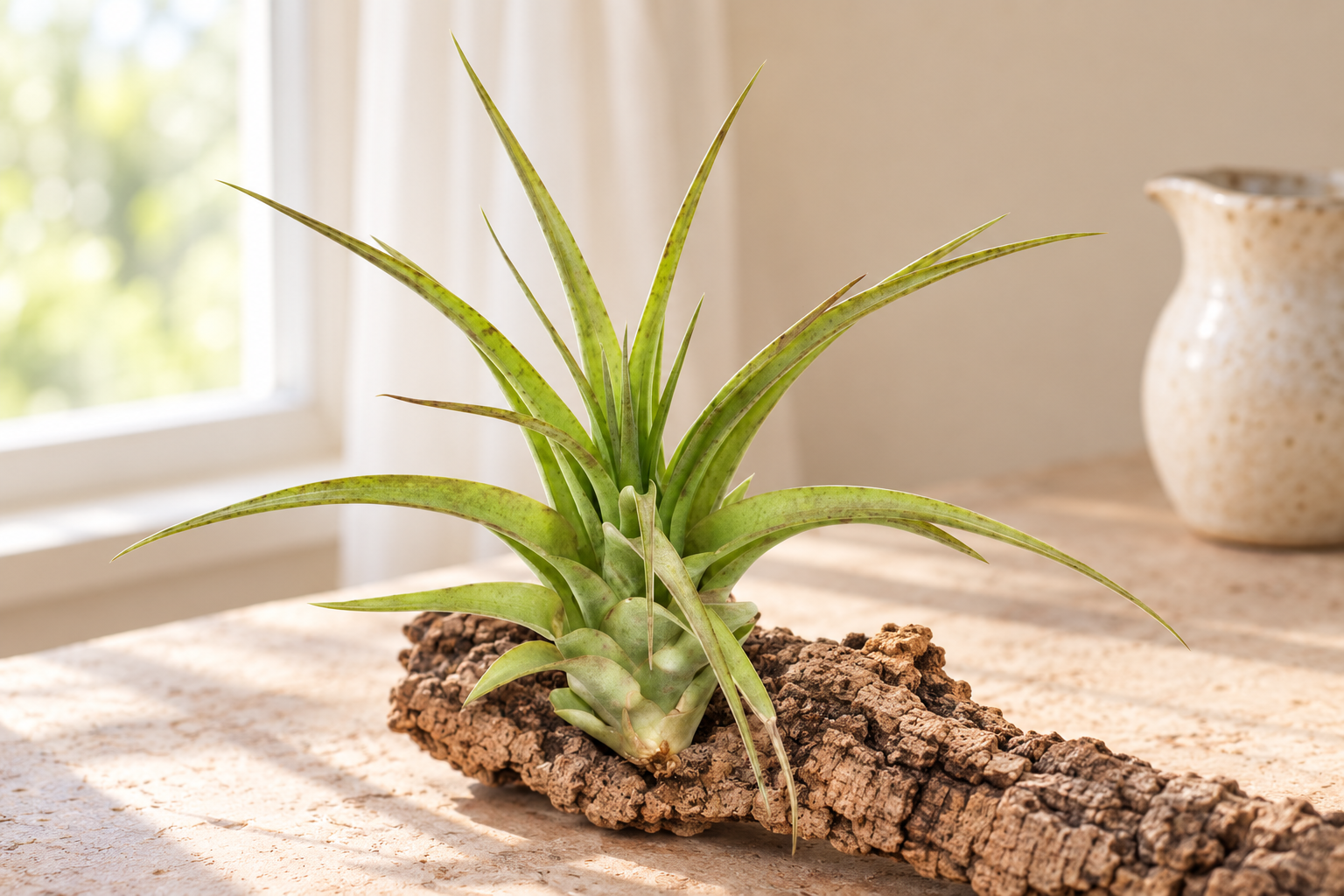
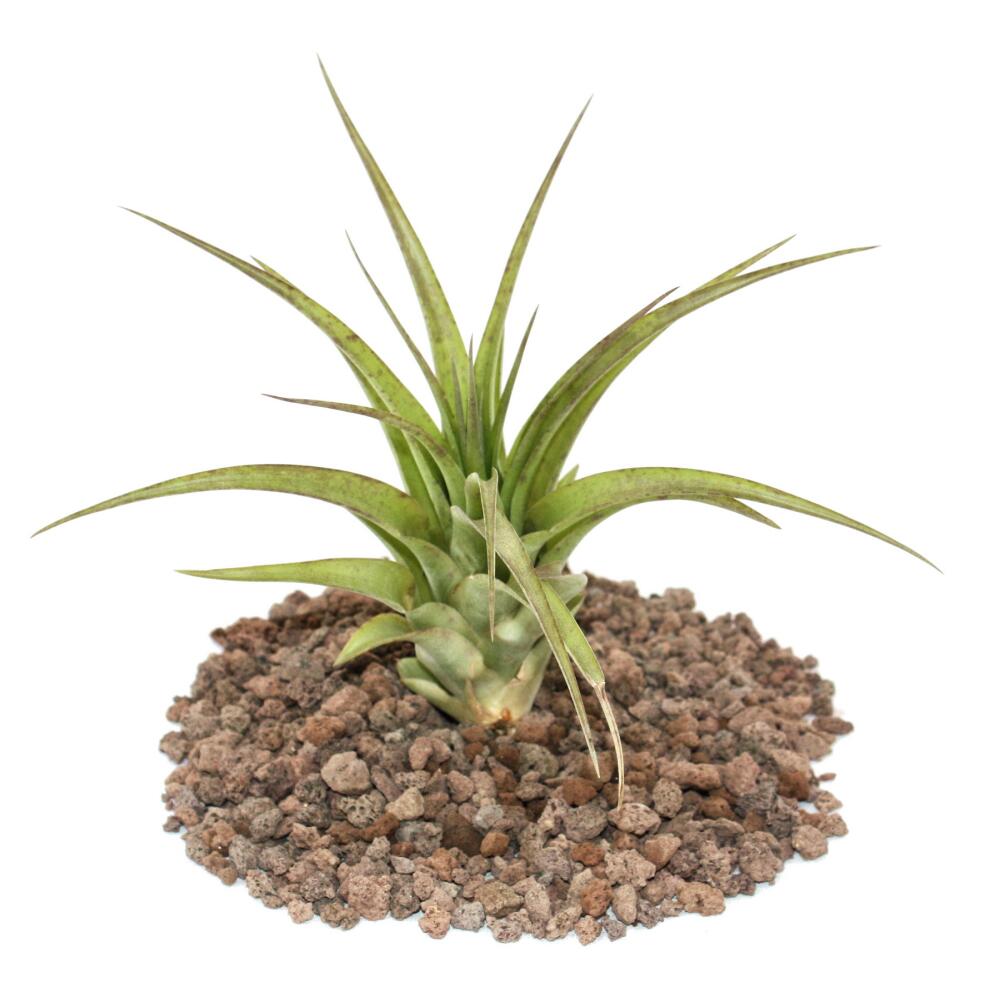
Multiflora’s outer leaves curve sideways while younger central leaves point upwards. Paler bases overlap beneath them to form a long strong base. The specific shop original shows one green plant with narrow firm leaves and a slightly matt surface. Multiflora is a horticultural trade designation within Tillandsia brachycaulos, an epiphytic bromeliad from the region Mexico to Venezuela. Specialist offers also use the name for this upright form. Open cork shows its outline particularly well when the base stays free. Original and scene show the foliage plant; current flowering is not promised.
The loose plant should stay accessible
The shop states about 12–18 cm plant size for the larger offer and 10–12 cm for the smaller. These describe delivery size, not pot height or fixed mature size. After unpacking provide a bright airy position. Roots mainly anchor it in this cultivation; potting compost is unnecessary. Place on open cork or use a suitable removable holder that neither squeezes nor deeply conceals the base. Long outer leaves need room. Try its position before attaching and check you can remove the entire plant for watering. A decorative arrangement only works if care remains practically accessible.
Filtered window light and air around the base
A light-rich position with filtered illumination suits green leaves. Shield strong direct midday sun through glass and acclimatise gradually after moving. The plant may develop reddish tones in stronger light, but red delivery colour is not promised or forced with abruptly hot sun. Warmth and air movement belong together. A bright bathroom can work if sufficient light and ventilation are actually present. A closed humid glass instead traps water at the base. In summer, a sheltered outdoor place with filtered light is possible while conditions stay warm. Bring the plant inside for cool nights.
Water thoroughly and dry the whole rosette
Tillandsias absorb water through leaf surfaces. Use room-temperature rainwater and wet thoroughly; a short soak can reach the whole rosette. The specialist producer describes Multiflora soaks up to about 30 minutes. This is a cultivation starting point, not a rigid calendar: warmth, dry air and air movement alter demand. Check several times a week how plant and leaves respond. Let the wetted rosette drain upside down and gently shake out remaining drops. Return it to its holder only when completely dry. Fine mist between waterings can supplement on warm days but does not replace thorough supply. Do not leave it on a wet surface or permanently standing in water.
Preserve leaf surfaces and supply modestly
Fine leaf surfaces supply the plant and are neither polished nor treated with leaf shine. Hard water may leave deposits, making rainwater the appropriate choice. At every care session inspect concealed areas between leaf bases too. During visible growth, a product intended for tillandsias or suitable orchid cultivation can occasionally enter the water according to instructions. Extra amounts do not automatically strengthen the rosette. Reduce supply accordingly during limited winter growth. A soilless plant still needs attention: here you monitor leaf condition and drying rather than feel for damp soil in a pot.
Distinguish cold wetness from dry tips
Keep Multiflora as bright and warm as possible in winter; cool dark storage is unsuitable. At lower temperatures it dries more slowly. If water cannot drain and dry promptly, first adjust location and timing of the next watering. Dry curled leaves or brittle tips can suggest inadequate water in warmth. A soft dark base or black central areas instead need checks for standing wetness and poor air movement. Do not therefore water more merely because of any brown spot. Consider the whole plant, especially its centre and conditions since the last care. Distinguish small firm old marks from new soft changes.
Offsets accompany further development
An individual tillandsia rosette flowers once in its life. Young basal rosettes can then continue development while the mother slowly declines. Multiflora gives no reliable date for this phase; no flower is assumed for the current green-leaf offer. Initially leave offsets with the mother. For later separation, let them grow sufficiently; about one third of mother size is the usual guide. Young plants then receive the same open soilless culture with suitable water and complete drying. Healthy leaves need no shaping cut. A completely dead mother can be removed gently without injuring growing rosettes at the base.
One plant, several views

Good to know
Does Multiflora arrive in a pot?
The offer supplies a loose tillandsia. Open cork and other scene holders are styling possibilities, not delivery accessories.
Which sizes are available?
The larger offer states about 12–18 cm, the smaller about 10–12 cm plant size. There is no pot height to include for the loose plant.
Does it need potting compost?
No. Leaves provide supply; roots mainly anchor it. An open removable holder makes care easier.
Is daily fine mist enough?
Usually not as the sole supply. Thoroughly wet or temporarily dip leaves, then dry completely.
How does the upright centre dry?
After watering drain upside down, gently shake drops out and dry completely in an airy place before returning.
Must Multiflora be red?
The specific original plant is green. Reddish tones may appear in stronger light; neither fixed red delivery colour nor hot midday sun follows from that.
When can offsets be separated?
When sufficiently strong; about one third of mother size is a guide. They can also initially grow with the mother.
Sources and editorial note
- Exotenherz: larger offer, plant size and original (directly read evidence 03.10.2026)
- Exotenherz: smaller offer, plant size (03.10.2026)
- Dümmen Orange 2017: separate horticultural offers Multiflora 86402 and Abdita 86401, PDF pages 47 and 50 (04.10.2026)
- Little Prince of Oregon Nursery: Multiflora, leaf features and culture (04.10.2026)
- RHS: air plants, water, air movement and offsets (04.10.2026)
- Kew POWO: accepted species Tillandsia brachycaulos (04.10.2026)
Multiflora documented as a separately named horticultural commercial form through directly read primary offers and actual original viewing; no botanical varietal rank or hybrid formula claimed. Two current size-related SKU offers belong to one portrait. Shop typo mutliflora recorded internally only as alias. Shop calendar and blanket humid-terrarium advice replaced by professionally checked adaptable supply with open air contact. Sources, original and generations separately hash-bound; publication and shared browser check by Root.