This plant at Exotenherz
Check the shop offer for current availability, price and what is included.
Check the shop for the current price, availability and offer contents.
Your care table
| Topic | What to do | Why it helps |
|---|---|---|
| Light | Choose sun or light partial shade in a sheltered outdoor position. | The green crown needs light; cold wind may damage segments. |
| Space | Plan later crown width and access to the container. | Young delivery height does not limit perennial development. |
| Soil | Use structurally stable fertile soil with free drainage. | Roots need moisture and air together. |
| Planting | Prefer spring and retain the previous trunk-base level. | Longer establishment helps before the first cold season. |
| Water | Check the rootball and water thoroughly when dry. | Established drought tolerance does not universally apply to small delivery balls. |
| Fertiliser | Supply during growth according to need and label. | Limited pots and good garden soil have different reserves. |
| Pruning | Selectively remove completely dead outer leaves. | Do not injure the living crown centre. |
| Winter | Keep young containers bright, cool and frost-free when the frost plan is uncertain. | Container roots are more exposed to cold than protected garden soil. |
| Checks | Check moisture and drainage even in winter on frost-free days. | Evergreen leaves continue losing water. |
For young plants, feel the soil directly at the root ball. The surface and deeper soil may have different moisture levels.
Water thoroughly after planting; later, water according to the soil, weather and establishment rather than a fixed calendar.
Avoid standing water. For plants in containers, also check that water runs out of the drainage hole.
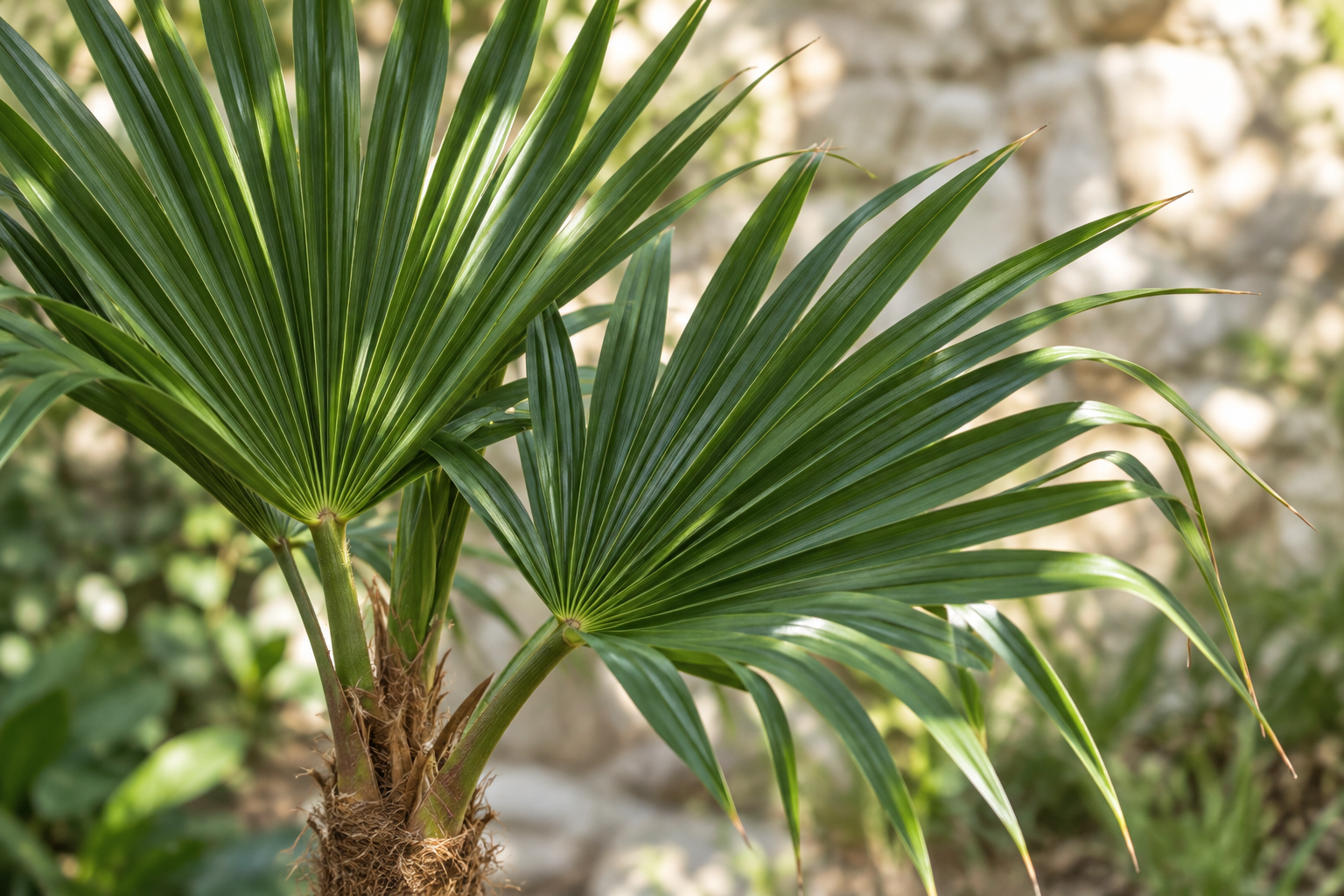
A fan consists of many folds
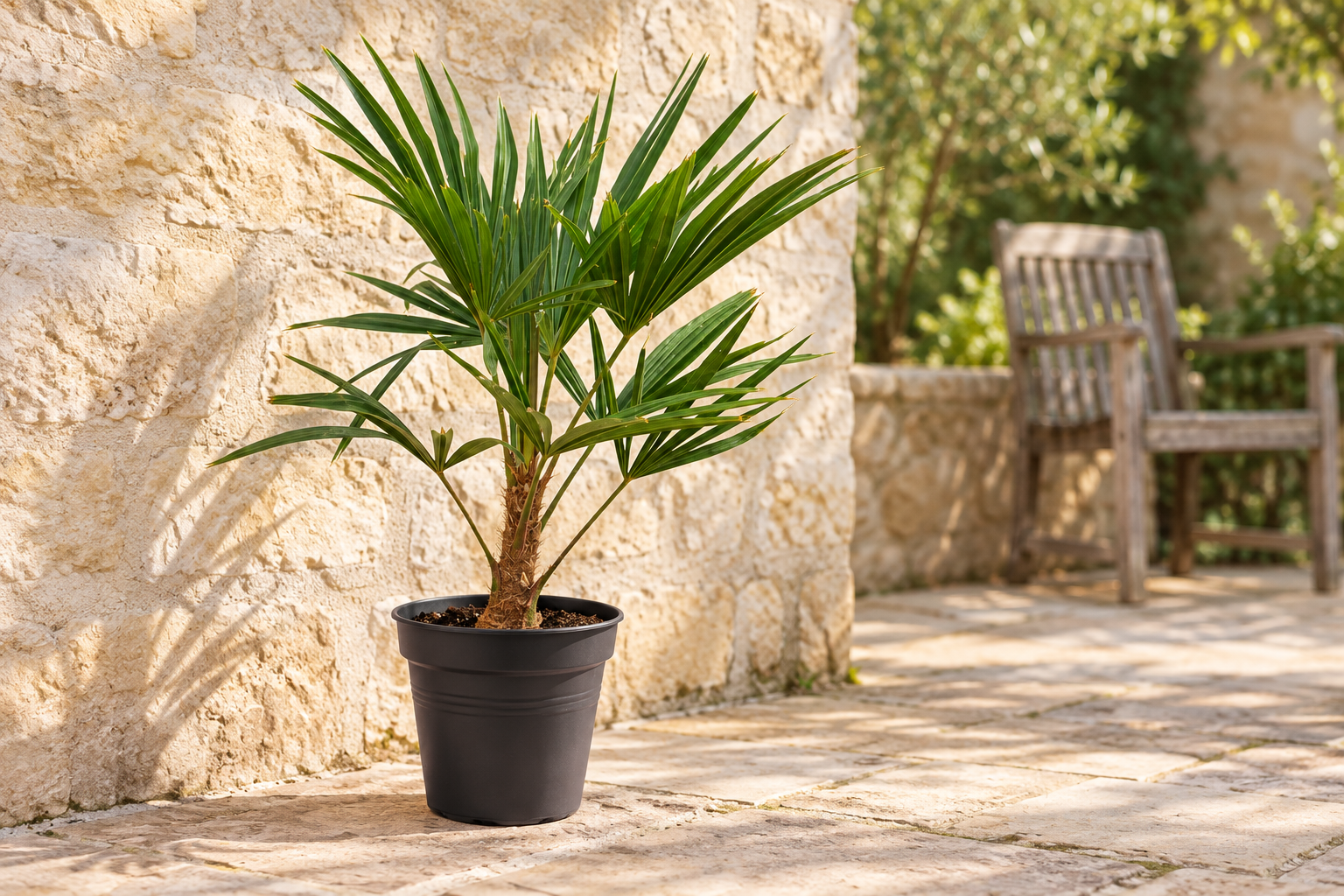
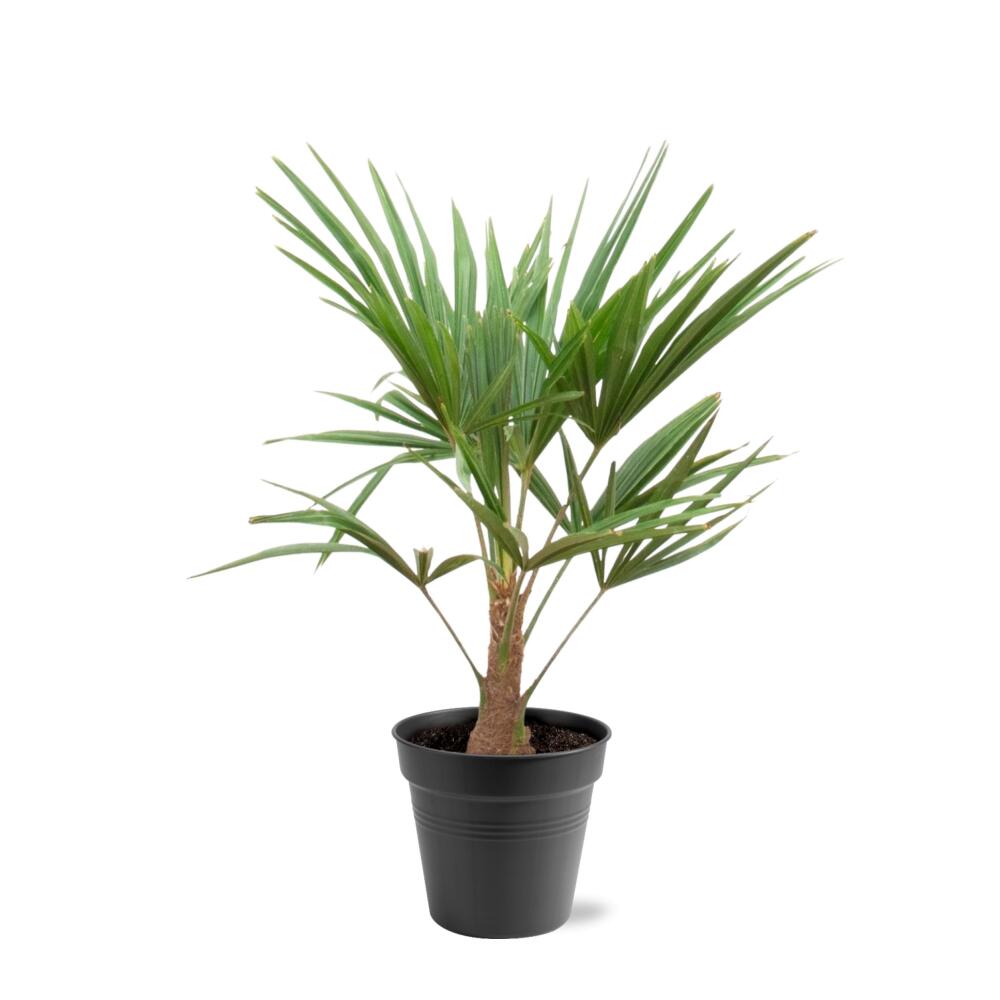
The green leaves open into numerous narrow lengthwise-folded segments. Some tips hang slightly while stalks hold fans away from the trunk. Brown fibres belong to old leaf bases and give the plant its familiar name. Trachycarpus fortunei is a palm in Arecaceae from Asian mountain regions. It usually forms one trunk. A young container initially shows a small crown; later garden character develops with further leaf generations and increasing trunk height.
Delivery height includes the pot
The linked offer describes one plant in a 21 cm pot at about 90–100 cm total height including container. The original shows a short fibrous trunk and several green fans, not a garden palm several metres tall. In favourable conditions the species can become a tall tree over decades, with possible heights beyond 12 m. Climate and containers substantially influence this path. Lift it from packaging by the pot and remove material without pulling leaf stalks. Check rootball moisture and stability before positioning.
Wind shelter preserves leaf form
Sun or light partial shade suits a protected outdoor place. Strong wind can tear folded segments; this does not automatically destroy viability but makes the crown look more tousled. Do not choose an exposed balcony corner only for its lovely light. Beside a terrace, the later crown needs lateral room. About 2–3 m spacing is a specimen guide based on developed crown width, not a fixed hedge rule. Also leave room to move the container and reach it when winter protection is needed.
Roots need water and drainage
Structurally stable fertile soil with good drainage is the foundation. Containers need free drainage openings and secure standing; the delivery pot does not define permanent size. Repot a strongly rooted ball into a suitably larger container without burying the trunk base deeper. Planting out is possible in mild regions but needs realistic assessment of soil, local frost and protection options. Spring provides a long establishment phase before the next winter. Simply adding some gravel to a planting hole does not give a small rootball reliable drainage in heavy waterlogged garden soil.
Drought tolerance does not replace provision
Check the root zone in summer and water thoroughly when soil dries. Excess should drain away. An established plant can endure dry phases better than a newly delivered container palm; this does not justify drying a small pot for extended periods. Sun and wind change demand. Suitable fertiliser according to its label may help during growth, especially in limited container volume. Do not feed a completely dry rootball or automatically interpret yellow leaves as nutrient deficiency. First inspect moisture, drainage and the rest of the crown.
Leave the crown centre untouched
Regular shaping cuts are unnecessary. Only selectively remove completely dead outer leaves with clean tools, without injuring the trunk or living crown centre. The central growing spear is essential for future development. Untidy fibre covering does not need a smoothly shaved trunk. Older plants may bear branching yellowish flower clusters in summer. Female plants may produce fruits after suitable pollination; sex, flowers or current fruit set are not guaranteed in the young offer. Care for an ornamental palm, not a harvest promise.
Assess cold by location and plant size
Windmill palm is among more cold-tolerant palms but still needs protection in hard frosts. A small container freezes differently from rooted garden soil. A bright cool frost-free shelter is a reasonable plan for a young container plant when outside conditions are uncertain. Outdoors, root protection, free drainage and shelter from cold drying wind must fit together; a thin cover guarantees no frost-free rootball. Check moisture on frost-free days and water to demand. Permanently dark storage is as unsuitable for evergreen foliage as a blanket promise to withstand every German winter without help.
One plant, several views
Good to know
Is a windmill palm a coconut palm?
No. Trachycarpus fortunei has folded fan leaves and belongs to a different palm genus from coconut palm.
Does it remain about a metre tall?
No. 90–100 cm describes delivery including 21 cm pot. Over decades several metres and more than 12 m in favourable places are possible.
Does a hardy palm need no protection?
That conclusion goes too far. Hard frost, cold wind and especially a small container need a protection plan suitable for the site.
Why do leaf segments tear?
Strong wind can damage fans. Check the site and distinguish mechanical damage from new discolouration or wilting.
Can I cut off the crown to limit height?
No. Do not injure the living crown centre. Only selectively remove completely dead outer leaves.
Must a young palm already flower?
No. Flowers and possible fruits belong to later development of sufficiently large plants and are not guaranteed for young delivery.
Sources and editorial note
- Exotenherz: current parent offer, delivery measurements and original gallery (03.10.2026)
- Directly read specialist reference: trachycarpus-rhs (03.10.2026)
- Directly read specialist reference: trachycarpus-ncsu (03.10.2026)
Identity and product SKU compared against canonical642 and shared and isolated portraits. Public parent offer, child sets and specialist sources directly read03.10.2026; exact URL and file hash evidence held separately. Delivery overall height and later growth distinguished. Sets and colour offers do not count as additional identities. Publication not approved: Root handles shared page construction and acceptance.