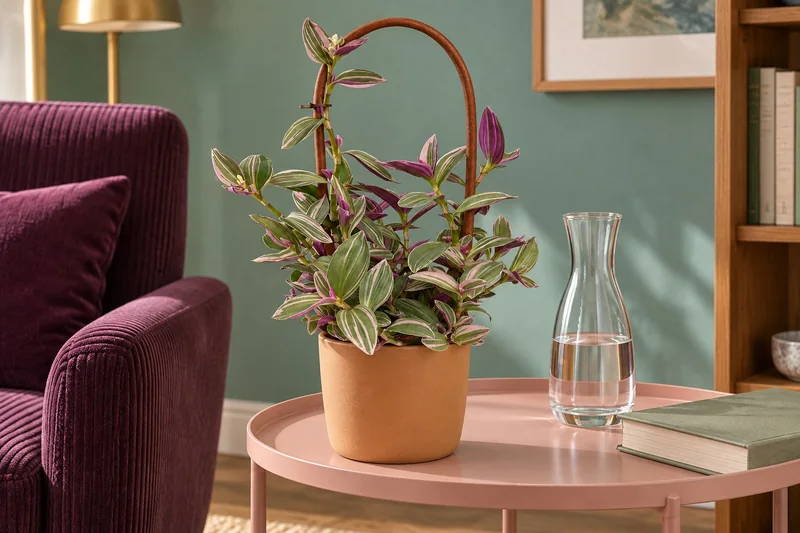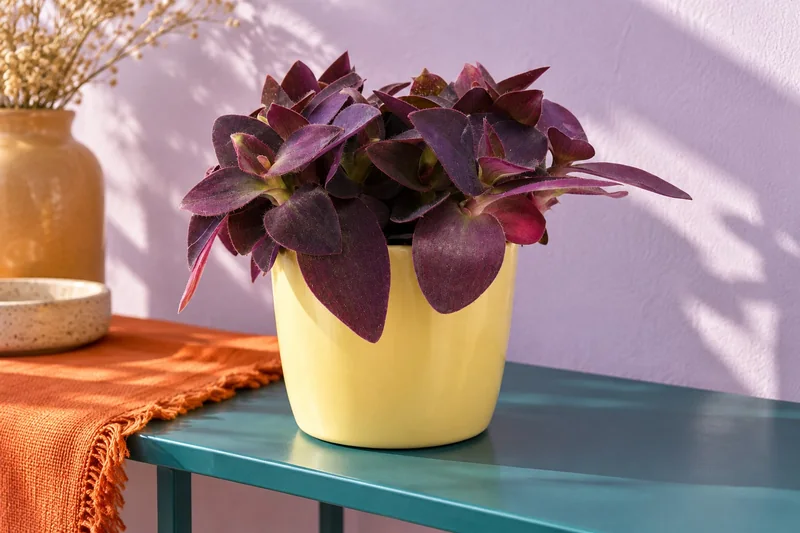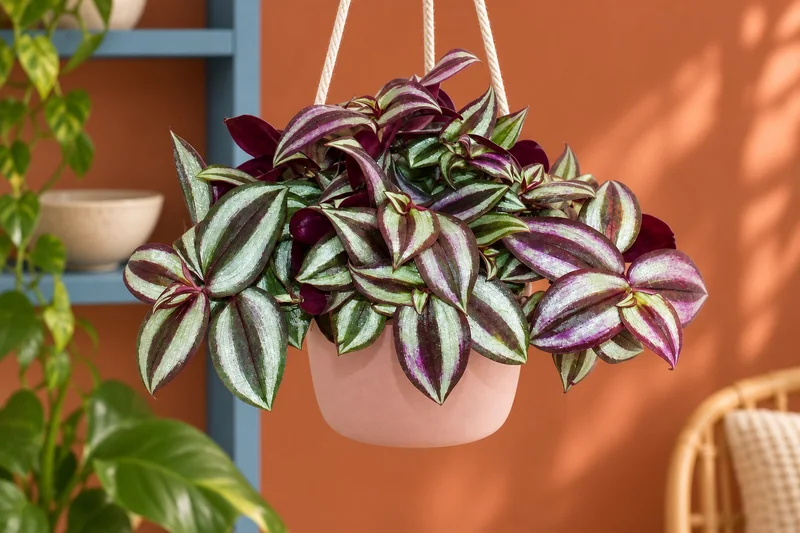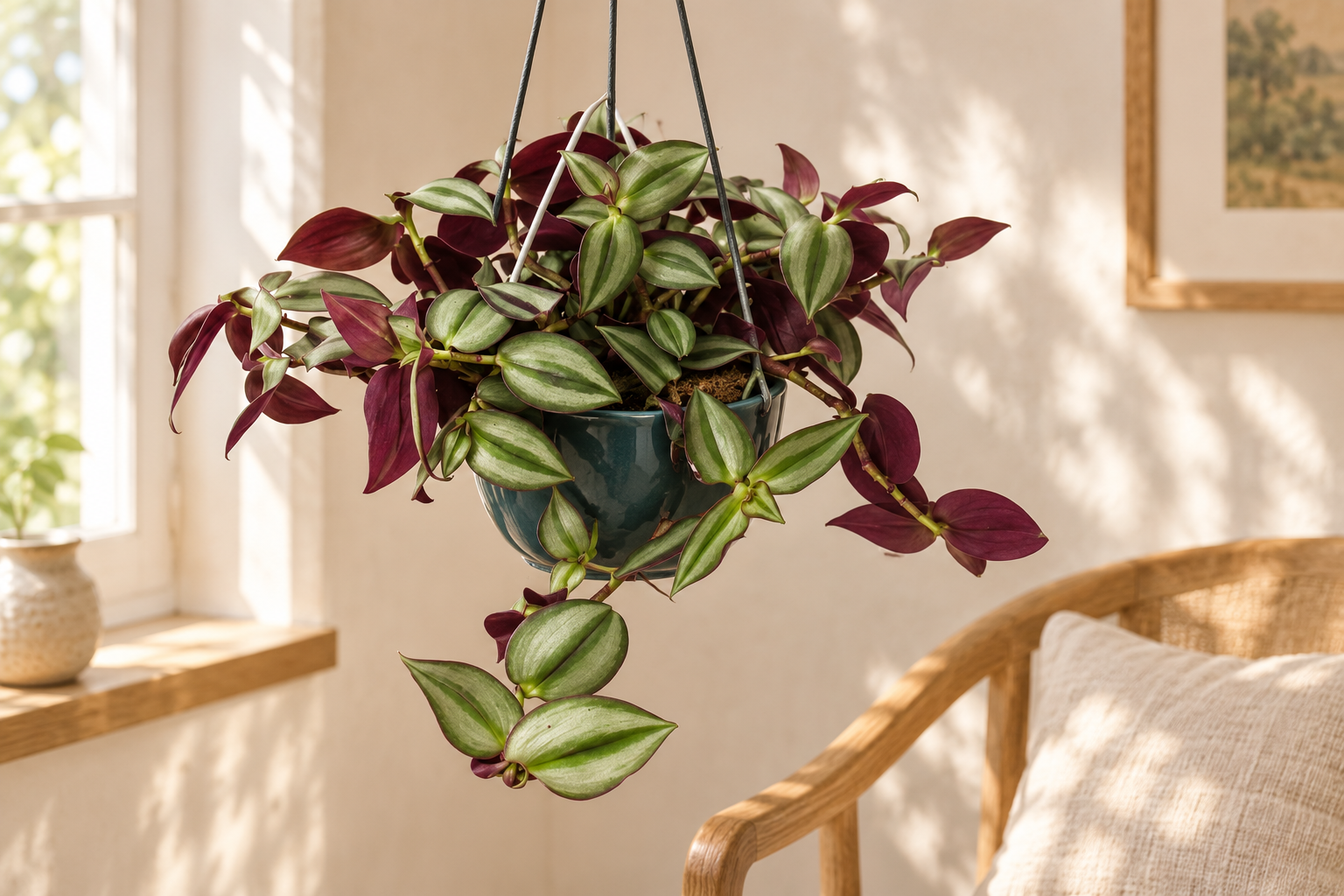
This plant at Exotenherz
Check the shop offer for current availability, price and what is included.
Product and delivery details are given in the individual offer.
Your care table
| Topic | What to do | Why it helps |
|---|---|---|
| Light | Bright and filtered; introduce stronger sun gradually. | A dark place encourages loose shoots, hot sun can damage leaves. |
| Water | Let the upper soil dry slightly, check weight and water moderately. | Supplied roots and controlled drying are more helpful than a fixed calendar. |
| Drainage | Take the hanging pot down for watering and let excess drain. | Wet roots and shoot bases are susceptible to rot. |
| Leaves | Water directly onto soil and remove dead foliage. | Constantly wet crowded foliage can encourage leaf spots and other damage. |
| Substrate | Use loose houseplant compost in a pot with drainage holes. | The root zone needs both water and air. |
| Pruning | Shorten long healthy tips above a node; use suitable tips as cuttings. | New branching and rooted tips can rejuvenate an older tuft. |
| Fertiliser | During visible growth, supply moderately according to the label. | Slow winter growth and fresh pre-fertilised soil change nutrient demand. |
| Winter | Keep bright, warm and frost-free; keep checking the root ball before each watering. | Less light often lowers consumption, while heating air can influence it too. |
Check the compost and pot weight. The care table explains how far the compost may dry.
Water only when needed. The water should reach the root ball without spilling over the rim.
Remove surplus water from the saucer or cachepot. Then return the plant to a suitable position.
Silvery-green leaves with a purple second side
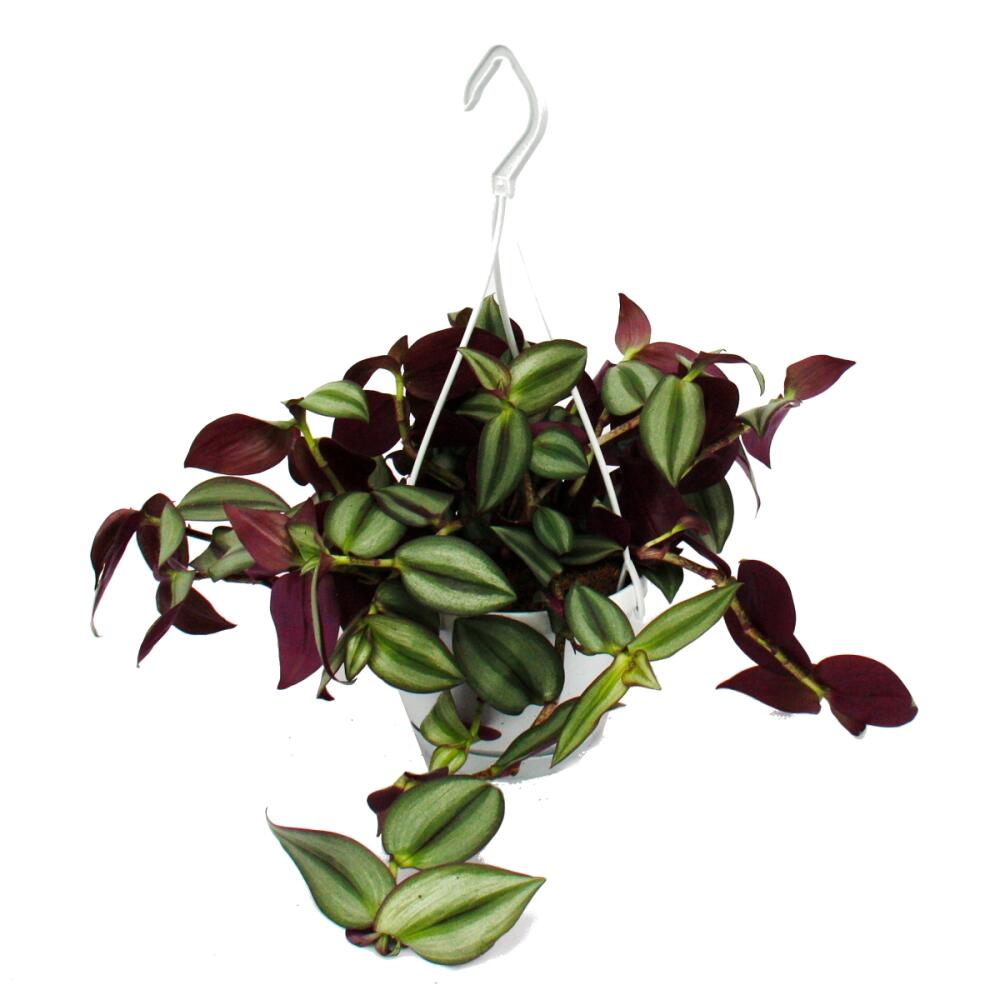
A slight change of viewing angle changes Violet Hill’s whole impression. From above, two broad silvery-green lengthwise areas appear, with a darker green line between them. A sideways-turned leaf instead shows its purple underside. The oval leaves tapering to points sit on branched fleshy shoots. Their movement over the pot edge makes this selection particularly attractive in a hanging pot. The offered specimen already shows individual trailing sections, but no room-filling curtain of leaves. Beside a bright reading chair, the plant can be viewed at eye level. Plan the suspension so leaves remain free and nobody bumps them when standing up. A safe, easily accessible position is part of the design.
Violet Hill is a named inch plant selection
The cultivar name Violet Hill is explicitly stated in the own offer’s description. Botanically the selection is listed as Tradescantia zebrina Violet Hill. It belongs to the spiderwort family, Commelinaceae, and is a perennial frost-sensitive foliage plant. The name zebrina refers to the lengthwise stripes. Its shoots creep or hang; roots can form at nodes. This enables later rejuvenation, but does not mean self-clinging wall cover. Small purple flowers can appear, but are not a reliable expectation in indoor cultivation. The originals focus on silvery-green foliage. Preserve this recognisable plant form in the furnishings too: it needs free space at the pot edge and does not need to be raised on a tall climbing frame.
Hang the pot without pulling shoots
The offer comes in a 14 cm hanging pot. No delivery height or fixed shoot length is stated; the original gallery shows the actual proportions of the offered plant. When unpacking, hold the pot and gently release the wrapping from leaf tips. Do not pull the tuft out by a trailing shoot. Afterwards check suspension and shoot bases before the hanging pot takes its place. It must be removable safely for later care. A ceiling position that is too high makes soil checks harder and often lies further from light than expected. The petrol-blue pot in the scene and furnishings are design examples; unchanged shop photographs show the offered white hanging pot.
Filtered daylight also reaches the centre of the pot
Choose a bright place with filtered daylight and normal room temperature. Light must actually reach the crown, even under a deep wall shelf or behind a curtain. Hot direct sun behind glass can damage foliage; stronger sun is therefore increased gently after shipping. In a dark corner, shoots can lengthen and become barer below. Rather than merely pruning away this change, first check the position. Occasionally turn the hanging pot gently if one side grows strongly towards the window. Neither suspension nor soft shoots should be twisted. An open leaf crown with some air movement suits better than tightly crowded foliage against a damp wall. Normal room air is possible; regularly wetting the whole plant is not a necessary watering method.
Check beneath the foliage and supply moderately
Gently part two shoots in a free area and feel the upper soil. Let it dry slightly between waterings; also check pot weight rather than deciding only from a pale dry surface. When water is needed, take the hanging pot down and water moderately directly onto the soil. The root ball should be supplied without subsequently standing in excess. Let the nursery pot drain and remove residual water from an additional outer container. Constantly wet leaf bases and dense damp foliage increase damage risks. A fixed watering week is no more helpful: new growth, a warm position and stronger daylight change consumption. Judge limp shoots together with root-ball moisture. In already wet soil, more watering is not a sensible first step.
Small cuts keep the tuft developing
Violet Hill can be rejuvenated using healthy shoot tips. When individual sections become too long or bare below, shorten them above a node with clean tools. A few small corrections retain foliage and opportunities for new growth together. Healthy cut-off tips can serve as cuttings: remove lower leaves at the insertion point so a node can reach loose substrate. A small drained container and bright sheltered place suit the start. Repotting the mother plant becomes useful when the root ball is densely rooted or the soil no longer reliably absorbs water. Choose only moderately more root space and loose houseplant compost. During visible growth, feed sparingly according to the fertiliser label, accounting for nutrients in fresh pre-fertilised soil.
In winter, look at light and leaf bases together
In lower-light months, Violet Hill stays warm and frost-free. If it hangs close to a window, avoid cold airflow when ventilating and do not leave it behind a cold closed curtain. Less growth can mean longer watering intervals; warm heating air can nevertheless dry the root ball faster. Therefore keep checking the actual condition. Remove dead leaves from the dense base and look beneath foliage. Fine webs, cottony deposits or small scales are reasons for a precise pest check. With soft shoot bases, first check roots, moisture and drainage rather than feeding. Plant sap can irritate skin: wear gloves when cutting and clean hands and tools. Plant parts are not eaten and stay out of reach of nibbling pets and small children.
One plant, several views


Good to know
How large is the delivery?
The 14 cm hanging pot is documented. No delivery height or fixed shoot length is stated in the offer; unchanged originals show the offered growth.
Are purple undersides damage?
No. Purple leaf undersides belong to the described leaf appearance of this selection. New spots or soft areas are judged separately.
Must I spray every day?
That is not a necessary routine. Water is supplied through the root ball; permanently wet dense foliage should be avoided.
Why does the hanging pot become bare in the middle?
Older shoots and too little light can contribute. Check light reaching the pot centre and use healthy tips selectively for rejuvenation.
Can I reuse cut shoots?
Healthy shoot tips with nodes suit cuttings. Remove lower leaves at the insertion point and gently root them in a small suitable container.
Is Violet Hill a climber?
Shoots creep or trail and can root at nodes. They have no self-clinging climbing organs for a wall.
Sources and editorial note
- Exotenherz: complete own offer and unchanged original gallery
- RHS: accepted Violet Hill selection, leaf description and full cultivation guidance (directly read 04.10.2026)
- NC State Extension: Tradescantia zebrina, shoot nodes, moisture, rejuvenation and sap contact (directly read 04.10.2026)
- RHS: houseplants, soil checking, drainage and winter position (directly read 04.10.2026)
Sources compared: 4 October 2026. The complete own shop offer and clean original gallery were read and viewed. Offer measurements describe the young plant offered and are not its eventual mature size.