This plant at Exotenherz
Check the shop offer for current availability, price and what is included.
Check the shop for the current price, availability and offer contents.
Your care table
| Topic | What to do | Why it helps |
|---|---|---|
| Position | Sunny to bright partially shaded outdoor position. | Shoots receive light and do not stay in a warm living room. |
| Soil | Use free-draining acidic heather or rhododendron compost. | Calluna relies on a suitable root environment. |
| Planting | Moisten the root ball, plant at its existing level and water in. | Good soil contact helps establishment. |
| Water | Specifically check the original root ball between the shoots. | Trailing decoration and wet planter soil may hide a dry root ball. |
| Drainage | Keep drainage holes open and remove excess. | Winter rain must not remain in the bowl. |
| Nutrients | If needed in spring, feed sparingly according to a product label for acidic soils. | More fertiliser replaces neither acidic compost nor needs-based watering. |
| Pruning | Gently shorten old bud-bearing shoots within the leafy area. | Heather regrows poorly from deeply cut bare wood. |
| Winter | Protect the container and check moisture on frost-free days. | A small root ball is more exposed than an established border plant. |
Check the compost and pot weight. The care table explains how far the compost may dry.
Water only when needed. The water should reach the root ball without spilling over the rim.
Remove surplus water from the saucer or cachepot. Then return the plant to a suitable position.
Small buds give the rim an outline
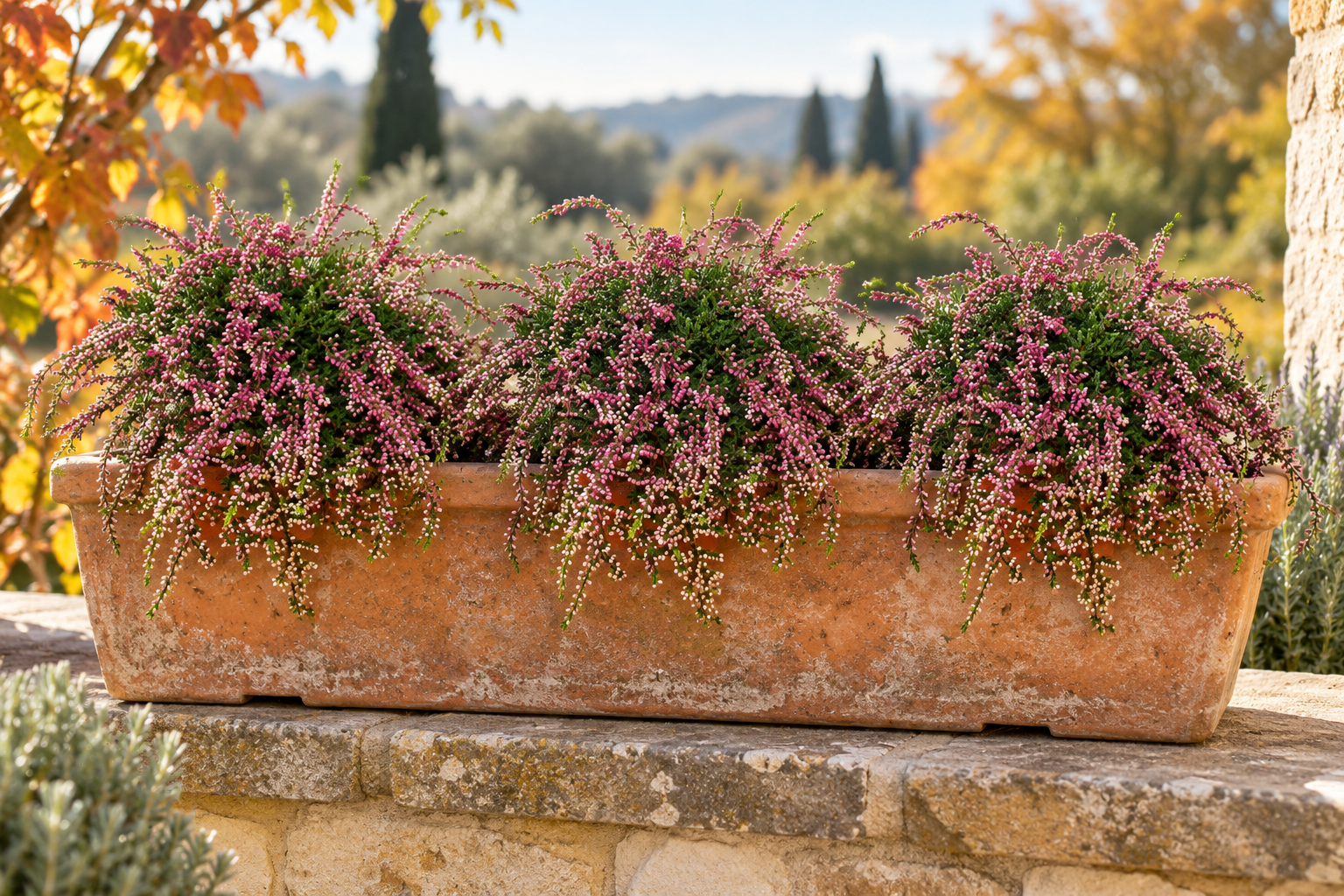
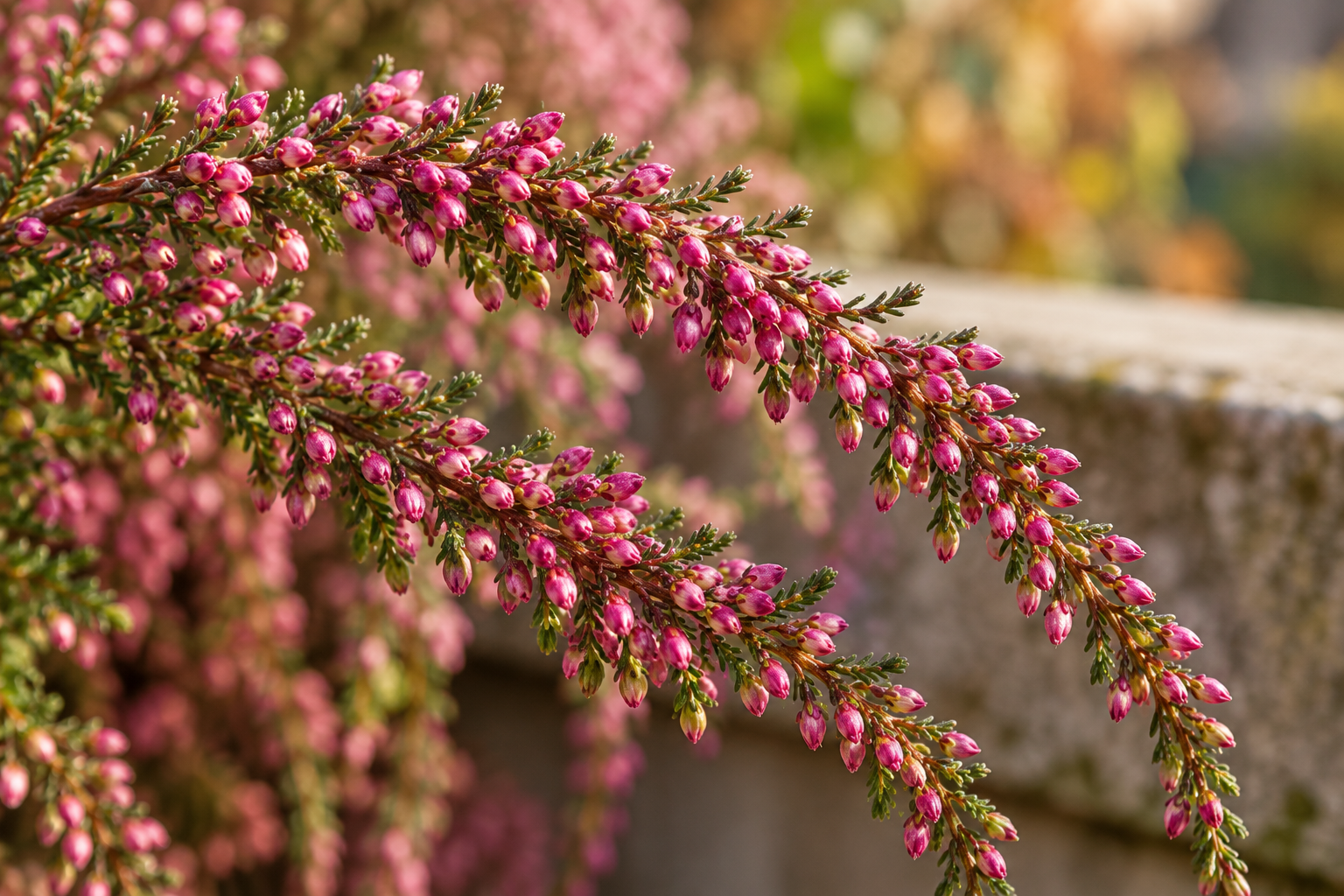
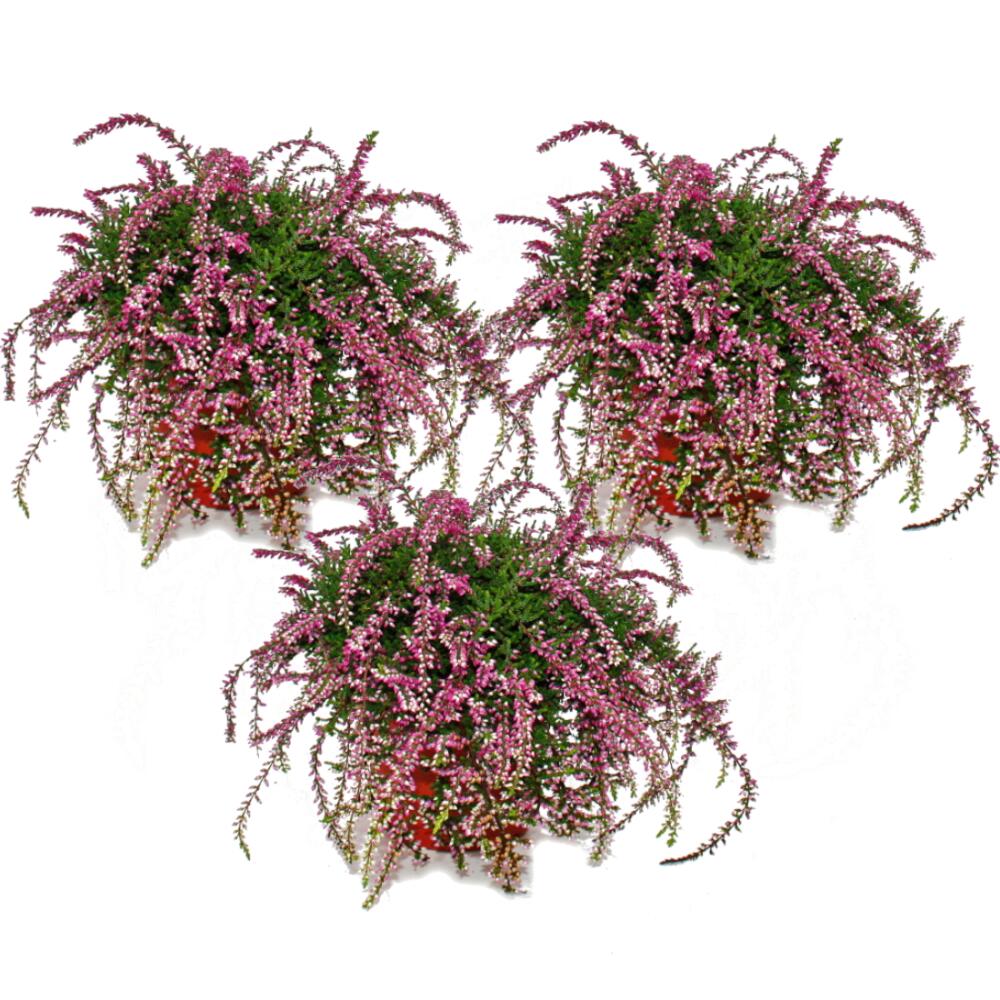
With this heather, the eye follows the shoots downwards. Many slender twigs bend outwards and over the pot rim; in the original photograph the pink bud chains hang like fine arcs in front of the green. This distinguishes the offered trailing forms from an upright heather group. Botanically they belong to Calluna vulgaris, a small evergreen member of the heather family. In these bud-flowering forms, the decoration consists of buds that stay closed for a long time. The branches therefore remain coloured for longer without repeatedly opening large new flowers.
Three plants need three supplied root balls
The offer contains three plants, each in a 12 cm pot, with approximately 20 cm total height. Different colours are offered; the pink original photograph promises no fixed colour mix. The stated height does not measure a later cascade of exactly the same length either. Check each root ball before planting and moisten when needed. Hold the nursery pot and carefully release the trailing twigs from their shipping sleeve. If all three go into a planter, keep each individual root position in view afterwards. Three apparently equally attractive crowns can have very different root-ball moisture.
Grow over the edge without being squeezed
A broad planter or bowl with reliable drainage shows the trailing form particularly well. Arrange the plants in their pots before planting. The twigs should meet loosely, not disappear beneath neighbours. Allow extra room for growing crowns in a lasting planting; an exact general spacing would suggest false certainty without a named variety. Shoots can also spill over a low edge in a bed. The scene shows one possible container arrangement. Planter, terrace and other decoration are not part of the set of three.
An attractive autumn planter starts with acidic soil
A sunny to bright partially shaded outdoor position suits better than a heated interior. Use free-draining acidic heather or rhododendron compost from the start if you want to continue cultivation. Set the root ball at its existing level and water in; do not bury the small twigs in soil. Spring and autumn offer suitable planting opportunities while the soil is workable, neither frozen nor waterlogged. With late autumn planting, establishment and protection of the small root space remain important. A vivid colour impression does not tell you the condition beneath the soil.
Even rain sometimes leaves small root balls dry
Carefully guide a finger between the shoots to the original root ball. Nearby soil may be damp while the plant itself receives too little water. When needed, water slowly directly onto the soil and check drainage afterwards. Covered planters receive little rain, while open bowls may become too wet. The same plant form therefore demands different attention depending on position. Check on frost-free winter days too: the evergreen foliage remains and can lose water. Check container and drainage together rather than adding a small amount every day as a precaution.
A light hand with the scissors in spring
The coloured buds eventually turn brown and fresh growth changes the outline. Then gently shorten old bud-bearing shoots within the still-leafy area, usually in spring for long-decorative autumn heather. Do not cut deeply into bare woody parts. A large imposed round shape would lose the trailing character anyway. If needed, use suitable fertiliser for acidic soils sparingly according to the label, accounting for existing compost nutrition. Also check whether roots are crowded in the container. A larger bowl later or a suitable border position gives the first autumn combination room for further development.
Distinguish colour, signs of life and open flowers
A branch may remain colourful for a long time while its root ball dries out. Also observe green foliage, flexible healthy shoots and moisture. Soft dark areas at the base require checking for persistent waterlogging; first consider dry shoot tips alongside water supply and wind exposure. Closed buds cannot be assessed like open-flowering heather for nectar or pollen. Add suitable open-flowering companions for that role without attributing an unsupported benefit to bud heather. Each plant then has its role: this form brings a fine coloured sweep over the rim.
One plant, several views
Good to know
Are three colours guaranteed in the set?
No. The offer lists various colours, but no binding three-colour combination.
Is September to December a normal open-flower season?
The offer describes the long colour period of bud heather. The buds do not fully open.
Can the planter stay in the living room?
For lasting cultivation, heather belongs in a suitable outdoor position. Warm dry room air is a poor fit.
How closely can I plant the three plants?
Use actual crown width as your guide and leave growing room for lasting cultivation. Do not squeeze the twigs together.
Why water despite autumn rain?
Only after checking: an original pot root ball may stay dry even when adjacent planter soil looks wet.
Can I cut all brown shoots back deeply?
Not as a blanket treatment. Check the cause and stay within the leafy area when shaping; old bare wood regrows poorly.
Sources and editorial note
- Exotenherz: offer and original photographs (02.10.2026)
- RHS – Calluna: planting, acidic soil, bud-flowering forms and pruning (02.10.2026)
Shop offer, article number, GTIN, availability and original images checked directly on 02.10.2026; specialist acceptance on 03.10.2026. Specialist sources read directly. Shop variant 274507092023 with full description and original image read on 03.10.2026. Bud colour period September to December according to the offer, not a guaranteed display of open flowers. No mature height for an unnamed variety or exact frost limit added. RHS growing guide read directly. Public planting information linked to weather and growth.