This plant at Exotenherz
Check the shop offer for current availability, price and what is included.
Check the selected shop offer for price, availability and delivery contents.
Your care table
| Topic | What to do | Why it helps |
|---|---|---|
| Arrival | Check firm bulbs; store dry and airy until planting. | Separate soft or mouldy material. |
| Position | Sun, wind shelter and fertile draining soil. | Flower stems and later leaf phase need a suitable position. |
| Planting | Plant in frost-free autumn with tip upwards. | Determine depth from actual bulb height and pack guidance. |
| Spacing | Leave lateral foliage space; approximately 10–15 cm as a bed guide. | Leaves and roots need side room. |
| Container | Use a deep stable container with free drainage holes. | Bulbs and roots need space below the surface. |
| Water | Keep lightly moist as needed during emergence and leaf growth. | Do not leave roots constantly wet or severely dry. |
| Nutrients | For continued cultivation, supply during growth according to need and label. | Active supply ends with yellowing foliage. |
| After flowering | Remove spent heads and let green foliage die back naturally. | Leaves build bulb reserves. |
| Summer rest | In wet summer soil, lift after leaf maturity and store airy. | Preserve healthy drying bulbs until autumn. |
For young plants, feel the soil directly at the root ball. The surface and deeper soil may have different moisture levels.
Water thoroughly after planting; later, water according to the soil, weather and establishment rather than a fixed calendar.
Avoid standing water. For plants in containers, also check that water runs out of the drainage hole.
One cup, many small patterns
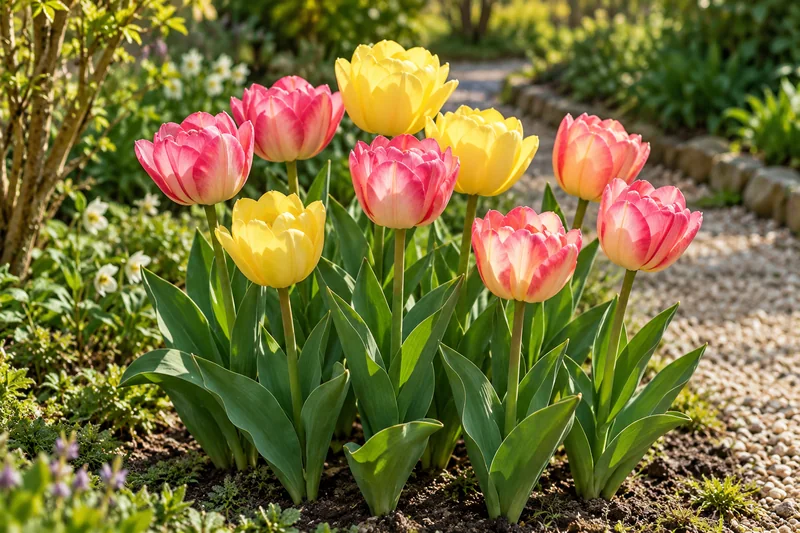
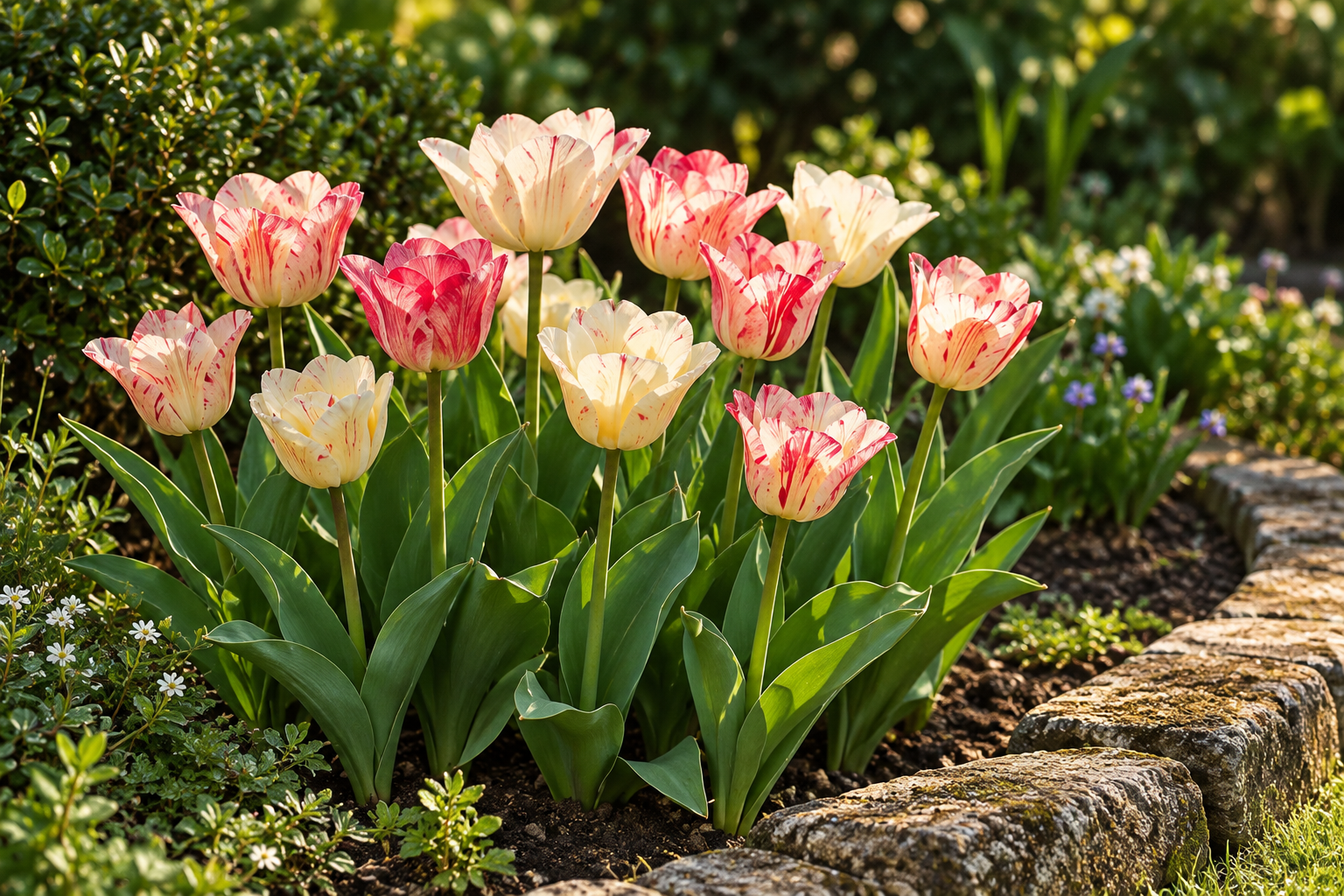
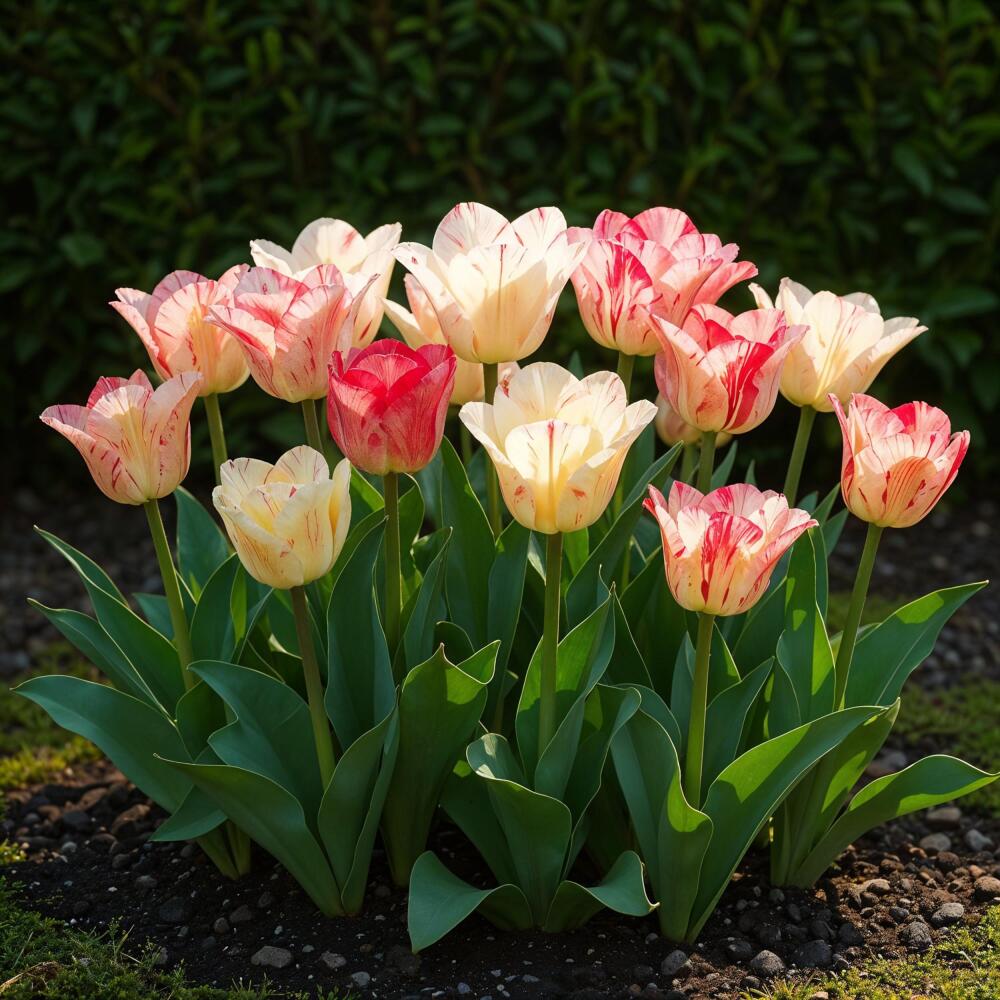
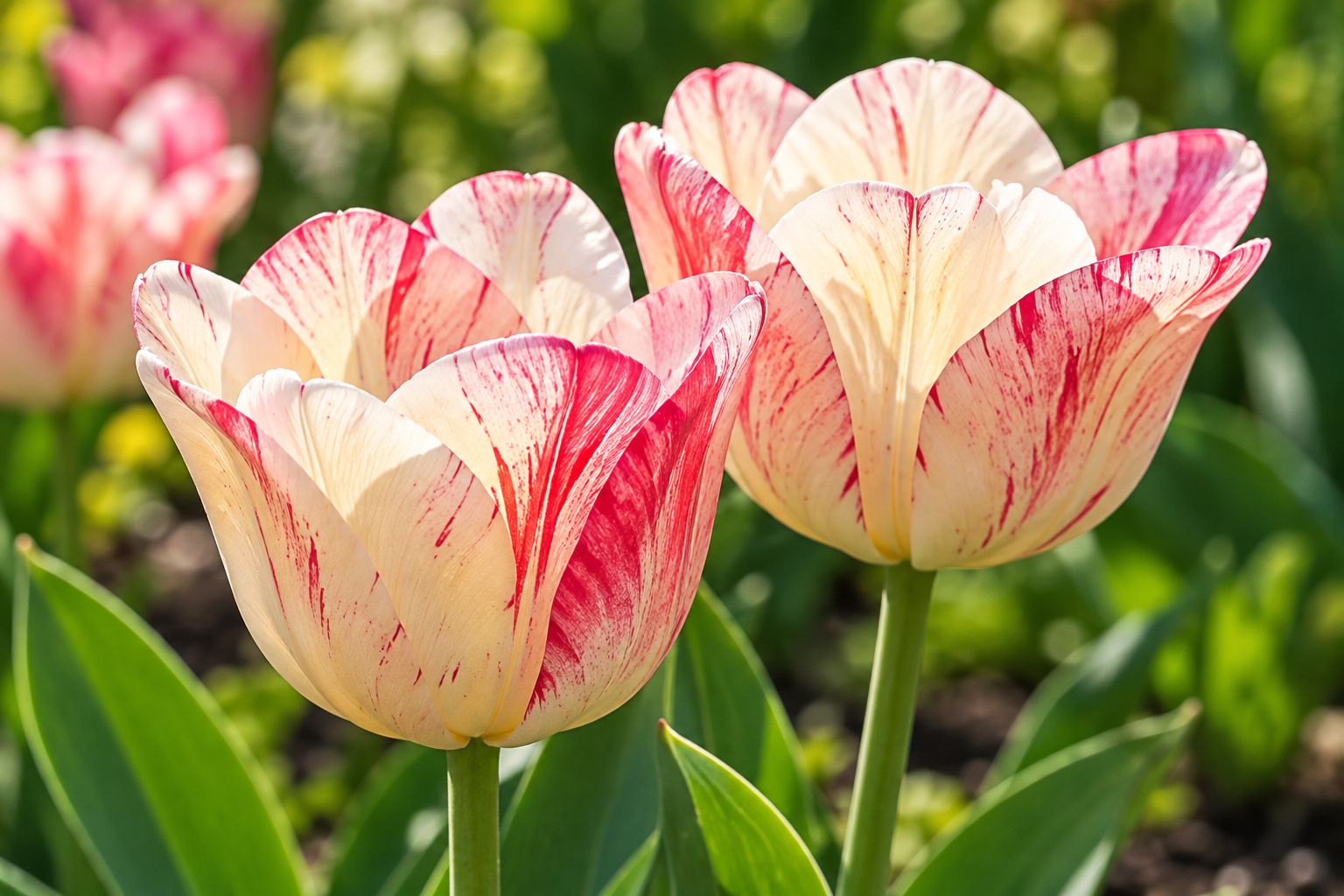
Among almost white flowers stands a stronger pink bloom; beside it a pale cup carries fine red lines. Hemisphere comes alive through this variation. Smooth flower parts overlap into a single tulip flower; broad green leaves accompany slender upright stems. Flowers of this named variety may be marked pink and white to different degrees, including more clearly solid pink. Look at several heads rather than only the most conspicuous bloom. Tulipa Hemisphere belongs to Liliaceae and the horticultural Triumph Group. Later flowering falls in mid to late spring; April and May are a guide shifting with weather and position. Patterns look particularly attractive against a calm garden background. A narrow pale bed edge can display flowers without crowding plants into a wall.
Twelve bulbs rather than twelve ready-made flowers
The particular offer contains twelve Hemisphere bulbs in trade size 11/12. You begin with planting material beneath a dry brown skin rather than flowering potted plants. The size class is neither an eleven- or twelve-centimetre-wide bulb nor delivery height. When unpacking, check firm bodies and unremarkable surfaces. Loose papery skin differs from soft spots or mould. Until planting, keep bulbs cool, dry and airy; a damp closed bag is unsuitable storage. Label material when several tulip packs lie together. Wear gloves if your skin reacts and store planting bulbs separately from food. Twelve planted bulbs are also no promise of twelve equally large cups opening simultaneously.
Choose the site for the leaf phase too
Choose a sunny position with fertile draining soil and some protection from strong wind. Later flowering height up to approximately 50 cm helps bed planning; it is a variety guide rather than fixed height for every stem. Place the group where broad leaves have spring space and are not immediately hidden by vigorous neighbours. Flower heads are easy to view in front of a low perennial, but companions should not fully shade tulip foliage after flowering. Observe soil after rain too: a depression retaining water is unsuitable. If the bed is intensively watered throughout summer, plan now for possible lifting of dormant bulbs. The most beautiful flowering place must also work horticulturally in the following weeks.
Plant in autumn according to the actual bulb
Plant in autumn in frost-free open workable soil. The shop names October and November for this material; weather determines whether planting is sensible on a particular day. Point the tip upwards and set depth according to approximately two to three actual bulb heights and package guidance. Size class 11/12 does not replace that measurement. At least two actual bulb widths of spacing leave room for roots and foliage; approximately 10–15 cm in beds is a loose gardening guide, not a rigid colour grid. Arrange bulbs in small groups and mark positions for later work. Improve heavy wet soil first or choose another place. A thin gravel surface cannot remove waterlogging beneath bulbs.
Consider the entire root zone in a container
A deep stable container can show Hemisphere close up on the terrace. It needs open drainage holes and structured soil retaining air after watering. Divide twelve bulbs between suitable containers if necessary rather than pushing them into an overly shallow bowl. Water after planting in dry soil and let excess drain. Check the root zone during emergence and leaf growth: supply as needed and keep lightly moist without constant wet. A dry surface alone cannot reveal lower conditions in a deep pot. Under a roof, rain often fails to reach soil, while an open position has already received enough. Moisten the root ball when needed and drain water from outer container or saucer. A rigid weekly rhythm does not suit these differing situations.
After flowering, the pattern remains in a photograph
Photograph different heads during flowering and note afterwards when foliage dies back. This allows later comparison without expecting identical stripes from every bulb. Spent heads can be removed if seed formation is unwanted. Leave green leaves until they yellow naturally: during this time the plant builds bulb reserves. Neither cut early nor tie into a tight knot. For continued cultivation, supply nutrients during growth according to need and a suitable feed label; active supply ends with yellowing. Pink-red markings on a firm healthy Hemisphere cup belong to varietal character. Brown spots, distorted shoots or soft tissue instead warrant closer inspection. Not every unusual colour is a fertiliser problem.
Summer dormancy and the following spring
Hemisphere is a perennial bulb, but equally strong repeat flowering is not certain at every site. Sun, uninterrupted leaf growth and drying summer soil support continued cultivation. If soil remains wet for long in summer, healthy bulbs can be lifted after foliage yellows. Loosen soil carefully, let material dry and store airy, dry and dark until autumn planting. Separate and discard soft or mouldy bulbs. Small daughter bulbs can later be grown separately and need time before flowering maturity. An overwintering container receives protection from prolonged wet and severe freezing through without closing drainage. In the plant book, flowering start, foliage maturity and chosen summer position are more helpful than a fixed number of expected blooms next year.
One plant, several views

Good to know
Are the differing colours different tulips?
Hemisphere is a named variety with variably pink-white single flowers. Fixed colour distribution among twelve bulbs is not promised.
Do I receive flowering tulips?
The offer contains twelve bulbs for planting. Garden photographs show later flowering, not current delivery height.
What does 11/12 mean?
It is a trade bulb size class. Do not treat it as an eleven- or twelve-centimetre-wide bulb or plant height.
When should I plant bulbs?
In autumn in frost-free workable soil. Weather and package guidance matter more than a rigid planting day.
Why leave leaves after flowering?
Green leaves build bulb reserves. Only remove naturally yellowed foliage.
Must I keep watering regularly in summer?
The dormant bulb needs a drying summer position. Water demand during green leaf growth is not transferred unchanged to dormancy.
Is repeat flowering certain?
No. Site, leaf maturity and summer rest affect development. Daughter bulbs need time before flowering.
Sources and editorial note
- Exotenherz: offer, delivery form and original photographs
- RHS: named Hemisphere tulip and flower variation
- RHS: planting tulips and caring through the seasons
Shop offer, unchanged originals and directly read specialist sources compared on 4 October 2026. Delivery form and later development are described separately. Check shop availability.