This plant at Exotenherz
Check the shop offer for current availability, price and what is included.
Product and delivery details are given in the individual offer.
Your care table
| Topic | What to do | Why it helps |
|---|---|---|
| Light | Very bright; accustom slowly to direct sun. | Young columns should not grow stretched in a dark room. |
| Water | During growth, moisten through, then let it dry. | The body stores water; roots need pauses. |
| Growing medium | Draining cactus compost with mineral ingredients. | Wetness should not remain at the base. |
| Drainage | Pot with clear holes; remove water from the decorative pot. | Even small cacti do not need standing water. |
| Feeding | During growth, moderately according to cactus-fertiliser instructions. | Strong feeding does not replace light. |
| Winter | Frost-free and bright; reduce water strongly with less growth. | Cool wet compost increases stress on roots. |
| Handling | Hold the pot and avoid spine contact. | Fine spines can still injure. |
| Inspection | Compare the new tip and firm base. | Changes indicate light or root problems early. |
Check the compost and pot weight. The care table explains how far the compost may dry.
Water only when needed. The water should reach the root ball without spilling over the rim.
Remove surplus water from the saucer or cachepot. Then return the plant to a suitable position.
Golden light between small spines
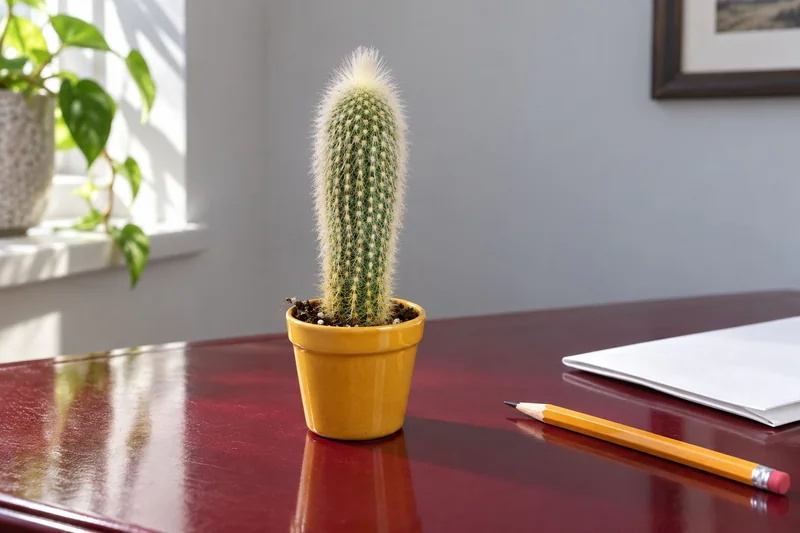
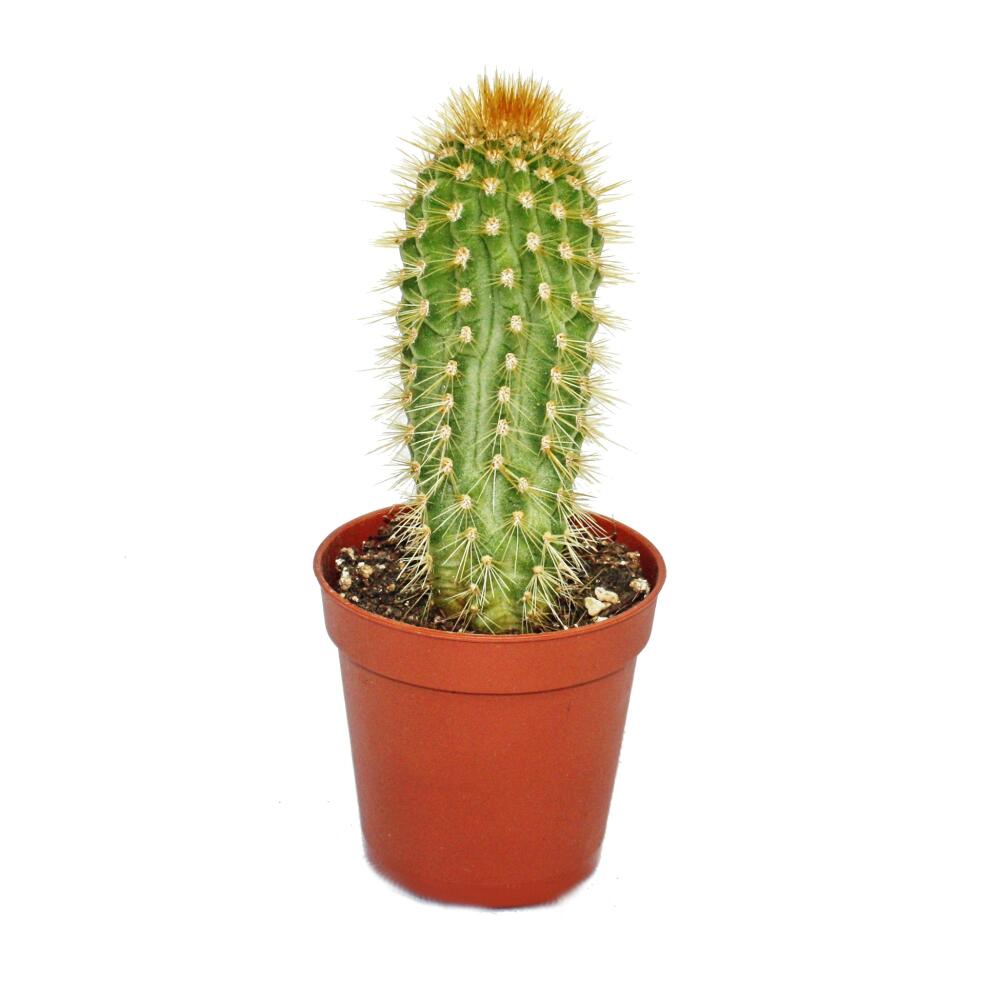
Even as a young plant, Vatricania guentheri shows a beautiful coat of spines. Between fine pale to golden-yellow tips, the green ribbed body appears as if through a light fabric. The upright form suits a small bright plant shelf. Our offer in an 8.5 cm pot has an overall height of about 12 to 18 cm and is therefore a young specimen. The occasional name red fox-tail cactus describes a later hairy zone of older plants, not the state of this delivery size. We initially enjoy the golden spines and accompany the small column without anticipating the next stage.
Hold the pot when unpacking
The fine spines look soft but may irritate or injure hands. Therefore hold the pot and remove packaging calmly without pulling it through the tip. After transport, the plant first goes to a bright sheltered position. Check the root ball before watering: moist soil needs no extra water as a welcome. A decorative pot may frame the small plant provided the nursery pot drains and can be removed. For later care too, we choose a position where one does not brush against the column in passing.
A bright position protects its structure
Plenty of light supports strong compact new growth. Strong sun is introduced gradually after transport because a young plant can scorch with an abrupt change. Behind glass, we also watch ventilation and heat. Dark shelves far from the window are not a good permanent solution. If the new tip becomes noticeably narrow or stretched, we first check the light supply. More water or fertiliser cannot replace the missing position factor. The existing column does not change immediately, but the form of new growth helps assess the effect of a better position over time.
Dry pauses throughout the root ball
During active growth, water thoroughly once the root ball has dried well. Let excess water drain freely and check a closed decorative pot after every application. The small pot may dry quickly in warmth, but a dry surface alone is not enough to judge. Pot weight and a cautious check inside help. Frequent small sips may keep the base constantly moist. A firm body and healthy new growth therefore belong in our observation together with the soil. With soft tissue, the cause is investigated before further watering.
Airy compost and a moderate size increase
Draining cactus compost with mineral ingredients suits cultivation. Drainage holes remain clear; a decorative gravel layer does not automatically improve heavy soil underneath. Repotting is sensible when roots fill the previous space or the mixture no longer dries reliably. Do not choose a disproportionately large pot because much unrooted soil holds moisture unnecessarily long. The base stays at its previous height. During growth we feed sparingly according to product instructions. The cactus should grow firm and well structured, not gain height as fast as possible through strong nutrient applications.
Winter care becomes quieter
When light and growth decline, we reduce water strongly and keep the young Vatricania bright and frost-free. A cool position makes a dry resting phase easier, while a warm room demands especially much light. Dry compost is not permission for frost. Check the base occasionally and look for pests between spines without touching the plant unnecessarily. Unclear leaf loss plays no role in this cactus; changes in the body and tip are the more important signals. With increasing spring light, supply resumes carefully according to actual new growth.
The adult plant remains a future image
Older Vatricania may branch and develop a characteristic reddish hairy zone from which flowers arise. This takes development and suitable cultivation. With our young plant in its small pot, strong columnar growth and healthy roots initially matter most. The reddish hairy zone may appear only later and needs patience. Observe new spines growing at the tip and the body slowly gaining height. A good light position, reliable drainage and dry pauses provide its foundation. The golden coat is already beautiful enough not to require waiting for the next developmental step.
One plant, several views
Good to know
Why does the young plant have no red fox tail?
The reddish hairy zone is a possible feature of older flowering-capable plants, not this young delivery size.
Are the fine spines harmless?
No. Hold the pot when moving it and avoid contact with spines.
Can it stand on a dark shelf?
Not as a permanent position. New columnar growth needs plenty of light.
How often is it watered?
During growth after good drying; strongly reduced in a cool winter.
Is an immediate large pot sensible?
No. Choose a moderate increase only when needed.
Can the column branch later?
Branching is possible in older plants; the delivered form initially shows the current young growth.
May it overwinter outdoors?
For the young potted plant, we recommend bright frost-free overwintering.
Sources and editorial note
- Exotenherz: offer and original images (01.10.2026)
- RHS: Vatricania guentheri (01.10.2026)
- RHS: cacti in cultivation (01.10.2026)
Shop offer, SKU, GTIN and availability checked live on 01.10.2026. Original photograph unchanged. Our own researched gardening texts and individually approved scene.