This plant at Exotenherz
Check the shop offer for current availability, price and what is included.
Product and delivery details are given in the individual offer.
Your care table
| Topic | What to do | Why it helps |
|---|---|---|
| Position | Bright indirect daylight; soften strong summer sun. | Bands remain visible without strongly heating leaves. |
| Warmth | Cultivate warm year-round, preferably above 15 °C, without cold draughts. | The named form is a sensitive indoor bromeliad. |
| Humidity | Support somewhat moister room air, keeping away from heating. | Dry warm air dries tips and reservoir faster. |
| Reservoir water | Use clean preferably soft water and renew regularly. | The reservoir needs fresh rather than long-stale supplies. |
| Watering | Keep ball moderately moist during growth, only lightly moist in winter. | Consumption and drying change with light and warmth. |
| Drainage | Drain inner pot completely and empty outer pot. | A leaf reservoir does not justify a permanent bath around roots. |
| Compost and repotting | Use airy bromeliad compost, pot only suitably larger at the same depth. | Loose support protects roots and rosette base from prolonged wet soil. |
| Feeding | Use suitable liquid fertiliser sparingly and weakly during growth according to label. | Little food suffices; solid granules do not belong in the reservoir. |
| Offsets and checks | Separate strong offsets at about a third of mother size; inspect bases. | Young rosettes continue the cycle; pests can be noticed early. |
Check the compost and pot weight. The care table explains how far the compost may dry.
Water only when needed. The water should reach the root ball without spilling over the rim.
Remove surplus water from the saucer or cachepot. Then return the plant to a suitable position.
Cross-bands give the rosette its rhythm
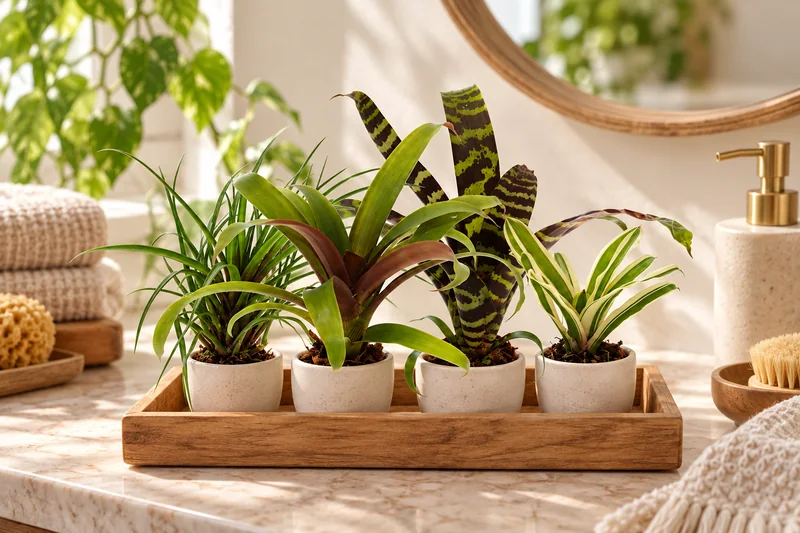
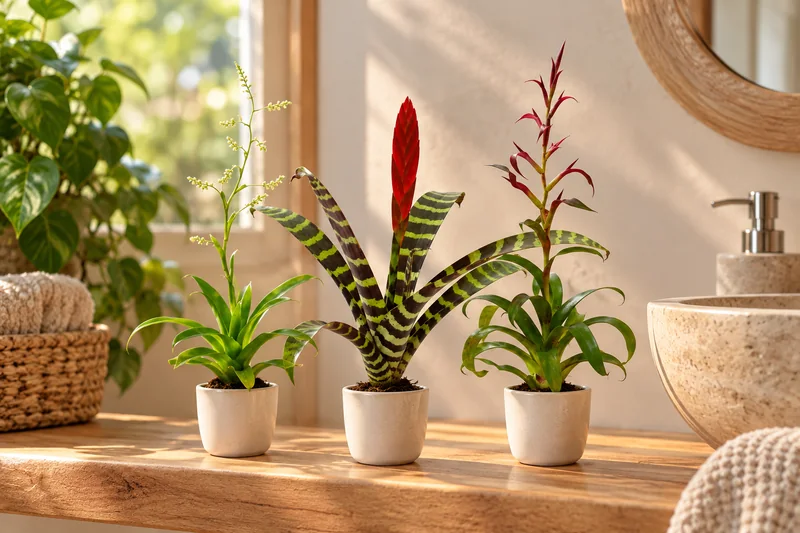
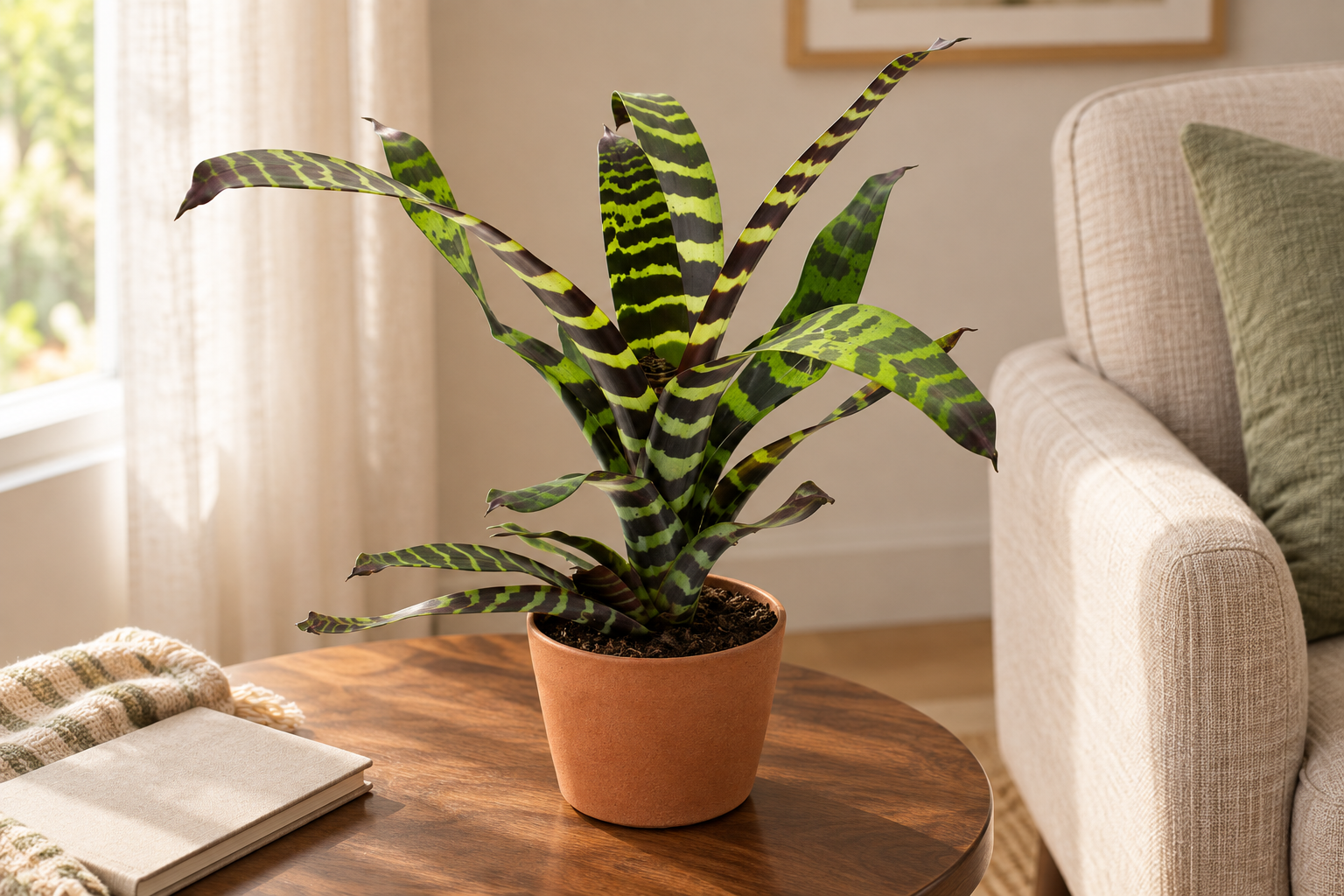
Vriesea Era first stands out through fresh green alternating with dark cross-bands. They run irregularly across broad leaves, sometimes closer then with more green gaps. Long smooth leaves emerge from a shared centre and curve outwards to differing extents. From above the rosette resembles an open vase, from the side a fan of foliage. Originals show no inflorescence. Leaves already carry its character. A calm backdrop and some side room reveal individual arches without pressing leaves against walls or furniture.
Era is a named horticultural form
The shop lists Vriesea splendens Era. It is also described as Vriesea Era: slow evergreen rosette bromeliad with strong strap leaves and dark red-brown to green cross-bands. Around sixty centimetres height is guidance for older plants, not a fixed final size in every home or offered plant height. An upright sword-shaped orange inflorescence may belong to later development. Its conspicuous effect comes largely from coloured bracts. Each rosette develops at its own pace; current foliage establishes neither flowering date nor yearly rhythm.
Carry the pot and leave leaf arches free
The specific offer includes a fifteen-centimetre pot and around thirty-five to forty-five centimetres total height including pot. That describes already distinct foliage still fitting an accessible shelf. After unpacking inspect inner pot and bases. Lift by container rather than a long leaf. An outer pot can support but must remain accessible for checking and emptying. Colour distribution, leaf position and growth may vary. Actual width therefore matters more initially than a tight decorative niche. The centre should remain inspectable from above.
A bright living position without hot sun
Bright indirect daylight reveals cross-bands well. Soften strong summer sun behind glass with a light curtain or more protected place. Partial shade remains sufficiently lit; it does not mean a dark corner. The named form is cultivated warm year-round, preferably above fifteen degrees. Cold ventilation draughts and pots directly on heating are unsuitable. Slightly more humid air helps in dry heating seasons. A bright bathroom can suit it if daylight really arrives. Leaves should not constantly press against other wet plants. Leave room between arches for air and care.
Fresh reservoir water and airy roots
Overlapping leaf bases form a reservoir. Use clean preferably soft water and renew regularly instead of continually topping up old supply. Also check inner-pot soil. During active growth keep moderately moist without becoming muddy. Excess drains completely after every supply and is removed from outer pots. Lower winter light reduces consumption; reduce supply accordingly. The ball should then remain only lightly moist. A cared-for reservoir and humid room air allow no permanent root bath. Pot weight, surface and base together reveal more than rigid weekly watering.
Plant loosely and feed sparingly
An airy bromeliad mix with suitable bark supports roots and quickly drains excess. Dense garden soil is unsuitable. Retain depth if repotting later: the rosette base does not go deeper into wet soil. Choose only suitably larger to avoid long-moist reserves around small roots. During clear growth suitable liquid feed sparingly weakly diluted according to label suffices. Solid granules do not enter the reservoir. If foliage fades or tips brown first check light, drainage and salt deposits. Stronger feeding does not restore damage and can disrupt balanced rosette form.
Offsets continue development
An individual rosette normally flowers once. Afterwards it may age slowly over a long time and make young side rosettes. Small offsets initially stay attached to strengthen. Approximately a third of mother size is useful guidance for later separation. New plants enter small airy pots and are carefully acclimatised. Remove only truly dry outer remains; do not shorten the living centre. Also watch for scale or mealybugs at bases. Sudden soft dark bases with wet soil differ from natural ageing. Firm new foliage and strong sides show how Era continues in its chosen place.
One plant, several views
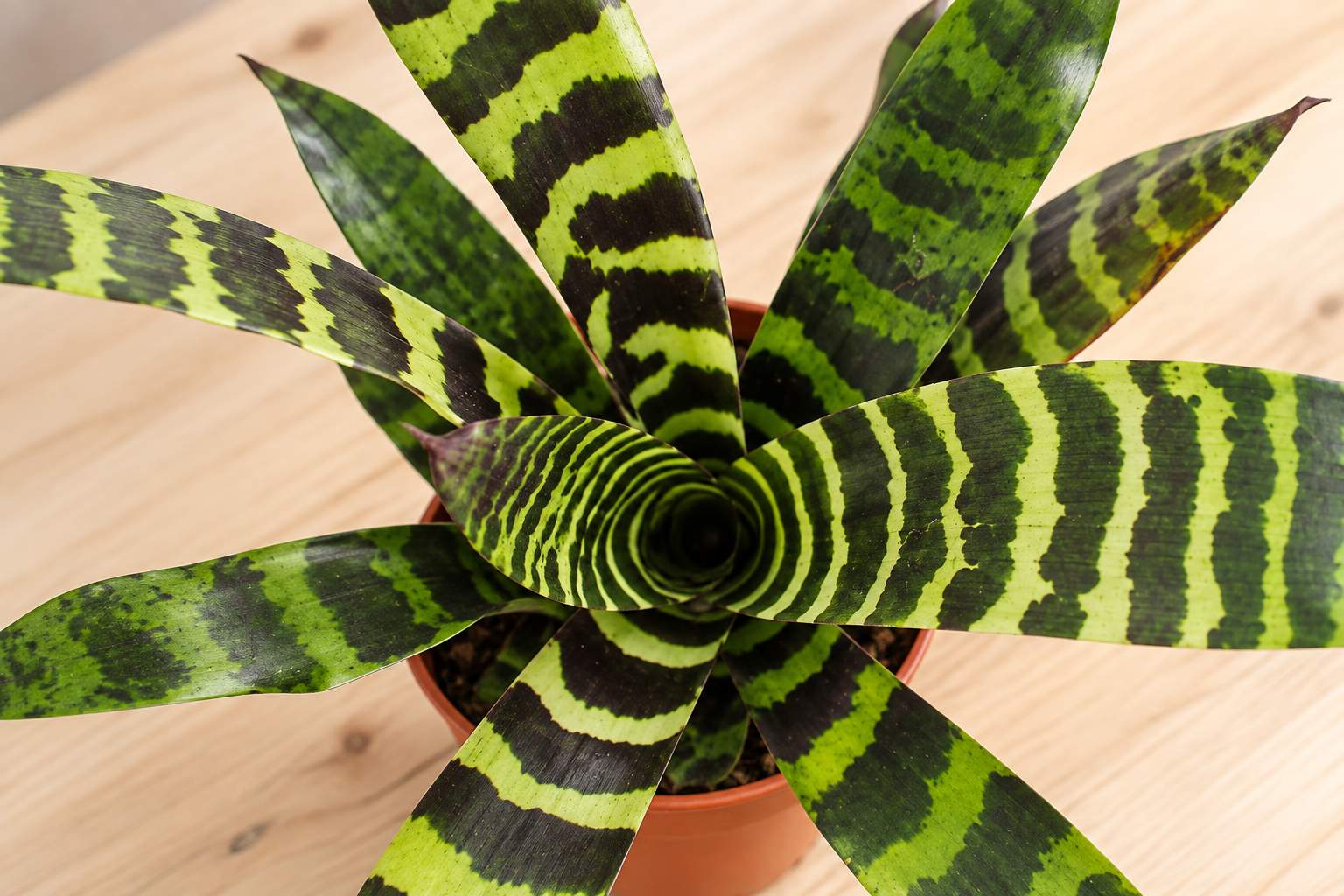
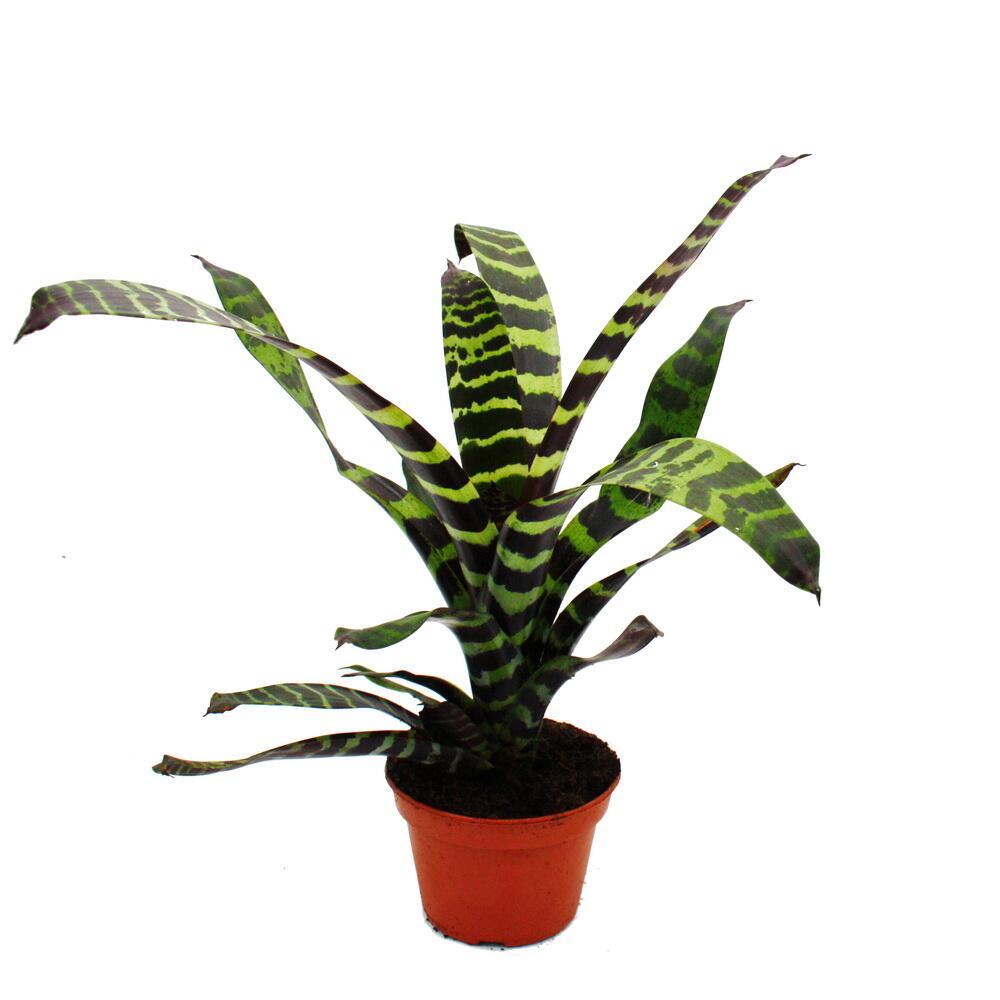
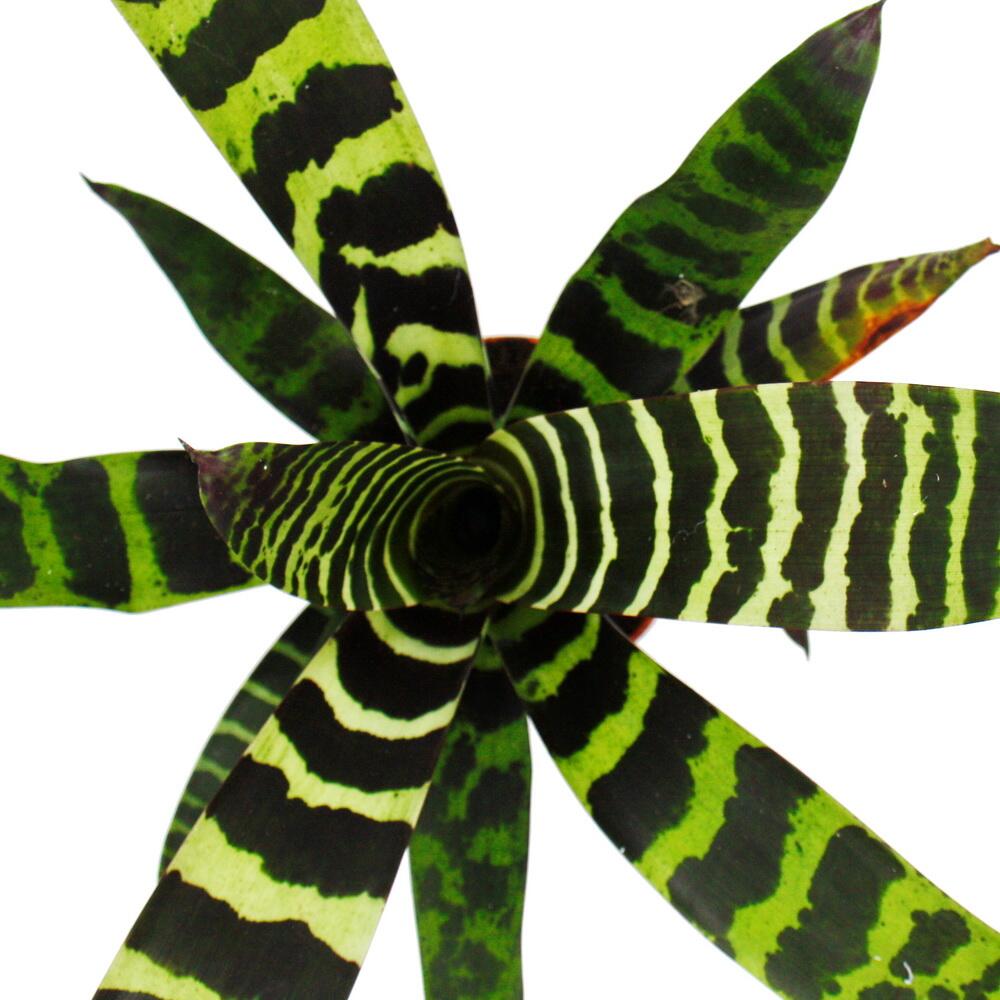
Good to know
What does Era mean?
Era denotes a named horticultural Vriesea form. Shop lists Vriesea splendens Era; portrait Vriesea Era.
Does the pictured plant already have an inflorescence?
Originals show no inflorescence. A later orange sword-shaped inflorescence is possible, not a delivery or date promise.
Is 35–45 cm its final height?
That describes offered total height including pot. Around 60 cm guides older plants; actual development may differ.
Does water belong in the leaf centre?
The rosette has a visible reservoir. Keep fresh with clean soft water and separately check the ball.
Can the inner pot constantly stand in water?
No. Remove excess after watering. Reservoir and soaked root space are different.
Does the same rosette flower every year?
Usually a rosette flowers once and ages slowly afterwards. Offsets may continue development.
When do I separate young rosettes?
Initially let them grow strongly. About a third of mother size guides separation; do not remove small offsets too soon.
Sources and editorial note
- Exotenherz: exact Era offer and originals (04.10.2026)
- RHS: Vriesea “Era”, named form and cultivation (04.10.2026)
- RHS: bromeliads, leaf reservoir and offsets (04.10.2026)
- Wisconsin Extension: bromeliad cultivation and airy compost (04.10.2026)
Shop offer, original images and specialist sources checked on 04.10.2026. Current shop availability.