This plant at Exotenherz
Check the shop offer for current availability, price and what is included.
Check the shop for the current price, availability and offer contents.
Your care table
| Topic | What to do | Why it helps |
|---|---|---|
| Light | Place all three crowns brightly in filtered daylight. | Neighbouring leaves must not block all the light. |
| Position | Keep warm without cold draughts. | Frost-sensitive houseplants remain protected. |
| Dieffenbachia | Let the surface begin to dry before need-based applications. | Permanently wet soil burdens roots. |
| Umbrella plant | Check root-ball moisture separately and drain excess. | Drought stress and wetness may accompany leaf loss. |
| Weeping fig | Do not let the root ball dry completely. | Compare leaf drop with position changes too. |
| Containers | Retain three separate controllable root spaces. | A set needs no single watering rhythm. |
| Growth | Repot suitably when rooted; fertiliser according to the label. | Account for pre-fertilisation and actual new growth. |
| Handling | Do not consume; work carefully around sap. | Dieffenbachia sap in particular may strongly irritate. |
Check the compost and pot weight. The care table explains how far the compost may dry.
Water only when needed. The water should reach the root ball without spilling over the rim.
Remove surplus water from the saucer or cachepot. Then return the plant to a suitable position.
Three forms pick up the same colour
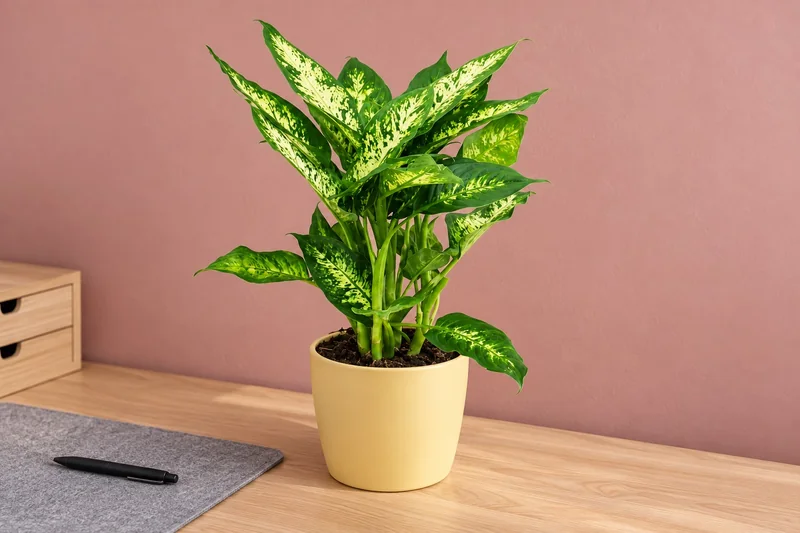
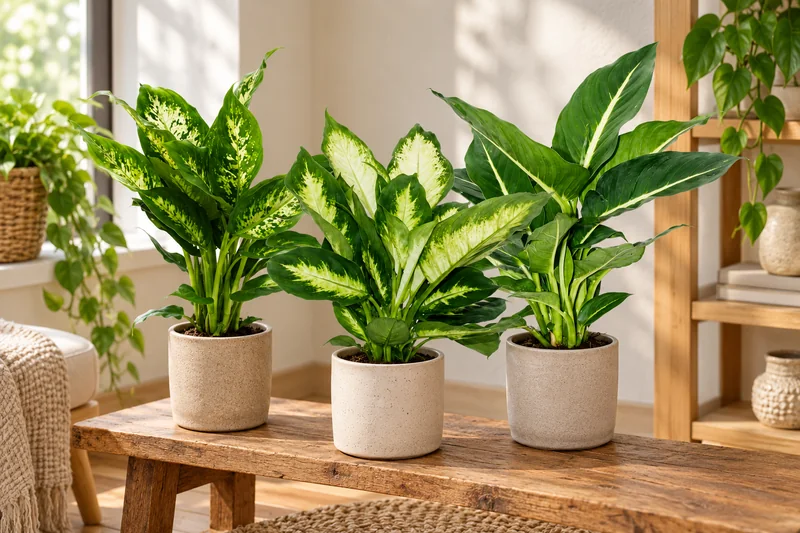
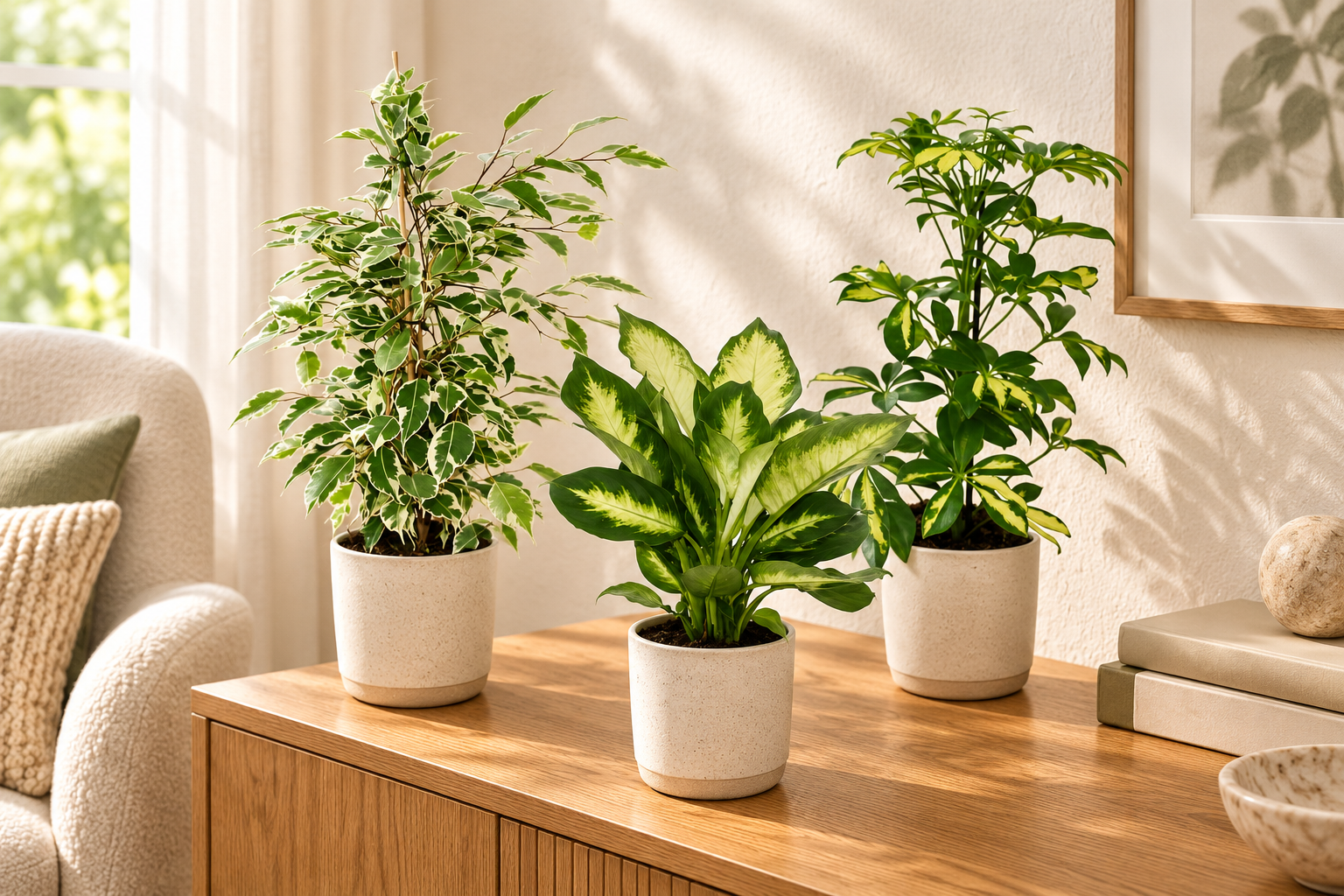
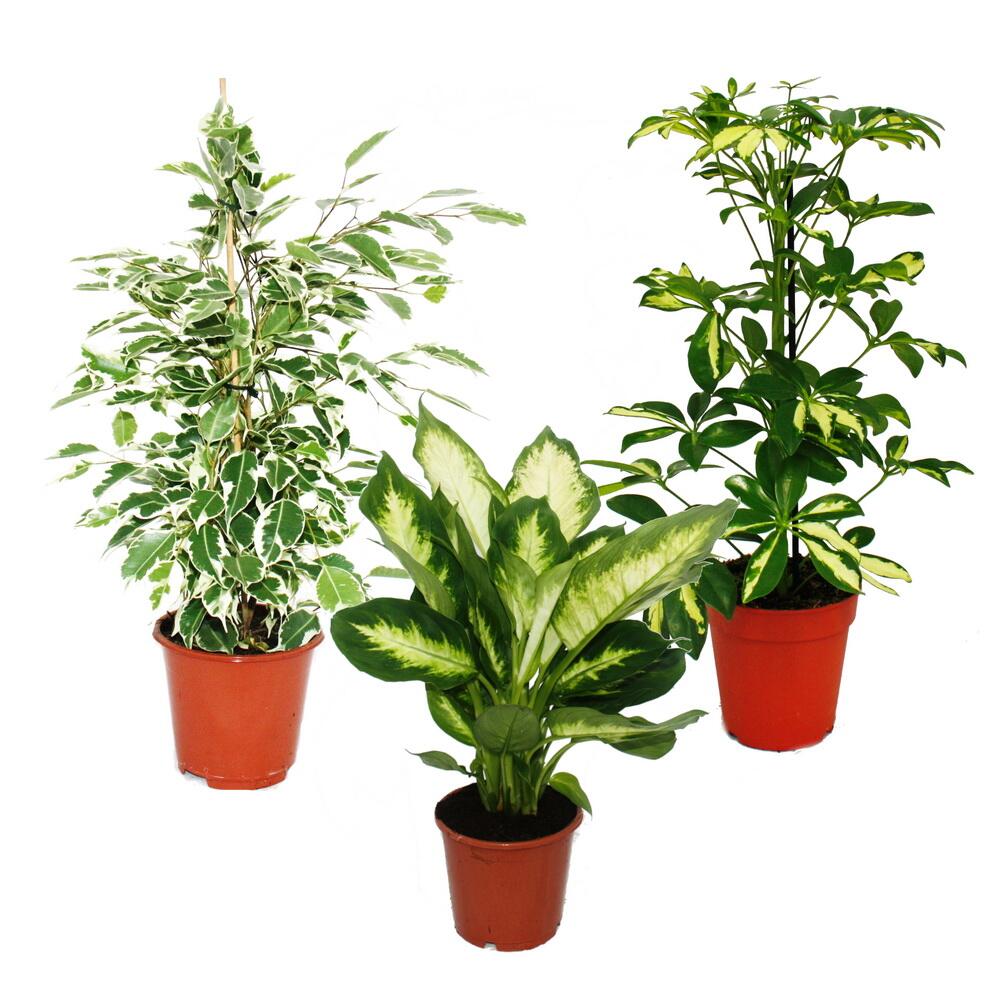
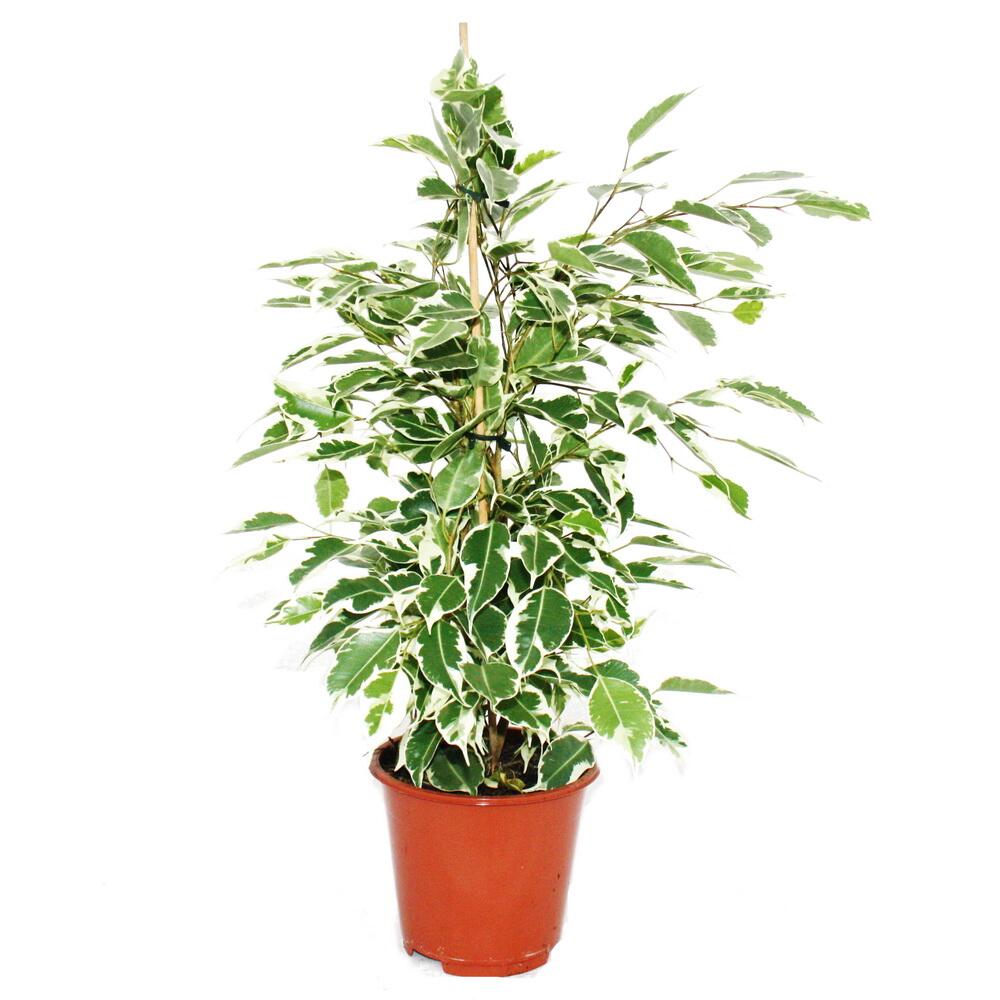
A broad leaf surface, a small leaf umbrella and many fine leaf tips: this white-variegated trio thrives on three plants showing similar colours very differently. The dieffenbachia has a pale centre between green margins. The umbrella plant arranges its leaflets around a shared point. Twilight weeping fig adds small pointed leaves with pale edges and fine branches. A broad bright shelf creates a group with depth. Each crown stays recognisable rather than disappearing into one green block.
The set begins with three individual root spaces
The offer contains three separate plants, each in a twelve-centimetre pot. Heights given are about twenty-five centimetres for dieffenbachia, thirty for schefflera and thirty-five for ficus. The shop describes them as height figures; no additional precise measuring method is added. These sizes begin their development. Dieffenbachia and Schefflera are supplied without a named cultivar; the picture creates no invented cultivar names. Twilight remains the actually named weeping-fig selection.
A shared place needs light for every crown
Bright filtered daylight is a sensible common starting point. A shelf suits them only if enough light actually reaches all three plants. Do not let broad leaves permanently shade the smaller neighbouring crown. After transport avoid sudden strong sun, cold draughts and dry proximity to heating. The weeping fig may respond to substantial position changes by dropping leaves. A carefully chosen stable place helps it settle. Schefflera is the familiar shop name of the umbrella plant; Heptapleurum arboricola is also used for the typical small-leaved form.
Three pots are not watered by a clock
Check every root ball separately. The dieffenbachia surface may begin to dry between thorough applications; its root space is neither parched nor permanently waterlogged. Water the umbrella plant after checking moisture too, with free drainage. The weeping fig should not dry completely. This does not mean all three must be watered together. Pot weight and soil help comparisons. Remove excess from every cover pot. If the weeping fig drops leaves, first check position and root ball before responding to supposed thirst with extra applications.
Design the group, follow roots individually
Individual containers make care and later repotting easier. A shared watertight outer pot does not replace three controllable drainage outlets. Use loose structured potting soil and give each only a little more room when roots clearly fill it. During active growth feed according to the label, accounting for pre-fertilisation. Do not cut all crowns to the same height: broad, radiating and finely branched forms make their shared charm. Plant-book photographs show which plant is making new growth. In lower-light winter, reassess consumption and nutrient needs.
Observe leaves and choose the place thoughtfully
Check leaf undersides, axils and branches regularly for changes. Gloves are useful when handling dieffenbachia: its sap can strongly irritate eyes and mucous membranes in particular. The other plants are not edible herbs either. Position the group beyond reach of children and animals and avoid sap contact. Broad leaves can be dusted gently without pulling their stalks. Pale markings naturally vary from leaf to leaf. The trio stays attractive when shared design and the needs of all three members are considered.
One plant, several views

Good to know
Are these three identical plants in different sizes?
No. The set combines dieffenbachia, umbrella plant and Twilight weeping fig.
Must I water them all together?
No. Check every root ball separately for moisture and actual consumption.
Should I plant them together immediately?
Separate pots make care and later repotting easier.
Why does the weeping fig drop leaves after moving?
A light change can cause leaf drop; check root-ball moisture and draughts too.
Are the pale leaves edible?
No. They are ornamental plants; dieffenbachia sap in particular may strongly irritate.
Sources and editorial note
- Exotenherz: offer and original images (03.10.2026)
- NC State Extension – Dieffenbachia, general cultivation and handling reference (03.10.2026)
- NC State Extension – umbrella plant, leaf structure and container cultivation (03.10.2026)
- NC State Extension – weeping fig, moisture and position changes (03.10.2026)
Shop offer, item number, GTIN, availability and original images directly checked on 02.10.2026; specialist acceptance on 03.10.2026. Specialist sources read directly. Specific set and original photographs directly checked on 03.10.2026. Three species or genera remain separate; no cultivar name invented for Dieffenbachia or Schefflera. NC State profiles read in full and general cultivation guidance used, with no additional confirmed Dieffenbachia species claimed. Not orderable: knowledge portrait without purchase link or social sending clearance. No tool, server or Wawi changes. Currently not orderable: knowledge portrait without purchase link; social drafts not cleared for sending.