This plant at Exotenherz
Check the shop offer for current availability, price and what is included.
Check the shop for the price, current availability and what is included.
Your care table
| Topic | What to do | Why it helps |
|---|---|---|
| Light | Bright with indirect light. | Pale foliage needs energy but does not tolerate sudden hot sun. |
| Water | Let the upper root-ball area dry, then water thoroughly. | An evenly supplied root ball is better than small daily sips. |
| Drainage | Remove water from the outer pot. | Constant wetness can damage roots. |
| Compost | Loose and freely draining. | Roots need air as well as water. |
| Feed | During active growth according to suitable product instructions. | Hold back accordingly when growth is low. |
| Vines | Later allow to trail or support loosely. | The offered plant starts with short young shoots. |
| Pruning | Shorten healthy shoots above a node if necessary. | This may encourage more compact growth. |
| Winter | Warm and bright, without heated air directly at the pot. | Less light usually reduces water use. |
Check the compost and pot weight. The care table explains how far the compost may dry.
Water only when needed. The water should reach the root ball without spilling over the rim.
Remove surplus water from the saucer or cachepot. Then return the plant to a suitable position.
The actual leaf appearance matters
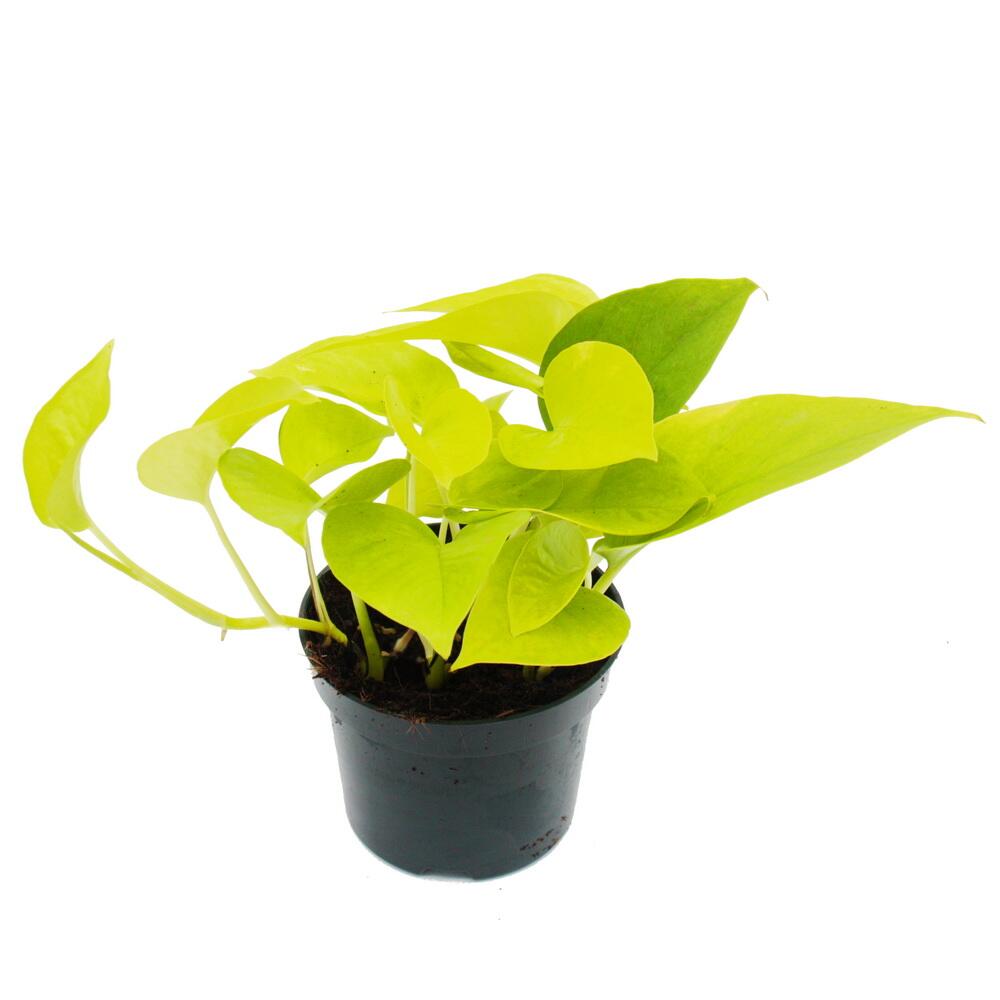
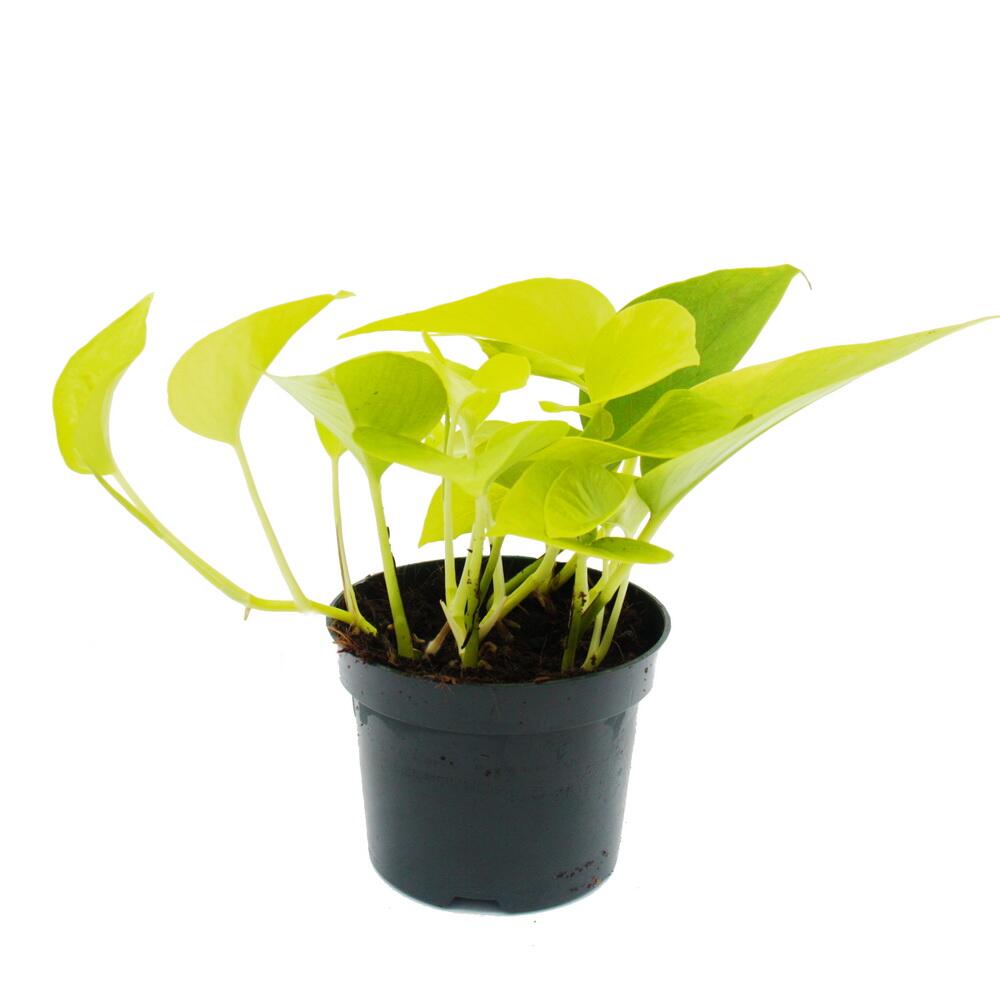
The original offer shows a young pothos with largely plain lime-yellow to yellow-green foliage. The shop uses the name Golden Pothos for it. Elsewhere, this trade name also describes yellow-marbled pothos. A particular Neon cultivar therefore cannot be reliably guaranteed from the photograph alone. Botanically, we place the plant in Epipremnum aureum; older names involving Scindapsus or Epipremnum pinnatum remain used in the trade. Collectors seeking an exactly identified cultivar should clarify the current cultivar information before buying. Good light and a healthy root ball are decisive for care.
A compact beginning rather than a long leafy garland
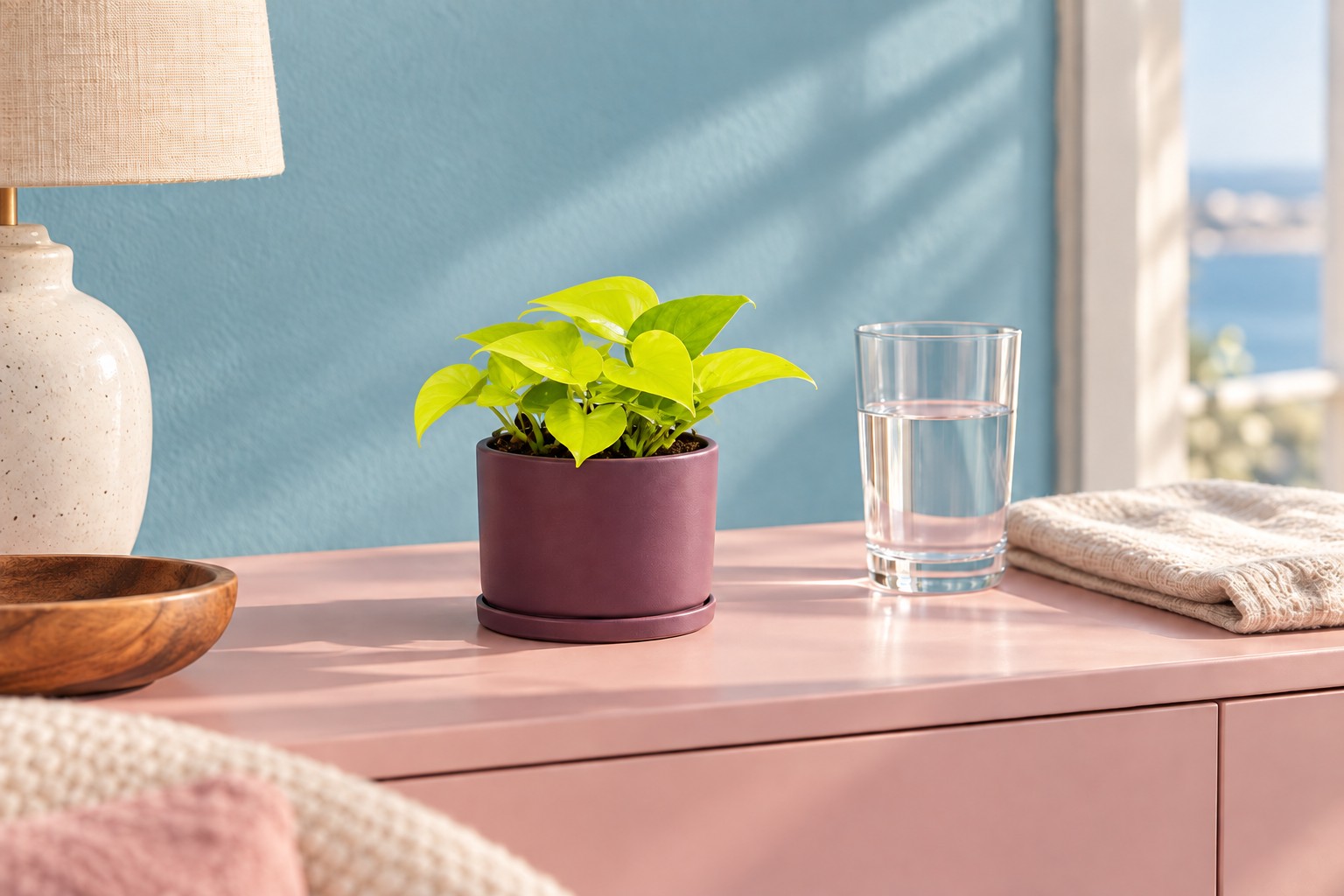
The shop states a 12 cm pot and around 14 to 18 cm overall height. This young plant initially forms a low tuft of leaves with short shoots. A small sideboard or bright side table is sufficient. The metres-long vine often associated with pothos develops only later under suitable conditions. Then provide either space to hang or appropriate climbing support. The plant is deliberately small in the scene. The decorative pot and furnishings serve the composition and are part of delivery only if the offer expressly states them.
Bright green needs usable light
A bright position with indirect light shows the foliage well. Hot direct midday sun behind glass can stress young pale leaf surfaces, especially immediately after shipping. Introduce stronger sun carefully. A permanently dark corner is unsuitable, even though pothos can survive temporary low light comparatively long. Consistently warm rooms without cold draughts suit it well. Do not stand the pot directly above a working heater. The plant may enrich a room’s design; it replaces neither ventilation nor technically effective air purification.
Water according to moisture and pot weight
Before watering, check whether the upper root-ball area has dried and the pot has become lighter. Then supply thoroughly until water can drain. Empty the outer pot afterwards. A small young-plant pot needs different intervals from a large densely rooted hanging basket. Warmth, light and season further change use. Pothos should not stand permanently wet, but should not repeatedly dry to severe wilting either. With limp leaves, check the root ball first: damaged wet roots can cause the same response as genuine lack of water.
Guide shoots and strengthen the young plant
A loose freely draining houseplant mix with good structure suits it better than compacted heavy compost. Repot once the root ball is sufficiently rooted or compost loses its structure. Choose a new pot only a little larger and provide drainage holes. During active growth, give suitable foliage feed according to the product and hold back when growth is low. Long shoots may be shortened with clean tools if needed. Healthy sections with nodes can be rooted. This allows later rejuvenation without treating every long vine immediately as a problem.
Distinguish colour from care problems
The offered bright yellow-green is initially a feature of the form. Nevertheless, suddenly yellowing older leaves, brown soft stems or many falling leaves need checking. Look beyond colour to firmness, growth and root-ball condition. Inspect leaf undersides and axils for mealybugs or scale insects. Carefully remove dust with a soft damp cloth. Like other pothos, the plant contains irritating calcium oxalate crystals. It is not intended for eating and belongs out of reach of small children and nibbling pets. Clean hands and tools after pruning.
One plant, several views
Good to know
Is this definitely the cultivar Neon?
The photograph shows largely plain yellow-green leaves and the shop calls it Golden Pothos. This does not establish a definite Neon identification.
Is a long hanging plant delivered?
The offer states a 12 cm pot and around 14 to 18 cm overall height. Longer vines develop with subsequent growth.
Does yellow colour automatically mean nutrient deficiency?
Bright yellow-green is part of this offered form’s appearance. Nevertheless, check sudden changes together with soft or falling leaves.
Can it stand in a completely dark place?
This pothos still needs enough light long-term. A bright position with indirect light is the better choice.
Sources and editorial note
Sources checked: 15 September 2026. Product information and the contents of delivery follow the linked shop offer. Care advice was checked against the cited specialist sources and should still be adapted to the plant’s condition, position and season.