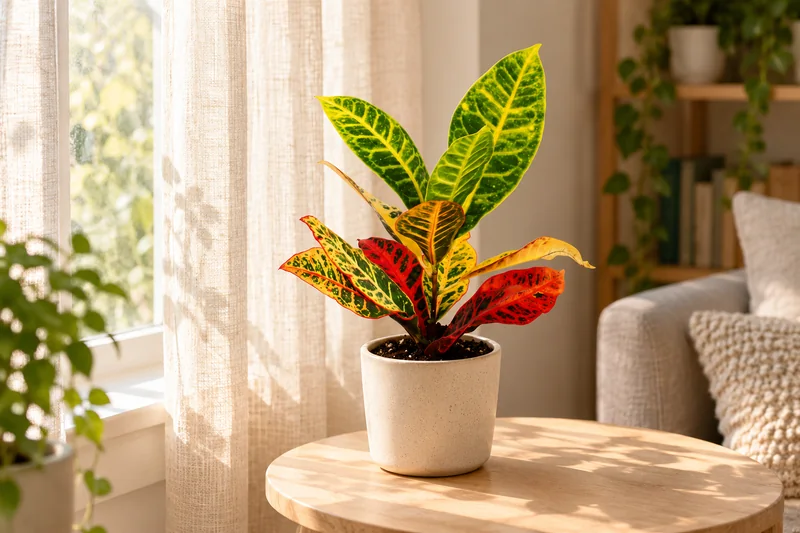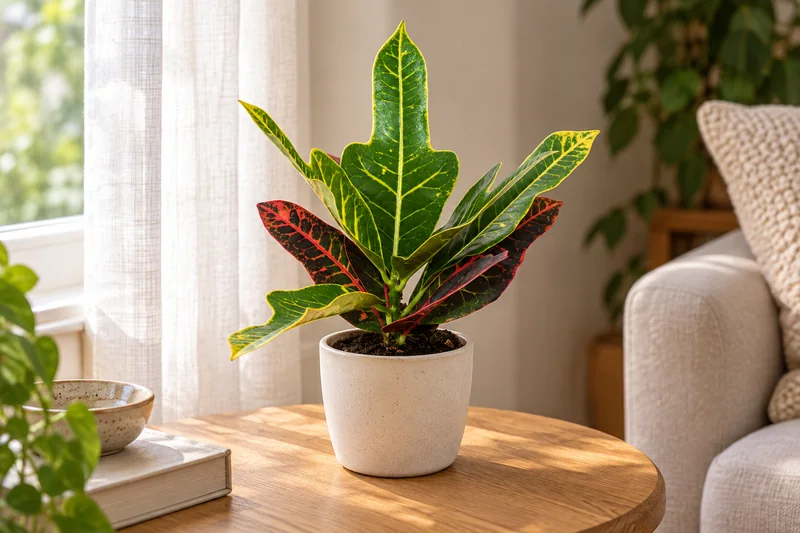
This plant at Exotenherz
Check the shop offer for current availability, price and what is included.
Check the shop for the current price, availability and offer contents.
Your care table
| Topic | What to do | Why it helps |
|---|---|---|
| Light | Bright and filtered in summer, without hot direct sun. | Leaf pattern needs usable daylight; strong sun through glass may damage it. |
| Water | Water after the uppermost soil dries somewhat; check the mini rootball too. | Little soil dries fast; permanent wetness harms roots. |
| Water quality | Use room-temperature, preferably low-lime water; no salt-based household softening. | The rather acidic root space should not become steadily alkaline from hard water. |
| Warmth | Warm all year, not below 15 °C; avoid cold draughts. | Fluctuating temperatures may contribute to leaf loss. |
| Room air | Avoid direct heater airflow; use suitable humidification if needed. | Occasional spraying raises humidity only briefly. |
| Soil and pot | Loose rather acidic humus-rich mix; only little more space once rooted. | Airy structure and holes prevent prolonged standing wetness. |
| Nutrients | Feed during active growth by label, accounting for pre-fertilisation. | Need follows growth; do not feed completely dry soil. |
| Pruning and checks | Inspect undersides; trim above a leaf attachment in spring if later needed. | Distinguish new damage from natural speckles; gloves for sap contact. |
Check the compost and pot weight. The care table explains how far the compost may dry.
Water only when needed. The water should reach the root ball without spilling over the rim.
Remove surplus water from the saucer or cachepot. Then return the plant to a suitable position.
Yellow speckles rather than a broad colour patch
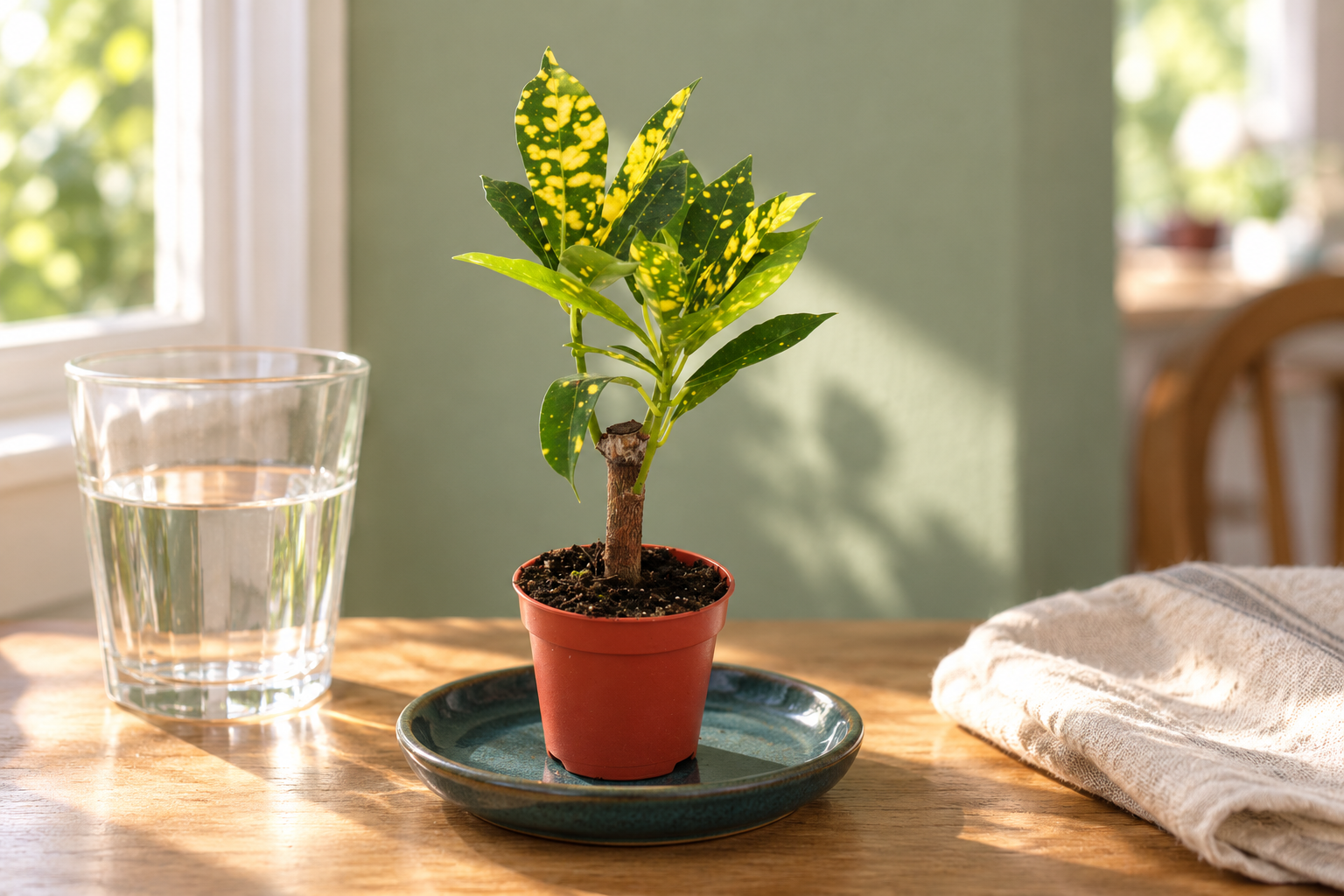
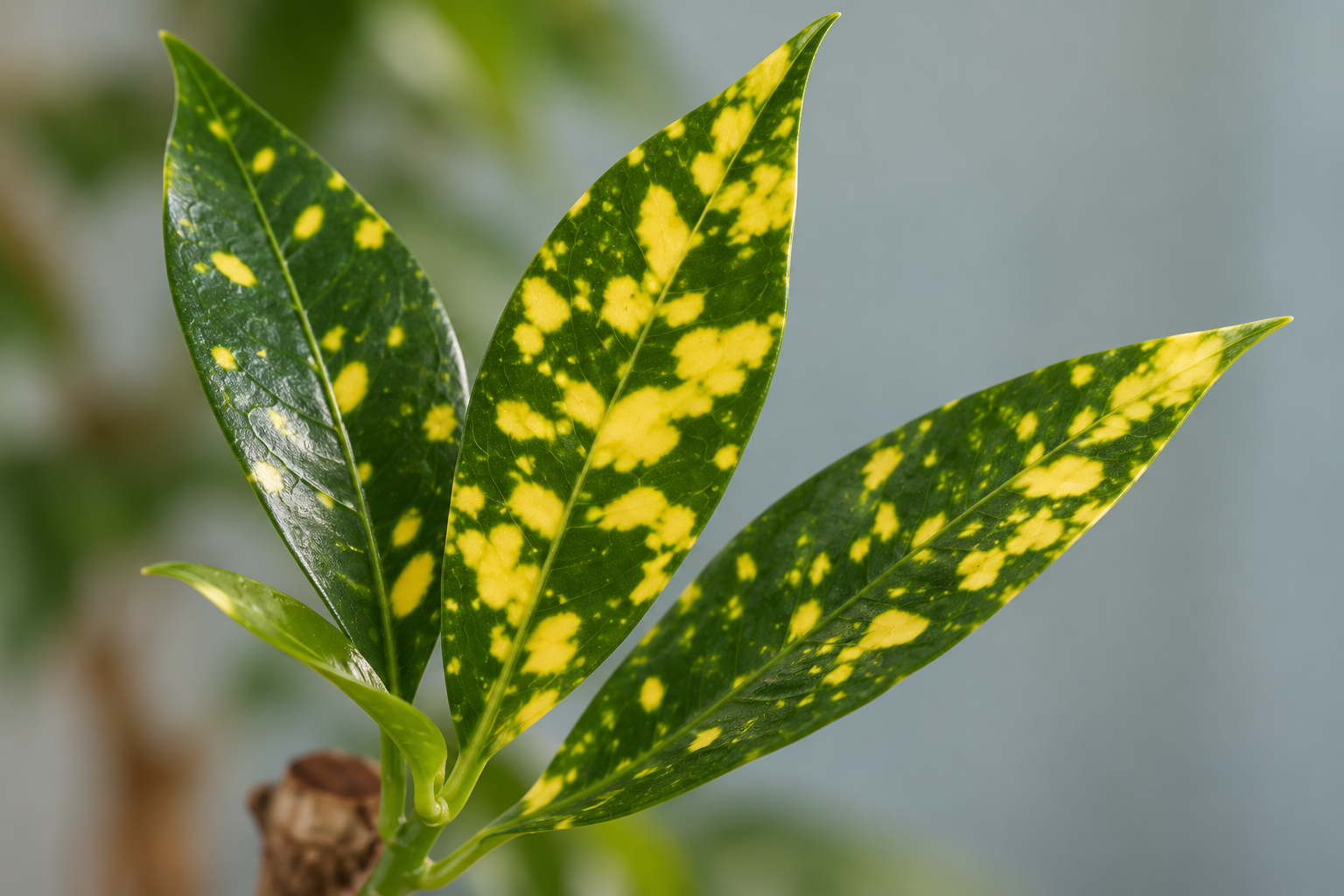
Yellow dots, larger spots and irregular little islands cover narrow green leaves. Elongated tips point in different directions; some young leaves still show much green. In the original, shoots rise above a short brown trunk section. This croton belongs to Codiaeum variegatum, a tropical shrub species with very varied horticultural forms. The unnamed yellow-speckled trade form is the focus here. Even one leaf has enough pattern for a second look. At a bright spot, watch new leaves gradually show their own green-yellow distribution. The pattern is not identical on every leaf.
A small crown with an equally small water reserve
The offered plant is in a 5.5 cm pot, about 12–15 cm tall overall including pot. Grip the container, not trunk or side shoots, when unpacking. Narrow tips need space so they do not catch on packaging. Check soil, holes and leaf undersides afterwards. The mini-pot holds little soil; its surface may soon seem dry. A fixed dose or weekly schedule is therefore unhelpful. Place initially in an accessible cover pot or on a saucer. The nursery pot should still lift out of a narrow decorative glass. The rootball stays checkable and surplus water accessible.
A bright breakfast spot needs steady warmth
Yellow speckles look lovely against a calm green wall or dark crockery. Light on the leaves is decisive, however. Give bright daylight filtered in summer; harsh sun through hot glass may damage surfaces. A curtain or some distance from glass retains brightness without heating the small crown. In winter move closer to usable daylight. Do not press leaves against cold glass or shut the pot behind a closed curtain. This tropical plant stays warm all year, not below 15 °C. A window opened frequently for ventilation or direct heater airflow is unsuitable for its sensitive settling-in period.
Feel the surface then supply the whole rootball
Water when the uppermost soil has dried somewhat and check the little pot’s weight too. Beneath, soil should retain some moisture without staying permanently wet. Slowly add room-temperature, preferably low-lime water until evenly supplied. Let it drain completely and empty the saucer. Rainwater suits the rather acidic root space; water from a salt-based domestic softener does not. Yellow foliage spots are no thirst signal. Watch changes from the earlier leaf pattern. If several leaves droop together, check soil first: both a dried-out rootball and a wet, damaged rootball can cause this appearance.
Air for roots and moderate nutrition for new shoots
For the next pot step, choose a loose rather acidic humus-rich mix with structural mineral components and open holes. Repot when roots have filled the small rootball; spring allows follow-up growth to be watched well. Give only a little more room. A large unrooted soil reserve stays damp too long and does not help the crown. Keep the trunk at its old height. During active new growth feed according to a suitable houseplant fertiliser label, counting pre-fertilised soil. Do not feed a completely dry rootball. This form has no proven fixed mature height; the mini offer becomes a larger perennial houseplant over time.
Winter changes consumption
Less daylight slows new growth. Soil then often dries more slowly, and extra nutrients have no use during a growth pause. Still check the rootball: hot dry heated air can dry the small pot surprisingly fast. Give no deliberately cool or dry winter rest. Higher room humidity helps but does not replace appropriate root-zone moisture. Occasional spraying changes room conditions only briefly; correctly operated humidification is more effective in very dry air. Leaf loss after a move calls for temperature, light and rootball checks. Let the croton settle in a suitable spot instead of trying a new one daily and adding fluctuations.
Examine spots, inspect undersides and prune carefully
A soft slightly damp cloth removes dust from leathery leaves. Support each surface so its narrow stalk does not kink. Distinguish existing yellow markings from new pale punctures, fine webbing or cottony patches at shoot bases. Isolate such changes and inspect more closely for spider mites or mealybugs. A later overly long stem may be trimmed in spring above a leaf attachment; the young specimen needs no routine shaping. Take cuttings in the warm growing season. Wear gloves when cutting and keep sap away from skin and eyes. Keep outside the reach of nibbling children and animals; parts are not eaten.
One plant, several views

Good to know
Is Gold Dust a proven cultivar name?
The offer names this narrow-leaved yellow-speckled trade form without a cultivar name. This portrait describes visible foliage without assigning one.
Will it stay only 12–15 cm tall?
That describes delivery height including pot. Codiaeum is a perennial shrub that can grow considerably larger indoors; exact mature size of this form is unproven.
Are yellow dots a deficiency?
Existing yellow speckles belong to the foliage. New pale punctures, brown patches or webbing are checked with position and undersides.
Must the mini-pot be watered daily?
No. Soil and pot weight show need. Water after the top dries somewhat, then drain; neither dry the whole rootball nor leave standing water.
Why do leaves drop after moving?
Light change, cold draughts, a dry rootball or dry room air may contribute. Check these first and choose a stable suitable place.
May it stand within reach of nibbling animals?
No. Parts are not eaten and stay away from children and animals. Wear gloves when cutting and avoid sap on skin and eyes.
Sources and editorial note
- Exotenherz: exact mini version, dimensions and original; saved available readback 03.10.2026 (directly read 04.10.2026)
- RHS: Codiaeum variegatum, forms and warm indoor cultivation (04.10.2026)
- NC State Extension: species profile, varied foliage and pictured narrow-speckled form (04.10.2026)
- RHS: moisture checks, drainage, nutrients and repotting (04.10.2026)
- RHS: light, leaf loss, pest checks and distinguishing problems (04.10.2026)
- Iowa State Extension: air humidity and limits of occasional spraying (04.10.2026)
Exact SKU205118112021, GTIN4019515917396; saved exact InStock/cart product HTML read in full on 04.10.2026, no repeat product HTTP. 5.5 cm/12–15 cm total height consistent in short/long descriptions. Clean Original1 actually viewed, conservative unnamed form, no cultivar assigned. Complete canonical comparison in identity-original-gate.json; no simple pot variant counted. RHS common croton variegatum and NC narrow-speckled species photograph support species identity. RHS warmth above 15 °C specifically takes priority over NC outdoor 50 °F; no cold rest or generic mist-humidity promise. No Gold Dust label.