This plant at Exotenherz
Check the shop offer for current availability, price and what is included.
Check the selected shop offer for price, availability and delivery contents.
Your care table
| Topic | What to do | Why it helps |
|---|---|---|
| Light | Choose fully sunny warm sheltered outdoor place. | Clear rosette needs abundant light for healthy structure. |
| Space | Keep pointed tips away from frequent paths and seat edges. | Later crown takes more space than delivery rosette. |
| Soil | Use stable freely draining soil with mineral components. | Constant moisture can harm roots. |
| Planting | Prefer spring, keeping previous rootball level. | Rosette base should not be buried. |
| Water | During growth water thoroughly after dryness and drain. | Even drought-tolerant species needs supply while rooting. |
| Feed | During active growth supply by label if container needs it. | Low water demand does not replace assessment of nutrient reserves. |
| Pruning | Selectively remove only dead outer leaves and spent flower stems. | Preserve living rosette centre and natural form. |
| Winter | With uncertain outdoor conditions keep young containers bright cool frost-free. | Cold and wet act differently in small pot than suitable garden ground. |
| Handling | Wear gloves and keep distance from pointed ends. | Leaf tips and potential skin reactions require caution. |
For young plants, feel the soil directly at the root ball. The surface and deeper soil may have different moisture levels.
Water thoroughly after planting; later, water according to the soil, weather and establishment rather than a fixed calendar.
Avoid standing water. For plants in containers, also check that water runs out of the drainage hole.
Many narrow leaves form the ball
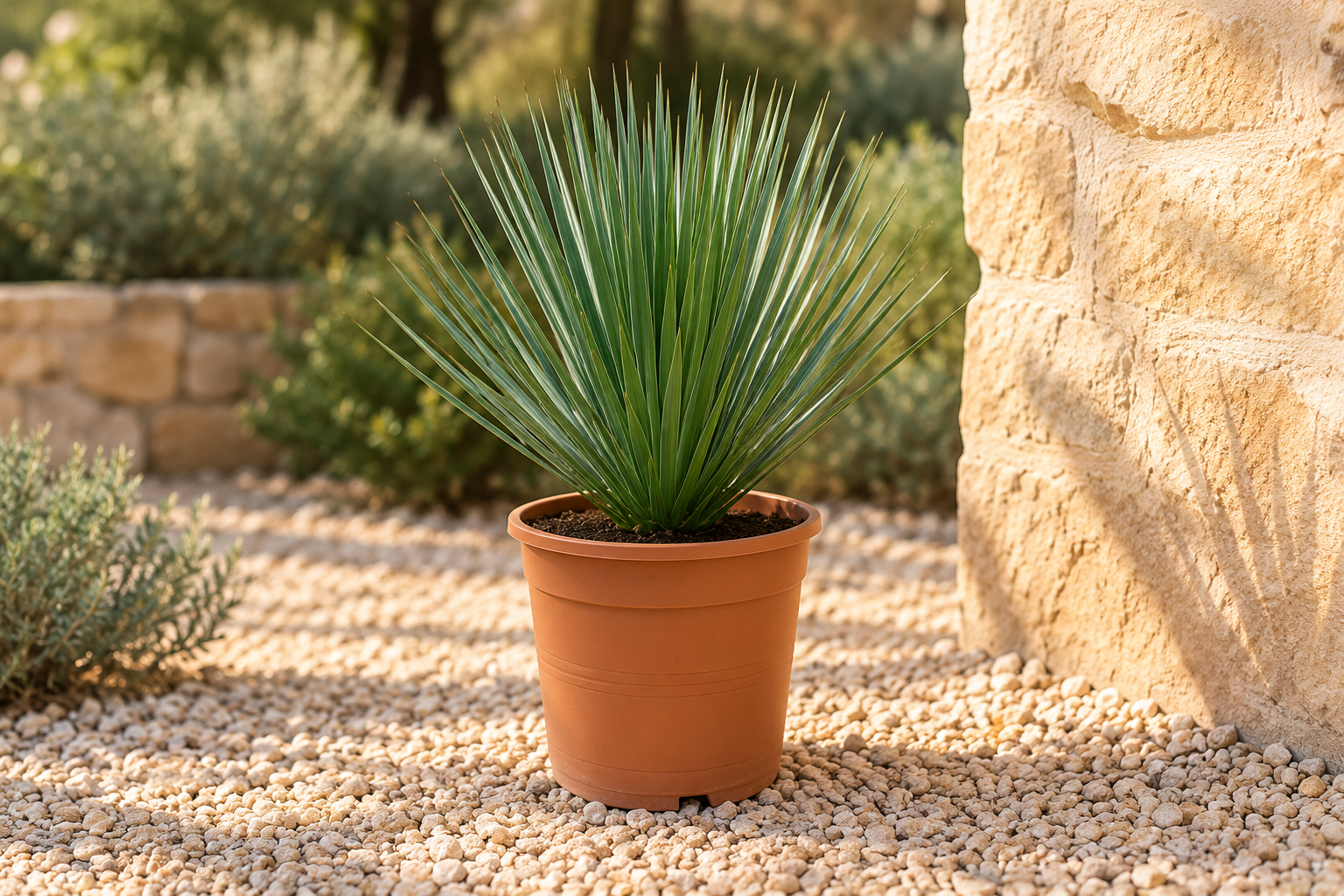
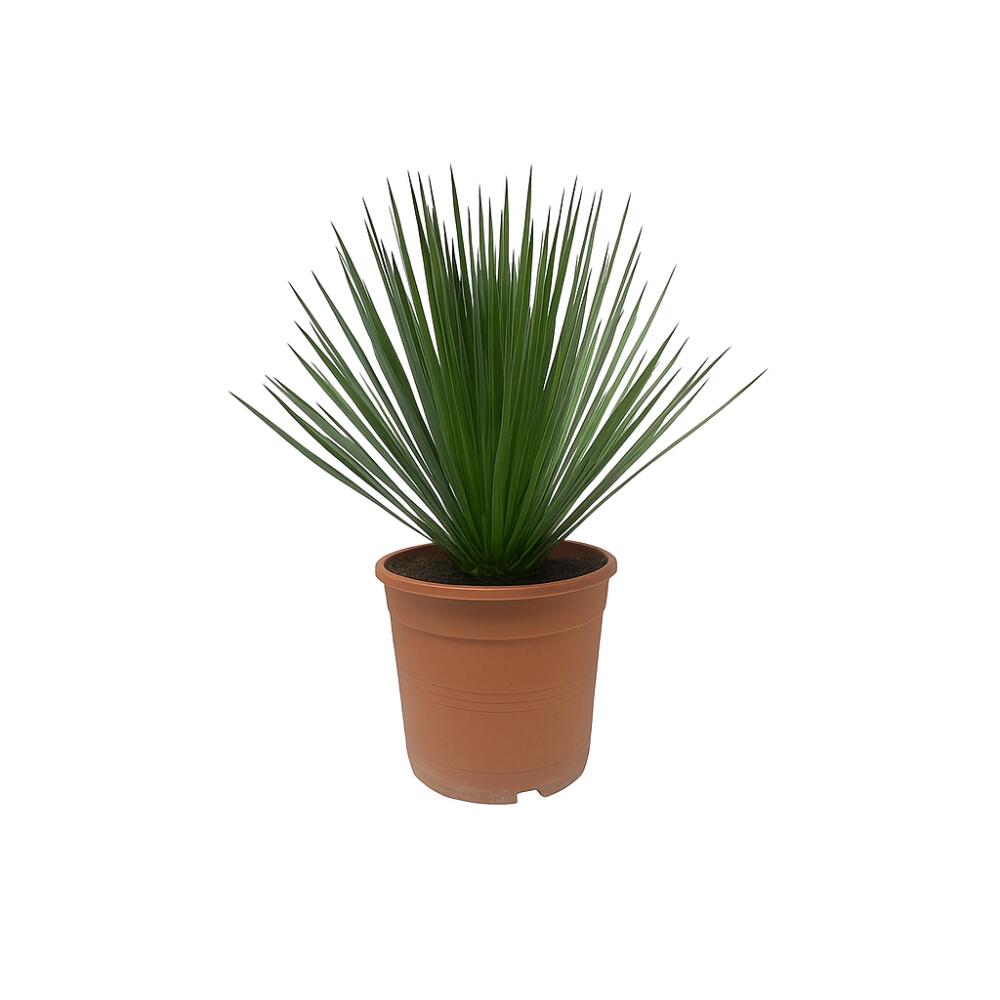
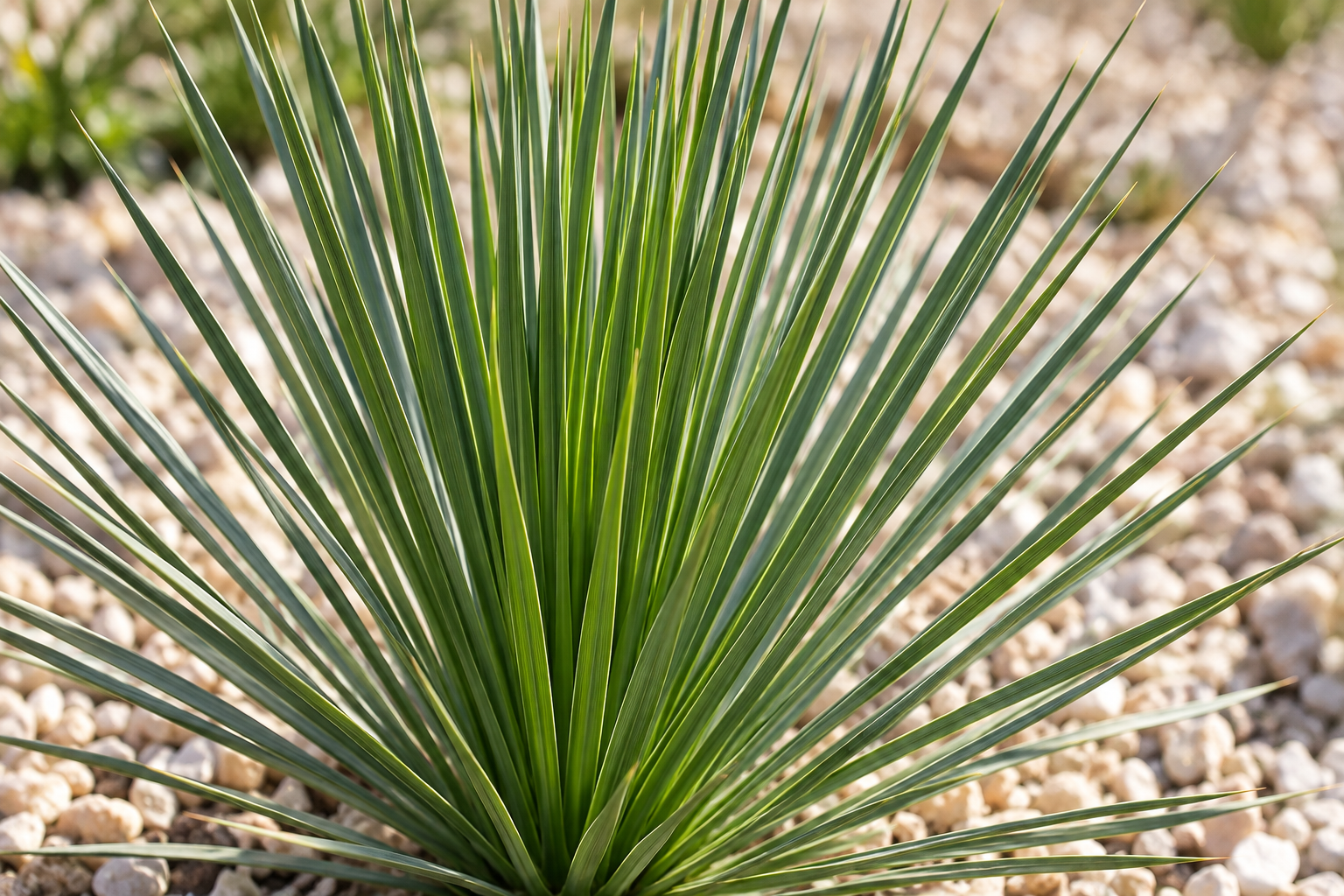
Yucca rostrata carries numerous very narrow green to blue-green leaves in dense rosette. Leaves are firmer at base and may yield more toward ends. Pointed tips remain important when positioning. Species belongs to asparagus family, native to Texas and adjacent northeastern Mexico. German name Palmlilie does not make it palm. Effect comes from clear rounded leaf arrangement; older plants carry crown on slowly developed woody trunk with remnants of old leaves.
A short beginning before later trunk
Offer gives one plant in 24 cm pot about 50 cm total height including container. Clean original shows young compact rosette without tall visible trunk. Older garden photo with short trunk explains later stage, not another guaranteed delivery size. About 2.5–4 m is possible over many years depending on climate and culture. Unpack without pressing leaf tips and lift by container. Check rootball before new sunny placement.
Sun and warmth belong together
Bright fully sunny warm sheltered outdoor position suits species. Light gravel garden or sufficiently sunny terrace can display clear form if drainage reliable. Allow distance from frequently used paths, seat edges and play areas so nobody walks into tips. Roughly 1.5–2.5 m guides solitary placement from later crown width. Delivery rosette needs less room today but will not remain same size indefinitely. After dark transport or protected growing introduce intense sun gradually.
Drainage determines root space
Soil must reliably discharge water. Stable container mix with minerals suits better than constantly wet heavy earth. Choose clear drainage holes and plant at former ball height without burying rosette base. Spring is favourable outdoor start. Ground planting needs sufficiently dry freely draining soil and winter plan for actual site. Thin gravel layer in planting hole does not alone make compact heavy garden soil suitable; check where water really escapes after heavy rain.
Little water is not a care shortcut
Established plants cope well with dry spells. Freshly planted small ball still needs checks and water until roots explore new space. During active growth water thoroughly when soil becomes dry then let all surplus drain. The rootball should dry between applications; rigid weekly rhythm fits neither weather nor container size. Cool winter greatly reduces demand. Constant moisture can encourage root damage. Lower-water plant still requires suitable soil, light, size planning and attention to cold and wet.
Crown needs no shaping cut
Regular pruning unnecessary. If needed remove dead or damaged outer leaves carefully with gloves, watching tips. Old leaf remnants on future trunk belong to natural structure. Do not injure living rosette centre or apply instructions for topping large indoor yucca indiscriminately to young garden plant. White flowers occur on sufficiently developed plants in tall stems; timing and actual flowering depend on climate. Spent stems can be removed. Little delivery rosette need not flower, and photo of mature flowers would not promise current delivery bloom.
Plan winter dryness and root protection together
Cold tolerance does not guarantee success in every wet German winter site. Bright cool frost-free quarters give manageable start for young pot when outdoor frost and drainage uncertain. Reduce water according to actual dryness and stop feed during rest. Suitable outdoor position needs severe-cold protection, avoidance of constant winter wetness and ventilation together. Simple wrapping cannot make wet roots suitable. Plant parts not intended for eating, inaccessible to pets; gloves protect from tips and potential skin reactions.
One plant, several views
Good to know
Is Yucca rostrata a palm?
No, it belongs to asparagus family. German name describes later tree-like effect, not palm genus.
Why does delivery plant lack tall trunk?
Offer shows young rosette. Woody trunk takes longer development.
Is 50 cm its eventual height?
No. Delivery total includes 24 cm pot. Developed plants may reach about 2.5–4 m.
Does drought tolerance mean hardly any care?
Less water than many moisture-loving garden plants, but still light, drainage, establishment supply and suitable winter plan.
Can wet pot simply remain outdoors wrapped in fleece?
This does not solve drainage. Assess cold and constant moisture together; bright frost-free quarters may suit young pots better.
Must young rosette already have white flowers?
No. Flowers belong to later development of sufficiently large plants. Timing climate-dependent, not annual delivery feature.
Sources and editorial note
- Exotenherz: current parent offer, delivery dimensions and original gallery (03.10.2026)
- Directly read specialist reference: yucca RHS (03.10.2026)
- Directly read specialist reference: yucca NC State (03.10.2026)
- Directly read specialist reference: yucca growing (03.10.2026)
Identity and product SKU compared against Canon642 and shared/isolated portraits. Public parent offer, child sets and sources directly read 03.10.2026; exact URL/file hashes isolated. Delivery total height separated from later growth. Sets/colours not additional identities. At that stage publication not authorised: Root coordinates shared build and acceptance.