This plant at Exotenherz
Check the shop offer for current availability, price and what is included.
Check the shop for the current price, availability and offer contents.
Your care table
| Topic | What to do | Why it helps |
|---|---|---|
| Light | Sunny to partially shaded garden position. | The fine mat needs a suitable outdoor site, not a dark indoor place. |
| Soil | Well-drained soil; check outflow at stone edges. | Lasting standing water does not suit described growing conditions. |
| Planting | Set the root ball at previous soil level, close soil around and water in. | The young root ball first needs contact with the new site. |
| Establishment | Regularly check the young root zone and water slowly as needed. | Established plants cope better with dry periods than newly planted ones. |
| Established plants | In prolonged drought, check directly in soil and water selectively. | Established planting usually needs less extra water, not a blanket drought promise. |
| Edges | Release rooted spreading shoots early and keep small neighbours free. | Low growth can occupy larger areas sideways. |
| Feeding | Supplement only modestly, accounting for existing soil nutrition. | Heavy feeding replaces neither drainage nor establishment water. |
| Division | Divide vigorous planting in spring when needed and accompany pieces anew. | Divisions again need soil contact and controlled water. |
| Winter | Keep drainage clear and inspect containers in frost-free soil. | Evergreen does not guarantee unchanged density or equal resilience everywhere. |
| Fruit heads | Watch dogs’ contact with burr-like heads. | Spiky fruits may irritate skin; general pet safety is not promised. |
Check the compost and pot weight. The care table explains how far the compost may dry.
Water only when needed. The water should reach the root ball without spilling over the rim.
Remove surplus water from the saucer or cachepot. Then return the plant to a suitable position.
The little pinnate leaf is the beginning
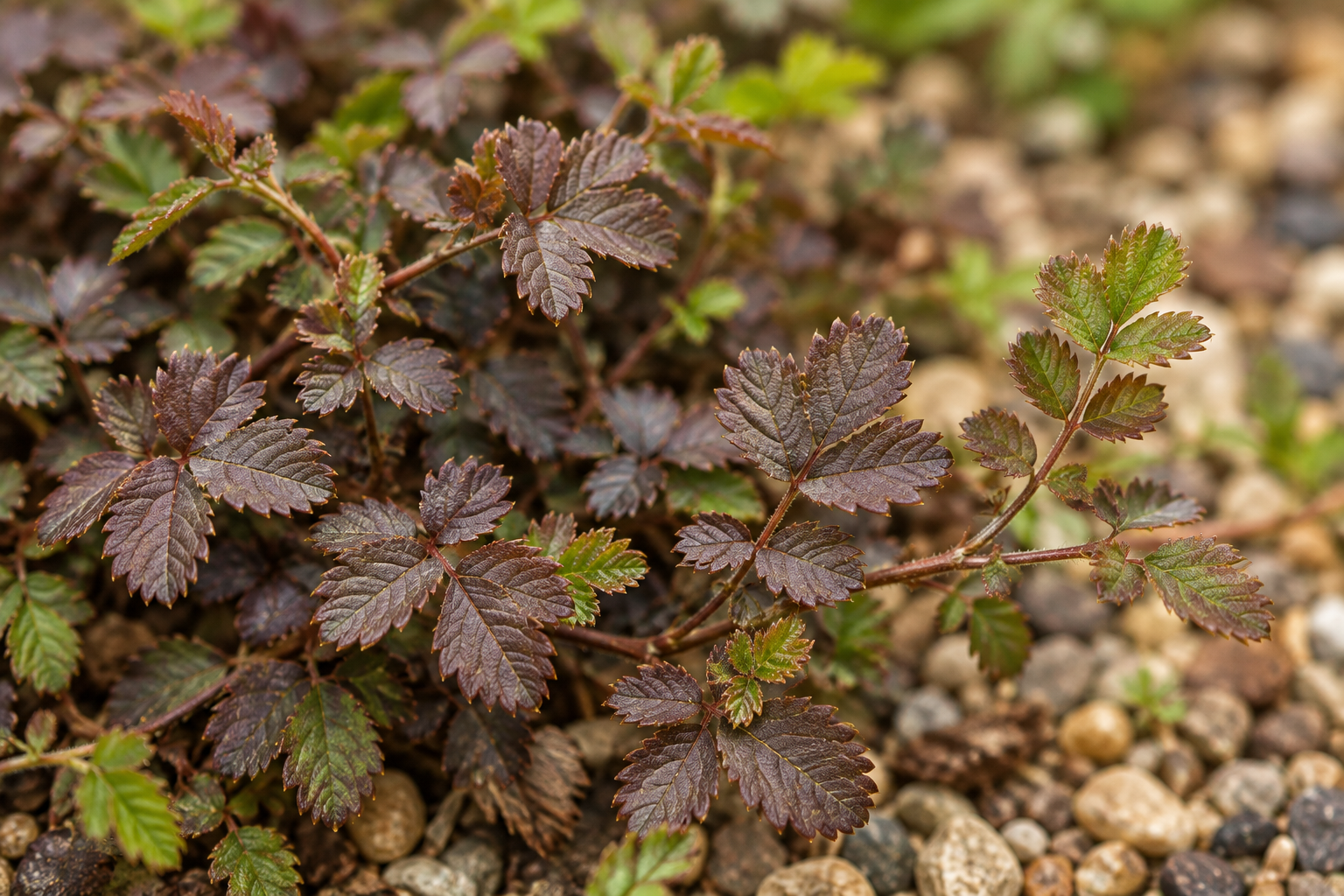
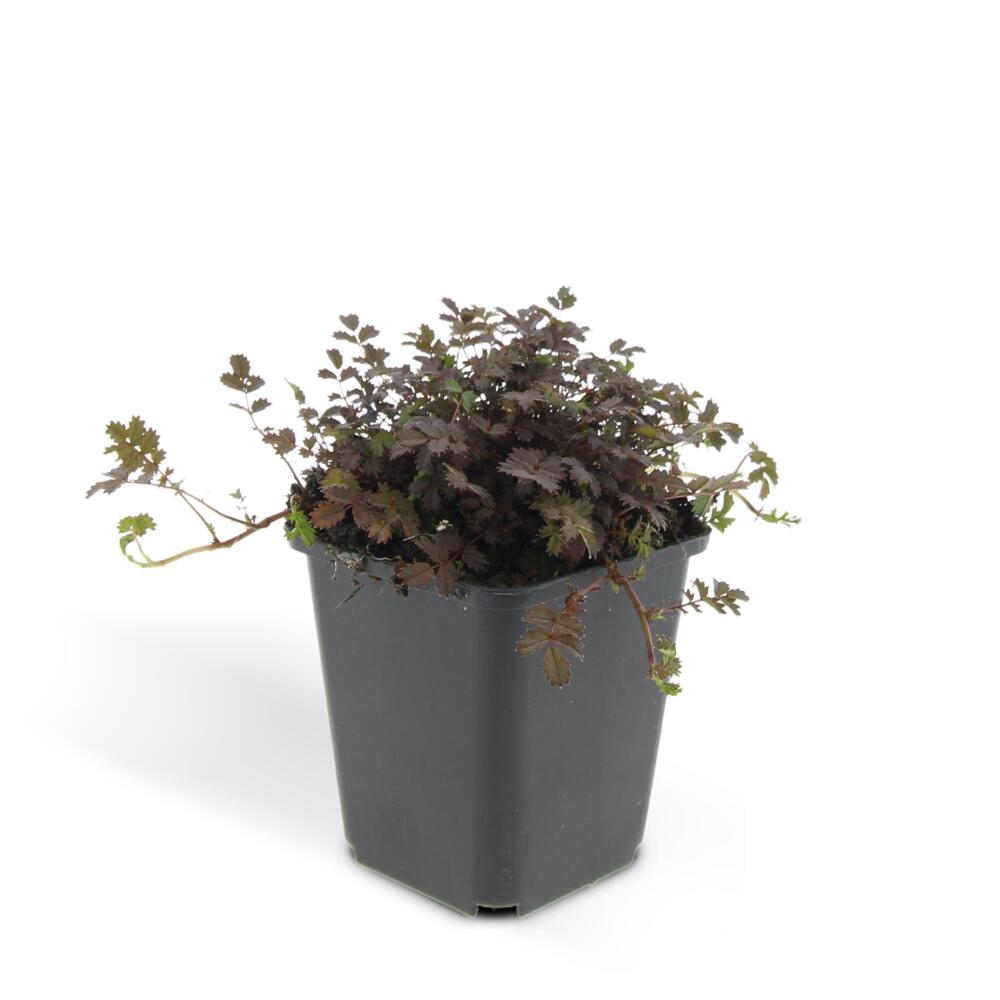
Kupferteppich is worth discovering without flowers. Rounded leaflets on fine leaves make a calm bronze-green pattern over soil. From a distance the structure resembles tiny fern fronds. Acaena is nevertheless a flowering garden perennial, not a fern. The young shop plant first shows this foliage mat; mature planting may look different with fruit heads above. Check shoots and root ball when unpacking: the visible surface is a start, not a finished closed garden carpet. Kupferteppich names the selection rather than a permanently uniform colour of every leaflet.
A garden edge with room to grow
Sunny or partially shaded edges display fine foliage well. Suitable stones, gravel or a low garden border contrast clearly with leaves. Soil underneath is decisive: water must drain and the young plant needs an accessible root zone. A joint with hardly any soil is not suitable simply because it looks attractive. Plan edges you can still maintain later. Shoots can root on soil and reach beyond the first planting point. Small slow-growing neighbours therefore need checks. Low does not mean staying precisely within the original pot outline forever.
Connect the young root ball with garden soil
Mild weather suits planting when the root zone can be monitored closely. Soil should be workable and draining. First set plants at planned points; paths, little neighbours and accessible watering places guide layout. Dig to retain the root ball’s previous soil level; do not deeply bury its top. Gently close loose soil around, press lightly and water slowly through. Water reaches the root ball and surrounding soil settles. If water stands for long, improve the site; adding more will not solve it. Even several young plants are no promise of an immediately closed area.
The carpet needs attention while establishing
Freshly planted Kupferteppich needs different help from established planting. Regularly check moisture directly in the young root ball and neighbouring garden soil. A dry planting edge may need water even if the rest looks dark after rain. Water slowly at soil level as needed until reaching the root zone, draining surplus. Surface splashes across foliage do not reliably replace this. Avoid fixed days: sun, wind, rain and soil composition change demand. Prolonged waterlogging helps no more than assuming a later more drought-tolerant plant can be left alone immediately after planting.
Water less after rooting, keep reading edges
Well-rooted plants can cope with relatively drier conditions and generally need less extra water. During long dry spells check soil nonetheless. Containers have less soil than beds; judge actual condition instead of transferring garden care unchanged. Reduced water does not make edges organise themselves. Resting shoots may develop roots. Release unwanted portions before they cover small neighbours and keep path transitions accessible. Vigorous older planting may be divided in spring if needed. Divisions start establishment again, requiring soil contact and controlled water.
Look at the little heads separately
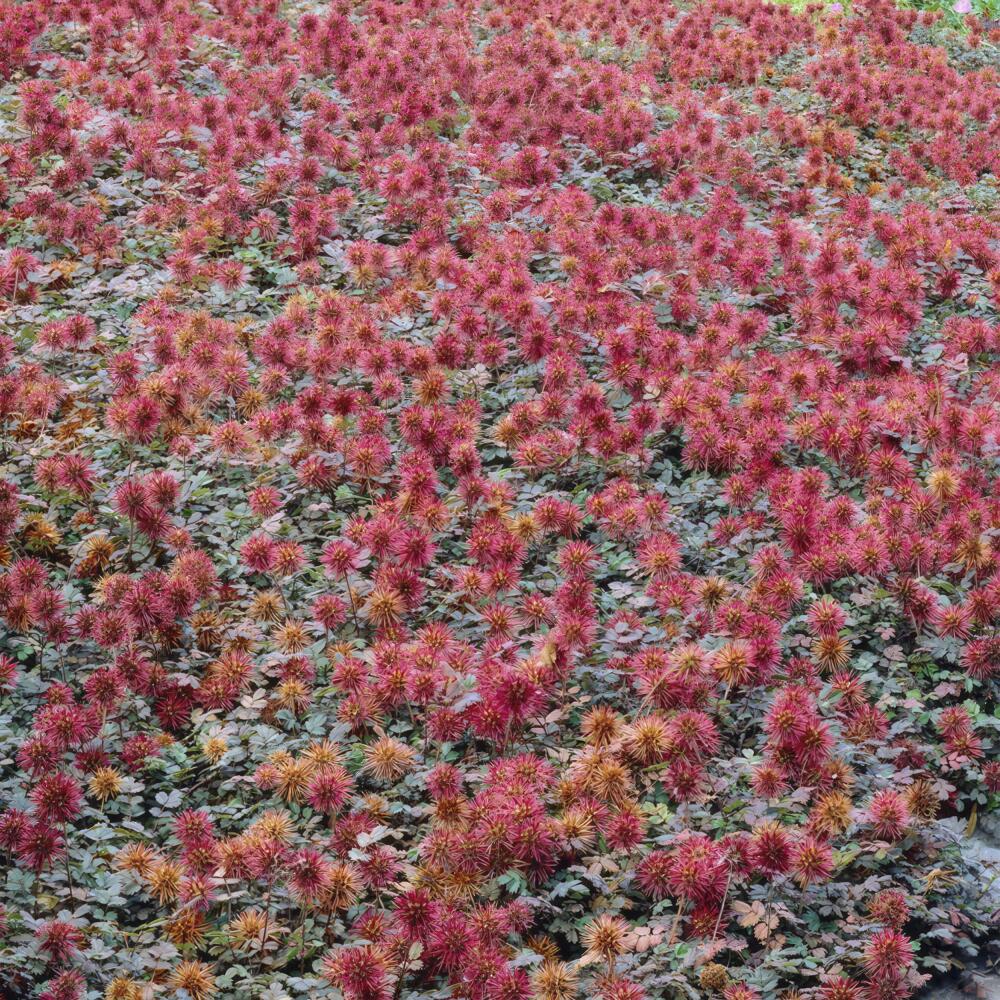
Small flower heads may rise over developed foliage. Later striking red to copper-red fruits become distinctive detail. Their burr-like spiky surface explains the pirri-pirri character better than flowers alone. This is a possible garden moment, not promised delivery contents. A chiefly leafy young plant therefore fits the offer. Do not try to force missing heads with heavy feeding. Modest nutrition is enough as an approach; position and roots must suit first. Where dogs pass closely, watch fruit contact: spiky heads can irritate skin. A low groundcover is therefore not automatically a harmless contact surface for every animal.
Guide the evergreen cushion through winter
Kupferteppich is described as an evergreen perennial. Leaves may remain through cold weather, without promising equally dense foliage everywhere. In containers particularly check free drainage and avoid lasting water accumulation. Inspect soil when frost-free and accessible; frozen root balls receive no routine water. In beds also look closely at shoots and edges. With conspicuous damage, assess soil, drainage and weather together rather than identifying a care mistake from one dark patch. Selectively remove damaged or unwanted material. New growth and shoot development later show more than one snapshot.
Choose quantity, retain plant character
Our offer has a quantity selection based on planned planting area; all sets contain this selection. Check the actual selected variant and current availability before ordering. Care depends on soil and development. With drainage, an accompanied start and accessible edges, fine leaf markings can be used attentively. Botanically this plant differs from similar-looking pinnate cushions or Irish moss. A comparable position does not make plants interchangeable: Kupferteppich brings bronze-green pinnate leaves and possible spiky fruit heads, while other cushions have their own leaf construction and needs.
One plant, several views
Good to know
Is Kupferteppich a fern?
No. Acaena microphylla is a flowering garden perennial. Pinnate leaves merely look like little fern fronds.
Does it fit every paving joint?
Only with enough accessible soil and good drainage. An almost soil-free joint is not suitable merely because it is stony.
How do I water just after planting?
Regularly check the young root zone and water slowly at soil level when needed. Establishment takes more help than settled planting.
Can I eventually stop all watering?
Rooted planting copes with relatively drier conditions. Still check actual needs during long dry spells, especially in containers.
Does it stay at the initial point?
No such boundary is promised. Ground-resting shoots may root; release spreading portions and keep little neighbours clear.
Must delivered plants have flowers or fruits?
No. Young plants may primarily show leaves. Flowers and striking fruits are possible later, not promised delivery contents.
Are fruits unproblematic for dogs?
Burr-like heads can irritate dogs’ skin. Watch contact along frequently used paths; no general pet-safety promise is given.
How do I choose quantity?
Plan by space, neighbours and accessible care places. Select a suitable available shop variant; every young plant needs establishment help.
Sources and editorial note
- Exotenherz: Kupferteppich, own offer and originals (6 October 2026)
- RHS: Acaena microphylla Copper Carpet / Kupferteppich, profile and growing (checked 6 October 2026)
- Proctors Nursery: Acaena microphylla Kupferteppich, garden care (checked 6 October 2026)
Own offer and originals checked on 6 October 2026. Care accompanies young plants through to an established garden planting.