This plant at Exotenherz
Check the shop offer for current availability, price and what is included.
Product and delivery details are given in the individual offer.
Your care table
| Topic | What to do | Why it helps |
|---|---|---|
| Light | Position brightly to partially shaded, without hot direct sun. | Fine fronds need light but should not scorch behind hot glass. |
| Water | Water after slight surface drying; do not let the small root ball dry completely. | Moisture changes quickly in the tiny pot. |
| Drainage | Let excess drain away and check the decorative pot. | Humid surrounding air does not replace free water drainage. |
| Room conditions | Keep warm, protected from draughts and with more humid surrounding air. | Dry heating nearby may stress narrow frond tips. |
| Soil | Use loose potting compost with a stable well-draining structure. | Moisture must stay available without waterlogging the root ball. |
| Nutrients | During growth, feed weakly according to the fertiliser label. | The small root ball needs no high fertiliser concentration. |
| Maintenance | Remove only fully dead fronds carefully. | Healthy fans remain and are not clipped to shape. |
| Glass cultivation | Keep moisture and air exchange controllable; avoid unnoticed waterlogging. | A closed container may trap wetness and heat. |
Check the compost and pot weight. The care table explains how far the compost may dry.
Water only when needed. The water should reach the root ball without spilling over the rim.
Remove surplus water from the saucer or cachepot. Then return the plant to a suitable position.
A fern with a different face
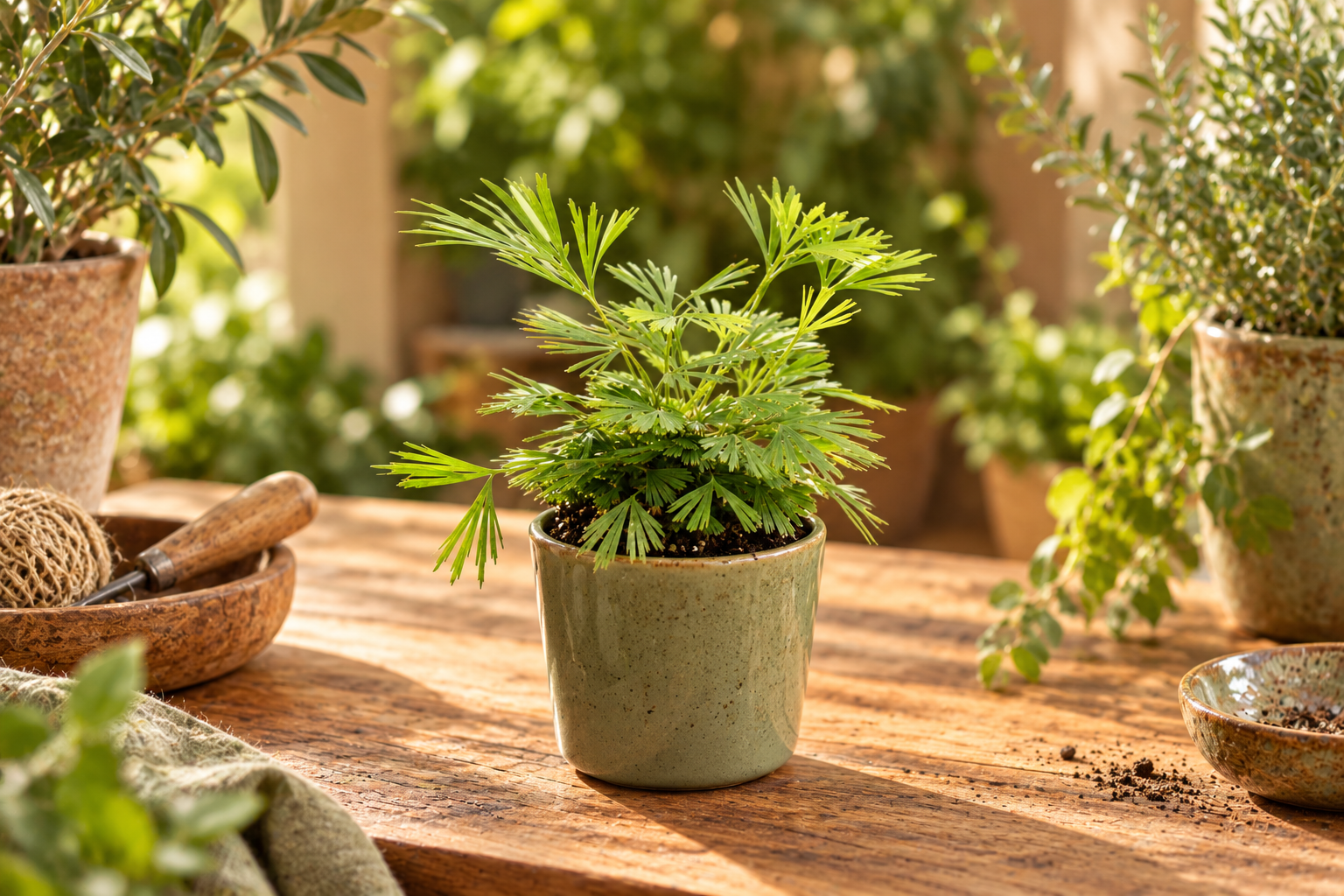
The fan fern is worth viewing from the side. The narrow divisions of each small frond spread like a fan and resemble tiny palm leaves. Yet this is no palm growing a trunk, but a true fern with its own small structure. We like it on a bright plant bench where its fine form shows beside calmer leaf surfaces. Individual fans should stand free rather than being wedged between heavy leaves or decoration. Especially with such a small plant, enough room to look closely makes the difference.
Miniature size with its own care needs
The offer describes Actiniopteris australis in a 5.5 cm pot and with an overall height of about 10 to 12 cm. Delivery height includes the pot. The shop also calls it Palmwedelfarn or Wimpernfarn. Its small size suits compact arrangements but does not make it a plant that may disappear into a container without checking. Examine root ball and drainage when unpacking. Handle the fine fronds gently. The scene pot is a design idea; the original photograph remains the guide to actual size and young form.
Bright light without overheated fans
A bright to partially shaded position with filtered daylight suits indoor cultivation. Avoid hot direct sun on fine fronds, especially immediately after transport. On an open shelf, light must actually reach the leaf surfaces. A dark compartment is not compensated by high humidity. A place directly above a warm radiator is equally unsuitable. We therefore examine light and room conditions together before choosing the prettiest container. In a new position, observe first rather than moving the small plant between corners every day.
Water changes quickly in the small root ball
Check the topsoil and lift the inner pot carefully. Once the surface has dried slightly, water slowly and then let excess drain away. The small root ball should stay reliably supplied during growth without constantly standing in water. An entirely dried miniature root ball cannot be replaced by occasional misting of fronds. Conversely, wet soil needs no further watering simply because a tip has turned brown. Note how quickly the pot becomes lighter at the chosen position. That is more helpful than a fixed number of watering days.
More humid air still needs air exchange
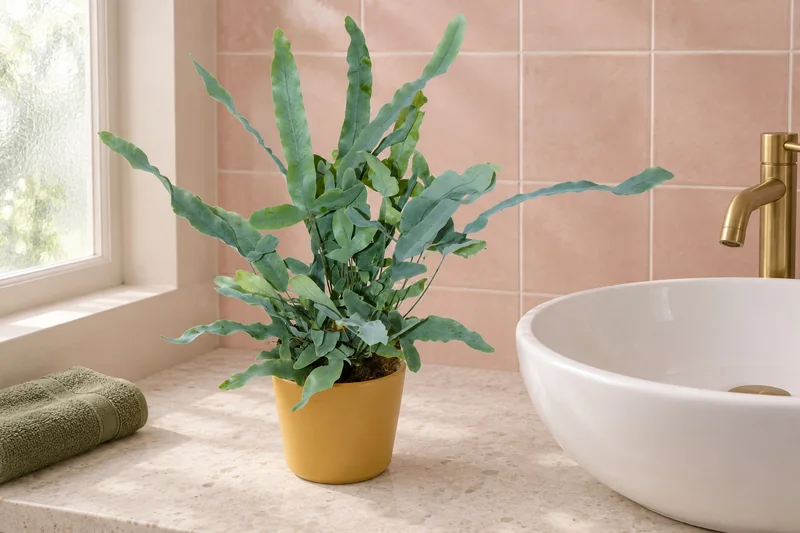
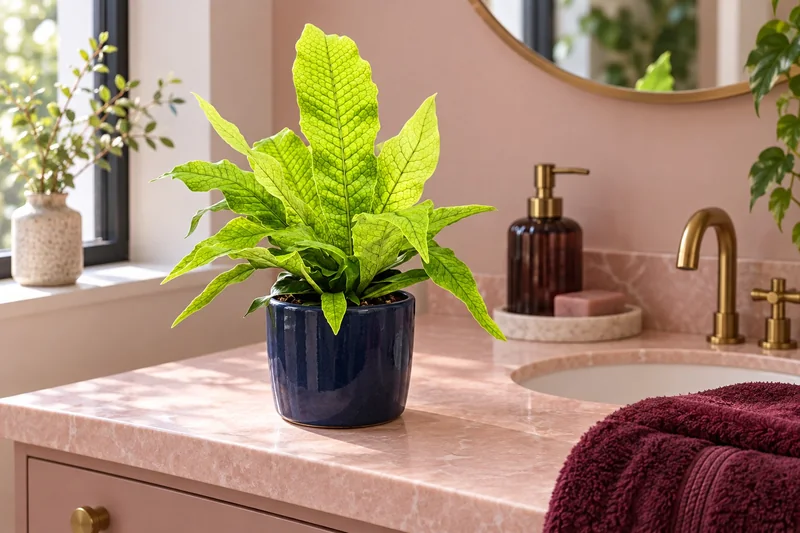
A warm position with more humid surrounding air makes sense for the fan fern. A sufficiently bright bathroom or carefully controlled plant arrangement may make these conditions easier. Humid room air is considered separately from water in the root ball. A permanently filled decorative pot does not improve care convenience appropriately. Likewise, an unchecked closed bottle garden is no automatic solution: observe temperature, condensation and plant condition. Gentle air exchange remains important. Avoid cold draughts during ventilation and abrupt cooling of the small plant.
Handle soil and nutrients gently
Loose well-draining potting compost should retain available moisture while letting air reach roots. When repotting later, give only slightly more container space if the root ball is densely rooted. Do not bury the plant's centre under new soil or use fans as handles to pull it out. During visible growth, feed weakly according to the label; consider freshly pre-fertilised compost. In darker winter weeks, assess actual need first. A high fertiliser dose replaces neither more light nor suitable moisture and may put additional strain on a small root ball.
Accompany the fans over time
Ferns form no flowers. Their appeal lies in fronds and developing new leaf surfaces; an apparently missed flower is no care mistake. Fully dead fronds may be removed carefully with a clean tool. Healthy fans remain. With dry tips, check moisture, room air and sun together; with soft areas, also examine drainage and plant centre. After a correction, do not immediately follow with several more measures. Instead, watch the next healthy frond. This allows the small pot to become a plant whose fine structure gives lasting pleasure.
One plant, several views
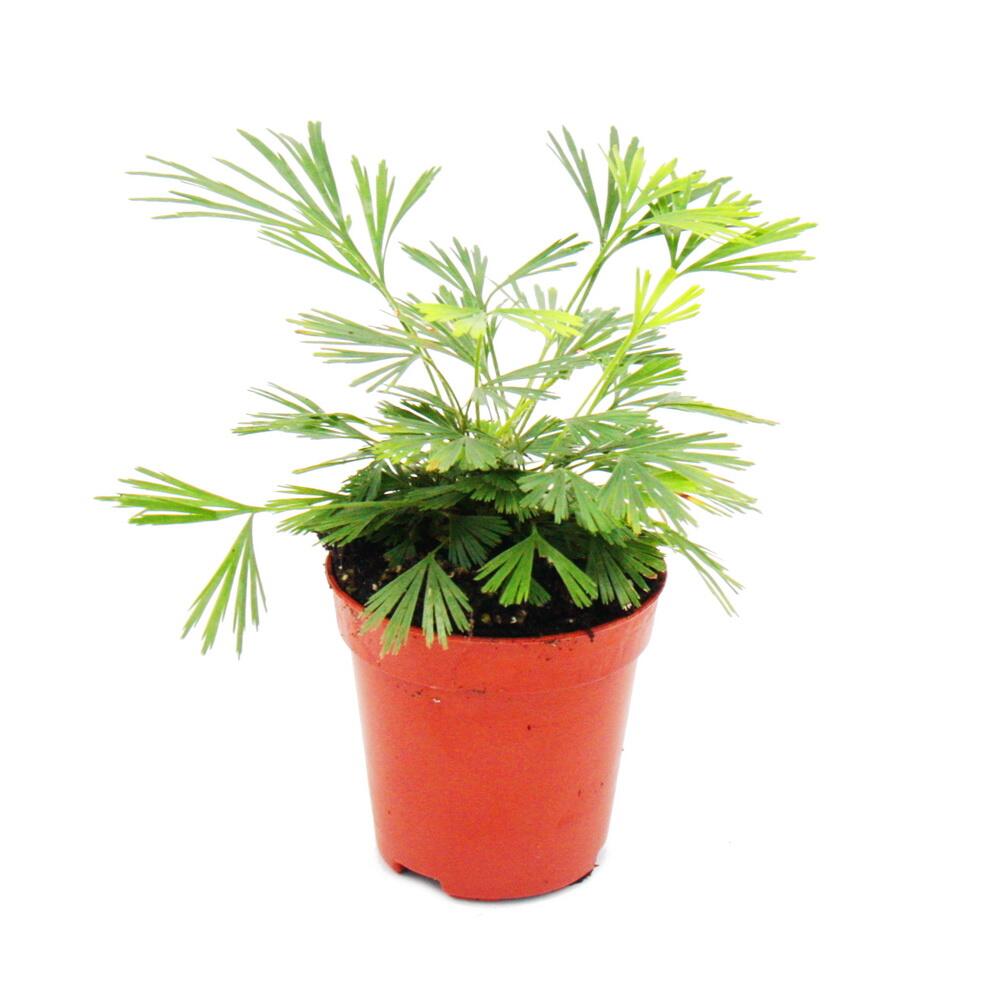
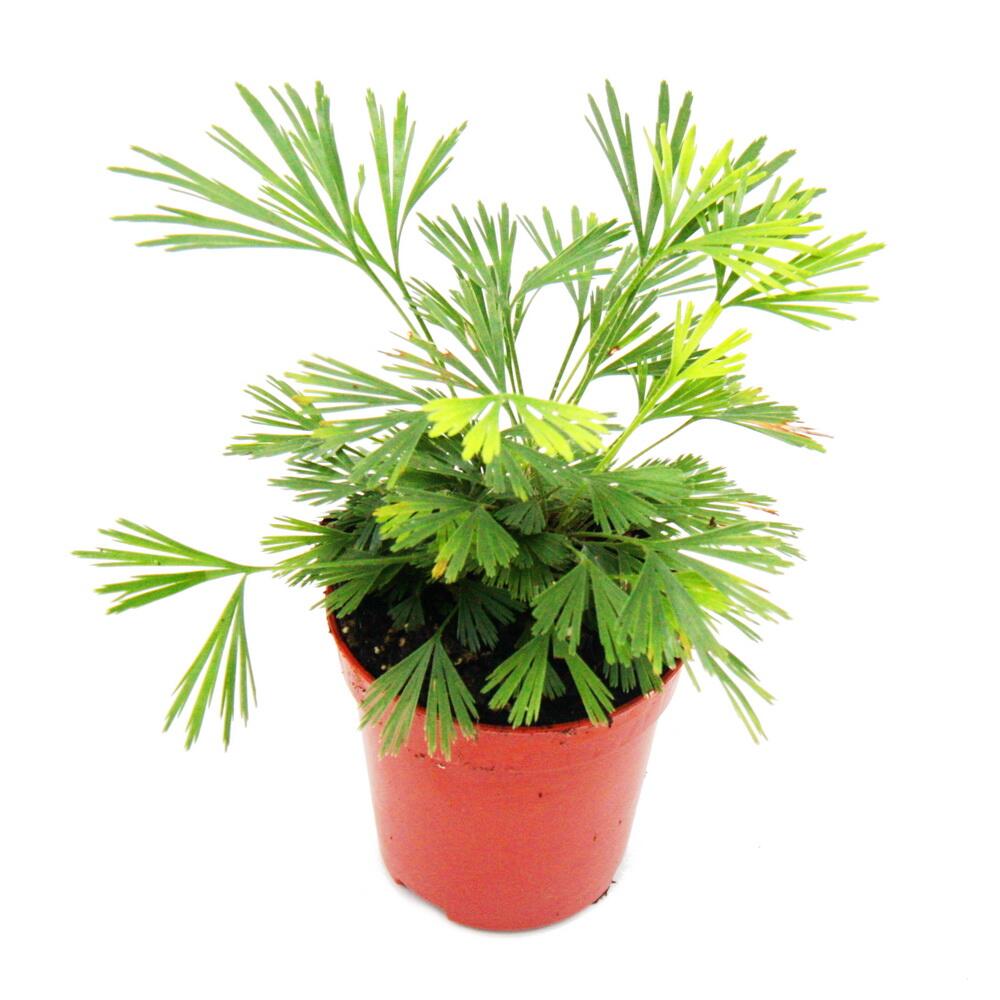
Good to know
Is the fan fern a little palm?
No. Actiniopteris australis is a fern. Its narrowly divided fans only visually resemble palm fronds.
Why does it form no flowers?
Ferns form no flowers and reproduce through spores. Healthy new fronds are the appropriate guide.
Can I keep the soil permanently wet?
No. Light even moisture with free drainage makes sense; avoid standing water in the root ball or decorative pot.
Is a bottle garden automatically suitable?
Only when light, temperature, moisture and air exchange suit and are checked. A closed container does not resolve these questions by itself.
Can it stand on a dark shelf?
The shelf position must receive enough filtered daylight. Permanent darkness cannot be compensated with more water.
Should I shorten the fans to keep it small?
Do not shear healthy fronds. Remove only fully dead parts carefully and preserve the natural form.
Sources and editorial note
- Exotenherz: offer and original images (02.10.2026)
- RHS: Actiniopteris australis, name and family (02.10.2026)
- Dötterer nursery: fan fern cultivation (02.10.2026)
- RHS: growing houseplants (02.10.2026)
Shop offer, article number, GTIN, availability and original images checked directly on 02.10.2026. Specialist sources read directly. Nursery care description accessed directly and documented locally. No unsecured ultimate height or frost-temperature figure. Tropical outdoor description not adopted as German winter hardiness.