This plant at Exotenherz
Check the shop offer for current availability, price and what is included.
Product and delivery details are given in the individual offer.
Your care table
| Topic | What to do | Why it helps |
|---|---|---|
| Light | Bright sheltered position without hot direct sun. | White bracts and dark foliage should receive light without overheating. |
| Moisture | Let the upper soil dry slightly, then water the root ball evenly. | The small pot needs individual checks. |
| Water quality | Use suitable soft water at room temperature. | Anthuriums like a rather acidic root environment. |
| Drainage | Let excess drain away and check the decorative pot. | A small container must not hold roots in water permanently. |
| Soil | Choose humus-rich rather acidic potting compost with stable airy components. | Roots need moisture retention and oxygen. |
| Feeding | With new leaves and stalks, moderately according to the label. | More fertiliser forces neither white nor permanent inflorescences. |
| Flower care | Remove fully dead stalks at the base; wear gloves. | Healthy leaf surfaces remain. |
| Winter | Keep warm and bright, away from radiators and cold draughts. | Consider root-ball moisture and reduced growth together. |
Check the compost and pot weight. The care table explains how far the compost may dry.
Water only when needed. The water should reach the root ball without spilling over the rim.
Remove surplus water from the saucer or cachepot. Then return the plant to a suitable position.
White with living transitions
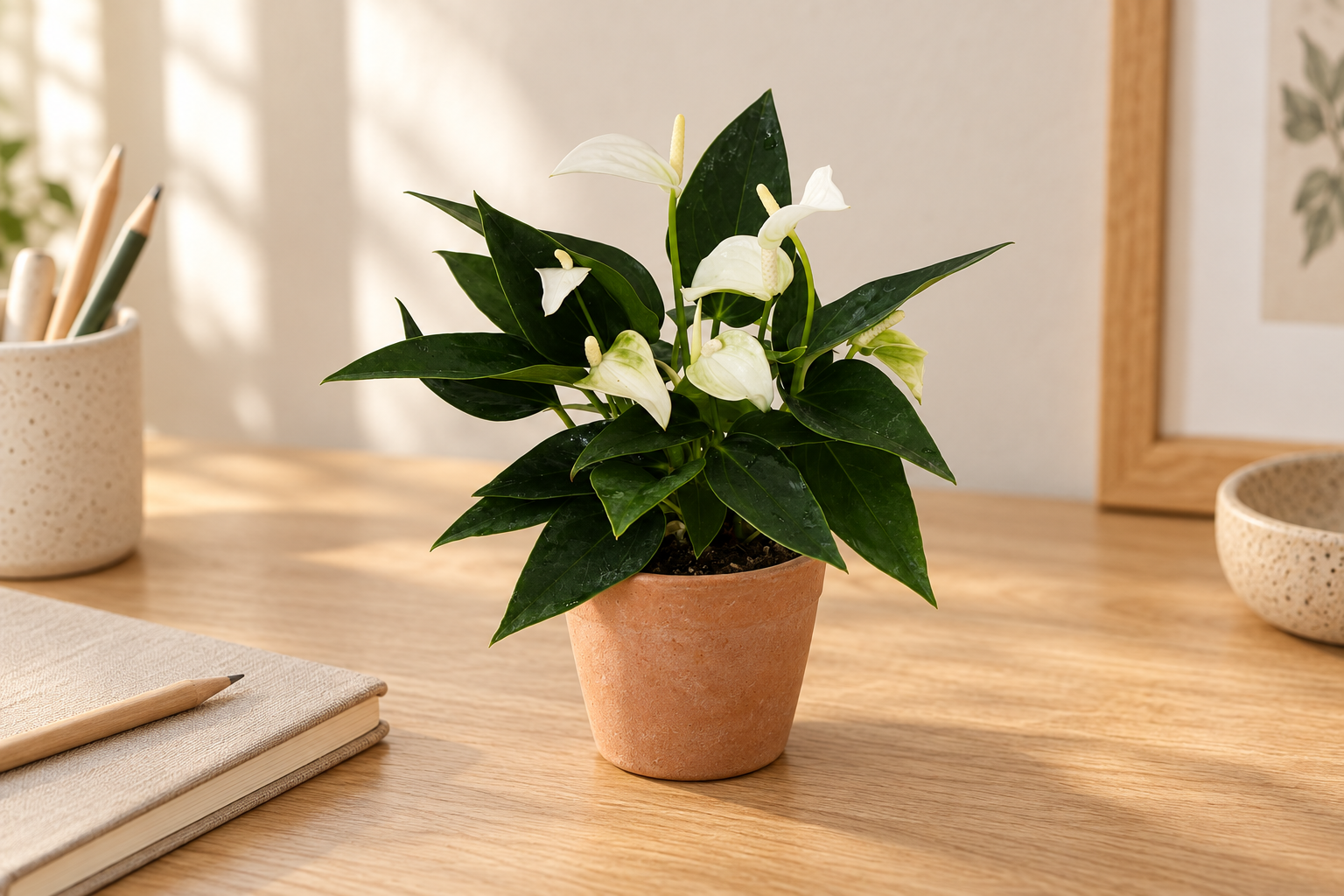
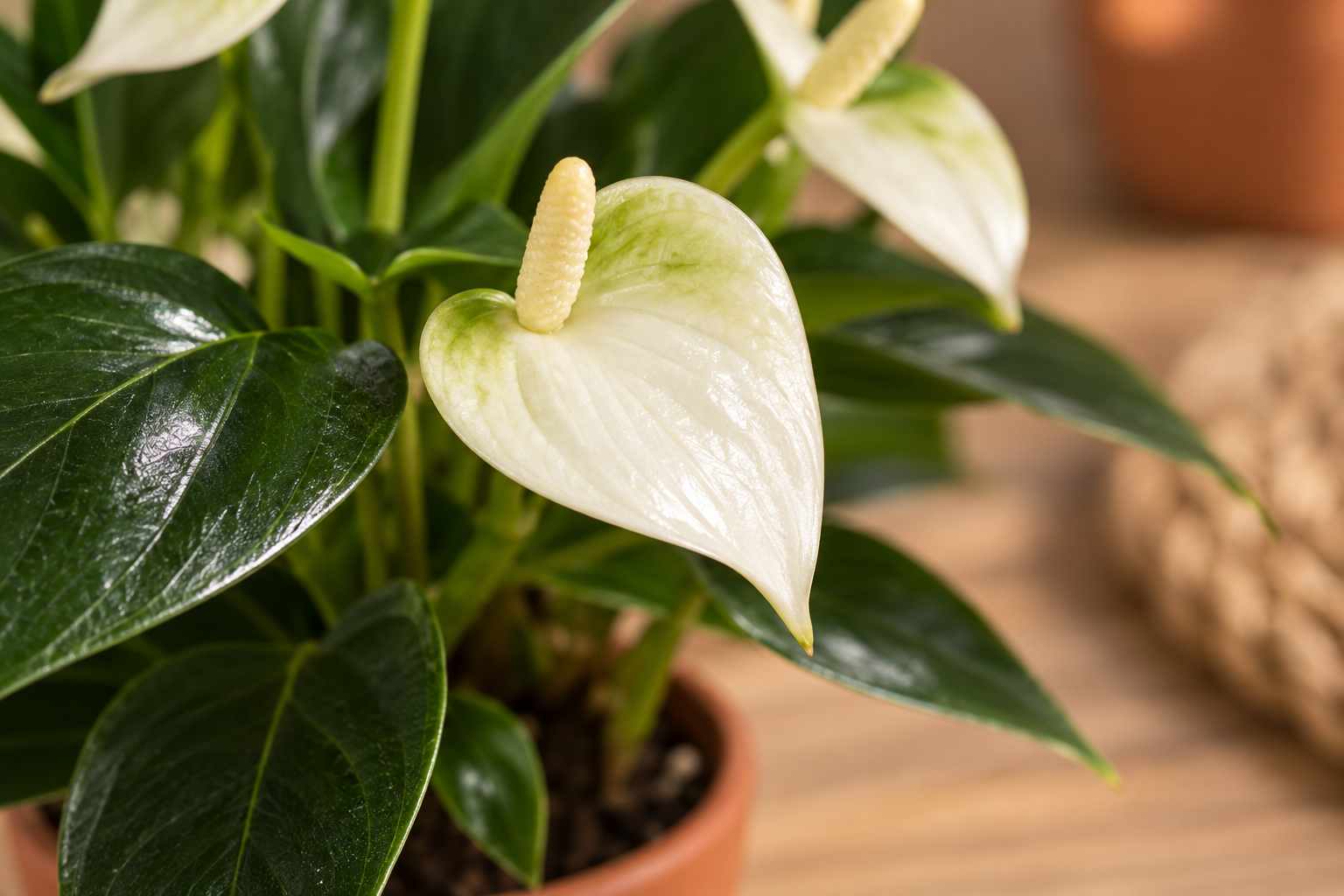
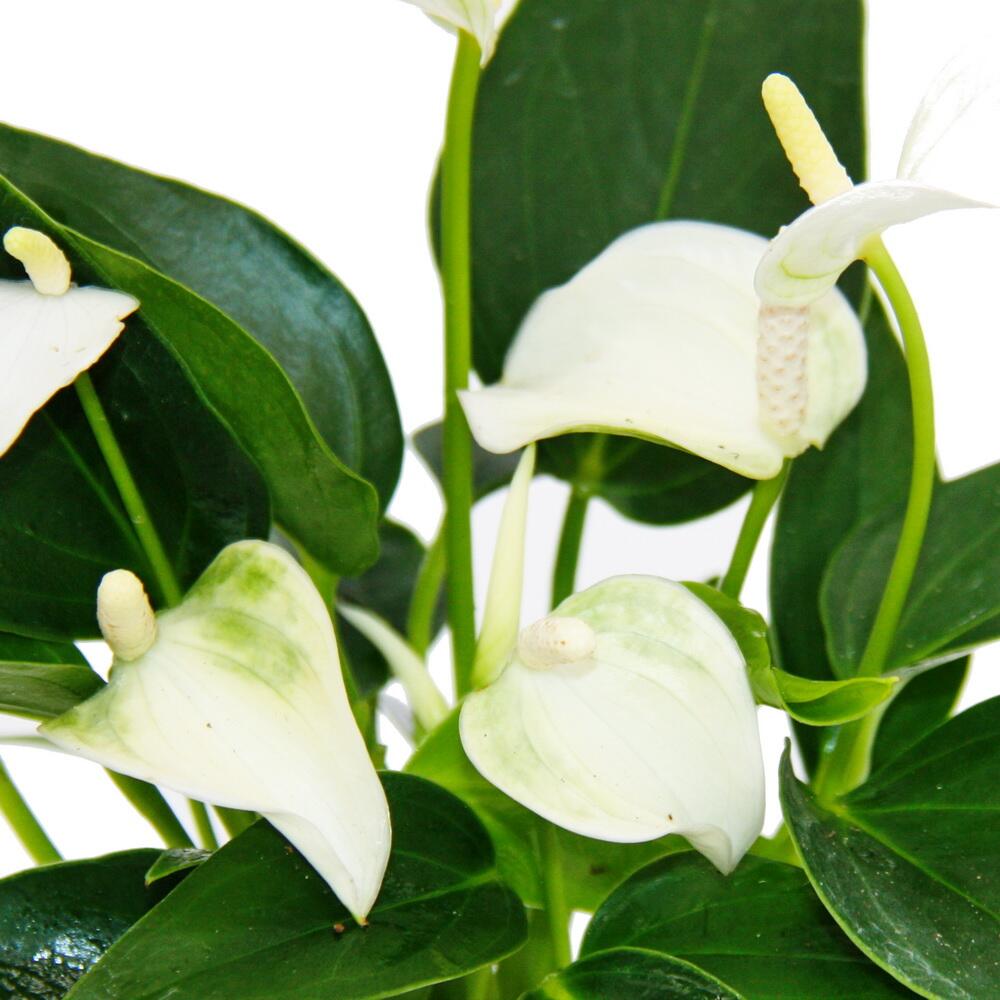
White Champion shows small pale bracts among dark glossy leaves. White surfaces may carry greenish areas, especially during development. This transition looks alive and distinguishes the plant from rigid white decoration. On a bright desk, the contrast shows calmly. A simple warm-toned decorative pot and clear space around foliage are enough. Pointed leaf ends should not constantly meet papers while writing. The little spadices in the bracts' centres also deserve a look: actual tiny flowers sit there.
Get to know the small offered plant
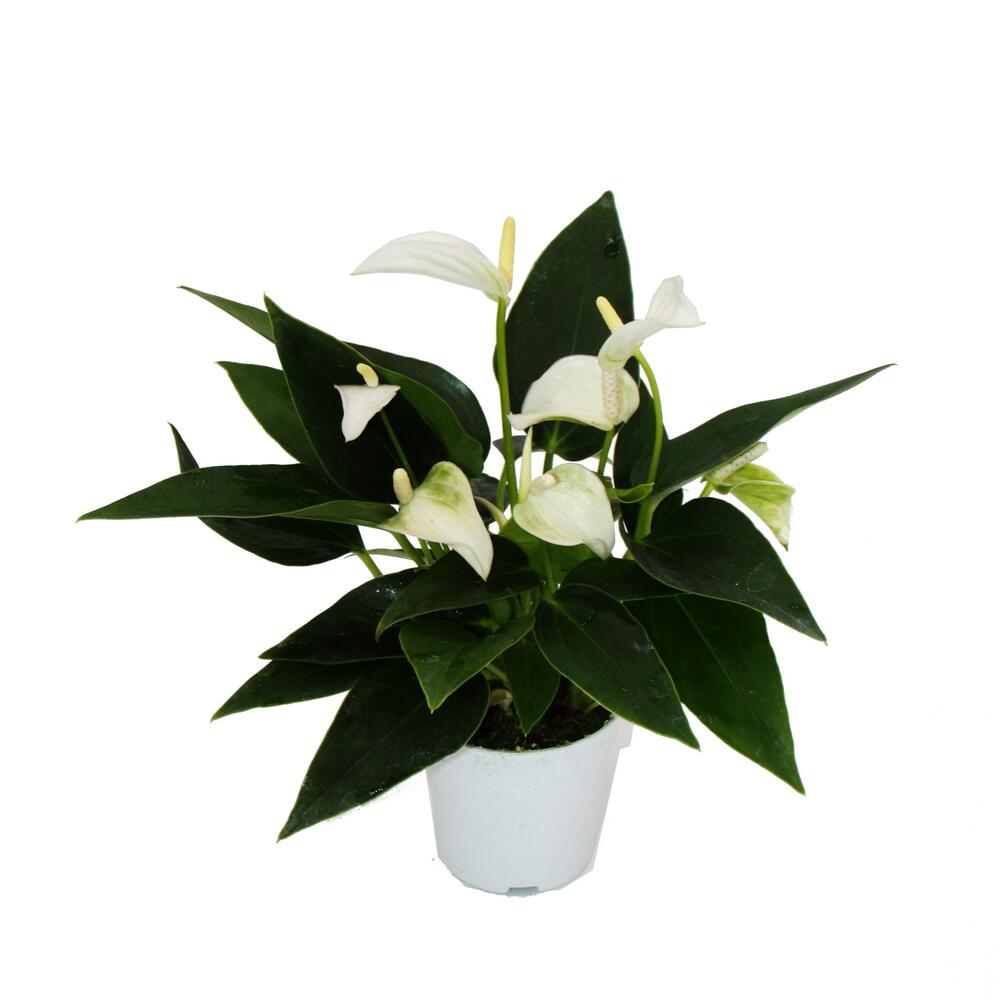
The shop lists White Champion as a baby anthurium in a 7 cm pot with an overall height of about 20 to 25 cm including pot. This size fits a small plant position but remains an early stage. Root space and foliage continue growing with suitable cultivation. Botanical spelling andraeanum often appears shortened as andreanum in the shop. White Champion is the recognisable cultivar name of this white-flowering offer. Actual originals show several pale bracts among narrower dark leaves. Their number and position vary and promise no permanently identical plant.
Protect pale bracts from hot glass
A warm place with plenty of filtered daylight supports development. Immediately behind hot window glass, leaves and bracts can be damaged. Therefore do not put it straight into strong midday sun after shipping. A desk lamp does not replace a fundamentally suitable daylight position either. In a deep dark corner, new inflorescences cannot be forced by more frequent watering. Also watch the air: cold draughts during ventilation and dry hot radiator air are unsuitable for the small flamingo flower. The actual plant place may have very different conditions from the centre of an otherwise pleasantly warm room.
Check moisture before the next sip
The small pot tempts one to add a little water every time. First check the topsoil and inner pot weight. After slight drying, water slowly and thoroughly; then allow complete drainage. Suitable soft water at room temperature helps avoid unnecessarily altering the rather acidic root environment. Standing residual water is easily overlooked beneath a decorative pot rim. Therefore take the inner pot out occasionally. If leaves droop although soil is wet, drainage and roots need examination. A dry light root ball, on the other hand, needs careful supplies again.
Roots need an open structure
Humus-rich rather acidic soil with suitable coarse ingredients retains moisture while letting air reach fleshy roots. A densely collapsed wet mixture makes both harder. If the root ball is clearly rooted through, offer only slightly more pot space during active growth. Hold the root ball when moving it and protect fine flower stalks. Moderate nutrients according to the label accompany new leaves and stalks; consider reserves in fresh soil. Wanting many white bracts is no reason for strong additional feeding. Light, root condition and development time remain jointly decisive.
Distinguish greenish bracts from old flowers
A young greenish bract may look whiter later. The RHS expressly describes this colour change for White Champion. Therefore do not treat every green area as a deficiency or rub it away. Older inflorescences also change and may eventually dry. Remove only completely dead stalks at their base with clean tools. Gloves protect against irritating sap. Dust healthy leaves carefully and support them when wiping. Strong rubbing, shine products or pulling apart young rolled leaf surfaces offer no advantage. Even supplies are better assessed through later healthy growth than the colour of one bract.
Remain a living plant in winter too
White Champion remains frost-free indoors. With little light and growth, reassess consumption without allowing the small root ball to dry completely for a long time. Dry edges may relate to room air or supplies; yellow leaves additionally require checking wetness and light. Examine undersides and stalk bases for unusual coatings. Do not prune, repot and feed heavily at the same time to compensate for one discolouration. Position anthuriums outside the reach of small children and nibbling pets. Calm white accents are particularly pleasing when invisible care beneath foliage is also reliably considered.
One plant, several views
Good to know
Why are some bracts slightly green?
In White Champion, young bracts may be greenish and become whiter during development.
Are they white petals?
The conspicuous surfaces are bracts. Actual tiny flowers sit on the spadix in the centre.
Must it always have new flowers?
No. New inflorescences depend on cultivation and development; no fixed flowering calendar is guaranteed.
Can it stand on the desk?
In a bright warm place away from hot sun, with enough room for foliage.
Is more fertiliser for more white sensible?
No. Moderate supplies according to need suffice; more fertiliser does not force a particular colour.
How large is the delivered plant?
The pot measures 7 cm; overall height including pot is about 20–25 cm.
Sources and editorial note
- Exotenherz: offer and original images (02.10.2026)
- RHS: White Champion (02.10.2026)
- RHS: growing anthuriums (02.10.2026)
- NC State Extension: Anthurium andraeanum (02.10.2026)
Shop offer, article number, GTIN, availability and original images checked directly on 02.10.2026. Specialist sources read directly. Young greenish bracts and white development checked using RHS and original images. No rigid flowering calendar or fixed ultimate size added.