This plant at Exotenherz
Check the shop offer for current availability, price and what is included.
Check the shop for the price, current availability and what is included.
Your care table
| Topic | What to do | Why it helps |
|---|---|---|
| Light | Place brightly with mostly indirect light. | Good brightness supports leaf development and compact growth. |
| Water | Let the top layer dry slightly before the next watering. | Constant wetness may damage roots. |
| Drainage | Remove excess water from the cover pot. | The root ball should not constantly stand in water. |
| Temperature | Cultivate evenly warm and protected from draughts. | Cold roots are especially sensitive when wet. |
| Compost | Loose and structurally stable; enlarge moderately when repotting. | Airy spaces support healthy roots. |
| Climbing support | Fasten shoots loosely and extend the pole in time. | Growing stems must not be constricted. |
| Fertiliser | Moderately during growth following product instructions. | Supply correspondingly less in low-light winter. |
| Handling | Do not consume; protect from nibbling children and animals. | Calcium oxalate crystals are irritating. |
Check the compost and pot weight. The care table explains how far the compost may dry.
Water only when needed. The water should reach the root ball without spilling over the rim.
Remove surplus water from the saucer or cachepot. Then return the plant to a suitable position.
Side leaf splits give this pothos its character
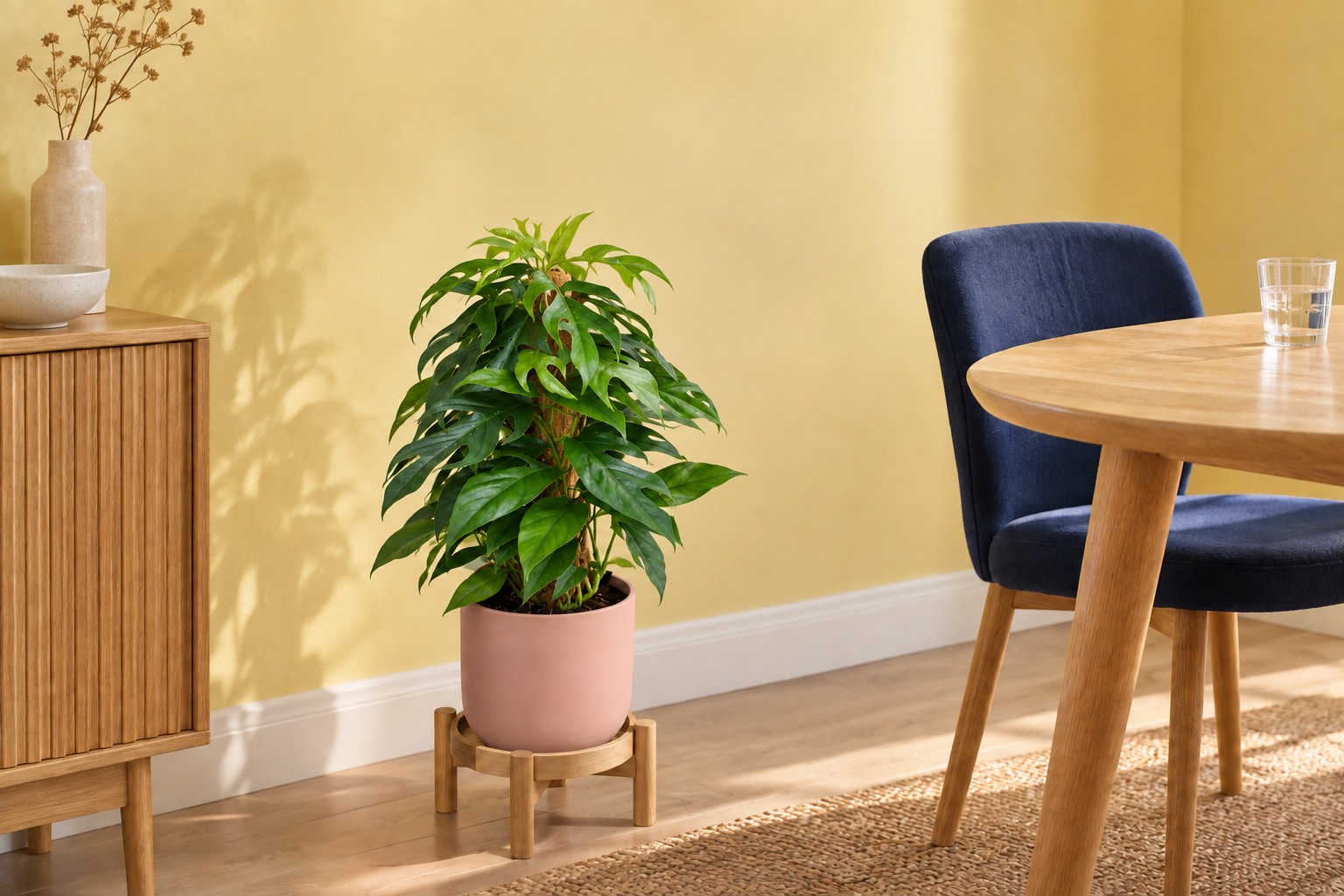
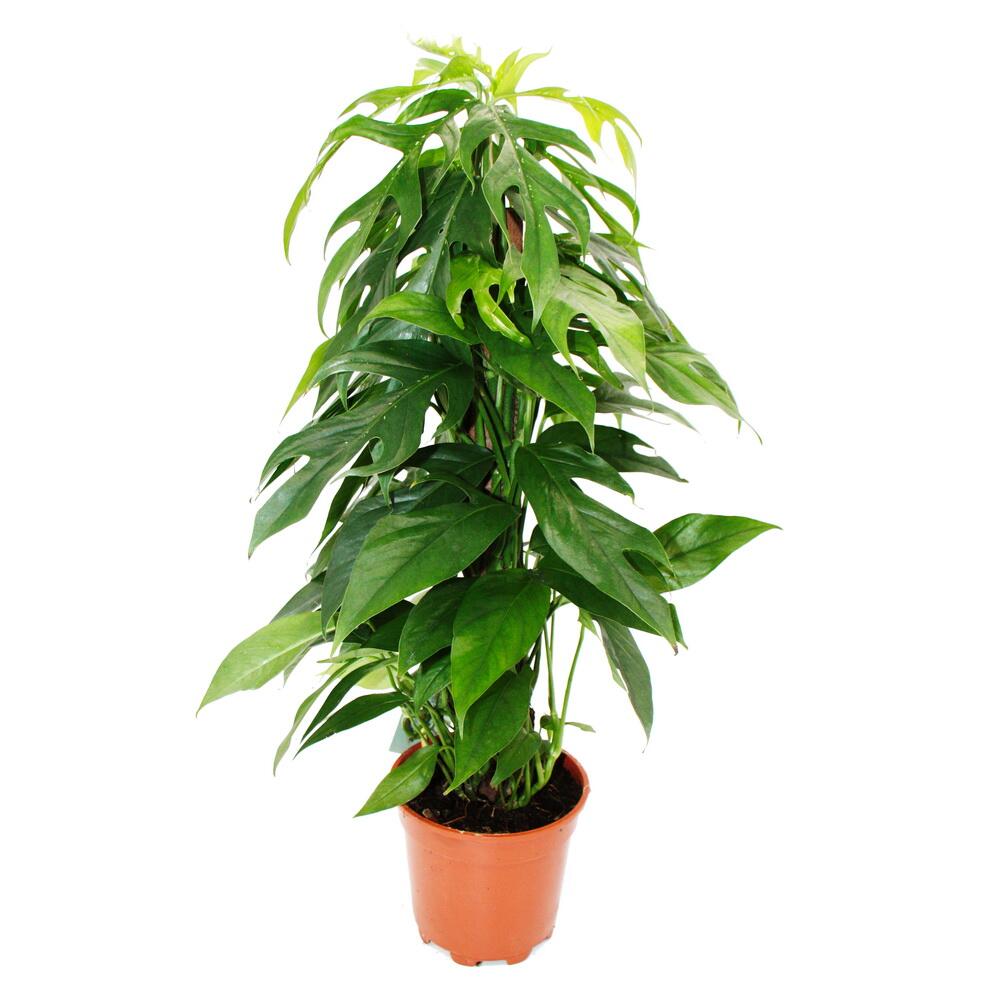
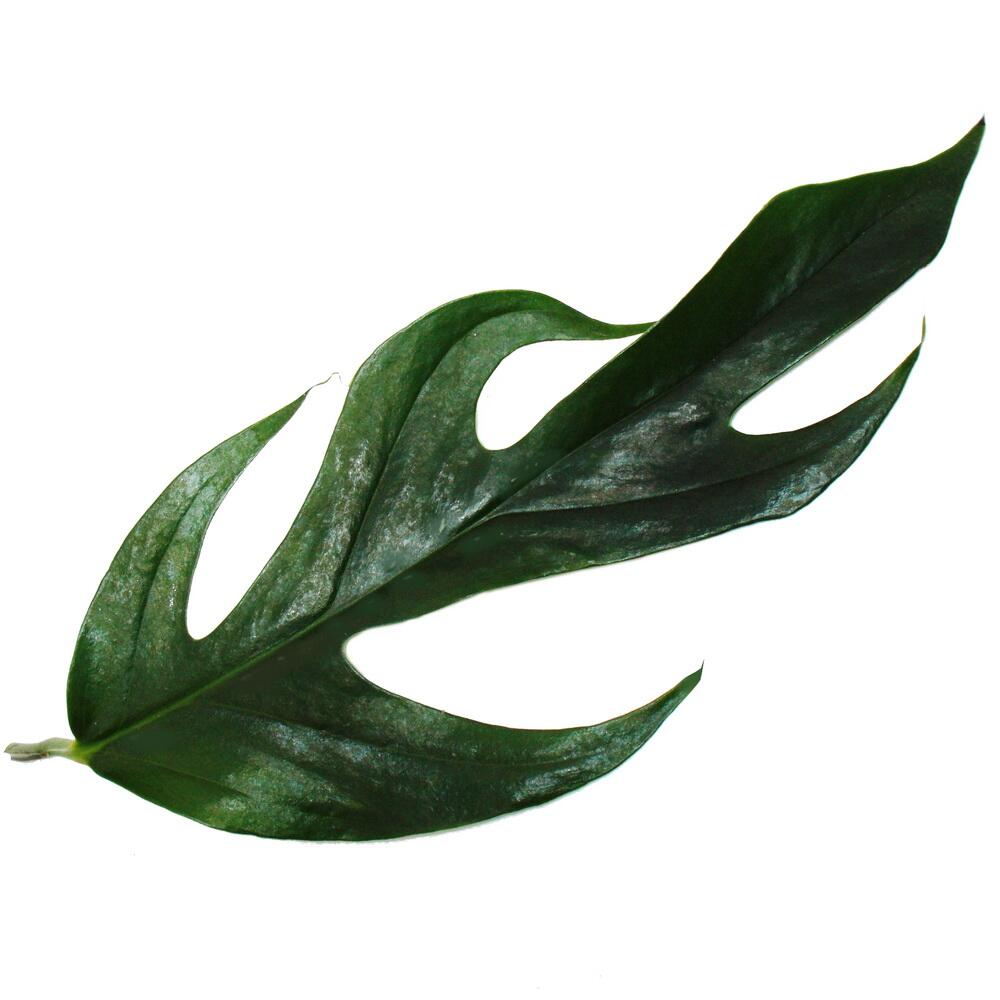
Baltic Blue is a horticultural selection of Epipremnum pinnatum. According to breeder Costa Farms, its dark green leaves may show a bluish impression and form side cuts relatively early. This does not guarantee every young leaf is already deeply divided. Entire juvenile leaves belong to normal development. It is distinct from Cebu Blue and is not described as a silvery shiny form or a Monstera.
The young plant climbs in a 17 cm pot
The offer states a 17 cm pot and around 60 cm total height on a climbing pole. The scene follows these proportions. The pole belongs to the depicted cultivated form; coloured cover pot, wooden stand and furnishings are styling. Shoots may grow beyond the original support during development. Give secure support in good time and fasten loosely. Tight string cutting into growing stems is as unsuitable as a wobbling undersized pole.
A bright living-space position favours characterful growth
Bright indirect light and evenly warm conditions suit well. Hot direct midday sun may damage leaves, particularly after shipping or prolonged shaded cultivation. A dark room corner may slow growth and leaf development. Subtle colour nuances change with lighting and leaf age; a strong artificial blue is no natural feature. Avoid cold draughts and chilled roots in winter. Decorative use in living rooms does not replace checking actual brightness.
Let the root ball dry slightly
Check the upper compost layer before watering. Once slightly dry, water the root ball evenly and remove excess. Rigid weekly quantities poorly match differing room temperatures and seasons. A slower-growing plant usually needs water less often in winter. A dry climbing pole does not prove the compost is also dry. Yellow leaves have several possible causes; with an already wet root ball, first check drainage and roots rather than automatically watering further.
Care for roots, leaves and support together
A loose structurally stable foliage-plant mix lets air reach roots. With clear root crowding, repot only moderately larger and maintain open drainage holes. Feed sparingly during active growth following the label. Remove dust with a soft damp cloth while supporting the leaf. Leaf-shine products are unnecessary. Aerial roots are part of climbing growth and need not constantly be cut. The pot’s root ball remains the decisive location for ordinary water supply.
Healthy new shoots and limits of use
Pruning above a suitable node may shape the plant. A cutting requires a viable node for propagation; one leaf without a node produces no complete new vine. Look for pest traces beneath leaves and at shoot bases, especially with dry heated air. Epipremnum belongs to the aroids and contains irritating calcium oxalate crystals. Leaves are unsuitable for consumption. This portrait does not guarantee measurable improvement of indoor air.
One plant, several views
Good to know
Is Baltic Blue the same as Cebu Blue?
No. They are distinct selections. According to the breeder, Baltic Blue shows side cuts earlier and not Cebu Blue’s typical silvery impression.
Why does mine also have undivided leaves?
Entire juvenile leaves are normal. Development stage and cultivation conditions affect when new leaves show cuts.
Is it really blue?
Dark green leaves may have a subtle bluish impression depending on age and lighting. Strong artificial blue should not be expected.
How large is the offered specimen?
A 17 cm pot and around 60 cm total height on the climbing pole are stated; living plants may vary slightly.
Sources and editorial note
- Product and delivery contents: Exotenherz
- Costa Farms nursery: plant and care knowledge
- Costa Farms nursery: plant and care knowledge
Sources checked: 15 September 2026. Product information and delivery contents follow the linked shop offer. Care has been checked against the stated specialist sources and remains subject to plant condition, position and season.