This plant at Exotenherz
Check the shop offer for current availability, price and what is included.
Check the shop for the current price, availability and offer contents.
Your care table
| Topic | What to do | Why it helps |
|---|---|---|
| Position | Place or hang in bright light, protected from hot midday sun. | Filtered light suits the flowering hanging plant and protects delicate foliage. |
| Watering | Keep moderately and evenly moist during growth, checking the compost before every watering. | Hanging containers respond to heat and airflow; water use varies. |
| Drainage | Keep drainage clear and remove water from outer covers. | Standing water restricts airflow to the root zone. |
| Mix | Use a loose freely draining container mix. | Roots need air as well as moisture. |
| Feeding | Feed moderately during active growth according to product instructions, accounting for pre-fertilised compost. | The flowering plant needs nutrients without concentrated extra salt applications. |
| Flower care | Gently remove faded flowers and dead leaves. | Preserve thin branches and neighbouring young buds. |
| Air and rain | Protect from strong winds and prolonged rain, keeping foliage airy. | Fragile shoots break easily; flowers that stay wet can suffer damage. |
| Checks | Regularly inspect leaf undersides, shoot tips and soft areas. | Early observation helps identify growing problems or pests specifically. |
| Winter | Protect from frost and reduce watering as growth slows. | Green foliage and a possible later tuber rest need different care. |
Check the compost and pot weight. The care table explains how far the compost may dry.
Water only when needed. The water should reach the root ball without spilling over the rim.
Remove surplus water from the saucer or cachepot. Then return the plant to a suitable position.
A flowering hanging plant with loose stems
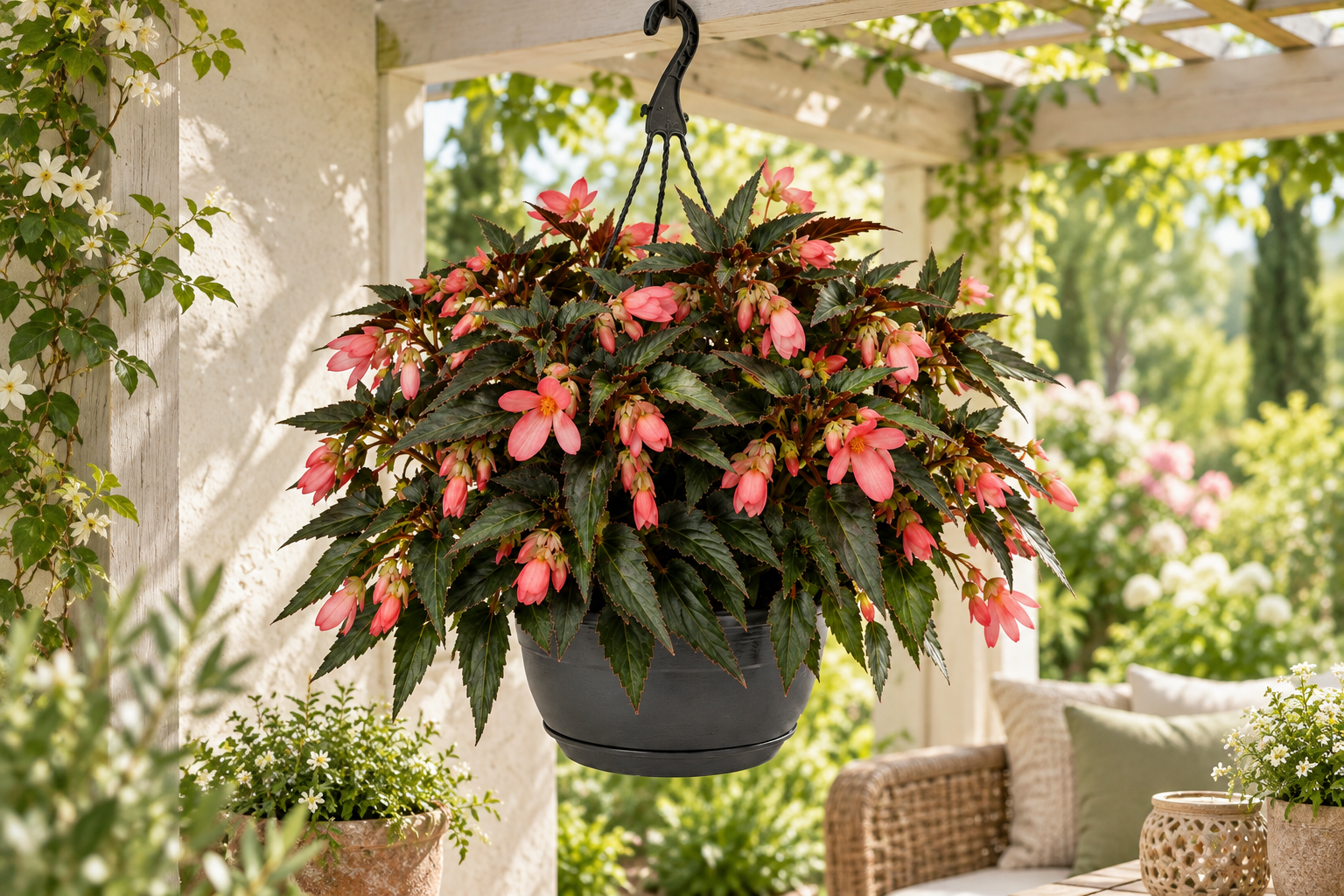
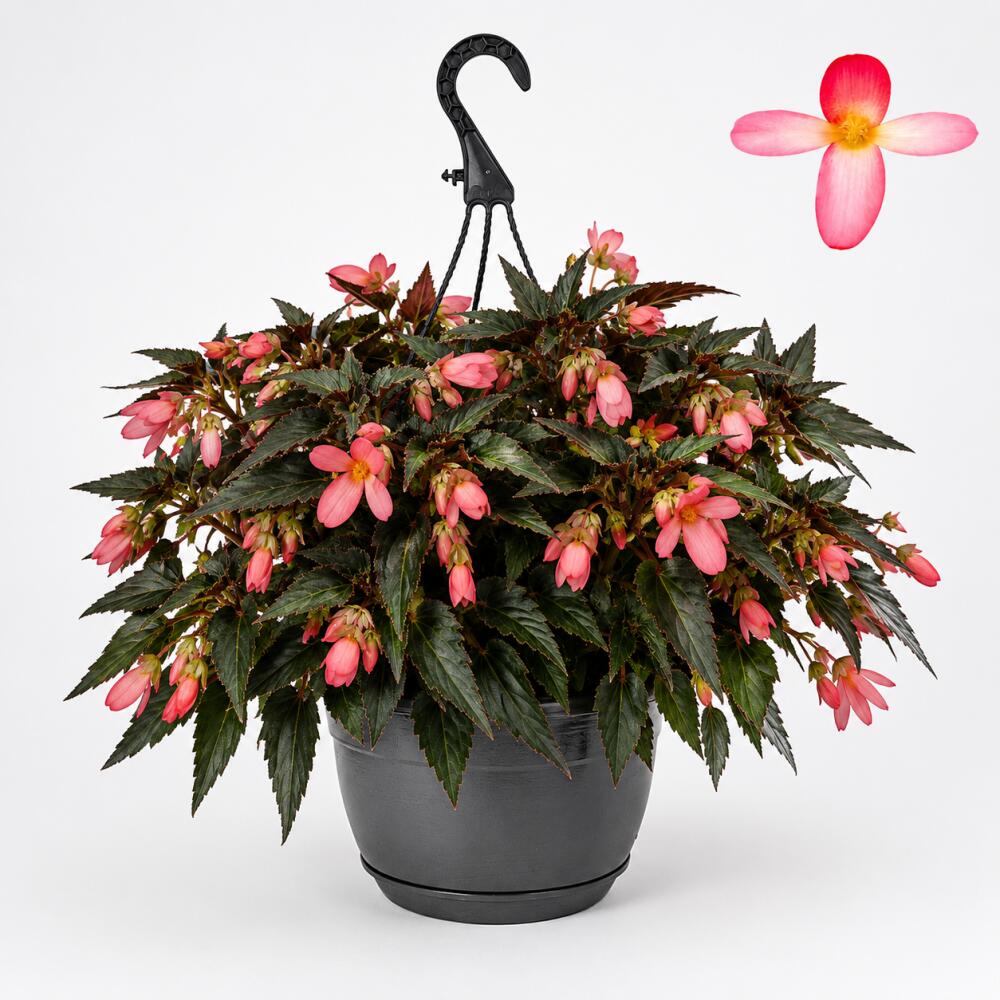
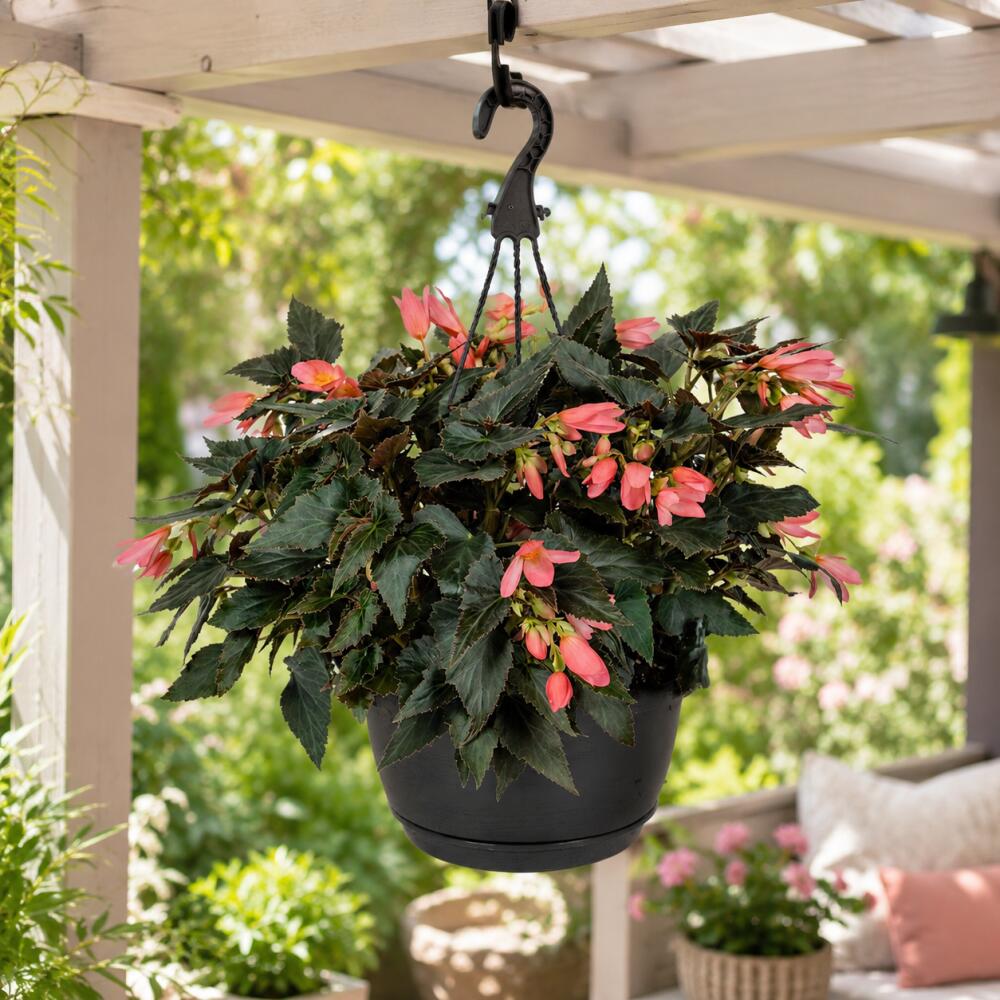
This trailing begonia carries flowers among narrow pointed leaves. The dark green foliage can show bronze tones, and toothed edges give the overhanging stems a lively outline. The shop’s own photographs show slender hanging buds beside open single flowers. Their pink-red surfaces become distinctly paler towards the base, with yellow stamens in the centre. From a little distance, the plant resembles a loose flowering umbrella. A hanging pot allows views from below and from the side. Choose somewhere the stems can fall freely without being brushed when a door opens or someone walks past.
Pendula describes the trailing begonia form
The shop offers the plant as Begonia pendula. Here this denotes a flowering trailing-hybrid trade group, without adding an individual named cultivar or a securely identified wild species. Garden trailing begonias have different flower forms, including doubles. This particular offer is described from its own single flowers, so a densely double rose-like flower would not represent its appearance. Foliage matters equally: narrow toothed leaves and branched trailing stems give the hanging plant its form between flowering phases. A photograph cannot establish a fixed number of open flowers for every delivery date.
Include the container when planning its position
The specific offer consistently states a twenty-four-centimetre hanging pot. The title gives thirty centimetres overall height, but the detailed delivery description adds no explanation of the measurement. Plan the position from the container and the actual stems after arrival. Check the fastening and hold the container when unpacking; branches are not handles. Avoid enclosing young buds in your hand when lifting too. The compost must remain easy to reach for watering. A high inaccessible hook makes daily observation unnecessarily difficult. Even inside a decorative cover or extra basket, surplus water must drain from the inner planting pot.
Bright filtered light in a sheltered position
A bright position with filtered light suits this flowering hanging plant. Outside, a sheltered veranda or similar spot without hot midday sun can work. Gradually introduce light and air before leaving it outdoors permanently, keeping it protected while frost threatens. A roof can shield flowers from heavy showers, but does not replace checking the pot: a covered hanging plant often receives less water than surrounding plants. Wind should not continually beat fragile branches against walls or railings. Leave some air between foliage and neighbouring plants so leaves can dry after accidental wetting.
Maintain even moisture and allow water to drain
During growth, keep the compost moderately and evenly moist. Check before watering, then water the soil without showering flowers. Water use in a warm sheltered outdoor position can differ substantially from a cooler indoor place, so a fixed weekly schedule is insufficient. Check drainage after watering and remove water collected in any outer cover. A loose freely draining container mix combines water and air in the root zone. Regularly misting the whole canopy is unnecessary; flowers and dense foliage especially should not remain constantly wet. An airy position makes care easier than additional wetness.
Care for flowers without straining the branches
During growth and flowering, moderate liquid feeding following product instructions supports nutrition. Account for pre-fertilised compost. Extra fertiliser replaces neither good light nor a healthy root zone. Gently remove faded flowers and dead leaves, steadying the relevant shoot rather than pulling the whole canopy. This keeps nearby young buds intact. Check leaf undersides and young shoot tips too. Distorted foliage, sticky deposits and soft areas need closer examination. Also check water supply, airflow and drainage; individual symptoms are no reason for indiscriminate extra feeding.
Manage the transition into colder weather
Before frost, move the hanging plant to a sheltered frost-free place. With less light and slower growth, it needs less water and an adjusted summer feeding routine. Observe whether foliage stays green or the plant dies back. For tuber-forming trailing begonias, a dry frost-free rest of the mature tuber can support overwintering. This offer does not, however, promise a visible tuber. Do not completely dry out or dig up a still-green plant merely because of the calendar. Base further care on its actual condition. Overwintering and flowering again depend on cultivation; a preserved root zone and healthy new shoots shape the next start.
One plant, several views

Good to know
Is Pendula a single cultivar?
Here it describes the offered flowering trailing-hybrid trade group. No private cultivar name or exact wild species is added.
How large is the offered container?
The shop’s own offer consistently states a 24 cm hanging pot. The title gives 30 cm, without explaining the height measurement further in the delivery description.
Are the flowers double?
The shop’s own photographs show single flowers with a few unequal tepals. Densely double flowers are not claimed for this offer.
Why call the flowers white-red when they look pink?
The offered colour designation is white-red. The shop photographs show pink-red surfaces with distinctly paler to whitish bases.
Can the hanging plant stay outside?
During frost-free cultivation in a sheltered bright position. Move it to protection before frost.
Must I mist the leaves daily?
No. Even compost moisture and an airy position are the basis; flowers and foliage should not stay constantly wet.
Is a tuber supplied, and will it flower again next year?
Neither a visible tuber nor repeat flowering is promised. Later overwintering follows actual growth and any developing rest phase.
Sources and editorial note
- Exotenherz: own offer/originals (04.10.2026)
- RHS: Pendula Group/trailing forms (04.10.2026)
- RHS: outdoor begonias/overwintering (04.10.2026)
- NC State Extension: flowering trailing hybrids/culture (04.10.2026)
Shop offer, original photographs and specialist sources checked on 04.10.2026. Check current availability in the shop.