This plant at Exotenherz
Check the shop offer for current availability, price and what is included.
Product and delivery details are given in the individual offer.
Your care table
| Topic | What to do | Why it helps |
|---|---|---|
| Light | Choose a bright position with filtered daylight. | Direct sun can damage the sensitive leaf blades; a dark corner provides too little light. |
| Warmth | Grow warm and frost-free, protected from cold draughts. | This begonia needs a sheltered position and is not a hardy border perennial. |
| Watering | Allow the upper soil layer to dry slightly, then supply the soil evenly. | The surface may dry, but the whole root ball should not remain parched for long. |
| Drainage | Let surplus water drain and empty the outer pot. | Standing water endangers roots and rhizome. |
| Leaf crown | Water the soil directly; do not routinely wet foliage and crown. | Damp crowded leaves dry poorly when there is little air movement. |
| Air humidity | Combine pleasantly humid air with free air exchange. | Dry air can damage leaf edges; persistent wetness and stagnant air, however, encourage problems. |
| Substrate | Use a loose, well-drained substrate and a container with drainage. | The root zone needs moisture and air; leaf bases should remain clear. |
| Feeding | Feed sparingly during active growth according to the label. | Reduced winter growth and pre-fertilised soil lower the additional need. |
| Winter | Keep bright and warm, checking moisture before every application. | With less light, the pot can remain moist longer. |
| Leaf care | Remove damaged foliage gently and check regularly. | No fixed shaping cut is needed; pest and rot signs are easier to spot early. |
Check the compost and pot weight. The care table explains how far the compost may dry.
Water only when needed. The water should reach the root ball without spilling over the rim.
Remove surplus water from the saucer or cachepot. Then return the plant to a suitable position.
Silver between green leaf veins
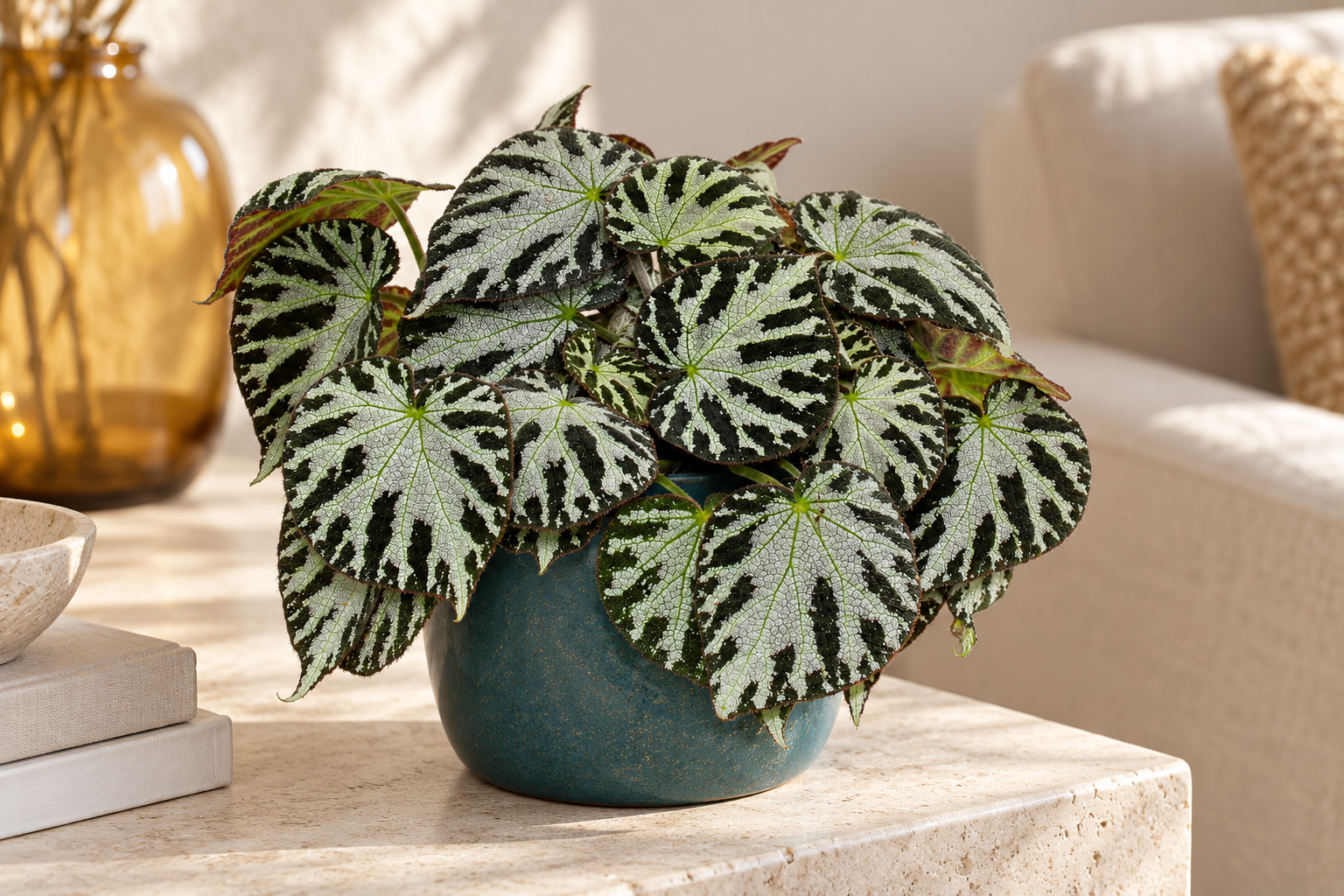
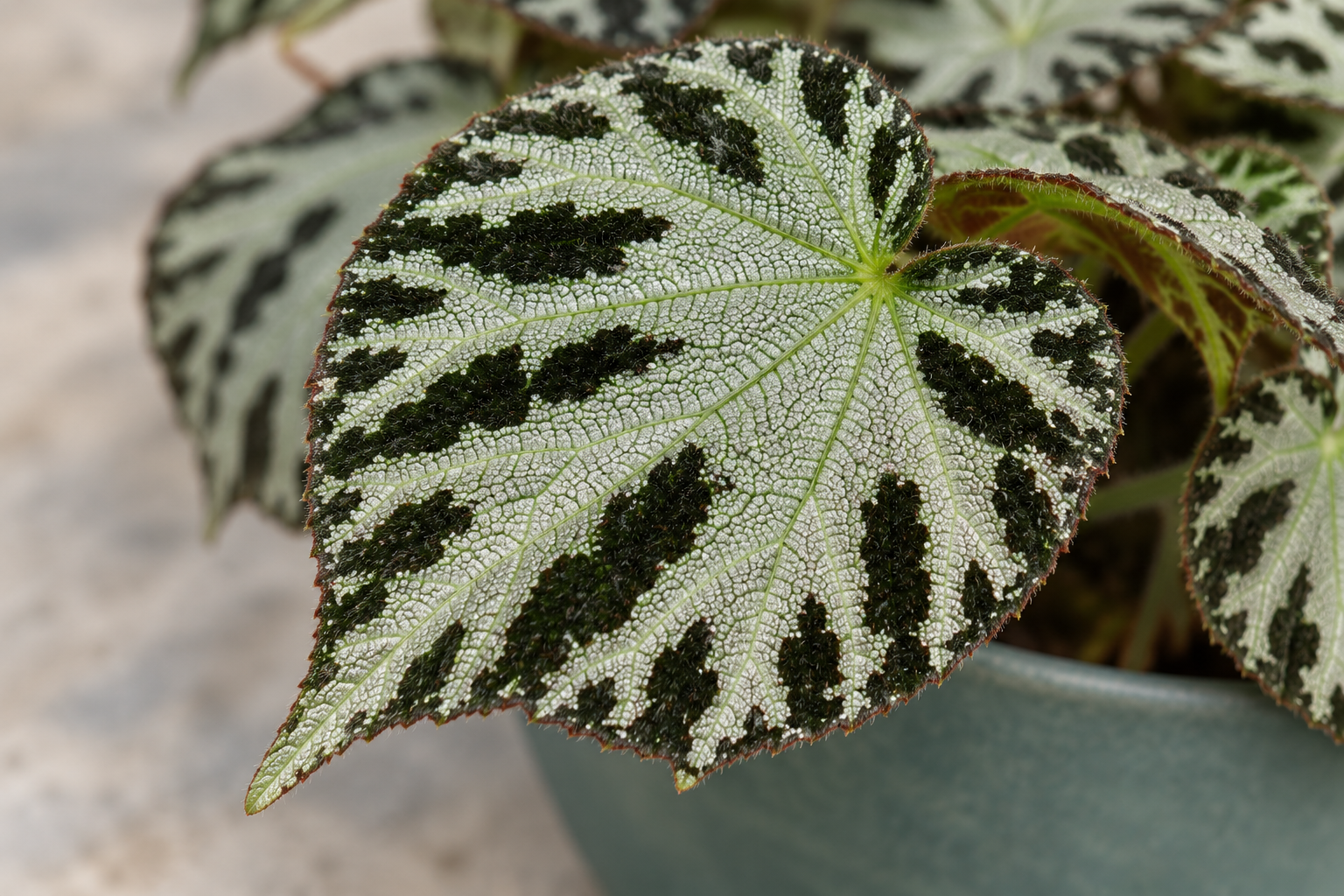
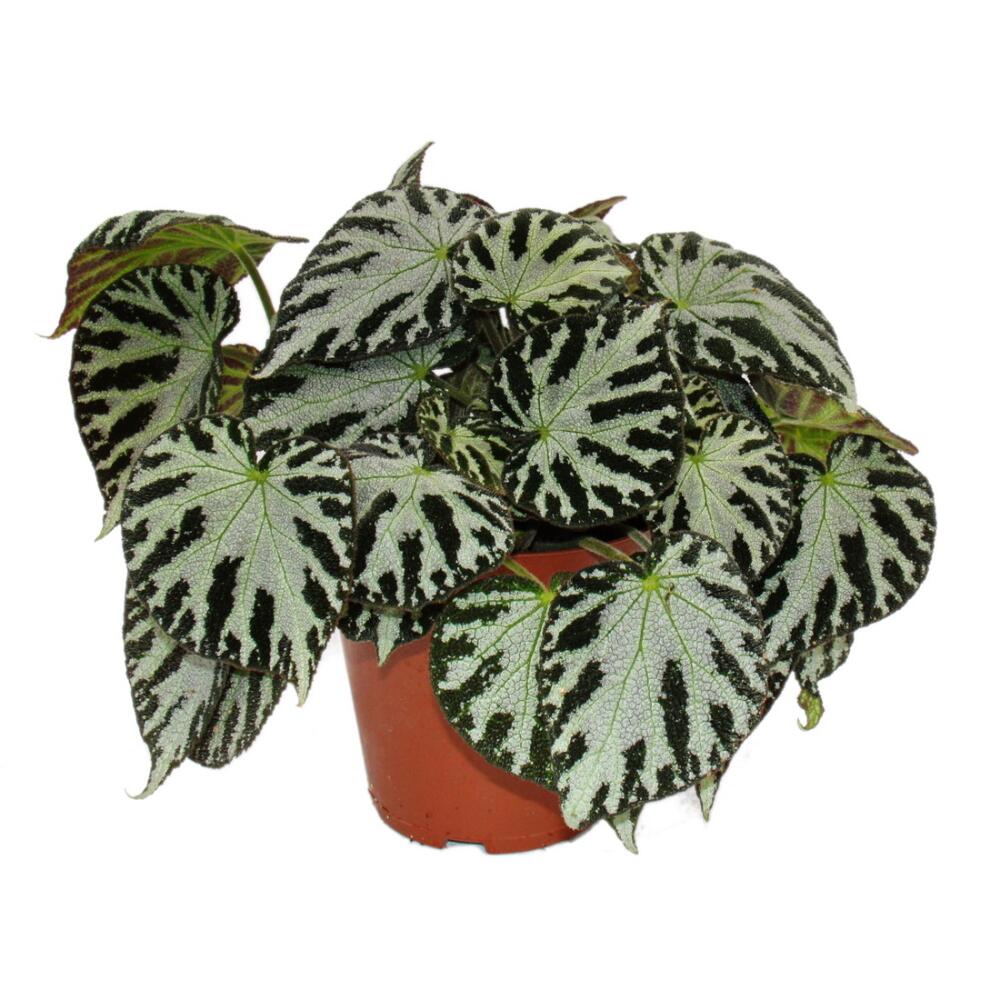
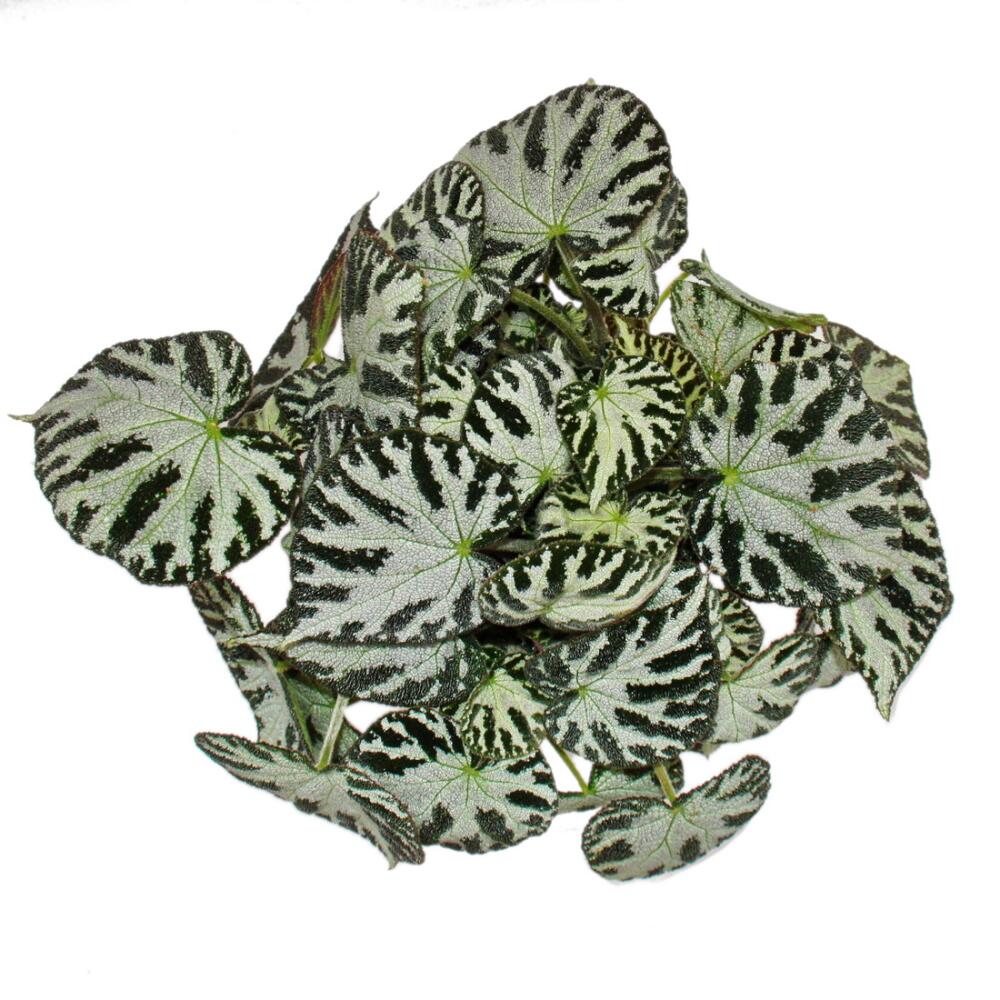
Silver Jewel catches the eye with a finely textured, uneven leaf surface. Metallic-looking silver lies between dark green markings; the lines run outwards from the leaf base. The heart-shaped leaves are asymmetric and their surface is distinctly pleated. Fine hairs form part of this relief. A light background and some open space around the pot make individual leaves easy to see. The begonia does not need flowers for this effect.
Begonia Silver Jewel is a named foliage begonia with rhizomatous growth. A rhizome is a thickened stem axis from which leaves and roots arise. Over time it forms a clump whose ornament starts close to the substrate. The plant belongs to the begonia family and is perennial. Its own silver-green leaf pattern is the focus here, rather than a changing mixture of different rex begonias. Markings and leaf positions also vary slightly within a plant. The pale surface is not a coating that needs rubbing off.
Let the foliage begonia settle gently
Hold Silver Jewel by its nursery pot when unpacking. Individual petioles are not handles, and a closely fitting protective cover is loosened carefully rather than pulling the foliage through it. Check the soil surface and look for bent leaves. A pot that is still moist does not need an extra precautionary watering after transport.
At first, the plant stays in its existing container. More important than immediately changing the pot is a warm bright position where you can easily reach the substrate and leaf bases. A narrow crowded niche makes checks unnecessarily difficult. Leave air between leaves and nearby objects. An outer pot is practical if the inner pot can be removed easily for checking and draining. A young foliage begonia may first adjust to its new position. The outer containers and furnishings shown are design examples and are not automatically part of the offered plant.
Bright light that does not scorch the leaves
A bright position with filtered daylight suits Silver Jewel. Avoid direct sun on the leaf surface, especially behind heated glass. A pale curtain can soften the rays; a shelf is an option only if enough actual daylight reaches it. The silver markings do not make the begonia a plant for a dark room corner.
Keep it warm and frost-free. Cold draughts should not sweep over the foliage when ventilating, and in winter the pot is not placed immediately against a cold window pane. A hot dry stream of air from heating is equally unsuitable. Observe light and warmth together with the soil: with less light, a pot often remains moist longer. A sheltered indoor position whose conditions do not constantly change makes care manageable. The plant is not put into a border to overwinter like a garden perennial.
Check the surface and supply the root ball evenly
Before watering, touch the upper soil layer and briefly lift the pot. When the surface has dried slightly, water slowly and directly onto the substrate. Water should reach the soil evenly without remaining between petioles or on the crown for long. Then let surplus drain freely and empty the outer pot.
A slightly drying surface is different from a completely parched root ball. Silver Jewel remains moderately and evenly supplied in the root zone; long dry periods are just as unsuitable as constantly wet soil. A rigid weekly plan offers little help. Light, warmth, leaf mass and substrate permeability determine how quickly water is used. If the pot is still heavy and the soil moist, wait before the next watering. Less growth means correspondingly lower demand. A brown leaf edge alone is no reason to water immediately: check soil, air and position together first.
Combine more humid air with a dry leaf crown
Silver Jewel likes pleasantly humid surroundings, but its hairy leaves and crown are not routinely sprayed wet. Air humidity and root-ball moisture are two different care questions. A loosely arranged group of plants can make the position more pleasant, provided their foliage is not pressed tightly together. If a tray with damp pebbles is used, the nursery pot stands above the water, not in it.
Fresh air should reach the leaves without causing a cold draught. A permanently closed, misted-up container is therefore not essential for this begonia. Wet leaf surfaces in stagnant air encourage problems, while very dry heating air can promote brown edges. Find a balanced position rather than misting the plant more and more. A loose, well-drained substrate with drainage suits the roots. Check the root zone before repotting; a suitable container only slightly larger is more useful than a large reserve of constantly moist soil. The rhizome and leaf bases are not hidden deep under wet substrate.
Distinguish growth from winter demand attentively
New leaves show when the begonia is growing actively. Nutrients can then be supplemented sparingly according to the dosage on the fertiliser label. Take pre-fertilised soil into account. More fertiliser does not restore damaged leaves, and a weakened plant is not given a strong extra portion instead of checking light and moisture.
Water use can drop in low-light winter weeks. Silver Jewel stays bright and warm; keep checking before every watering whether the upper soil layer has dried slightly. Soil should neither remain constantly wet nor stay completely dry for long. Slower development is a reason to adapt watering and feeding to actual demand. Small cream-coloured flower clusters may appear in winter. They are a possible later property of the begonia, not promised flowers on delivery and not a requirement for its silver leaf pattern.
Rhizome, leaf cuttings and warning signs
Silver Jewel does not need regular shaping cuts. Dead or clearly damaged leaves are removed gently with clean tools without pulling on the rhizome. Healthy leaves may later be used for a leaf cutting; dividing the rhizome is also possible. A suitable attempt starts with healthy material and well-drained propagation substrate in a warm, bright, ventilated position. A newly arrived plant does not have to be cut back heavily at once for this.
Occasionally check leaf undersides and petiole bases for mealybugs, mites or thrips. Grey coatings, spreading spots or soft parts of the rhizome also need attention. Persistent wetness and poor air exchange can encourage rot. First position a conspicuous plant so its leaves do not touch neighbouring plants, then check substrate and location. Not every yellow leaf has the same cause; extra watering does not undo old damage. What matters is whether the cause can be narrowed down and new leaves continue growing healthily. Silver Jewel is grown as an ornamental plant.
One plant, several views
Good to know
Is Silver Jewel a mixture of different begonias?
This portrait presents the named foliage begonia Silver Jewel. A variable collection of unnamed rex begonias is a different offer.
Is the silver on the leaves a coating?
The silver surface and dark green markings belong to the leaf pattern. The pleated, finely hairy surface is not rubbed or polished. A newly appearing grey coating is checked separately.
Must the soil be completely dry before watering again?
No. The upper layer may dry slightly while the root ball remains moderately supplied. Avoid both prolonged complete dryness and constantly wet soil.
Should I spray the leaves every day?
No. Support air humidity with sufficient air exchange and water the substrate. Leaves and crown are not routinely wetted.
Does it need a closed terrarium?
Permanently closed glass is not essential. A bright warm plant position with pleasant air humidity and ventilation is more suitable than constantly wet foliage in stagnant air.
Can it overwinter outdoors?
Silver Jewel is grown frost-free and sheltered. It is not overwintered outside like a hardy garden perennial.
Will the delivered plant flower in winter?
Small cream-coloured flowers are possible during suitable later development. This does not promise that the young plant is flowering on delivery.
How can I propagate it?
Healthy leaf cuttings or rhizome division are possible methods. Clean tools, suitable substrate and a warm bright propagation position accompany the attempt; success is not guaranteed.
Sources and editorial note
- Exotenherz: Silver Jewel, own offer and originals
- RHS: Begonia 'Silver Jewell', named foliage begonia and cultivation
- RHS: indoor begonias, rhizomatous types and care
Care is adapted to growth, light and substrate moisture. The original photographs show the young foliage begonia; images and furnishings are examples.