This plant at Exotenherz
Check the shop offer for current availability, price and what is included.
Check the selected shop offer for price, availability and delivery contents.
Your care table
| Topic | What to do | Why it helps |
|---|---|---|
| Settling in | Unpack every pot carefully and check root-ball moisture. | Dense flower heads are not carrying handles. |
| Light | Choose bright partial shade or suitable outdoor sun. | Assess small-pot heat separately from a dark roof. |
| Planting | Set the moistened root ball at previous level and water in. | Original pot soil must connect with new ground. |
| Soil | Provide moisture-retentive draining soil and free outflow. | Moisture stays useful without standing in the root zone. |
| Water | Keep the root ball slightly evenly moist; water by actual condition. | Weather, roof and pot size do not fit two fixed weekdays. |
| Flower care | Gently remove faded heads and retain healthy shoots. | Do not apply another bellflower’s blanket pruning rule. |
| Nutrition | Feed moderately during growth when needed by a suitable label. | Food remedies neither inadequate light nor wet roots. |
| Observation | Check young shoots for feeding damage and leaves for unusual deposits. | One yellow leaf does not prove a particular cause. |
| Winter | Shelter the container and maintain free drainage. | A small pot is more exposed than rooted garden soil. |
For young plants, feel the soil directly at the root ball. The surface and deeper soil may have different moisture levels.
Water thoroughly after planting; later, water according to the soil, weather and establishment rather than a fixed calendar.
Avoid standing water. For plants in containers, also check that water runs out of the drainage hole.
Bells among small green leaves
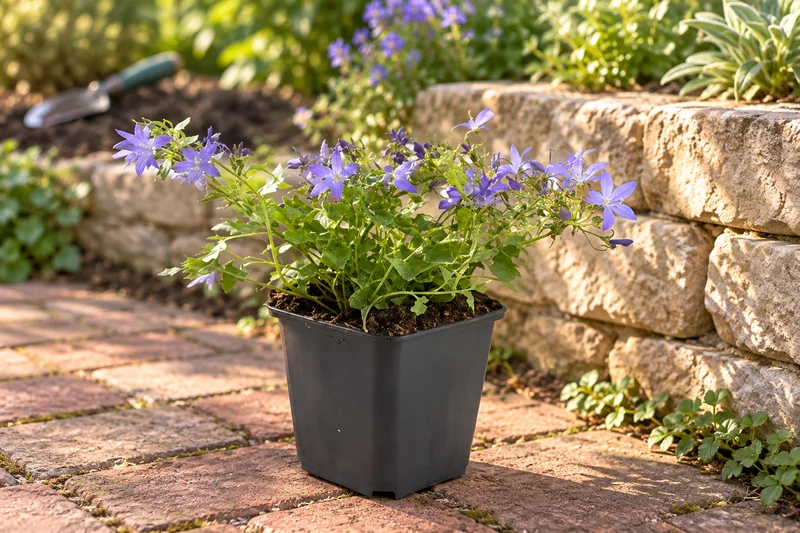
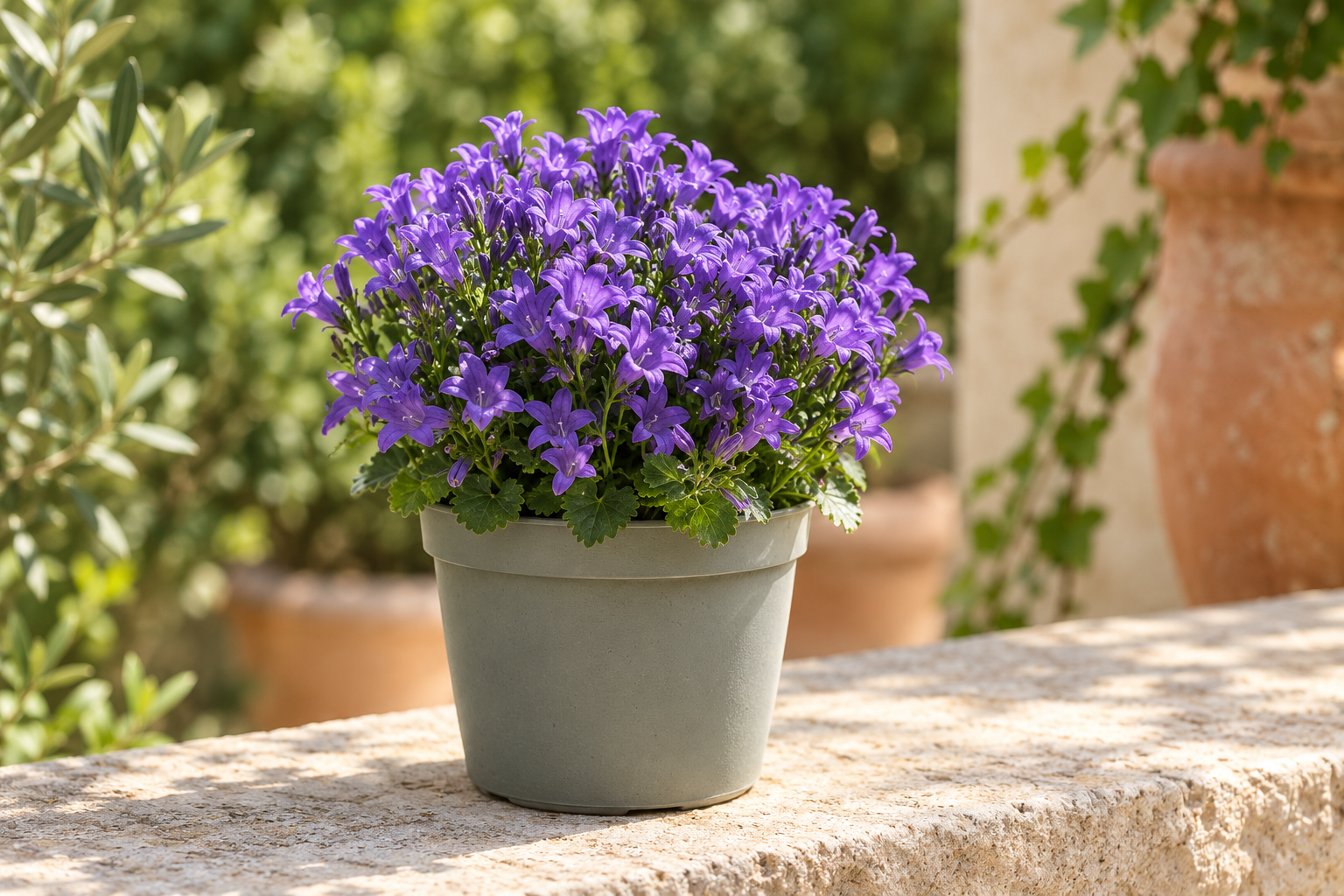
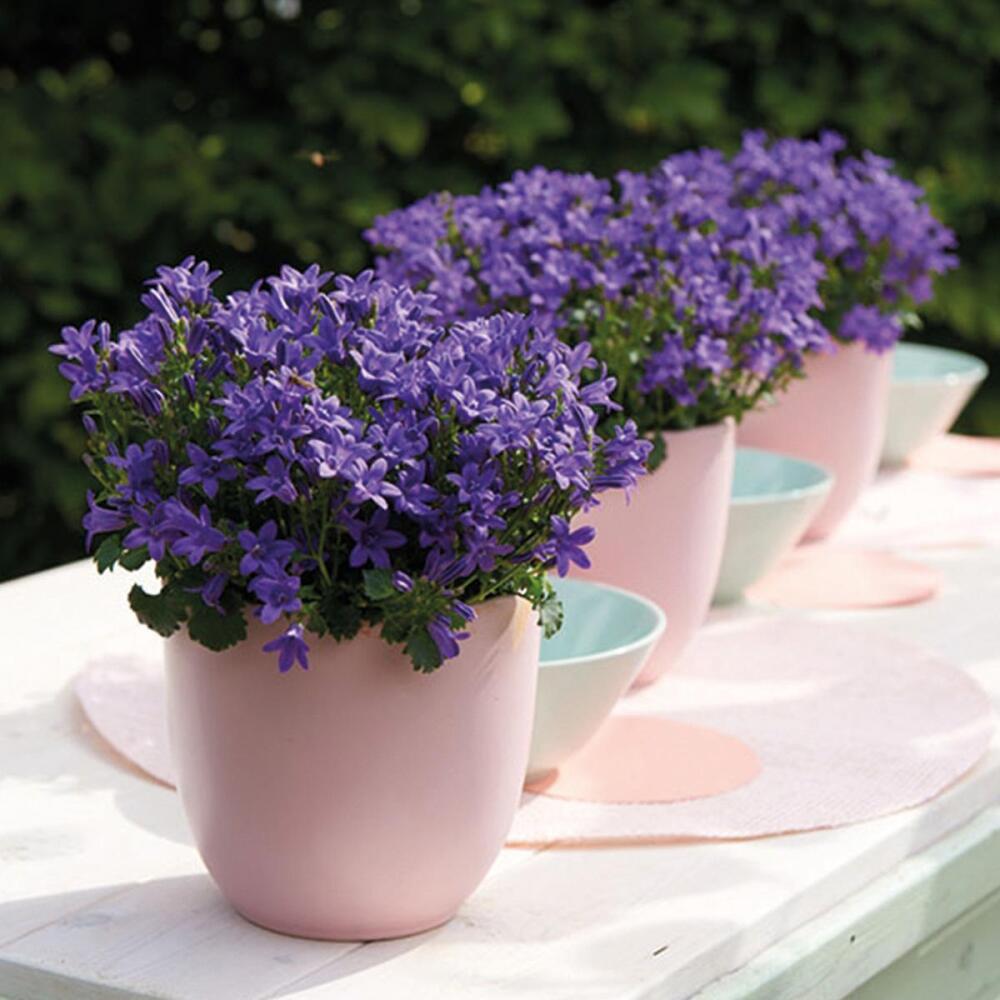
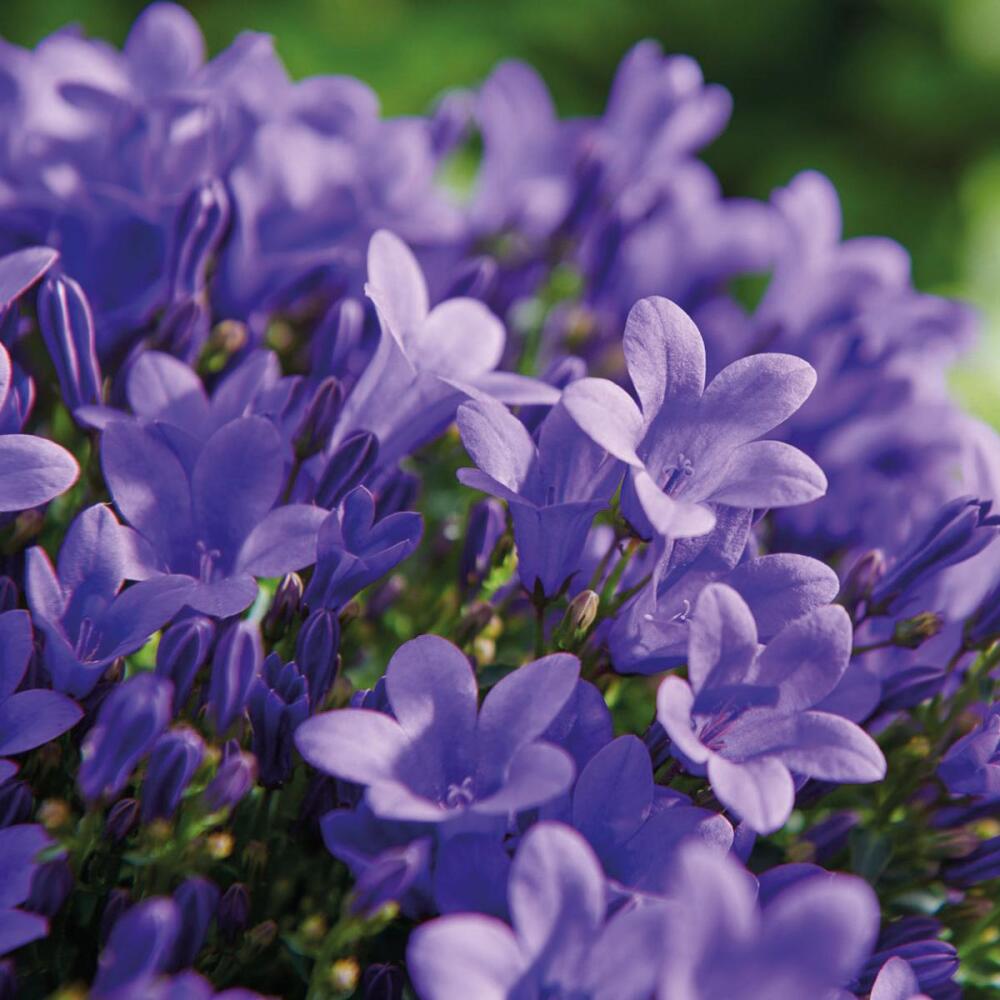
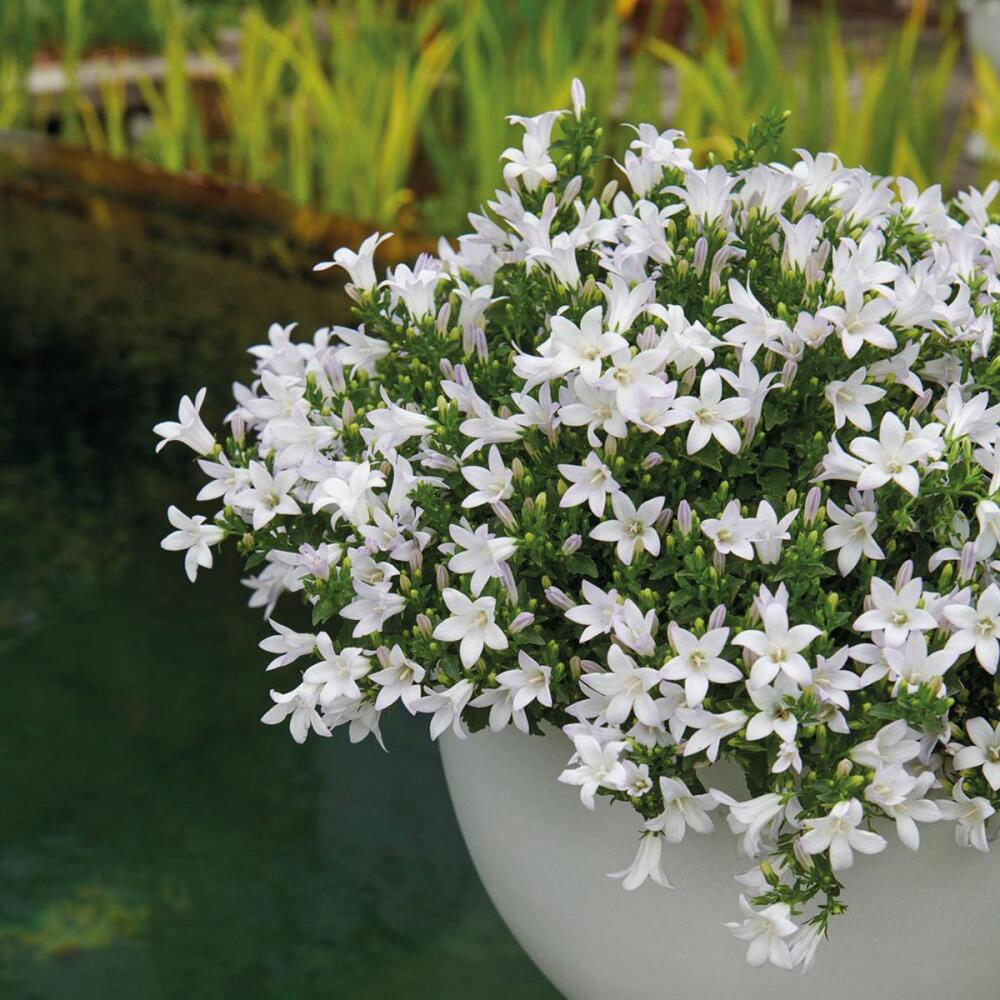
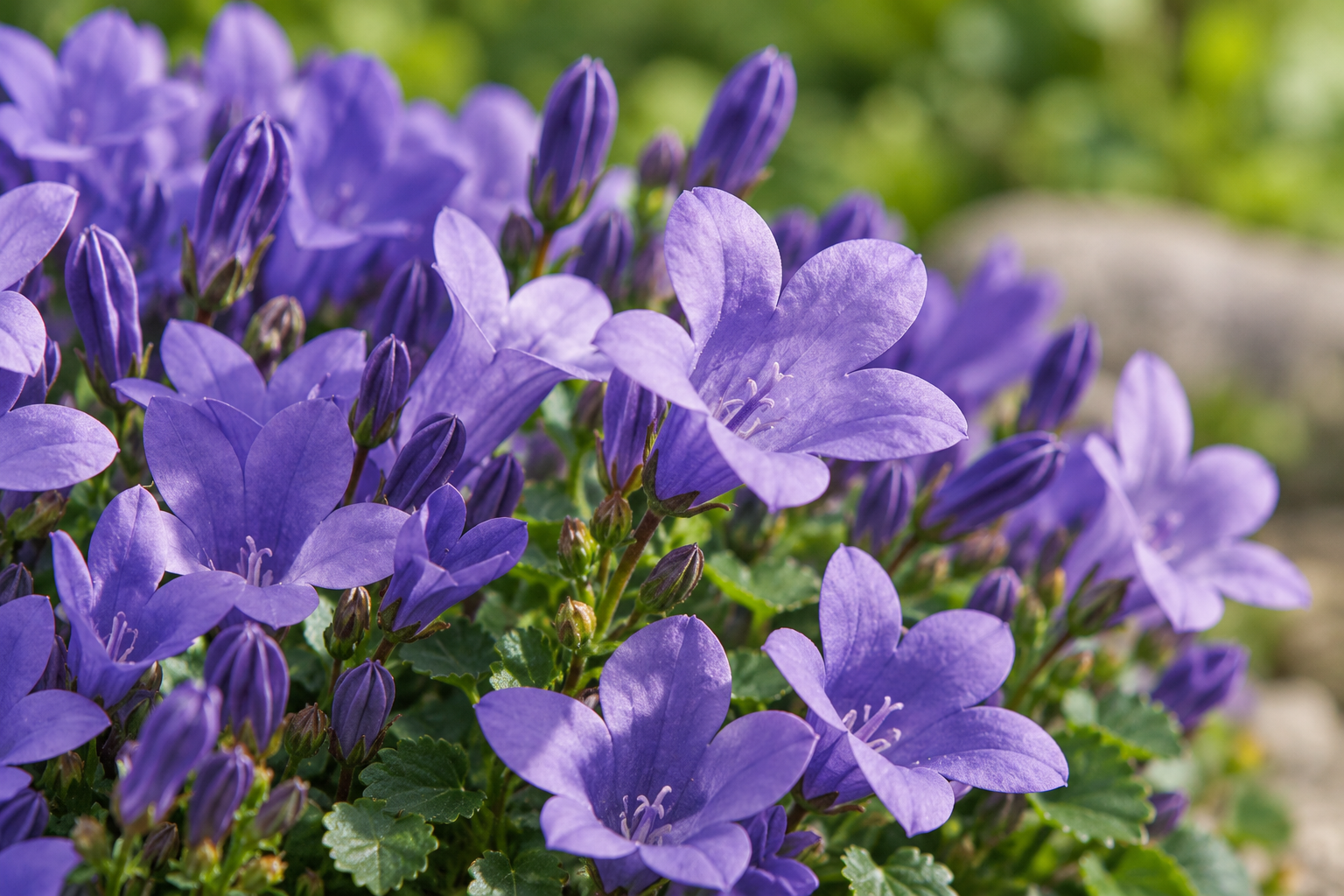
Ambella is a densely rounded bellflower with many little blooms above green foliage. From above they open in five lobes; from the side their connected tubular to funnel-shaped base is visible. That second look explains the bellflower name better than a single top view. Small rounded heart-shaped leaves with toothed edges accompany ascending shoots. Addenda lists Ambella as a compact series of Campanula portenschlagiana. The linked offers here are purple and white; the particular selection decides flower colour. A bright terrace allows close viewing of its compact form, and later it may grow along a low bed edge. Compared with loosely spreading Stella bellflower, young Ambella looks rounder and denser. That helps with planting design but is no reason to supply its roots less carefully.
Let six little pots settle in calmly
Both specific offers state six plants, each in a 12 cm pot. Shop descriptions give no numerical delivery height. Later garden-cushion height also differs from the whole plant including pot. Lift each pot separately when unpacking instead of pulling its dense flowering head. Check trapped shoots, root-ball weight and whether soil inside retains moisture. Photographed flower abundance describes one moment rather than a fixed state of every delivery. First stand the six pots out, then distribute among suitable containers or a garden position. The advertised area does not immediately make a closed square metre: new roots and lateral shoots need time. When combining purple and white, actual quantity and colour remain determined by the particular shop order.
Bright partial shade is a garden position
Bright partial shade suits the compact terrace picture. The RHS species profile also lists sun provided soil stays freely draining and roots remain supplied. By a hot south-facing wall a small pot can dry much faster than on an airy table with morning sun. Observe the day’s course rather than just shade at the moment of placement. Deep under a dark roof there is often insufficient light for vigorous new growth. Ambella is a perennial garden plant. Brief decoration in a bright room cannot permanently replace its later outdoor position. After transport, gradually accustom sheltered-grown plants to stronger sun and wind. Choose a position where you can actually reach soil between little flowering heads. Seeing only the outer flower edge is insufficient for proper care checks.
A low border needs real root space
Mild spring or early autumn suits garden rooting when soil is frost-free, workable and not waterlogged. Humus-rich draining soil should retain moisture without forming a heavy wet core around the root ball. A stone edge is attractive but does not replace soil beneath the plant. Set the moistened root ball approximately at its previous level, gently close soil around and water slowly. Make sure original pot soil does not subsequently stay dry while neighbouring soil is moist. Allow sideways space for developing cushions and access for checks. RHS describes low foliage of about 15 cm for the species; flower shoots and series culture may differ. That garden guide is not delivery height. In containers provide free drainage holes and sufficient soil; closed outer pots need checks for accumulated water.
Water by the root ball, not two weekdays
During growth the root zone should stay slightly and as evenly moist as possible. Repeated complete drying is no care goal for a young flowering Ambella. Check soil beneath foliage and pot weight when needed. As the root ball dries further, moisten it with control and drain surplus. If it stays heavy and wet, assess drainage and existing moisture before watering again. Rain may already have supplied enough water on an open terrace, whereas beneath a roof it often never reaches the roots. Wind and warmth further change demand. The general shop rule of twice weekly therefore cannot reliably decide for every position. Yellow leaves alone give no certain diagnosis either: dryness and constantly wet roots can both cause problems. Moist soil means free drainage, not a full saucer.
Remove faded flowers carefully
Look between flowers and gently remove faded heads without pulling healthy young shoots out of the cushion. Addenda describes this deadheading for Ambella; repeated hard pruning does not automatically follow. Another bellflower variety’s cutting instructions are therefore not transferred unchanged. More flowers are possible with good development, but neither three certain flowering phases nor a fixed September date is promised. Between flowering phases foliage and root care remain important. Measured container nutrition during growth may be useful according to a suitable feed label. Fresh pre-fed soil and plant condition determine need. More food replaces neither light nor a properly supplied root ball. Healthy basal shoot sections in spring may suit small personal propagation. Rooting requires a bright sheltered place and careful moisture checks; new plants must first grow strong themselves.
Accompany the little pot through winter
The species is a perennial garden plant, but a fixed subzero guarantee is unsuitable for a small delivery pot. In a bed, soil and drainage help determine winter cultivation. Container root zones are more exposed; long rainy periods and standing water warrant particular attention. Position the pot sheltered, keep drainage holes free and check root-ball moisture on frost-free days. A closed wrapping trapping rainwater does not improve matters. Gently remove dead parts in spring and watch new growth. Slugs may damage young leaves. Inspect unusual leaf spots or deposits closely first; the specialist profile lists rust, powdery mildew and leaf spots among possible problems. A dated plant-book photo recording position and root-ball condition helps compare changes. Thus care accompanies the small bellflower between especially photogenic blooming weeks.
One plant, several views
Good to know
Which colour is Ambella?
The linked offers are purple or white. The particular shop selection determines colour; the purple scene is only an example.
How tall is it when supplied?
Shop offers state six plants in 12 cm pots but no numerical delivery height. Low species garden height is not treated as a delivery measurement.
Do six pots immediately cover a square metre?
No. Young planting needs rooting and lateral development. Plan area and spacing according to actual place and growth.
Must I always water twice weekly?
No. Keep the root ball slightly moist and check actual moisture. Rain, roof, sun and wind change demand.
Should I prune hard after every display?
Gently remove Ambella’s faded heads and retain healthy shoots. Hard cutting for Stella or other bellflowers is no automatic Ambella rule.
Does it certainly flower three times yearly?
Further flowers are possible with suitable culture. Timing and abundance depend on development and position; fixed repetition is not promised.
Can the small pot winter unprotected?
Even a perennial garden plant needs suitable container drainage and shelter under strong exposure. Check the root ball on frost-free days.
Sources and editorial note
- Exotenherz: purple offer, delivery form and originals
- Exotenherz: white offer, delivery form and originals
- Addenda: Ambella series profile and botanical assignment
- Addenda: complete series catalogue, Ambella and Adansa
- Addenda: bellflower and flower care
- RHS: Campanula portenschlagiana, habit and garden growing
Own shop offers, unchanged originals and directly read specialist sources compared on 4 October 2026. Delivery form, series selection and garden development are described separately. Check availability in the shop.