This plant at Exotenherz
Check the shop offer for current availability, price and what is included.
Check the selected shop offer for price, availability and delivery contents.
Your care table
| Topic | What to do | Why it helps |
|---|---|---|
| Light | Bright to sunny; acclimatise gradually after moving outdoors. | Fresh foliage handles a sudden change to full light poorly. |
| Water | Water thoroughly after surface drying. | Even firm palm leaves need a supplied rootball. |
| Drainage | Pot with holes; remove standing water. | Wet, air-poor compost damages roots. |
| Compost | Structurally stable container compost with mineral components. | The mixture stays well drained while retaining moisture. |
| Nutrients | Moderately during growth according to the fertiliser label. | A young container palm grows in a limited compost volume. |
| Winter | Bright, cool and frost-free; water less often but not never. | The potted rootball is more cold-sensitive than an established palm. |
| Pruning | Remove only completely brown fronds; preserve the heart. | New fronds arise from the delicate growing point. |
| Checks | Inspect leaf undersides, stalks and rootball regularly. | Problems can be recognised before the entire crown suffers. |
Check the compost and pot weight. The care table explains how far the compost may dry.
Water only when needed. The water should reach the root ball without spilling over the rim.
Remove surplus water from the saucer or cachepot. Then return the plant to a suitable position.
A palm with its feet on the ground
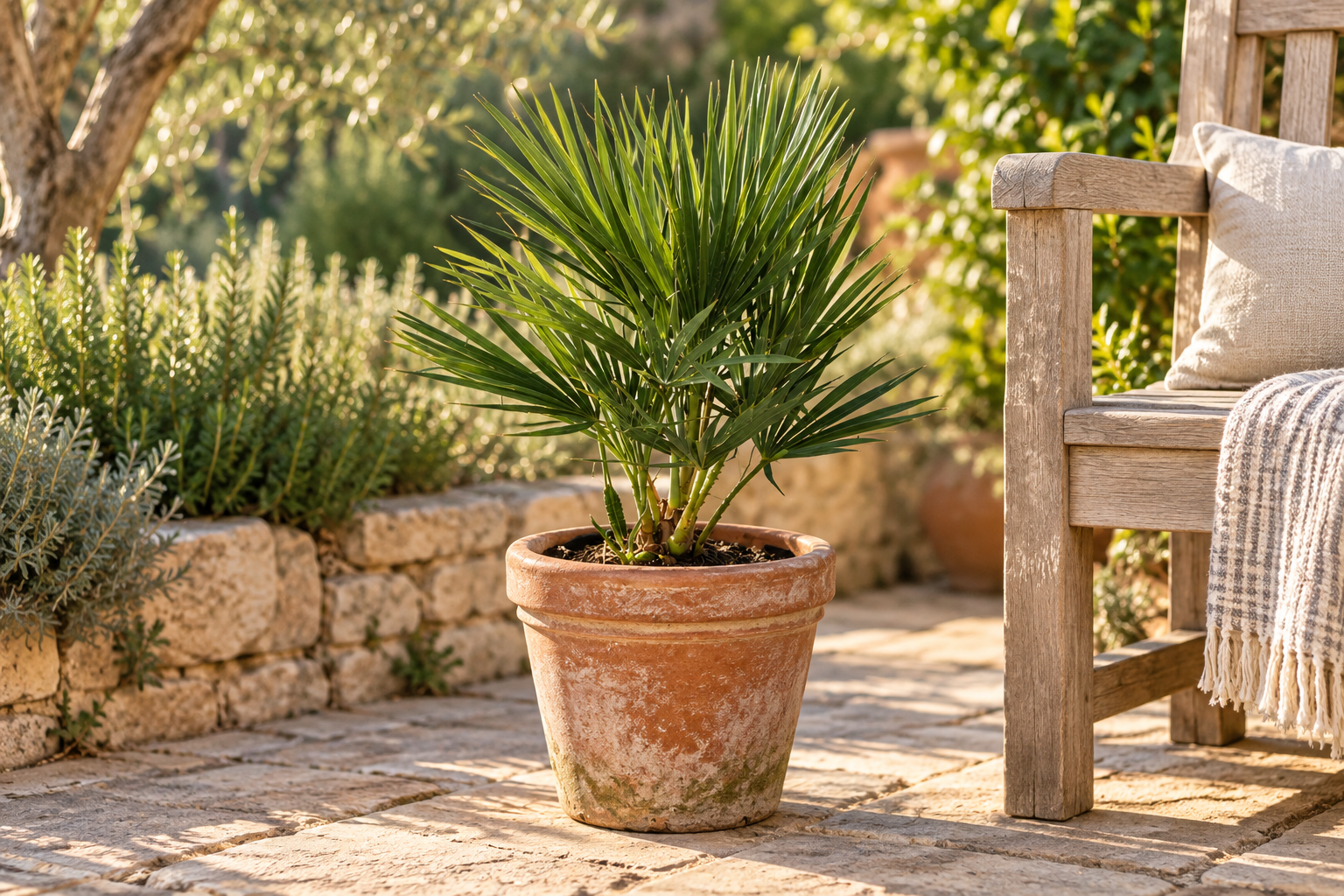
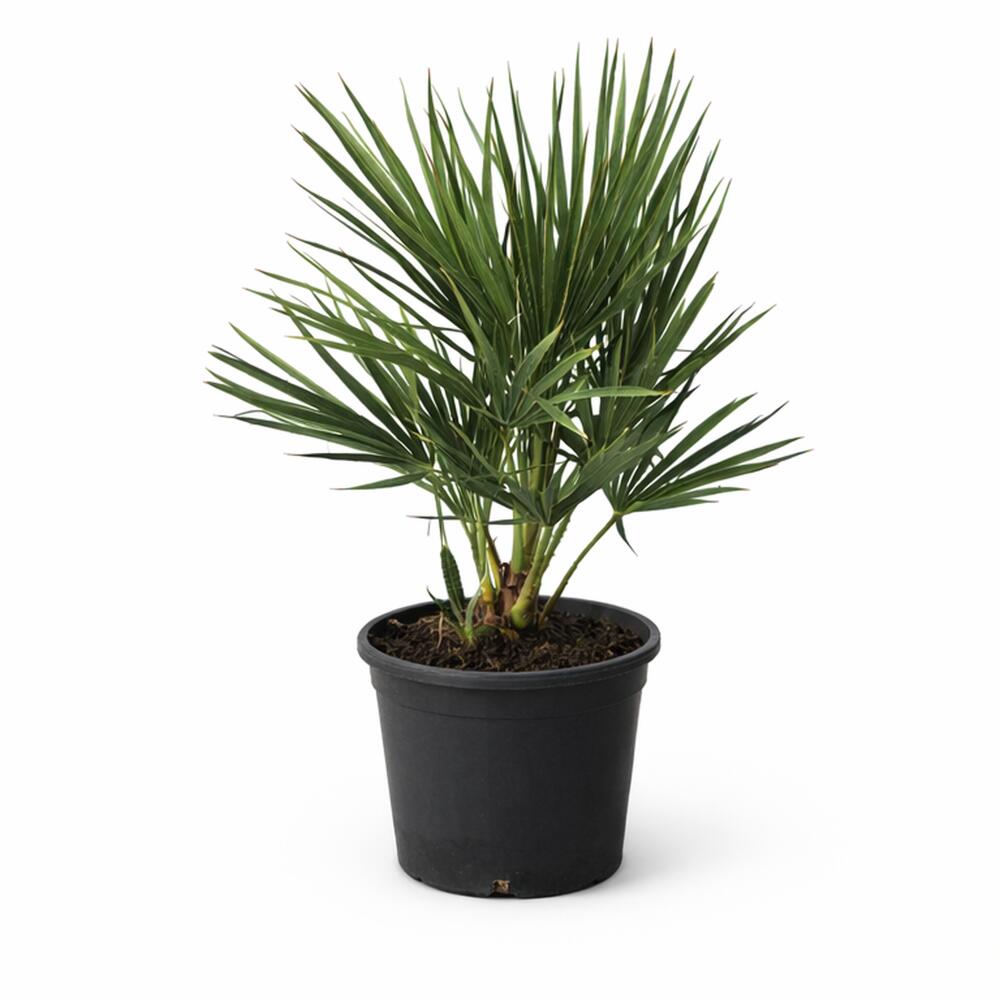
The dwarf fan palm’s charm does not start with a tall trunk. Young fans sit close together and open like little green hands. Chamaerops humilis is initially manageable but develops a strong, often multi-stemmed shape over the years. Our plant in an 18 cm pot is approximately 40 cm tall, including the pot. This is a good beginning for a container palm whose growth you can accompany. A warm terrace suits it; a dark hallway less so over time. Plan its winter position now, before the container becomes heavier.
Arrive without changing everything at once
Unpack the fronds gently and check rootball moisture. Leaf stalks may be armed, so grip the pot rather than reach between fans. After transport, the palm may initially stand brightly and sheltered from strong wind. If compost is moist, it needs no welcome watering. A new outer pot is fine as long as you can lift out the nursery pot and remove drained water. Repotting makes sense when roots truly fill the pot. The first week need not become a major gardening project.
Sunshine that becomes familiar slowly
A bright, sunny place supports short, firm fronds. Nevertheless, a newly unpacked palm should not immediately enter the hottest midday sun. Begin with protected light and gradually extend sunny hours. On a terrace or balcony, the container needs stability so wind does not constantly rock the roots. Under glass, also pay attention to ventilation: sun through a pane may generate intense heat. Indoors, this palm belongs in a genuinely bright area, not merely as a green object somewhere beside the sofa.
The rootball decides about the watering can
Firm fans may tempt you to consider the dwarf palm completely undemanding. However, a small container dries considerably faster in sun and wind than garden soil. Feel the upper compost and check pot weight. When it has dried, water slowly until water emerges below. Then allow excess to drain. Daily little sips often wet only the surface while the interior stays dry. Conversely, a heavy, cool rootball is no reason to add more water. Demand changes with weather, growth and container size.
Compost that does not collapse
For later repotting, we choose a stable container only modestly larger, with clear drainage holes. Structurally stable compost and mineral components help maintain water and air in the right proportion. A gravel layer alone does not make dense compost well drained. Set the palm approximately as deep as before and firm the mixture gently. Moderate nutrient applications are helpful during growth; dosage follows the product used. More fertiliser replaces neither light nor healthy roots. In autumn, reduce the supply in line with slowing growth.
Hardy does not mean invulnerable in a container
The species may tolerate cold in suitable locations. This does not provide a blanket frost guarantee for a young plant in a small pot. A freezing rootball and winter wetness differ from a sheltered garden position. For this delivered size, bright, cool, frost-free overwintering is the more reliable route. Water sparingly but keep checking the rootball: evergreen fronds lose water in winter too. A warm, dark room challenges the palm unnecessarily. Before moving it outside in spring, gradually reacclimatise it to wind and sunlight.
Guide the crown gently
An older brown frond does not make the palm ill. Wait until it has died completely, and only then cut it off cleanly. Green fronds are the plant’s working surface; frequent shortening weakens it. The heart in the centre remains untouched. Dry tips may have various causes, from a temporarily dry rootball to unfavourable room air. Therefore consider position and roots before changing anything. The finest palms rarely come from many interventions, but from a good place, a thoughtful watering rhythm and patience with their own pace.
One plant, several views
Good to know
Can the young dwarf palm overwinter outside?
For the small container plant, we recommend a bright, frost-free winter position; species hardiness information is no guarantee for the potted rootball.
Must it be repotted immediately?
No. Check roots and rootball first; a heavily rooted pot warrants a modestly larger container.
Why do leaf tips turn brown?
Check moisture history, roots and position. Brown tips alone do not allow an unambiguous diagnosis.
How often should I water?
According to rootball moisture and pot weight; more often in heat, considerably less in cool overwintering.
May I shorten the palm?
Not at the heart or green fronds. Remove only completely dead leaves.
Can it stay in the living room?
Only in a genuinely bright position; for winter, a bright, cool area is better than a dark, warm corner.
Is 40 cm its later size?
No. This is the approximate overall height of the delivered plant, including its pot.
Sources and editorial note
Shop offer, SKU, GTIN and availability checked live on 01.10.2026. Original photograph unchanged. Independently researched gardening texts and an individually reviewed scene.