This plant at Exotenherz
Check the shop offer for current availability, price and what is included.
Check the shop for the current price, availability and offer contents.
Your care table
| Topic | What to do | Why it helps |
|---|---|---|
| Light | Choose an open sunny outdoor place without shade from neighbours. | General houseleek cultivation needs light and openness. |
| Water | Check soil and weather; target dry soil with water if needed. | Rain and drying change need, not reliably reflected by a fixed interval. |
| Drainage | Keep holes clear and remove water from closed containers. | Persistent wetness can damage roots. |
| Substrate | Use draining soil or suitable loose mineral potting mix. | Sun cannot replace sufficient drainage. |
| Planting level | Set the root ball at the existing level and leave rosette centre clear. | General instructions maintain previous height. |
| Surface | Add a loose mineral surface around rosettes if needed. | It can keep soil off lower leaves but cannot fix deeper waterlogging. |
| Feeding | Consider existing supply; supplement pots sparingly during active growth. | Extra nutrients are usually unnecessary in beds and depend on need in pots. |
| Winter | Put very wet pots under airy rain shelter if needed and keep checking drainage. | Rain protection helps with drainage and air exchange. |
| Refreshing | Carefully rearrange crowded or gappy groups if needed. | Existing rosettes and roots determine the reason. |
| Offsets | Separate rooted rosettes gently; establish unrooted ones under protection. | Initial rooting differs from established sunny-site cultivation. |
| Checking | Examine moisture, drainage and roots when rosettes soften or anchor poorly. | Extra water or feed cannot automatically fix wetness or root issues. |
For young plants, feel the soil directly at the root ball. The surface and deeper soil may have different moisture levels.
Water thoroughly after planting; later, water according to the soil, weather and establishment rather than a fixed calendar.
Avoid standing water. For plants in containers, also check that water runs out of the drainage hole.
China Green: green centres in dark rosettes
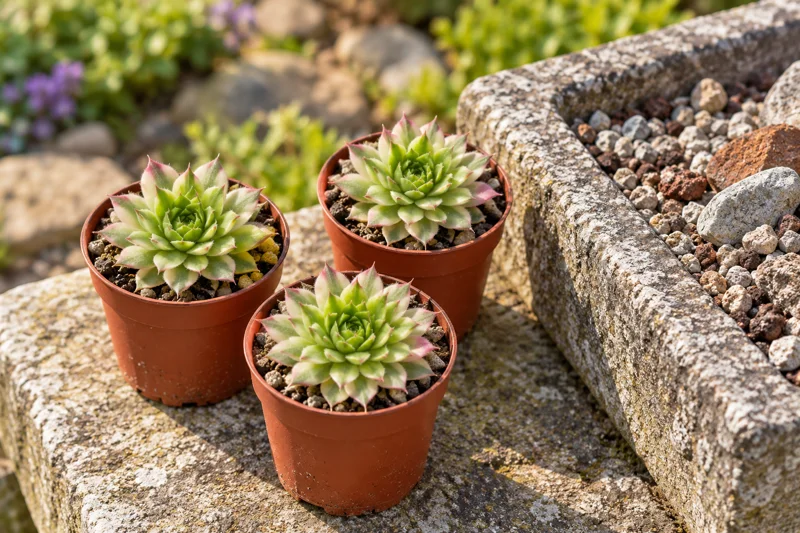
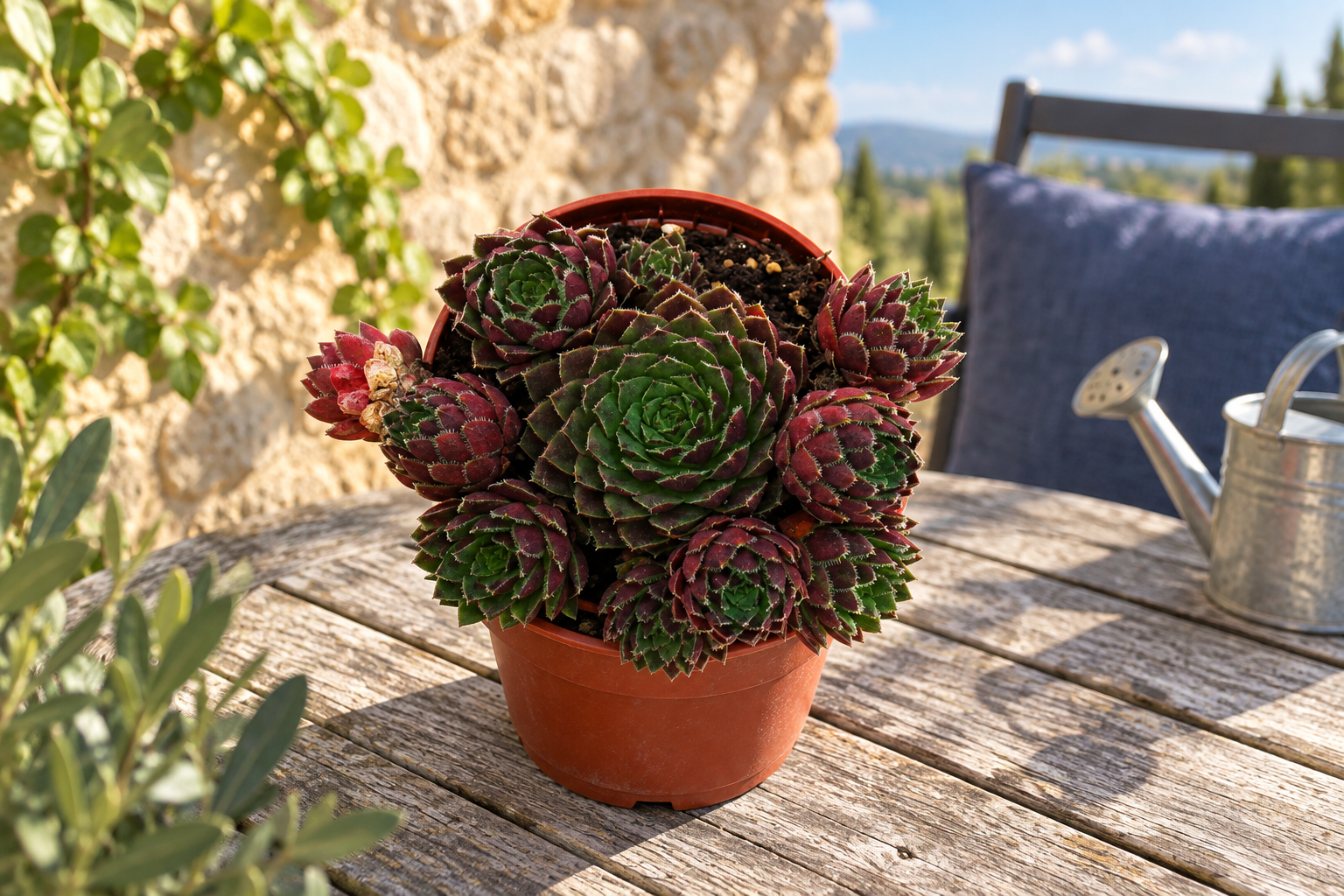
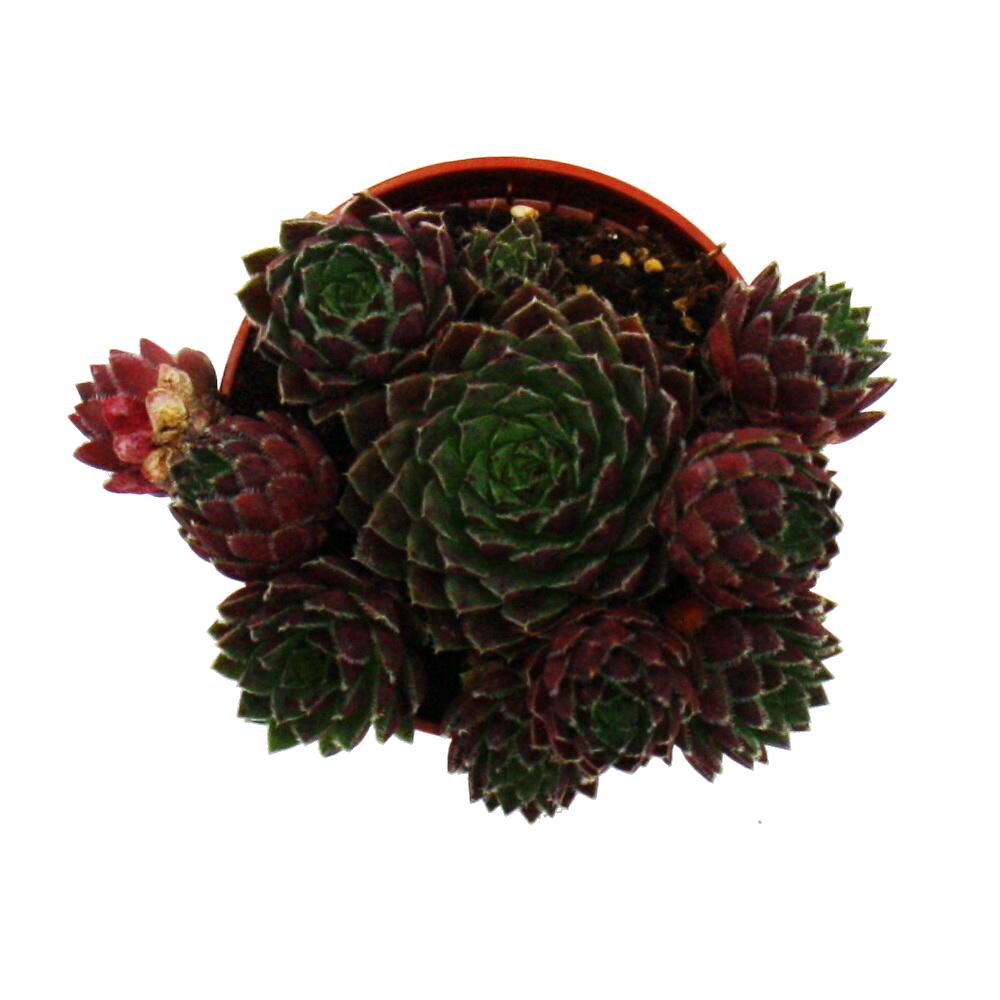
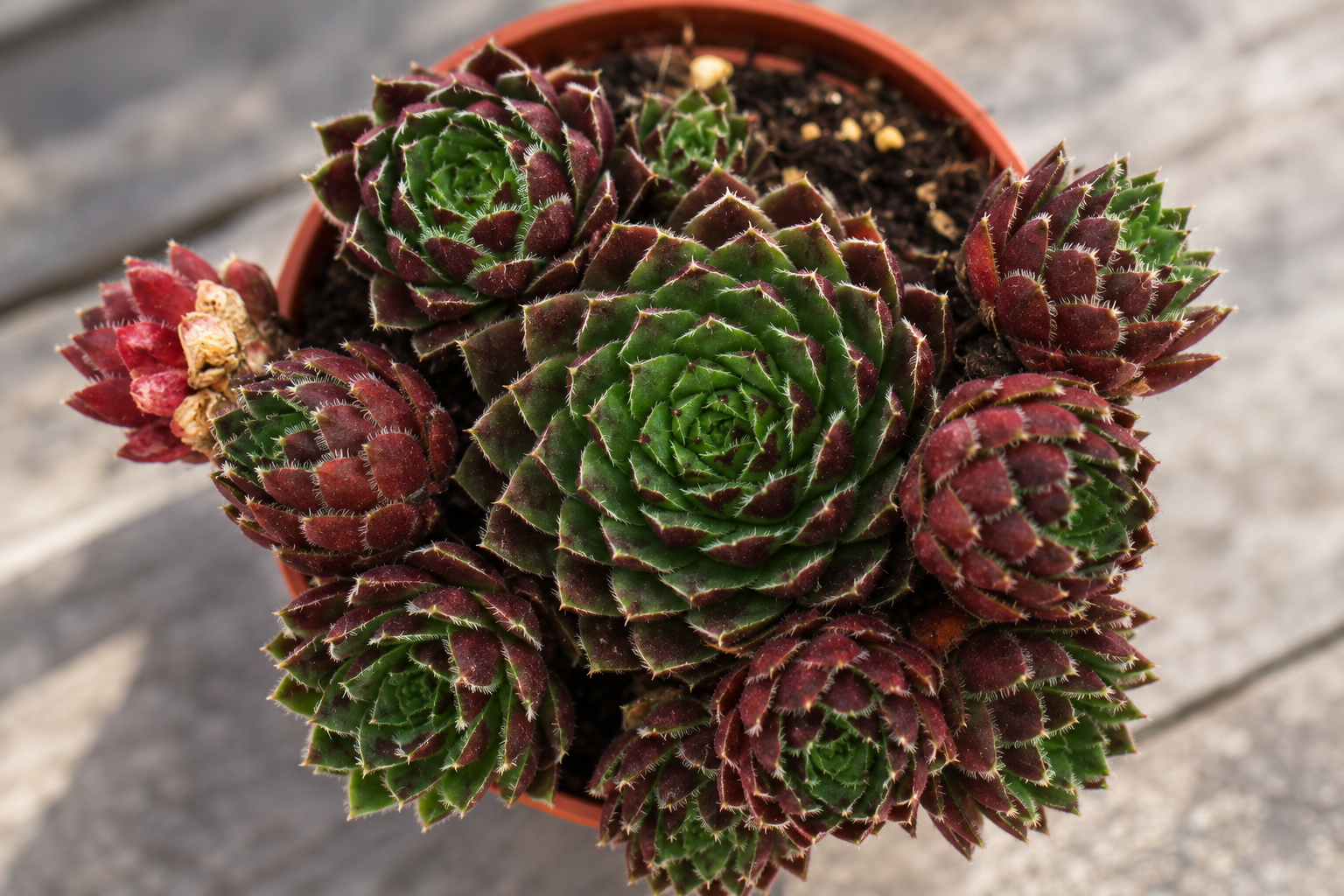
From above, China Green shows a clear contrast: green leaves inside rosettes and dark burgundy areas outside. Pointed fleshy leaves interlock in layers, with fine pale hairs tracing edges. These features appear in the associated photograph of the young group. A little place allowing a view from above displays its construction well.
China Green is this houseleek’s shop name, used here as a named Sempervivum trade selection. Name and colours imply no particular wild species or ancestry. Typical houseleek structure helps care more: fleshy leaves store water while rosettes need open sun and good drainage. General Sempervivum guidance is therefore the basis. A photo records a state, not a promise of permanently identical colours on every plant.
After unpacking: check place and drainage first
Remove the growing pot from packaging and position rosettes with leaves free. Hold the pot or gently support the root ball when moving; pulling pointed leaves is unnecessary. Then inspect soil and drainage. A still-moist root ball needs no immediate water simply because the plant arrived.
Prepare the final place before choosing decoration. A pot with drainage holes fits a design; a closed container needs checking and emptying at every watering. Outdoors, rain can collect too. Include free drainage as a permanent part of the position. Rosettes need light and must not remain in collected water after rain.
Outdoor sun and a clear view of rosettes
Open sunny outdoors suits general Sempervivum culture. Rock beds, bright gravel areas and drained containers offer options. Combined light and drainage matters more than surrounding materials. On balconies choose where rosettes get sun and the pot drains after rain. A dark place beneath dense foliage or behind other plants does not meet these conditions.
Watch neighbours later too. Tall perennials or increasing growth can shade an initially open group. Check with actual growth and keep rosettes clear if needed. Some spacing helps see leaf layers, soil and standing water. The plant remains part of the garden without disappearing in shade.
Plant in draining soil at its previous level
Houseleeks need draining soil. More light cannot compensate for dense soil wet for a long time. Choose a bed where water infiltrates well. With permanently heavy wet soil, a suitable pot is often easier to manage. Loose mineral-draining substrate helps; ready-made cactus or alpine mixes are options. A name on a bag cannot replace inspecting structure and drainage.
Set the root ball at its previous planting height and firm gently. Do not bury the rosette centre. A loose mineral surface may keep soil off lower leaves and reveal rosette structure, but cannot fix waterlogging deeper down. Check substrate and holes first; the top layer only supplements styling. General houseleek guidance favours planting or dividing during a period allowing good establishment, often spring.
Little water means watching weather and soil
China Green needs no fixed watering day. Additional houseleek water follows soil dryness and weather. Check whether soil is actually dry and rain has already supplied moisture. Targeted watering may help in a dry growing phase. Water soil and drain fully, then remove leftover water from containers.
A roofed pot receives less rain than one in the open garden; a small pot can dry faster than a bigger planted area. These differences call for checking, not precautionary daily watering. Moist soil initially needs no extra supply. Low water needs do not mean no attention: a sunny dry pot and a water-filled outer pot need different responses. In winter, weather-exposed houseleeks usually need no extra water; continue assessing real moisture in protected containers.
Add nutrients and space only when needed
General Sempervivum cultivation usually needs no extra feeding in garden soil. In pots, existing soil nutrients matter too. Already fertilised substrate gets no automatic extra feed. During active growth with declining supply, restrained feeding as directed may fit. This sets no rigid calendar or extra feeding for stronger colour.
If rosettes become crowded or gaps appear, rearrange if needed. Lift carefully and inspect the root zone before preparing more soil or a new pot. Divide only where rosettes separate gently and provide draining soil again. Remove visibly dead material. Refreshing follows actual condition rather than routine intervention without reason.
Keep winter wetness off without enclosing the plant
Drainage remains important in cool weather. General guidance recommends a sheltered place for pots at very wet sites. An airy rain shelter or suitable cold frame can reduce excess winter moisture. Prevent rain entering over the edge or water remaining below. Rain protection and functional drainage work together.
A sealed cover around rosettes and pot cannot replace them. Keep airy and observe soil rather than trapping moisture. General statements about hardy houseleeks imply no precise frost limit for China Green. Choose winter shelter according to actual site and guidance for the particular plant. A pot repeatedly wet in winter especially needs better positioning and drainage.
Look calmly at offsets and changes
Sempervivum can generally be propagated from small daughter rosettes. Separate rooted offsets carefully into draining soil. Unrooted young rosettes need careful surface placement, protection from strong direct sun and cautiously maintained moisture until rooting. This differs from established outdoor sun-grown houseleeks. Watch new roots and growth without promising a duration or success count.
If a rosette softens, anchors poorly or soil stays wet, start with site and roots. Inspect drainage and the root ball gently before extra water or feed. Excess moisture may damage roots, but changes can have several causes. Fine marginal hairs visible in our photograph belong to observed appearance and alone prove no pest attack. Consider the whole plant and targeted checks.
One plant, several views
Good to know
What does China Green mean?
It is this Sempervivum selection’s own trade name, described with its offer and rosette photograph. The name implies no particular wild species or ancestry.
Will rosettes stay exactly green and burgundy?
Colour description records our photograph. Houseleek colours generally vary with conditions and season; no fixed colour sequence or permanent photo colour promised.
Can it stay permanently in the living room?
The underlying cultivation calls for open outdoor sun. A dark indoor place cannot replace those light and site conditions.
How often should I water?
Check soil and weather rather than a fixed interval. Dry soil without rain may need water; moist soil initially needs no more. Drain surplus.
Does surface gravel prevent waterlogging?
No. It can keep soil off lower leaves but soil and container beneath still need drainage. A filled outer pot remains a problem.
Does it need regular feed?
Usually not in garden soil. In pots, existing nutrients and active growth decide. Supplement sparingly only if needed, as directed without rigid routine.
How should I position the pot in winter?
Avoid persistent wetness and inspect drainage. Airy rain shelter can help at very wet sites. General genus guidance implies no exact frost threshold for China Green.
Can I remove daughter rosettes?
General cultivation allows careful establishment in draining substrate. Rooted and unrooted rosettes need different initial care; roots and growth matter more than fixed time.
Are the garden images photographs of delivery?
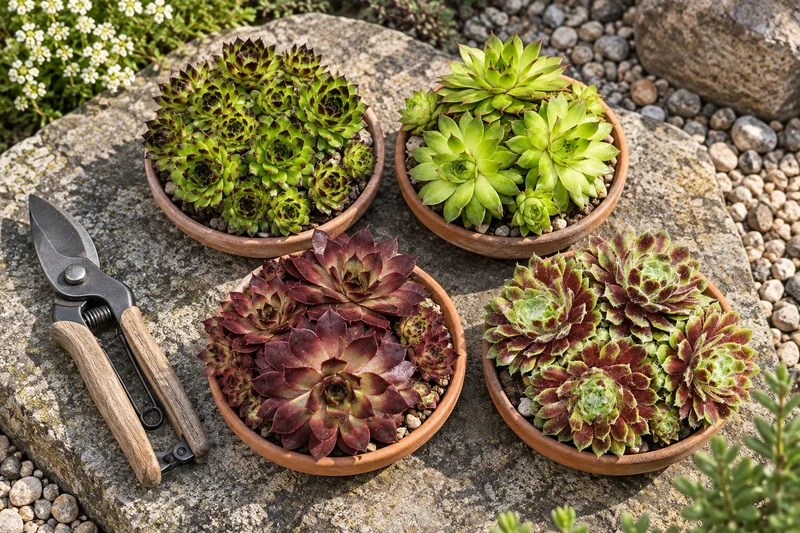
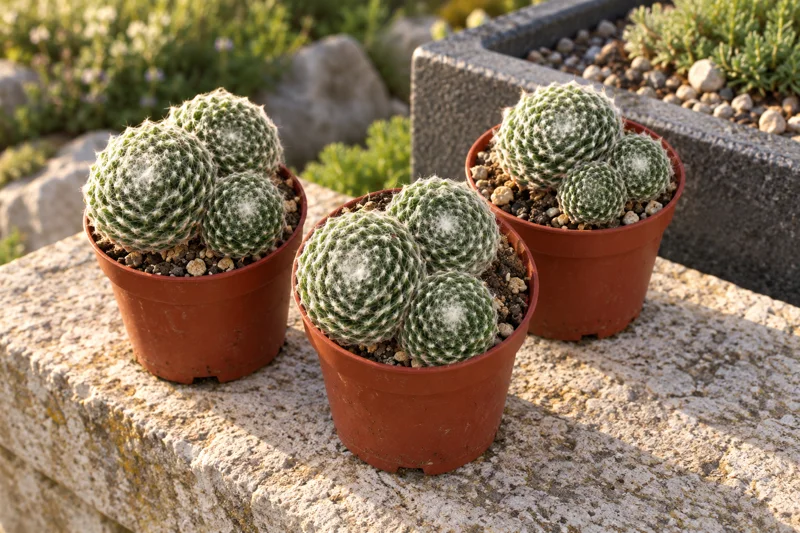
The original shows the associated young shop group. Additional views are AI examples based on it. Decoration and enlargement fix neither delivery contents nor size and show no later stage.
Sources and editorial note
- Exotenherz: our selected China Green offer and associated photograph (6 October 2026)
- Royal Horticultural Society: complete general Sempervivum growing guide, not a China Green cultivar description (6 October 2026)
China Green is used as a distinct Sempervivum trade name. Appearance follows the associated photograph; care follows the complete general Sempervivum guide. Our offer checked on 6 October 2026.