This plant at Exotenherz
Check the shop offer for current availability, price and what is included.
Check the shop for the current price, availability and offer contents.
Your care table
| Topic | What to do | Why it helps |
|---|---|---|
| Arrival | Check each rosette and ball separately. | Tiny 5.5 cm pots react quickly to dry and wet. |
| Position | Bright open outdoors, low neighbours. | The small rosette must not stay shaded. |
| Planting | Former level in frost-free non-wet soil. | Keep centres free; spring helps establishment. |
| Mix | Drained mineral structure and open holes. | Gravel alone does not prevent standing water below. |
| Water | Water the root zone according to moisture, then allow drainage and drying. | Water-storing leaves do not replace checks on young balls. |
| Nutrition | Usually no extra garden feeding; restrained container feeding if needed. | Extra fertiliser fixes neither dry nor waterlogged roots. |
| Variegation | Watch new leaves, separate all-green daughters if needed. | Pink changes differ from loss of cream pattern. |
| Propagation | Carefully root appropriately marked daughters in spring. | Seedlings do not reliably preserve the selection unchanged. |
| Winter | Airy rain shelter during long wet periods, open drainage. | Saxon needs particular attention to winter wetness. |
For young plants, feel the soil directly at the root ball. The surface and deeper soil may have different moisture levels.
Water thoroughly after planting; later, water according to the soil, weather and establishment rather than a fixed calendar.
Avoid standing water. For plants in containers, also check that water runs out of the drainage hole.
Cream stripes in a small rosette
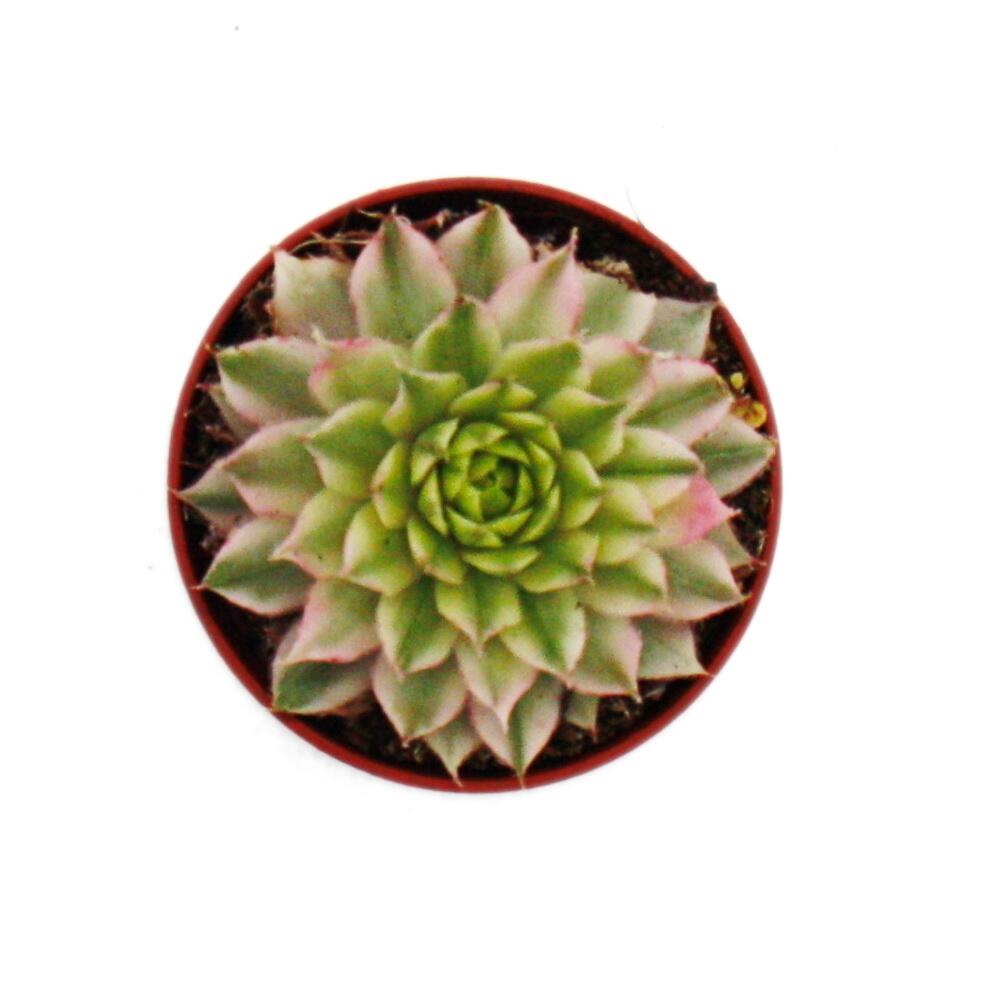
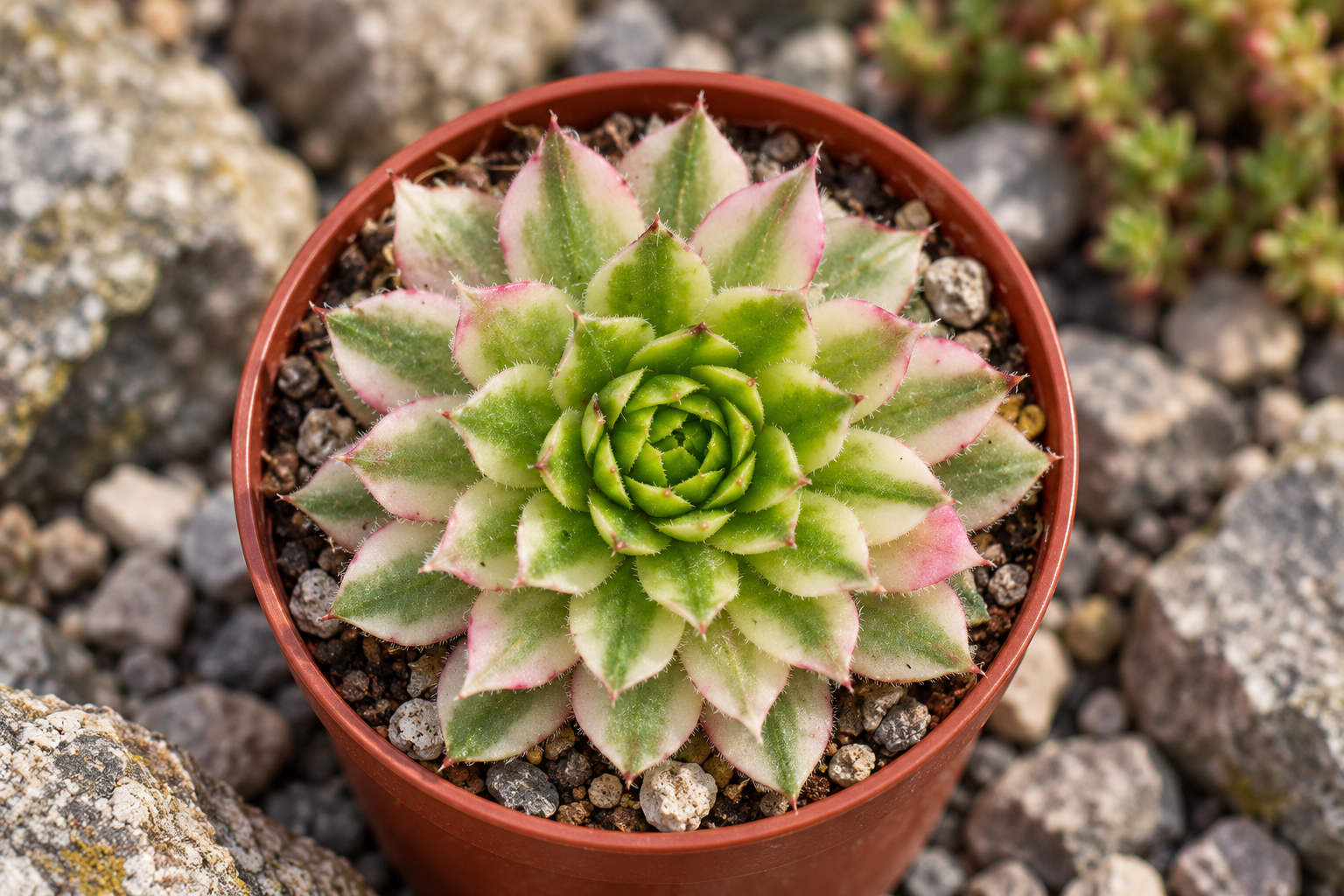
Saxon stands out before flowering. Thick pointed leaves crowd a green centre; cream lengthwise zones and pink-washed tips mark the low rosette. Fine margins show in the original too. Sempervivum belongs to Crassulaceae; Saxon is a named variegated selection. Foliage and gradual daughters matter, not a long upright stem. Pattern can differ within the group. Pink changes with light and season, not a promised permanent colour; pale zones are variegation. Do not judge by tip intensity alone. Green tissue and fresh central leaves remain useful observations.
Three tiny pots are a beginning
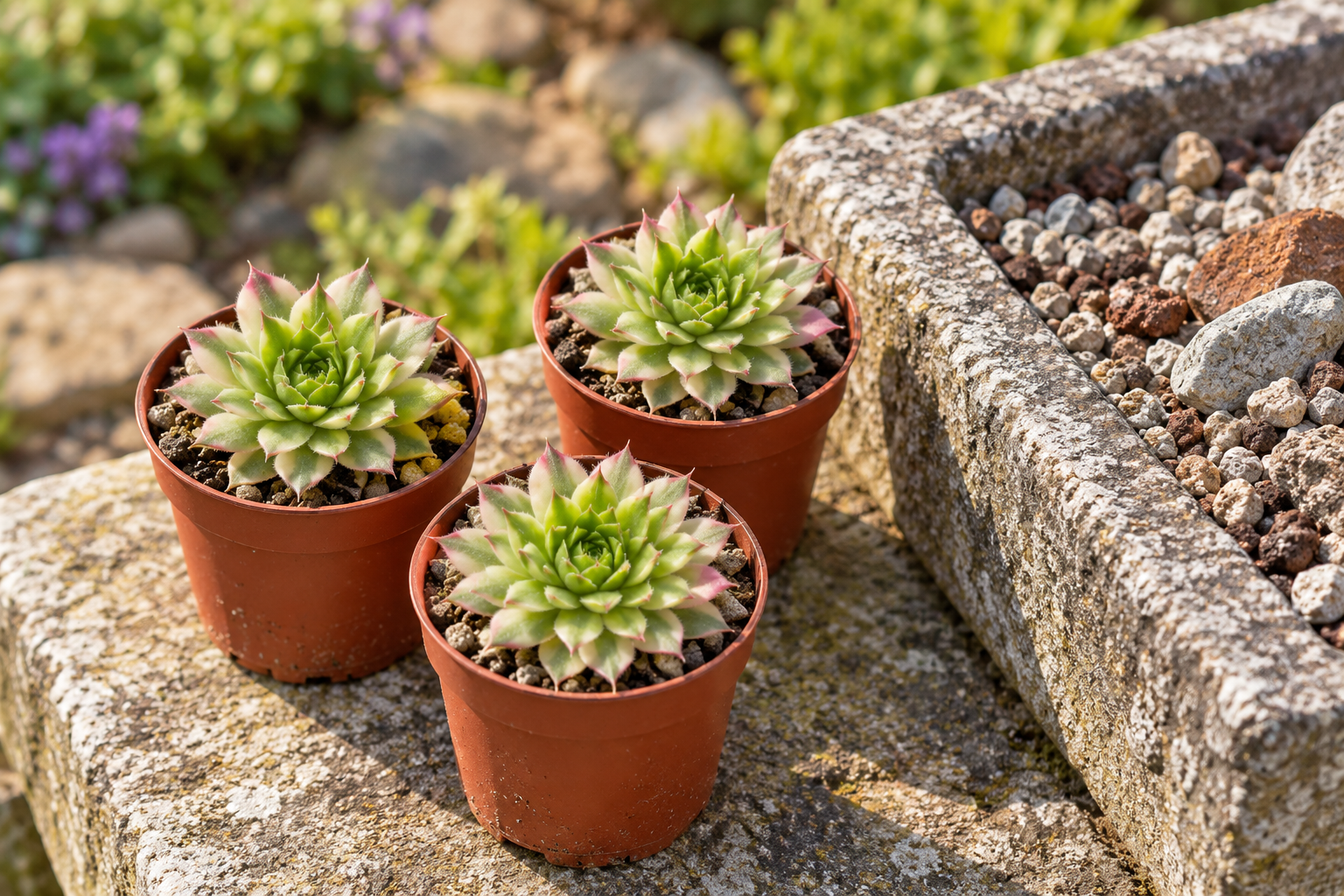
The offer gives three of the same selection, each 5.5 cm pot and about 6–9 cm overall height including pot. Starting and transport dimensions, not mature flowering height. Selection description gives about six centimetres rosette diameter; side daughters later occupy more area. Check each youngster’s firmness, wet or dry ball and intact pale leaves. Free packaging gently, carry pots without pulling rosettes. Keep the three separate initially if useful. Later spacing and bare stone show individual patterns; a closed carpet is not the delivery stage.
Bright outdoors with room between leaves
A small trough, drained bowl or open rock garden suits it. Higher neighbours must not cover the rosettes. A permanently dark indoor decoration or closed humid glass is unsuitable. Acclimatise sheltered-shipped youngsters gradually to strong sun, not immediately beside a hot reflective wall. Later rosette size matters more than pot count: about 8–10 cm centre spacing loosely derives from roughly six centimetres width and a free edge, not tested cultivar row spacing. Allow daughters or keep separate, retaining access for dead leaves and soil checks.
Mineral structure under decoration
Gravel only helps if water drains below. Choose leaner drained soil with stable mineral structure; suitable alpine or succulent mix provided it does not stay wet. Surface stones keep soil off lower leaves but replace no holes. Set near former level with centre free and ball gently connected to soil. Spring helps rooting through warmer months; other times require frost-free workable non-waterlogged ground. Improve the whole small area in heavy soil or use a suitable raised vessel. A water-filled hollow under a stone is a poor root environment even when leaves look dry.
Water by need, watch small balls
Fleshy leaves store water, making established Saxon modest in demand but not exempting small pots from checks. Water roots carefully after planting, drain and inspect before more. Targeted water may help in dry spring or summer, especially small containers. Daily drops into the centre can wet the base while barely reaching roots. Soft leaves require distinguishing dry roots from damaged wet roots before another dose. Normal winter rain usually requires no extra; under shelter actual moisture decides. Garden nutrition generally suffices; lasting container plants may need restrained label-based feeding during growth.
Green reversions and daughters separately
Saxon may produce offsets without cream. An entirely green daughter differs from a variegated rosette whose pink tips fade. Observe fresh leaves and mark a suspect daughter initially, without treating every seasonal change as lost selection. Separate clearly green daughters gently if preserving variegation; do not tear firm connections violently on small plants. Well-developed marked daughters suit spring propagation. Separate rooted rosettes gently into drained soil; lay unrooted ones shallowly and shelter from strong direct sun until establishment shows. Lightly attended moisture helps, constant wetness does not. Seed cannot reliably preserve the pattern: observation, not a guarantee for every new rosette.
Limit winter wetness, maintain the group
Saxon’s description expressly advises extra winter attention and possible rain shelter. Bright airy outdoors with free drainage; a little transparent roof or suitable open cover can keep prolonged rain away. Tight wrapping, condensation and warm dark indoors do not help. After wet weather inspect lower leaves and base. Soft translucent parts, poor firmness or absent roots require diagnosis and saving healthy daughters where possible. Gently remove dry outer leaves without pulling living ones. Mature houseleek rosettes may flower in summer then die; healthy daughters continue the group. No precise Saxon month or flower colour promised. In spring organise dense groups, fill gaps with healthy marked daughters and renew container soil when structure and roots no longer fit.
One plant, several views
Good to know
Is 6–9 cm mature height?
No, young overall size including pot. Later low rosettes about six centimetres across form a broader group; flower stems rise higher.
Is a green offset ill?
Not necessarily: Saxon can revert green. Separate carefully after confident distinction if maintaining variegation.
Must tips always be pink?
No, pink varies with season and light. Assess cream pattern and new leaves separately.
Why rot despite gravel?
Soil and container may stay waterlogged below. Check holes, mix and roots; gravel cannot empty a closed pot.
Overwinter in the lounge?
Bright airy outdoors with protection from excess wetness is preferable to warm dark indoors. No tight plastic wrapping.
How preserve variegation?
Gently separate and root well-developed marked daughters in spring. Seedlings do not reliably keep the pattern.
Why does a flowering rosette die?
Its individual life ends after bloom, daughters continue. Wet rot without flowering needs a different response.
Sources and editorial note
- Exotenherz: offer, delivery dimensions and originals
- Sempervivum-Liste: Saxon and Volkmar Schara’s first-hand description
- RHS: houseleeks in garden and containers
- NC State Extension: rosette structure and life cycle
Offer, originals and sources checked on 4 October 2026. Young size, later rosette development and seasonal colours are separate. Check shop availability.