This plant at Exotenherz
Check the shop offer for current availability, price and what is included.
Product and delivery details are given in the individual offer.
Your care table
| Topic | What to do | Why it helps |
|---|---|---|
| Position | Keep bright with filtered daylight, warm and frost-free. | The offered tropical aroids need light without sudden hot sun. |
| Water | Let the upper soil dry slightly, then water thoroughly according to need. | Roots should be supplied without standing in persistent wetness. |
| Drainage | Remove excess from the saucer or outer container. | A tall climber gains nothing from a wet pot bottom. |
| Support | Check stability and guide shoots loosely at appropriate points. | Ties must not constrict growing shoots. |
| Moss pole | Check material and root contact; do not water the root ball again solely because the pole is dry. | Moisture on the support and in the pot are different care questions. |
| Soil | Choose loose draining soil and a suitable pot size. | Limited root volume must keep pace with increasing foliage. |
| Food | During active growth, moderately according to the fertiliser label. | More fertiliser replaces neither light nor enough root space. |
| Pruning | Cut selectively only after recognising the specific plant; wear gloves. | Petiole, stem and aerial root perform different roles. |
Check the compost and pot weight. The care table explains how far the compost may dry.
Water only when needed. The water should reach the root ball without spilling over the rim.
Remove surplus water from the saucer or cachepot. Then return the plant to a suitable position.
A support changes the view of leaves
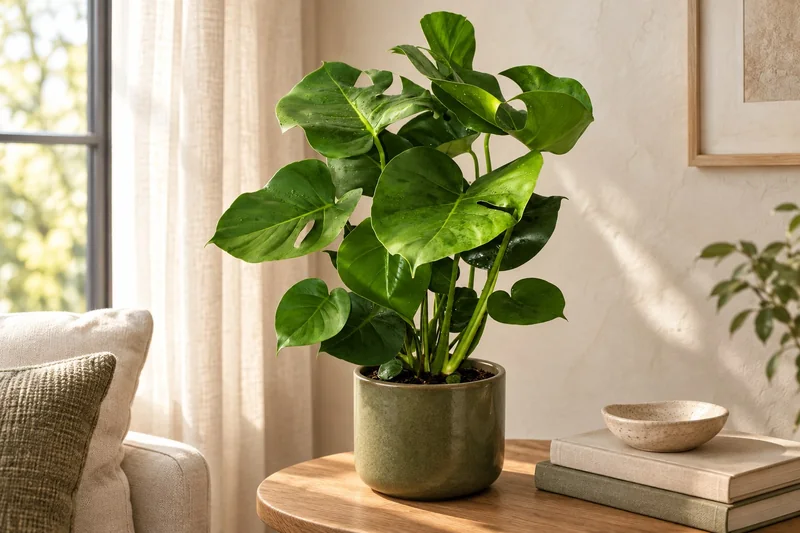
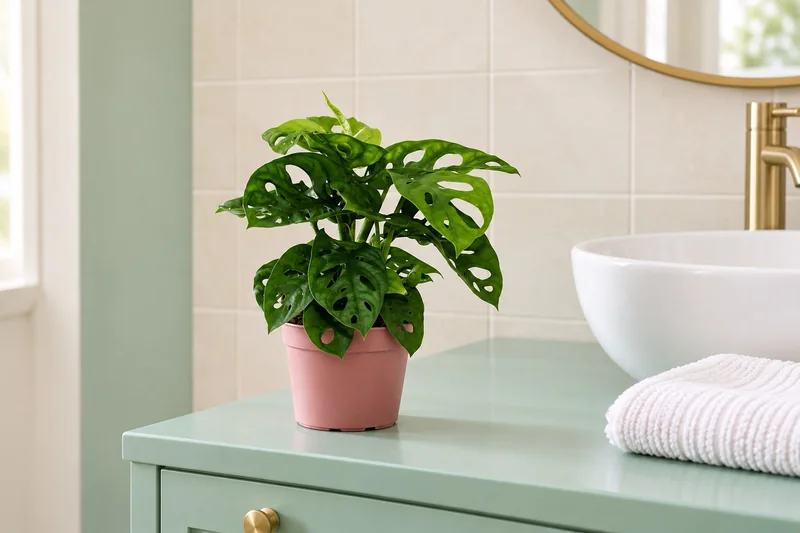
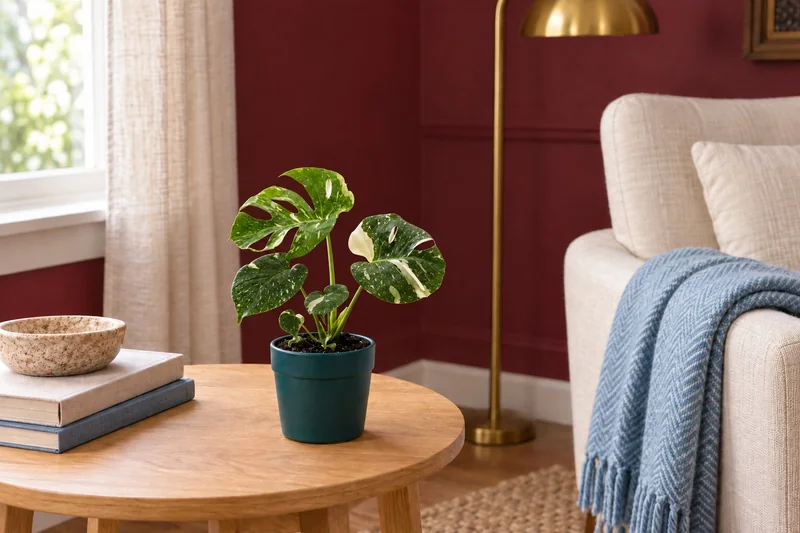
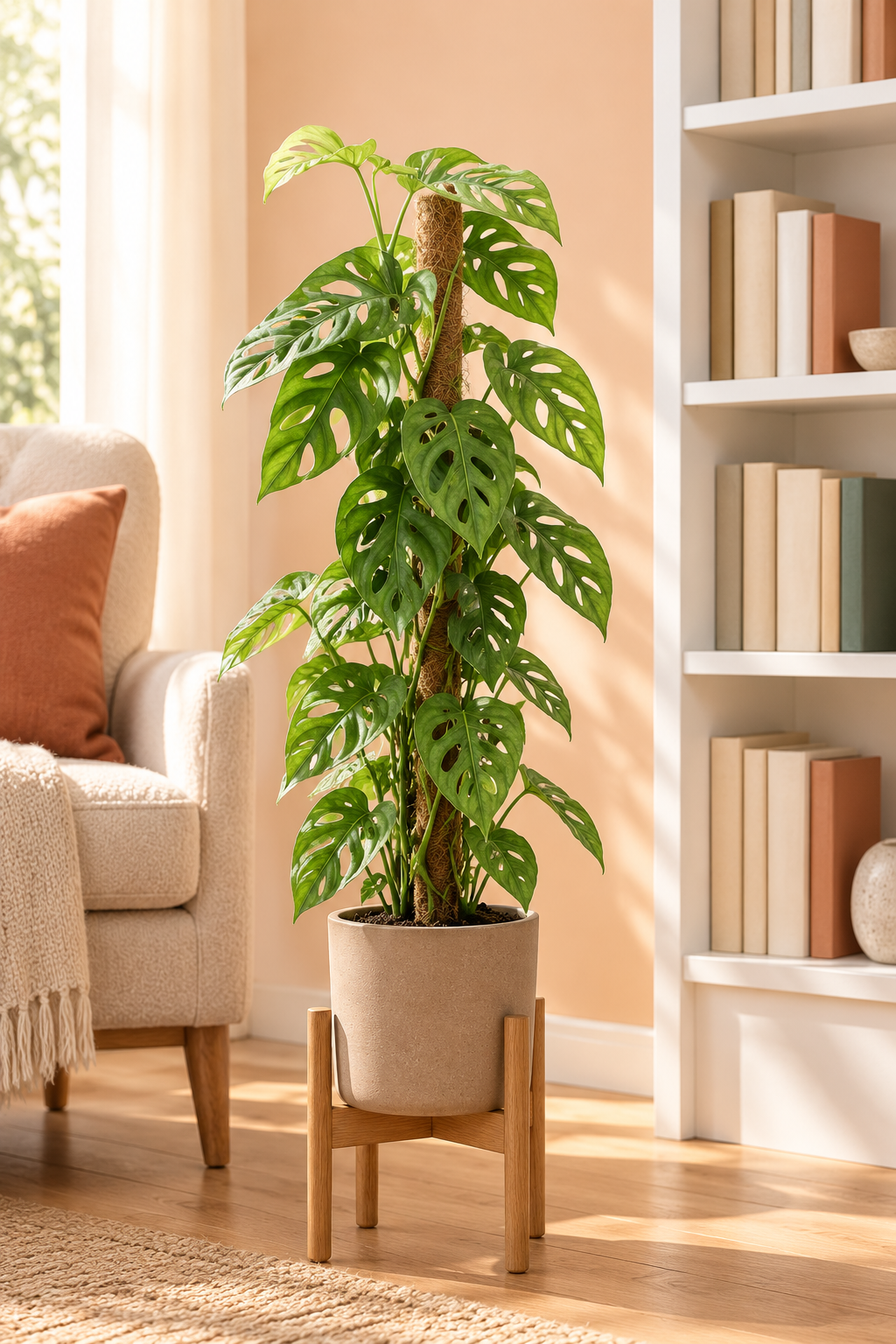
A climbing plant on a moss pole lifts foliage upwards and makes development easy to follow. Shoots, attachment points and sometimes aerial roots become visible between leaves. The shop offers a changing selection from Monstera, Philodendron or Syngonium. You receive one plant, not the whole group in the example photograph. Leaf shape and possible pattern therefore depend on the actual selection. Our scene shows one possible Monstera form on the pole. It promises no particular species or cultivar for every order.
Sixteen centimetres of pot hold a young climber
The offer gives a sixteen-centimetre pot and approximately eighty centimetres overall height on the moss pole. This height is the delivery state including container and support. No adult ultimate height follows from it. When unpacking, set the pot securely and examine existing ties before pulling packaging off from above. Free leaves carefully; do not carry the plant by the pole or individual petioles. Keep the label. If the delivered species can later be identified more precisely, its particular care needs can be added to the plant book.
The bright position is part of the support
A pole alone creates no strong foliage. Filtered daylight, frost-free warmth and a well-chosen position accompany further development. Do not put the plant in a dark corner simply because of its height. The lower leaf zone should also receive light. A place beside a bright open bookshelf may suit if enough daylight actually reaches it. Leave room between pole tip and shelf above for new growth. Avoid cold draughts when ventilating and direct radiator heat. After transport, the plant first has time to settle into its new place.
Guide shoots without tying them tightly
Check whether the support sits firmly in the pot. Existing shoots are accompanied loosely rather than pulled tight against material. A petiole is no suitable substitute for a strong stem section. Ties need room and are checked again as growth continues. Aerial roots may contact suitable pole material; they are not routinely cut off because they look a little untidy. Different pole materials absorb water differently. A pole that looks dry therefore does not mean the root ball must be watered again. Both areas are considered separately.
Keep the root ball accessible beneath foliage
Lift the inner pot carefully when needed and check soil and weight. Once the top layer has dried slightly, supply the root ball thoroughly and let it drain. Leaf mass, room warmth and root density influence need. A large full decorative pot does not create a safe water reserve. After watering, check the bottom of the outer container. Also leave room between shoots to see the surface. With limp foliage, first examine root ball and roots rather than simultaneously feeding and watering more. A calm change is easier to assess later.
Plan repotting and shaping together
If the pot is densely rooted or the tall plant no longer stands securely, plan the next sensible size increase. Loose draining soil and clear holes maintain useful root space. The pole must also be supported and possibly secured anew during the move. Additional food follows active growth and the fertiliser label; existing pre-fertilisation is considered. Before a cut, think which part is a stem with nodes and which is only a petiole. The exact propagation method depends on the delivered species. A changing selection does not produce one general cutting instruction.
Observe new leaves and position safely
In winter, the position remains bright and frost-free. With less growth, the root ball usually uses less water; checks nevertheless continue. New leaves may change size or form during development, particularly with climbing aroids. Damaged old parts are assessed separately. Look beneath leaves and at ties occasionally. These houseplants are not intended for consumption; children and pets should not reach them. Wear gloves when cutting and clean tools. A stable accessible plant position combines the attractive upright effect with practical care.
One plant, several views
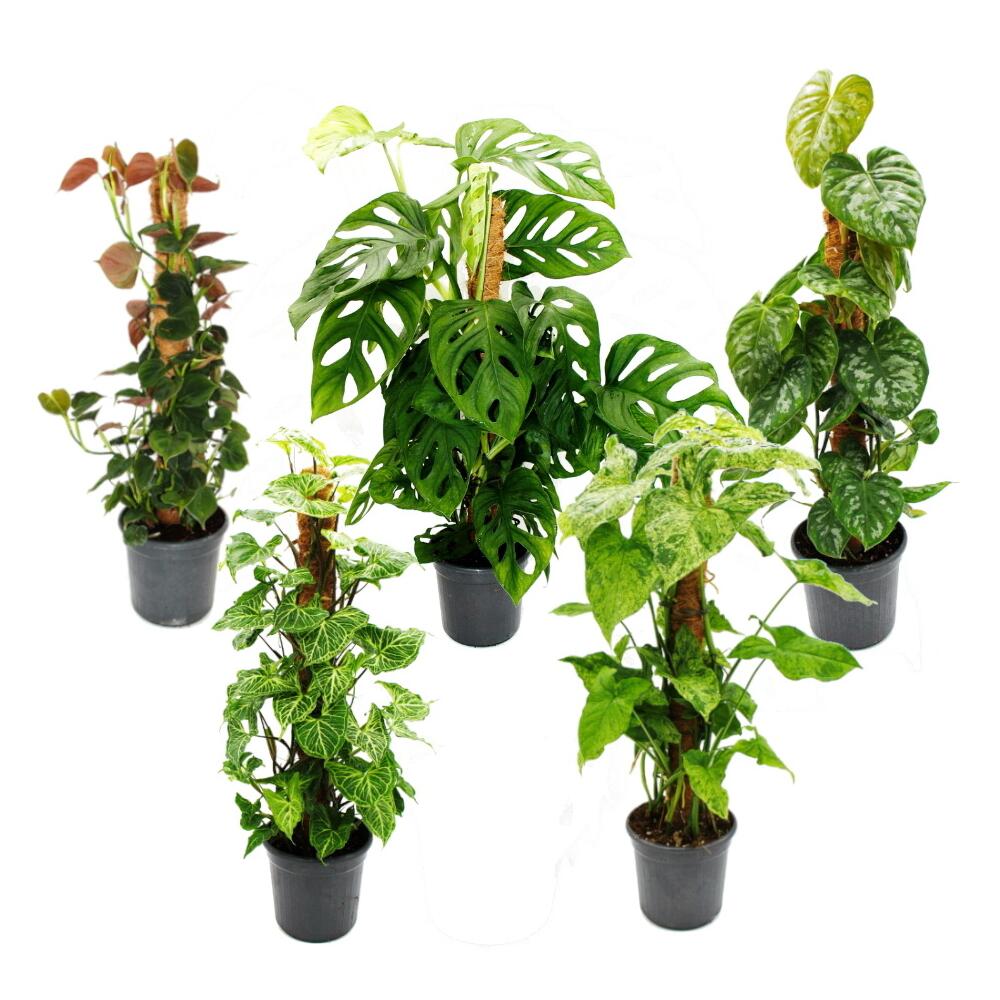
Good to know
Do I receive every plant in the shop photograph?
No. The offer is one climbing plant from the changing Monstera, Philodendron or Syngonium selection.
Is a particular cultivar promised?
No. The actual selection and an existing label determine the delivered plant.
Is 80 cm the ultimate height?
No. It is the approximate stated overall height of the delivery state on its pole.
Must the root ball stay wet if the pole is dry?
No. Pole material and root ball are checked separately. Permanent root-ball wetness is avoided.
Can I cut off every aerial root?
Not routinely. They belong to climbing growth; healthy aerial roots may find suitable support.
Is it suitable for pets to nibble?
No. Do not let pets consume the offered aroids and position them safely.
Sources and editorial note
- Exotenherz: offer and original images (02.10.2026)
- NC State Extension: Monstera adansonii, climbing habit and cultivation (02.10.2026)
- NC State Extension: Syngonium podophyllum, development and cultivation (02.10.2026)
Shop offer, article number, GTIN, availability and original images checked directly on 02.10.2026. Specialist sources read directly. One variable individual plant, not a set of five. Scene marked as an example selection; no binding cultivar added. Scene checked directly against the original on 02.10.2026: plant quantity, leaf or head shape, habit, size proportions and labelling appropriate.