This plant at Exotenherz
Check the shop offer for current availability, price and what is included.
Check the shop for the current price, availability and offer contents.
Your care table
| Topic | What to do | Why it helps |
|---|---|---|
| Unpacking | Free packaging without pulling fans and move by pot. | Ribbed crests must not be squeezed or used as handles. |
| Position | Choose very bright and slowly increase direct sun after moving. | Decorative shade supplies too little light; abrupt change can affect the surface. |
| Root ball | Check soil and weight before each watering; wait for complete drying. | Water follows root zone, not a fixed weekday. |
| Watering | Moderately water soil as needed and drain fully. | Water belongs in the root ball; a filled saucer keeps it unnecessarily wet. |
| Substrate | Use draining cactus soil and clear holes. | Loose mix passes surplus and avoids wet roots. |
| Repotting | Only for actual space need, into a suitably larger stable pot. | Much unrooted soil can stay wet longer without helping. |
| Surface | Remove dust with soft brush if needed, protecting ribs and areoles. | The fine surface needs neither polishing nor strong rubbing. |
| Feeding | During active growth, dose suitable cactus feed as labelled. | Feeding follows growth and cannot replace brightness. |
| Winter | Keep bright, frost-free; less water with lower use and continued checking. | A resting root ball uses less water but strong persistent shrivelling still calls for inspection. |
| Checking | Inspect crests, folds and base for new deposits or soft discoloured tissue. | Check changes separately rather than treat every unusual fold as a problem. |
Check the compost and pot weight. The care table explains how far the compost may dry.
Water only when needed. The water should reach the root ball without spilling over the rim.
Remove surplus water from the saucer or cachepot. Then return the plant to a suitable position.
A green line waves over the fan
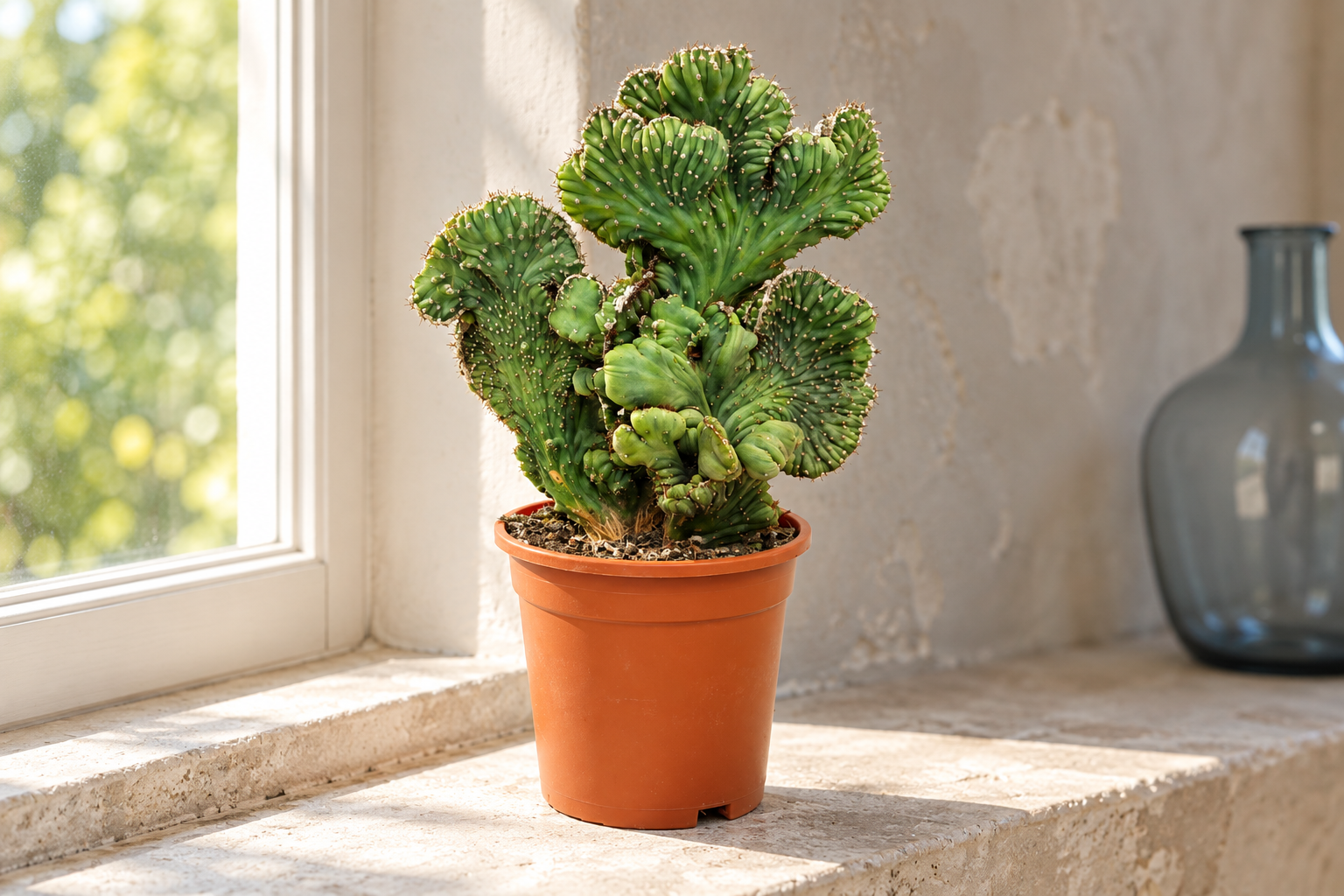
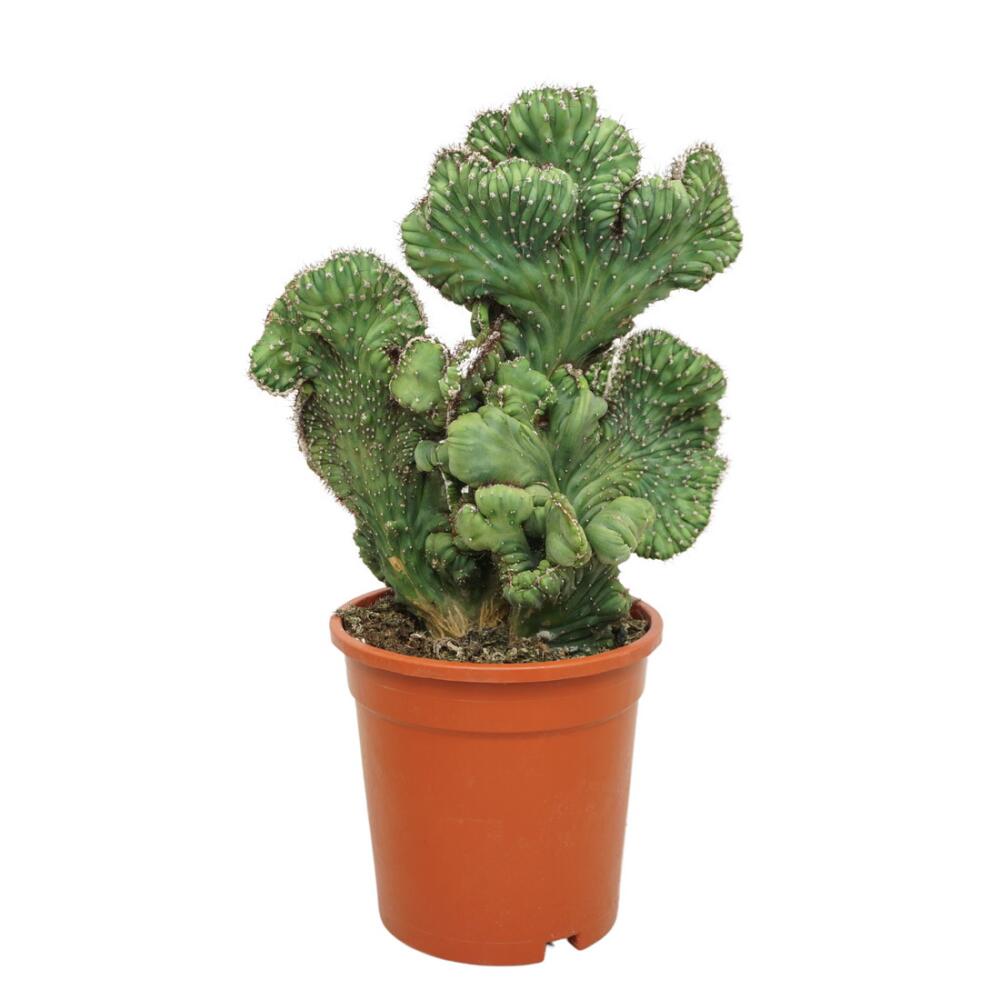
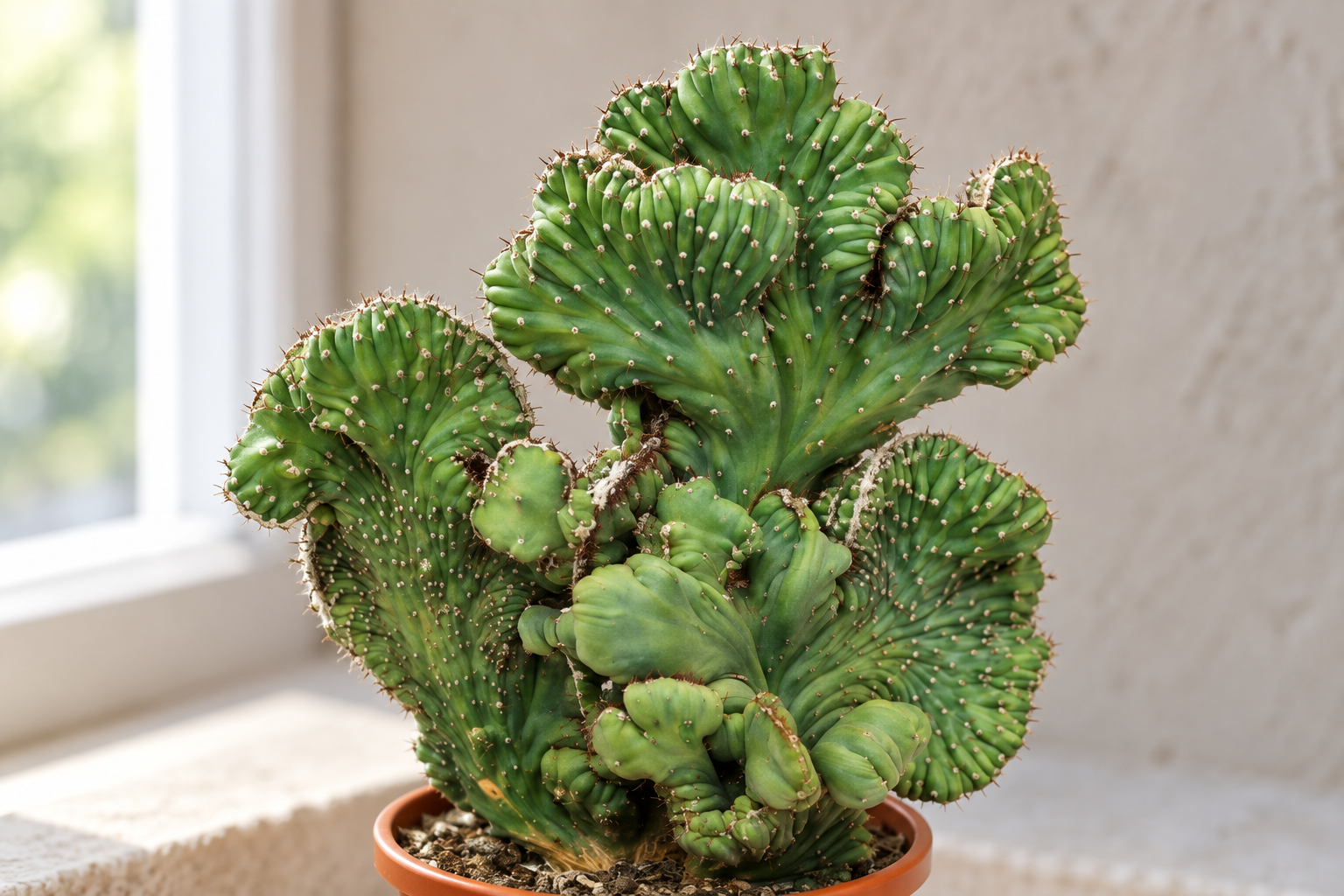
Coral shows its form beautifully from the side. Several broad green sections open into ribbed fans, their upper edges waving like a crest. Small pale areoles and short brown spines finely mark the green. Narrow shadows form between fans while projecting ribs appear lighter. The associated photograph shows this structure. A quiet background and enough daylight reveal it at home without extra decoration between ribs. Photograph both the side outline and upper crest; the two views tell different stories about the same cactus.
Coral names this offered crest form
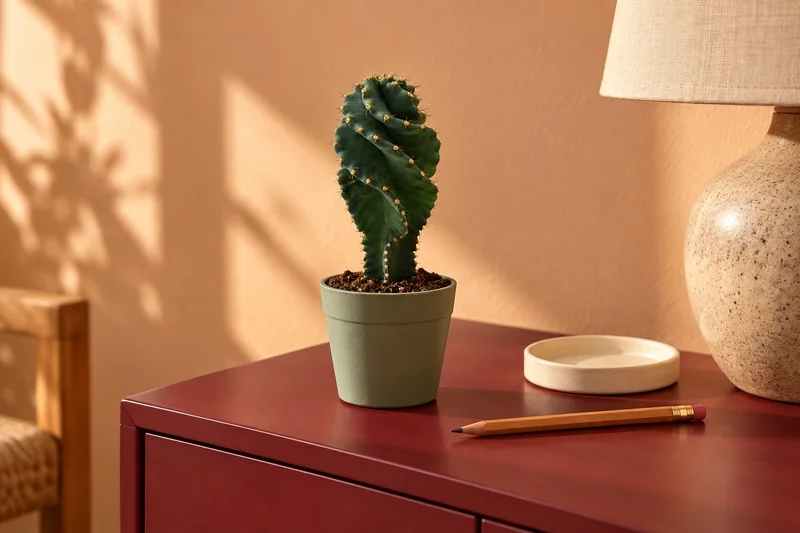
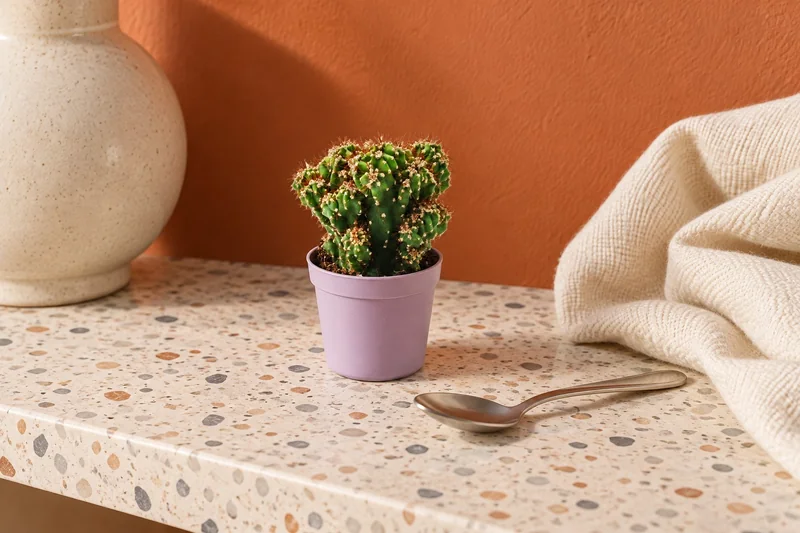
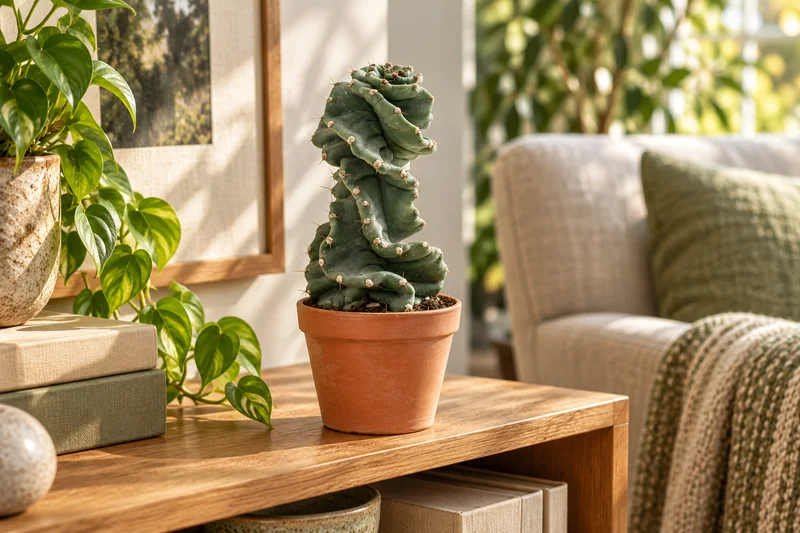
The trade name is Cereus monstruosus Coral, with cristate or crested form added. Here Coral denotes the documented selection with broad wavy fans, not a separate species or proven identity with every other Cristata offer. Such trade names can cover very different forms. Follow the particular plant and associated image. Fans need not be mirror-symmetrical to retain character. Current shop offer governs delivery; styled images show an example environment. An outer pot or stand in a scene is not automatically part of the plant.
Light should reach fans without abrupt moves
Very bright suits our growing details for this form. Increase direct sun gradually after unpacking or darker keeping, observing the surface response. Behind glass, consider heat and airflow too. A beautifully lit piece of furniture suits cultivation only if sufficient daylight actually arrives. Dark corners are better for viewing a photograph than permanent cactus growing. Broad parts are not handles: move by the pot and leave room from passing hands. Keep both bright and stable.
The watering pause is part of care
Let soil dry completely between applications. Check root ball and pot weight rather than surface alone. A lighter pot helps observation; with time you learn changes after watering. When needed, water soil moderately and drain surplus completely. Leave no reservoir in the outer pot. A daily little sip cannot reliably replace checking the whole root ball. Spraying fans does not supply roots like watering soil. The dry pause is not an invitation to forget indefinitely. With strong persistent shrivelling, examine soil, firmness and roots before adjusting supply.
Water’s route begins with soil and container
Use well-draining cactus soil for Coral. Structure should supply the root zone and pass surplus without permanent wetness. Clear pot drainage holes go with it. Decorative surface layers cannot automatically make heavy moist soil beneath drain. Actual root-space need determines the new container at repotting. Choose appropriately larger and stable; much unrooted soil often dries more slowly. Support without pressure on fans. Suitable aids and hand protection help with spines. The aim is good root space, not speeding unusual form with the largest pot.
View the crest and preserve the surface
Do not press ribs or crests flat or force symmetry through regular cutting. Most indoor cacti need no such shaping. Gently loosen dust with a soft brush if needed, without vigorous rubbing, preserving pale areoles. Look closely in folds: new cottony deposits or changes are separate from existing pale dots. When turning for a photo keep your hand on the pot. Stability is useful for a broad plant that should not wobble with every nearby contact. A crest photograph in the plant book helps recognise its form without touching daily.
Growth and rest require different attention
During active growth, suitable cactus fertiliser can be used as labelled. Extra supply cannot make a dark position suitable. Observe light, roots and water before feeding more. Keep Coral bright and frost-free in winter. With lower use, water much more sparingly; soil takes longer before the next supply. Fixed months of dryness fit neither every room nor development. Continue looking during quieter weeks. Strong shrivelling, unusually soft areas or prolonged wet soil call for checks. Care follows observations without promising a temperature or later flowers for the trade form.
Check fan and base changes individually
A wavy crest belongs to Coral’s visible character. New soft or darkened areas are separate observations calling for checking water, soil and roots. Too much water can harm roots; too little encourage strong shrivelling. Review position with weak new growth. Small pests such as mealybugs may sit in sheltered folds. Inspect folds and lower body as well as front without squeezing. A single spot determines no certain cause. A photograph and note of last watering help comparison. The plant book accompanies these fans without prescribing rigid shape or watering dates.
One plant, several views
Good to know
Is Coral a clearly determined separate species?
Coral is the trade name of the documented Cereus crest form here, not a separate species or proven clonal synonym of other Cristata offers.
Are wavy fans a disease sign?
Broad fans and wavy upper crests appear in the associated original. Check newly soft or discoloured tissue separately.
When should I water?
Let soil dry completely, inspect root ball and weight, then water moderately and drain surplus fully.
Is spraying enough?
Water soil when the root ball needs it. Spraying fans cannot replace root supply.
Does the crest need regular pruning?
No regular shaping is intended. Handle gently and do not flatten ribs by pressure or cuts.
Can Coral go straight into strong sun?
After transport or darker keeping, introduce stronger sun gradually. Consider glass heat and airflow too.
How is it cared for in winter?
Keep bright and frost-free. Give less with lower use, inspect soil and do not ignore strong persistent shrivelling.
Can I rely on later flowers or fan size?
No fixed later size or timed flowers are promised for this trade form. The portrait follows the existing crest and its care.
Sources and editorial note
- Exotenherz: our Coral offer and associated original photograph
- Royal Horticultural Society: general care guide for indoor cacti and succulents
Our offer and associated clean original compared on 6 October 2026. Coral denotes a documented Cereus crest form. Care combines our growing details with general indoor cactus guidance.