This plant at Exotenherz
Check the shop offer for current availability, price and what is included.
Check the shop for the current price, availability and offer contents.
Your care table
| Topic | What to do | Why it helps |
|---|---|---|
| Position | Sun or light partial shade, sheltered from cold wind. | Light favours flowers; evergreen leaves may suffer at exposed winter positions. |
| Arrival | Check rootball moisture and release side branches gently. | A long stem does not describe existing root reserves. |
| Soil | Prepare ordinary well-drained garden soil. | Permanently wet roots hinder healthy development. |
| Planting | Set at previous height and water slowly thoroughly. | Water and soil contact support new roots. |
| Spacing | Use about 50 cm group guidance; consider later broad branches. | Low height does not mean little area. |
| Water | Check directly at the rootball during establishment; inspect containers. | Young plants explore new soil gradually. |
| Feeding | Sparingly as needed in beds; by label in containers. | Extra fertiliser cannot fix unsuitable drainage. |
| Pruning | Remove obstructing branches selectively; check flowers, fruit and nests first. | Strong overall cutting can reduce seasonal effect. |
| Winter and fruit | Protect pots; do not eat red ornamental fruit and wear gloves. | The rootball and evergreen foliage need attention; fruit is no snack. |
For young plants, feel the soil directly at the root ball. The surface and deeper soil may have different moisture levels.
Water thoroughly after planting; later, water according to the soil, weather and establishment rather than a fixed calendar.
Avoid standing water. For plants in containers, also check that water runs out of the drainage hole.
Branches tell more than low height
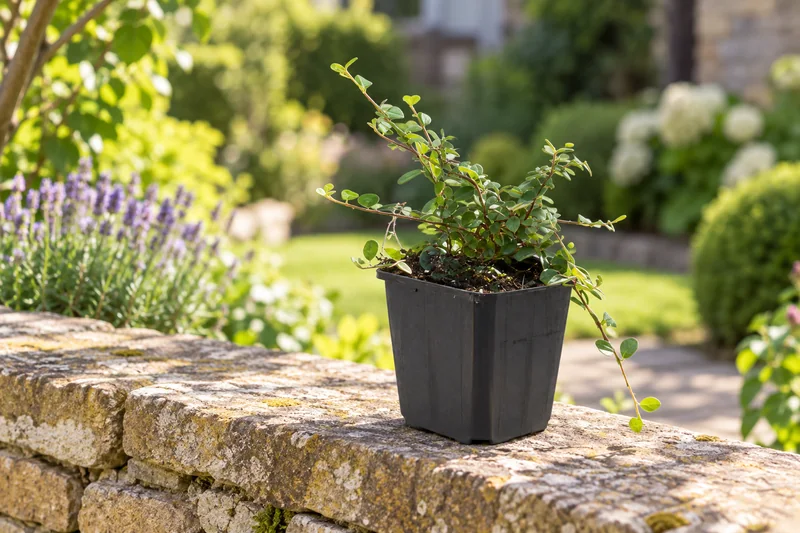
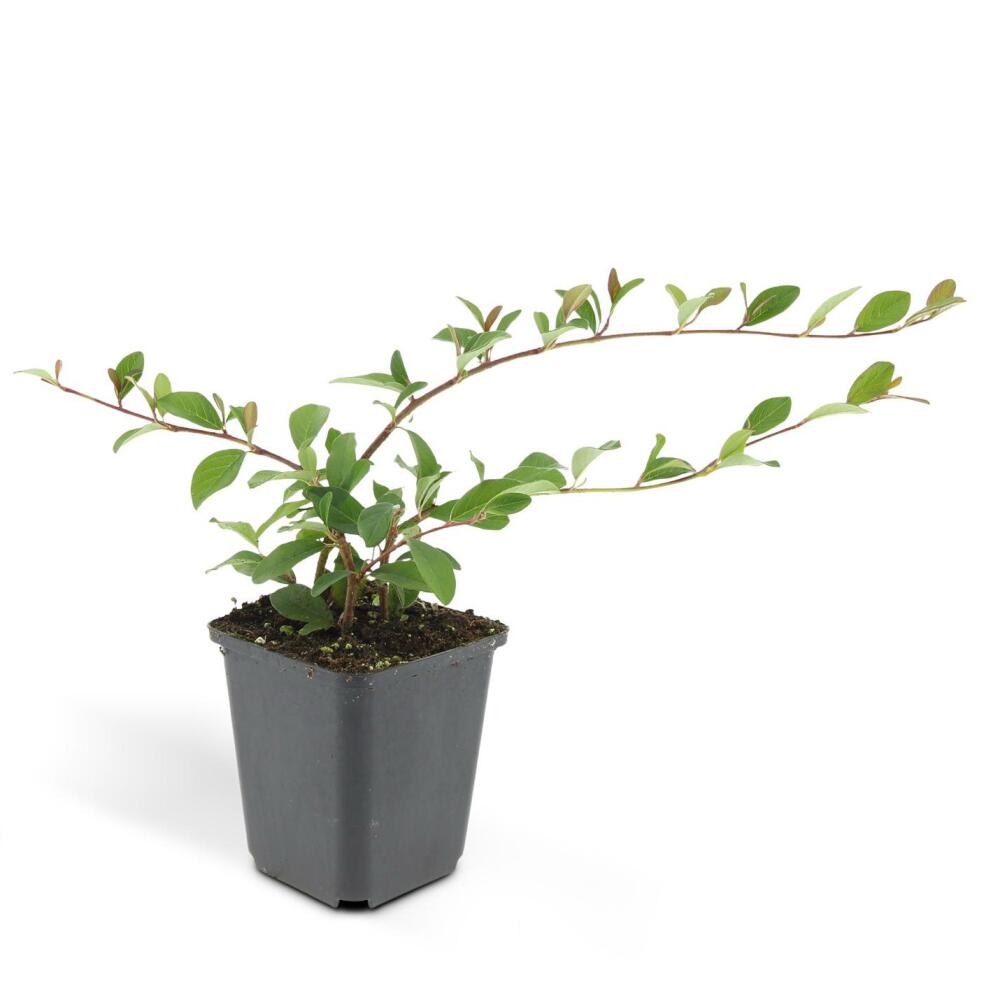
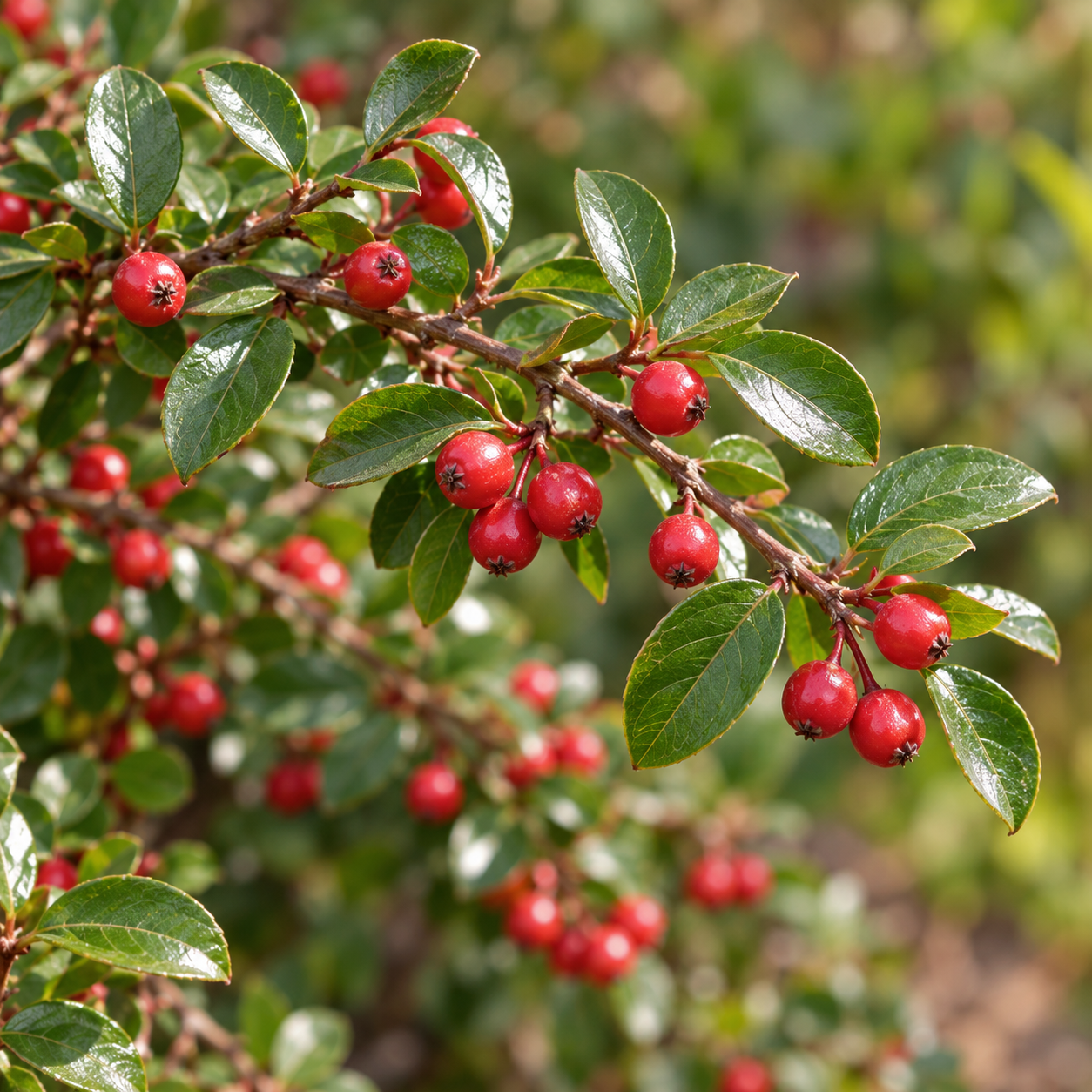
Cotoneaster dammeri is a low evergreen woody plant with widely spreading branches. Small oval green alternate leaves have a slight upper gloss. Small white flowers may appear in early summer, later red ornamental fruit shows between leaves. A developed stand stays low but takes considerably more width than a young pot. A low wall edge shows this habit well: branches lie or hang more freely there than on a flat area. Plan that natural line without immediately expecting a closed carpet.
The little pot describes the start
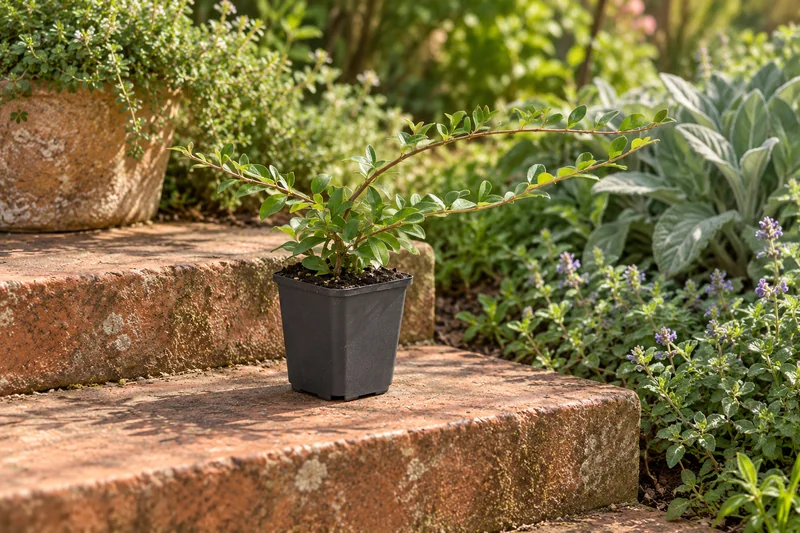
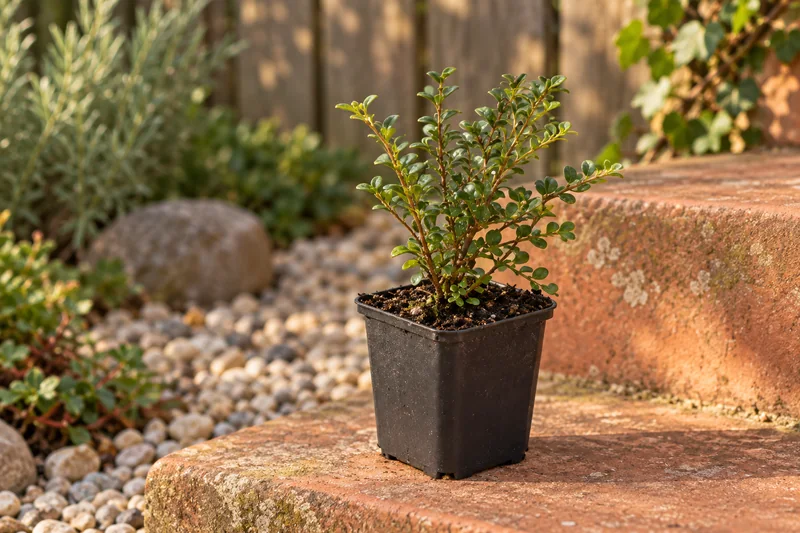
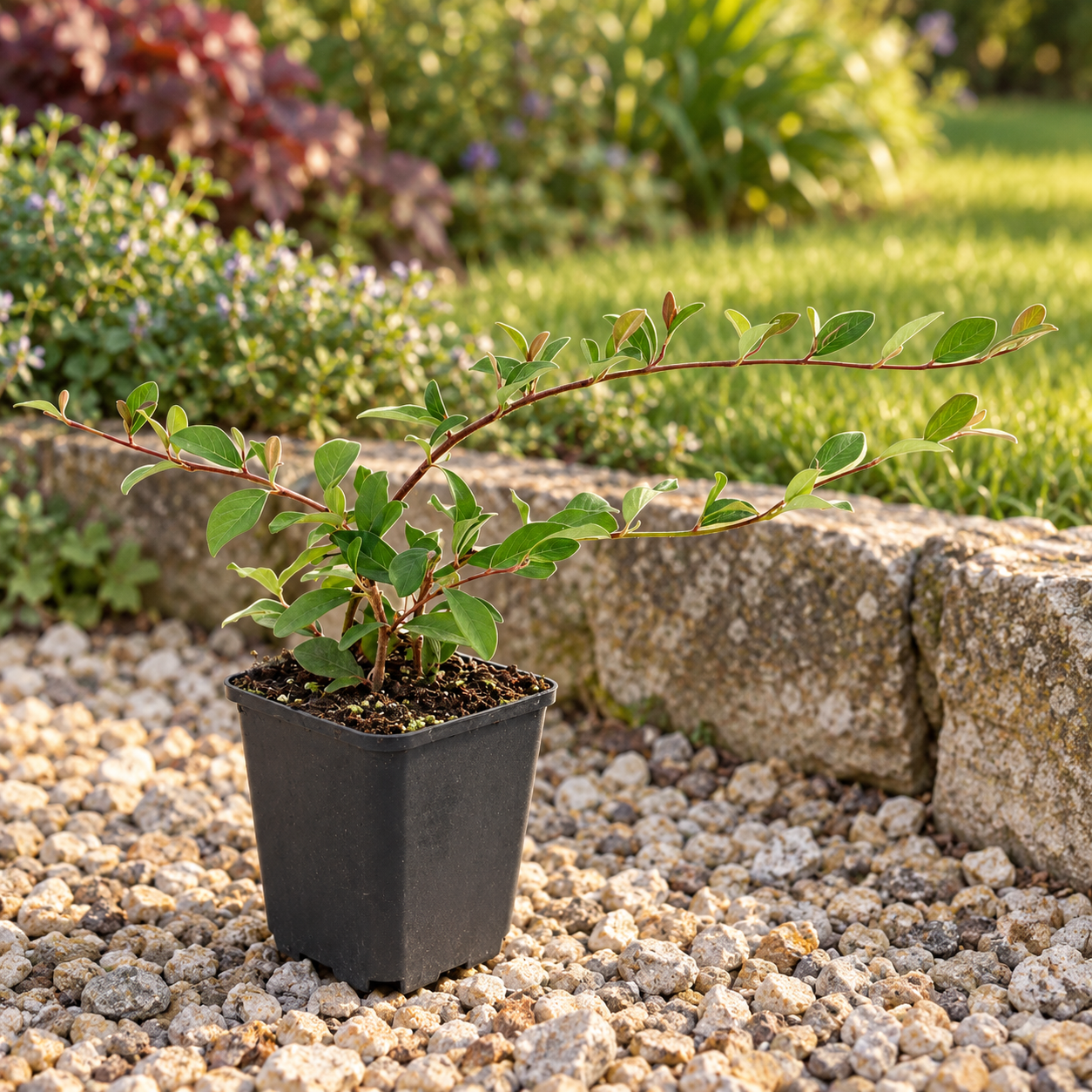
The current choice includes single plants and sets of six, twelve or sixty, each in a 9 cm pot, approximately 10–25 cm total height including pot. Some branches may already extend sideways while roots have little soil space. A developed stand can reach about 1.5–2.5 m wide, usually remaining around 20 cm high. Release fine branches gently and check soil moisture. Hold soil when unpotting; a branch is no handle for the rootball’s weight.
Sun supports flowers, drainage supports roots
Sun or light partial shade suits bearberry cotoneaster. Sun may enhance flowers and later fruit if the young rootball remains supplied; deep shade is less favourable. Many ordinary garden soils suit it if surplus drains. A hollow remaining wet after rain does not. At a wall, check whether rain reaches the root zone; beneath an overhang it may stay dry. Shelter from strong cold wind helps evergreen leaves through difficult winters. Existing moisture matters as much as brightness.
Prepare accessible space for broad branches
The offer gives about 50 cm group spacing. Set pots out provisionally and allow for the eventual outer edge. Low height does not stop a branch extending into a path or over a small perennial. Spring and early autumn suit frost-free non-waterlogged ground. Slowly moisten a dry rootball first and plant at existing height. Loosen surrounding soil, make good contact and water in. Keep surface covering away from the trunk. On slopes water young plants especially carefully rather than equating surface runoff with rootball moisture.
Look more closely in the first garden year
Newly planted shrubs have not yet explored soil widely. Check directly at the rootball during dry periods and water slowly and thoroughly as needed. Continuing establishment also needs drought checks. Established plants manage temporarily drier conditions, but prolonged drought still prompts inspection. Container reserves remain limited: provide drainage and root space. Good garden soil usually needs no special routine fertiliser; suitable organic soil care may suffice. Feed containers during growth according to need and label.
Targeted cuts leave flowers and fruit visible
The naturally flat shape needs no general annual radical pruning. Remove dead branches, trim very long obstructing stems selectively and keep boundaries accessible. Look for flowers and developing fruit before cutting; a strong uniform sheared line may remove much of them. Check dense shrubs for occupied bird nests before work too. Red fruit stays ornamental and is not eaten. Where branches root into soil, remove unwanted sections with those roots. Occasional boundary checks belong even to an established low area.
Watch winter leaves and unusual shoot tips
Evergreen leaves may change in winter; some old ones are replaced. Dry winds, winter sun and frozen ground can stress foliage. In outdoor containers protect the rootball, keep drainage open and check moisture in frost-free weather. Do not add water to frozen soil. If tips suddenly brown or larger areas wilt, examine position, drainage and affected branches carefully. Sticky deposits or webbing merit closer attention too. Seek a specific professional diagnosis for progressive damage rather than trying several treatments and care changes at once. Wear gloves for planting and pruning.
One plant, several views
Good to know
How can such a low plant need much room?
Branches grow far sideways. A developed stand may reach about 1.5–2.5 m wide while usually staying around 20 cm high.
Is the red fruit edible?
No. It is considered ornamental and not eaten.
Does the pot arrive with abundant fruit?
Not promised. The fruit detail illustrates a later garden phase; young delivery may only have green branches.
What does 10–25 cm mean?
Approximate total height of the young delivery including 9 cm pot, distinct from sideways branches and later bed width.
Must the area be cut hard every year?
Targeted cuts on dead or obstructing branches usually suffice. Strong overall cutting may remove flowers and fruit.
Does a young plant need little water immediately?
No. Check the small rootball during establishment. Older-root drought tolerance develops through growth in the garden.
Is it suitable for containers?
Outdoor cultivation is possible with enough root space and drainage. Water, lateral branches and winter protection need ongoing care.
Sources and editorial note
- Exotenherz: parent offer, originals and delivery form (03.10.2026)
- Directly read specialist source: dammeri-rhs (03.10.2026)
- Directly read specialist source: cotoneaster-growing (03.10.2026)
- Directly read specialist source: dammeri-nzflora (03.10.2026)
- Exotenherz: directly read six-plant child offer (03.10.2026)
- Exotenherz: directly read twelve-plant child offer (03.10.2026)
- Exotenherz: directly read sixty-plant child offer (03.10.2026)
Current parent and child offers directly read publicly on 03.10.2026; unchanged HTML hashes and originals saved separately. Specialist sources directly read, clean originals actually opened. Delivery form and garden development separated. Joint page view and publication require Root acceptance.