This plant at Exotenherz
Check the shop offer for current availability, price and what is included.
Product and delivery details are given in the individual offer.
Your care table
| Topic | What to do | Why it helps |
|---|---|---|
| Light | Place very brightly to sunny and slowly acclimatise to stronger direct sun after shipping. | Plenty of light supports typical colour and compact growth; abrupt changes stress previously protected foliage. |
| Watering | Let the root ball dry out partly between waterings. Then water soil until supplied and let it drain completely. | Fleshy leaves store water, but permanently wet roots still need protection from lack of air. |
| Container | Check clear drainage holes and remove residual outer-pot water. | Even suitable water amounts become problematic when left in a closed container. |
| Substrate | Use an airy, mineral-based succulent mix. | Structure and drainage help roots regain air between supplies. |
| Repotting | When roots fill the ball, allow only a little more pot space as growth begins; keep the base at its old level. | Much unrooted soil dries slower than a container well matched to the root ball. |
| Nutrients | During active growth, feed moderately with suitable succulent fertiliser according to its instructions; consider existing soil feed. | A rigid feeding calendar cannot replace observation, and extra feed does not compensate for missing light. |
| Winter | Choose a bright frost-free place and greatly reduce watering when growth is limited. | Frost is not tolerated; substrate stays moist longer in lower light. |
| Checks | Check leaf bases and branching for unusual cotton-like deposits and initially separate suspect plants. | Mealybugs may hide among tight leaves; even leaf structure is not evidence of infestation. |
Check the compost and pot weight. The care table explains how far the compost may dry.
Water only when needed. The water should reach the root ball without spilling over the rim.
Remove surplus water from the saucer or cachepot. Then return the plant to a suitable position.
A small flame of fleshy leaves
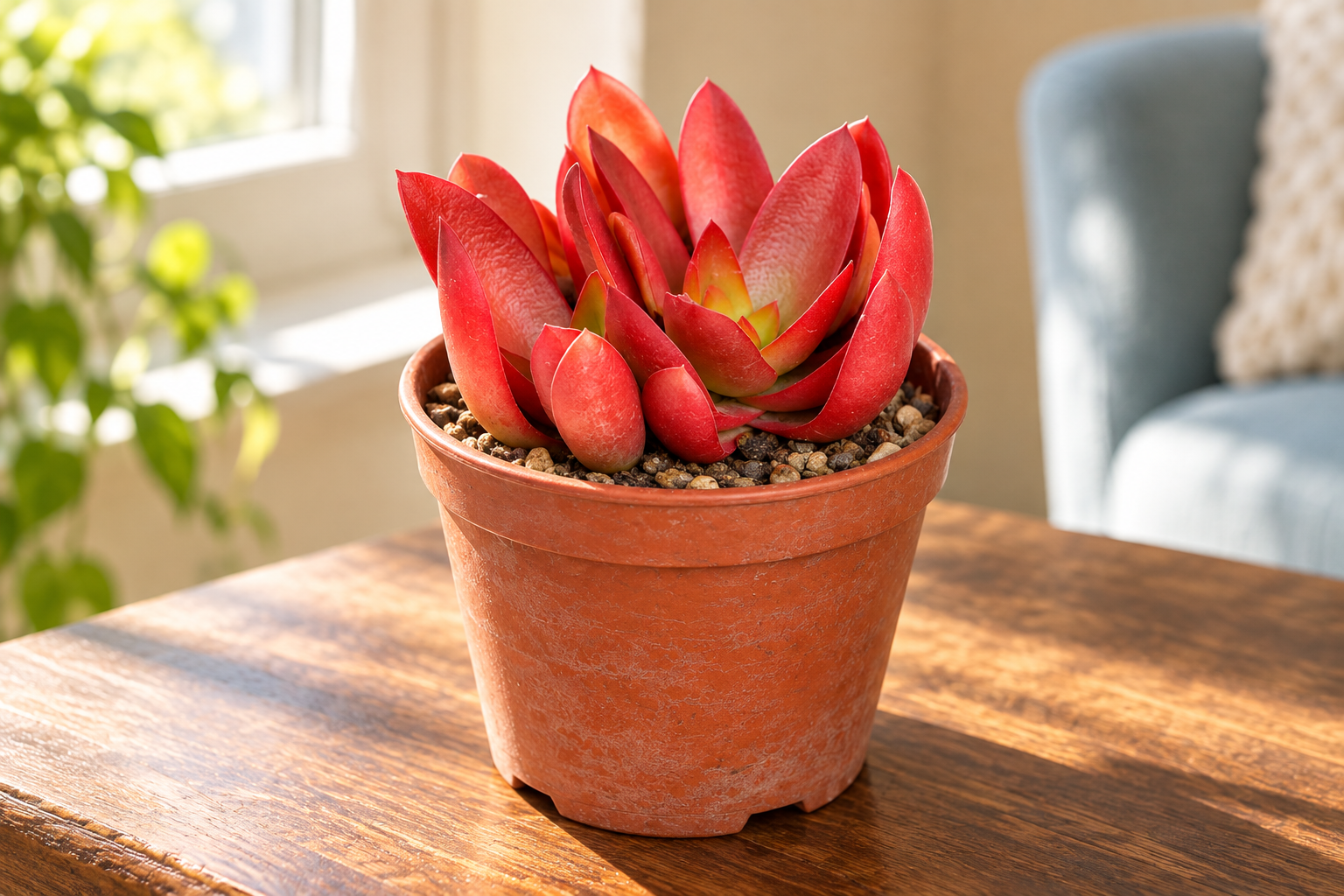
Campfire stands out before you read its name: older leaves are strong red while a yellow-green to green centre remains visible between them. Individual blades are fleshy, smooth-edged and taper gently to a point. They stand in opposite pairs and stack closely in compact young growth. This creates an almost flame-like picture, especially lively in backlight. It is Crassula capitella with the cultivar name Campfire, a member of the stonecrop family. Its colour is not fixed. Light, new shoots and cultivation change the impression; not every plant shows the same red at all times.
Let the young plant settle quietly
The clean shop photograph shows a single compact specimen in a nursery pot. Leaf pairs are still close together and mineral grains are visible between plant and pot edge. After unpacking, place it in bright light and first check root-ball condition. Transport, protected pre-cultivation and your later position may differ considerably. A dry surface alone does not say that all root space needs water. Hold the pot when moving, not the leaves. The scene shows an example design; terracotta pot and furnishings are not automatically part of the offer. The young form is likewise not a scale for later spread.
Sun for colour, acclimatisation for leaves
A very bright to sunny position suits Campfire. Deep inside a room, light often cannot maintain dense leaf placement and strong colour. At a bright window it is easy to observe without squeezing among tall neighbours. After shipping, increase intensity gradually rather than suddenly placing it against a hot sunlit pane. Sheltered outdoors in a frost-free summer can also suit when acclimatised and draining well. Do not deliberately drought-stress or chill it to produce stronger red. Colour is part of plant character, not a care goal overriding healthy roots and leaves.
Water pauses with the whole root ball in view
Fleshy leaves can store water. This calls for substrate that dries out partly, not the idea that Campfire never needs water. Check soil and pot weight before watering. During growth, supply the root ball, let water drain and remove residual water from decorative covers. Many small daily sips keep upper soil constantly moist without meaningfully reaching deeper roots. Demand may rise in warmth and sun and fall with poor light and cooler conditions. Soft leaves therefore first require a moisture check. If roots remain wet, more water is no suitable first reaction. A slight reduction in firmness on a truly dry plant has another context.
Airy root space supports compact growth
Use a permeable succulent mix with mineral structure. What matters is that roots do not remain long in a dense waterlogged mass. Even with an attractive outer pot, check the actual nursery pot has clear holes. Early active growth suits repotting when the existing ball is well rooted. Allow only a little more room rather than preventively placing a small plant in a large container. Extra unrooted soil retains water longer. Plant the base at its previous level and firm gently without crushing leaf pairs. A decorative top layer should not entirely block views of the root ball and plant base.
Nutrition and pruning follow actual growth
While Campfire visibly grows, suitable succulent feed according to its instructions can supplement supply. Account for pre-fertilised soil and first restore sensible water supply to a very dry stressed root ball. During little winter growth, extra food cannot replace light. Regular shaping is unnecessary; leaf architecture may develop. If healthy shoots later serve propagation, stem or leaf cuttings may be tried during the active season. Let wounds dry first and then use permeable soil. A small newly received plant need not be divided immediately. Propagation remains a horticultural possibility, not guaranteed success for every removed leaf.
Frost-free winter rest with attentive checks
Campfire is cared for as a frost-sensitive succulent. A bright frost-free winter place therefore belongs to the plan even after a sheltered outdoor summer. Bring it in before threatening frost in good time. With less growth, water much more sparingly while still watching the root ball; completely shrivelled leaves are not the desired sign of successful rest. Occasionally check leaf bases and branching. Irregular cotton-like accumulations may indicate mealybugs, while fine even texture of red leaf surfaces belongs to the leaf itself. With changes, first consider position, moisture and plant condition together. Colour shifts, new shoots and a possible care problem remain distinguishable.
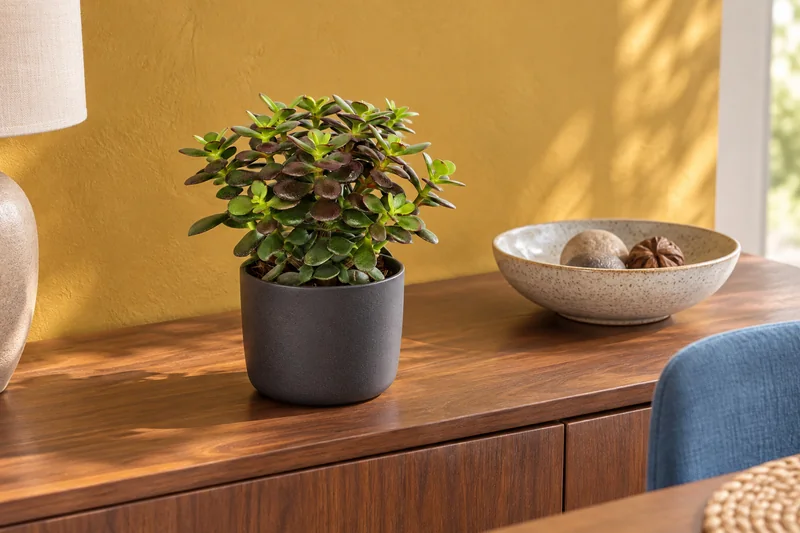
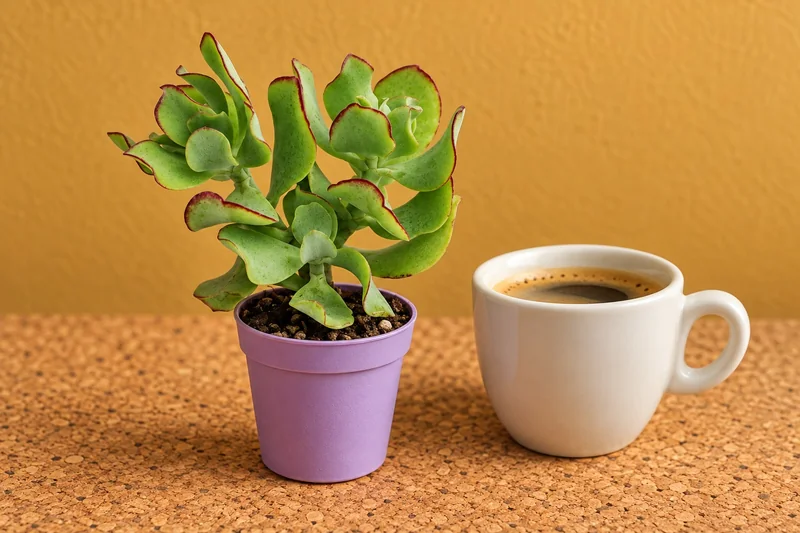
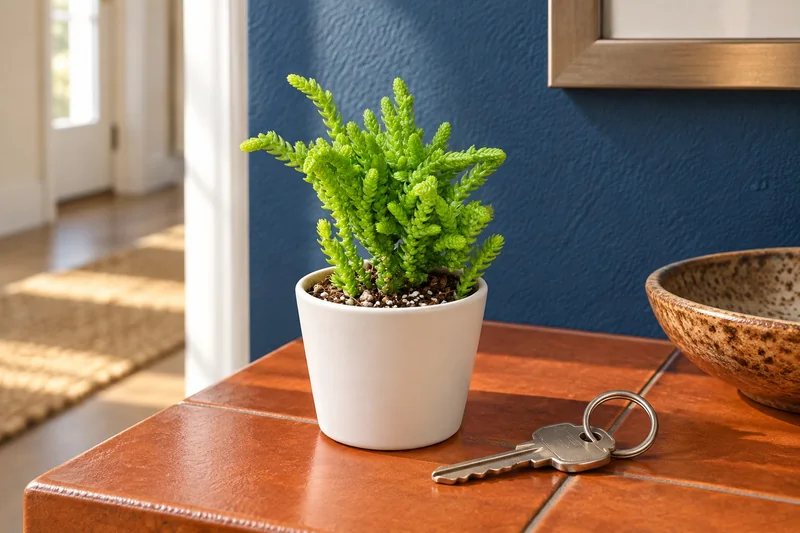
One plant, several views
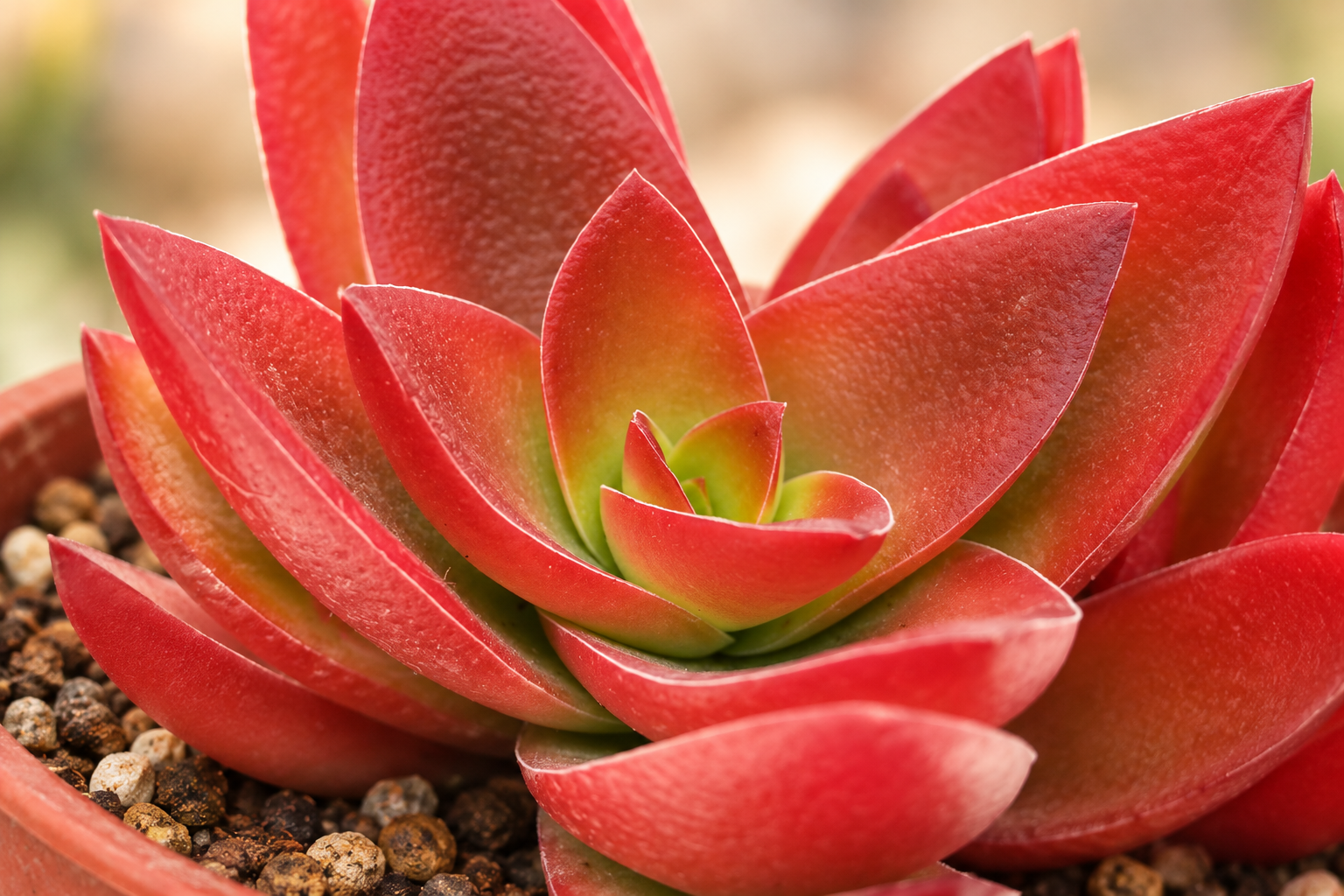
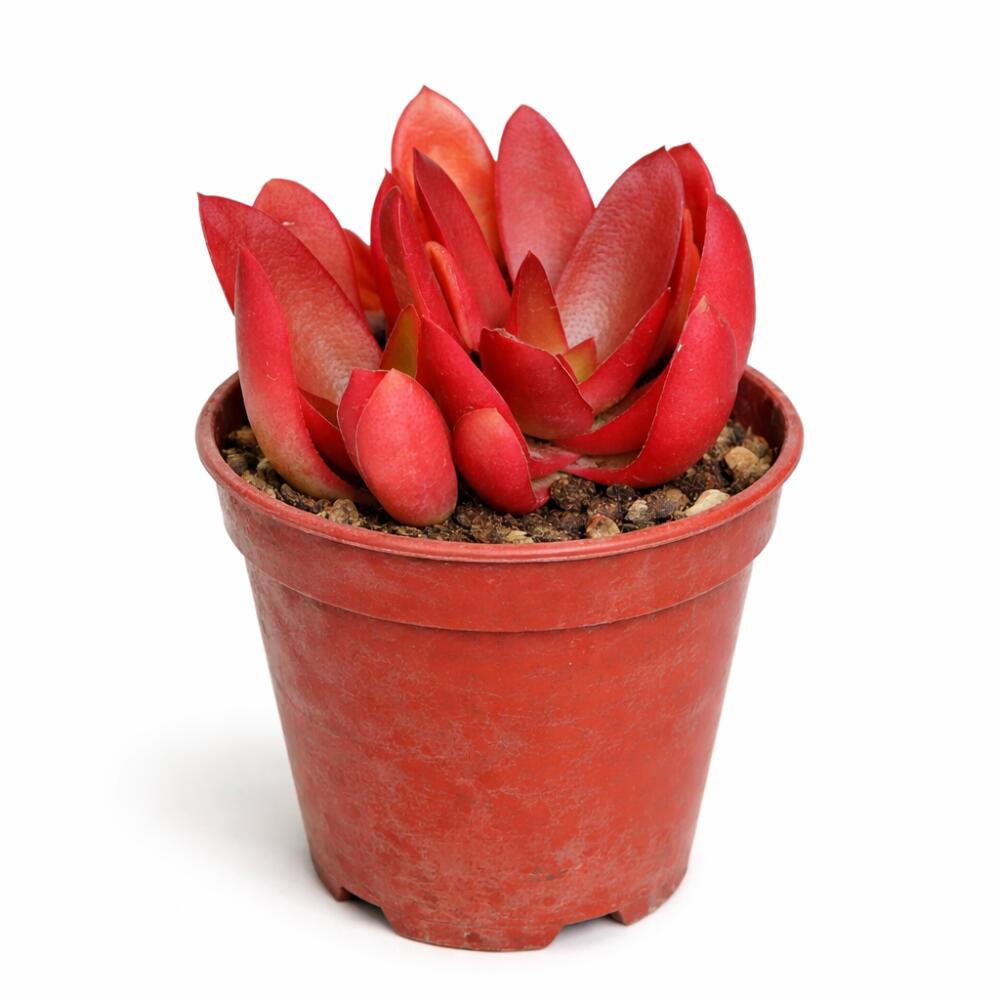
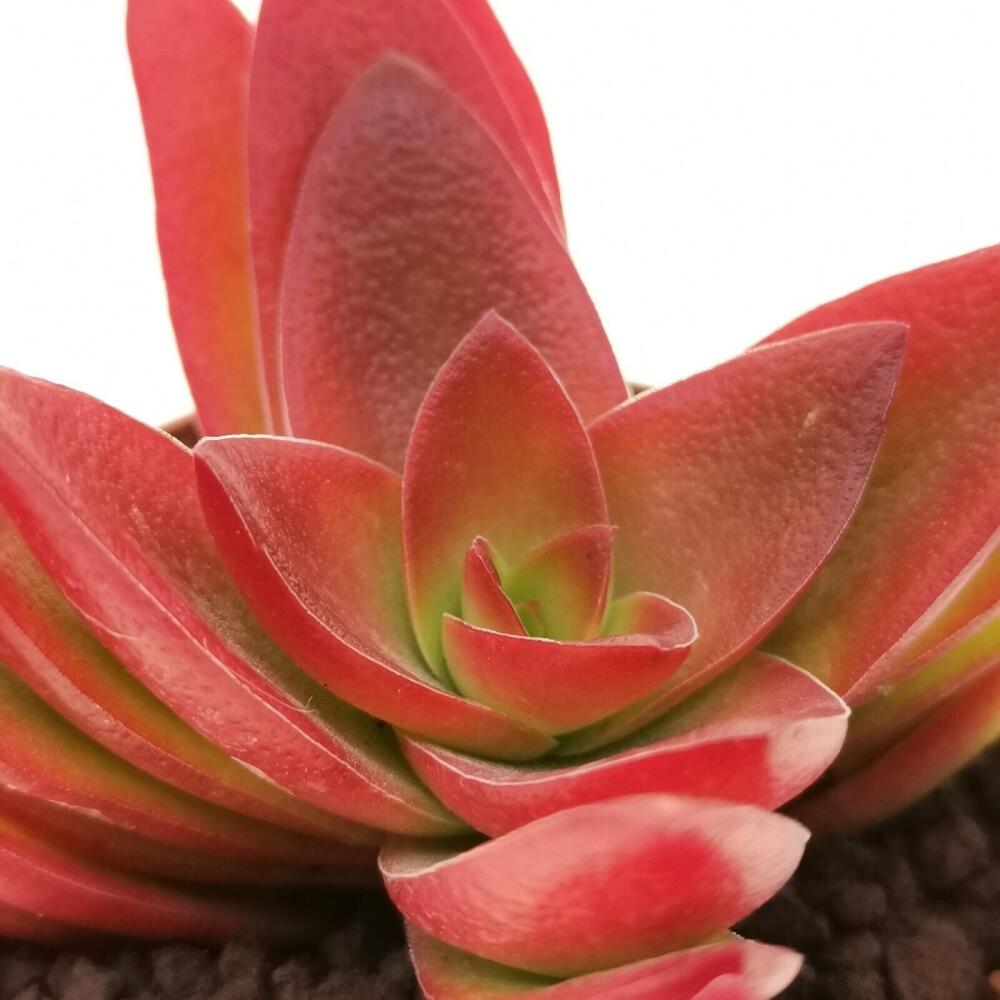
Good to know
Must Campfire always be bright red?
No. Young growth may stay green and colour follows light and cultivation. Provide a very bright position without using drought stress or cold to force red.
Can it stand on a dark shelf?
A permanently dark place is unsuitable. Campfire needs much light; direct sun suits after gradual acclimatisation.
How often should I water?
Only after partial drying, then remove excess. Pot, season, light and temperature alter demand; fixed weekdays are unsuitable.
What should I check first with soft leaves?
Root-ball moisture. A wet heavy pot needs a different response from a dry root ball. More water without checking can worsen wetness problems.
Can Campfire winter outdoors?
Unprotected frost overwintering is not recommended. Bring it to a bright frost-free place before frost and water sparingly during little growth.
Does it need regular pruning?
Routine shaping is unnecessary. Healthy shoots may later serve propagation, but the young plant need not be cut directly after unpacking.
Sources and editorial note
- Exotenherz: exactly associated own offer and original images
- RHS: complete plant and cultivation profile Crassula capitella Campfire
- RHS: complete care guide for indoor cacti and succulents
Sources as of 5 October 2026: shop offer with exact SKU/GTIN and complete texts freshly read; RHS cultivar profile and complete succulent-care guide read directly. All conflicting numerical delivery dimensions remain omitted. No delivery or mature height inferred. Two clean originals retained unchanged, two AI images actually viewed against originals. OutOfStock: neutral offer link, no social or slider dispatch. SANBI403 not used as expert evidence.