This plant at Exotenherz
Check the shop offer for current availability, price and what is included.
Product and delivery details are given in the individual offer.
Your care table
| Topic | What to do | Why it helps |
|---|---|---|
| Arrival | Check root ball, shoot base and free drainage. | Already moist soil needs no extra starting dose. |
| Light | Place very brightly and build stronger sun gradually. | Changing position must not involve abrupt heat stress. |
| Water | Let soil dry noticeably, then moisten as needed. | Storage leaves allow drying pauses; permanently wet soil burdens roots. |
| Drainage | Let surplus drain and empty closed covers. | Standing water prolongs wetness around roots. |
| Substrate | Use well-drained cactus compost or a suitable loose succulent mix. | Water and air should reach root space. |
| Feeding | Feed sparingly only during active growth according to product instructions. | A nutrient boost cannot fix light or root problems. |
| Repotting | When needed during active growth, use only a suitably larger pot. | Much unrooted soil stays moist longer. |
| Winter | Bright and frost-free; adapt water to lower activity. | As consumption falls, the mix need not be remoistened as in summer. |
| Pruning | Do not prune regularly to shape. | Natural shoot development needs no regular pruning. |
| Checks | Gently check leaf bases and the base for pests or soft areas. | A specific finding permits a targeted response. |
Check the compost and pot weight. The care table explains how far the compost may dry.
Water only when needed. The water should reach the root ball without spilling over the rim.
Remove surplus water from the saucer or cachepot. Then return the plant to a suitable position.
A green tower of tightly placed leaves
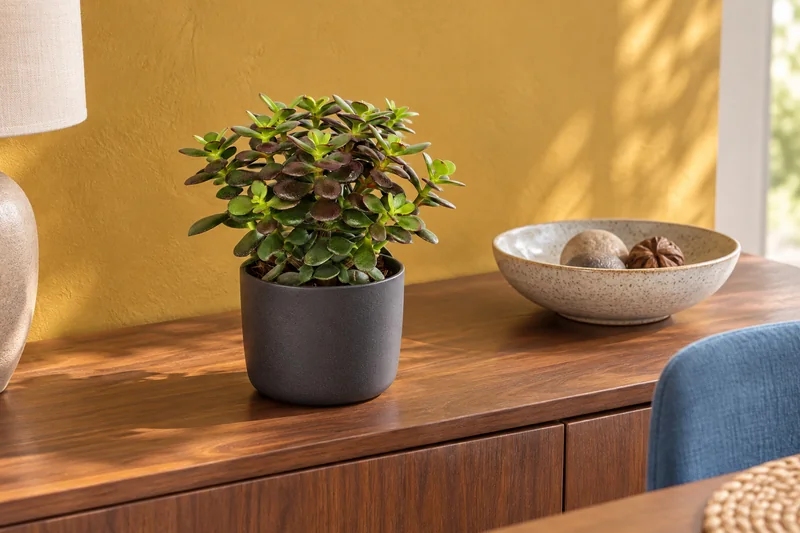
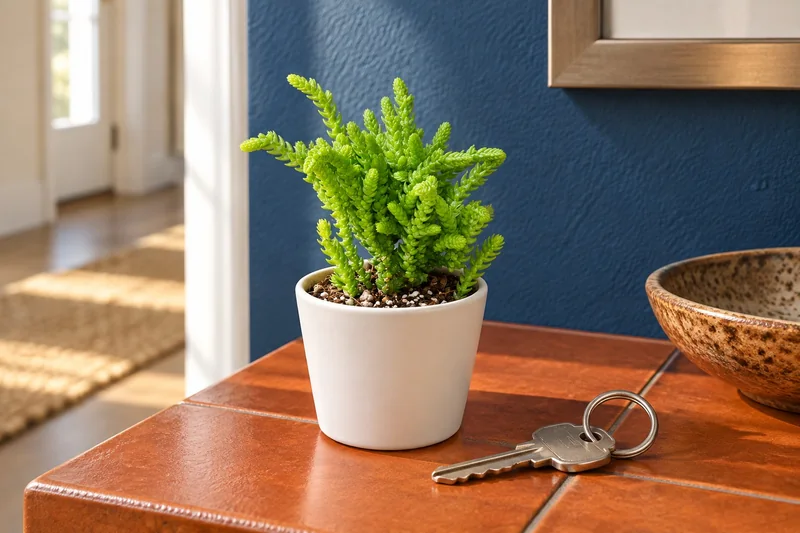
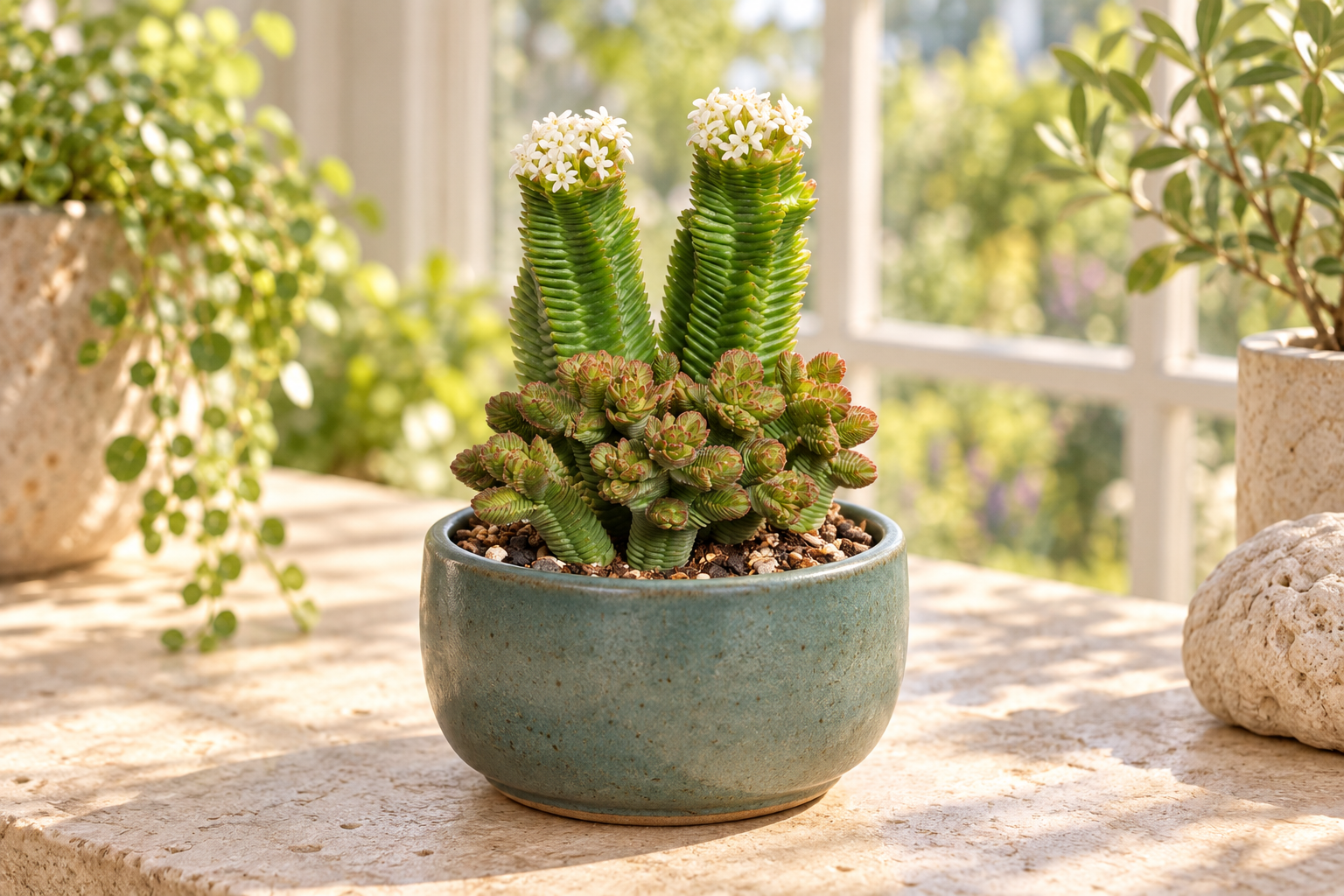
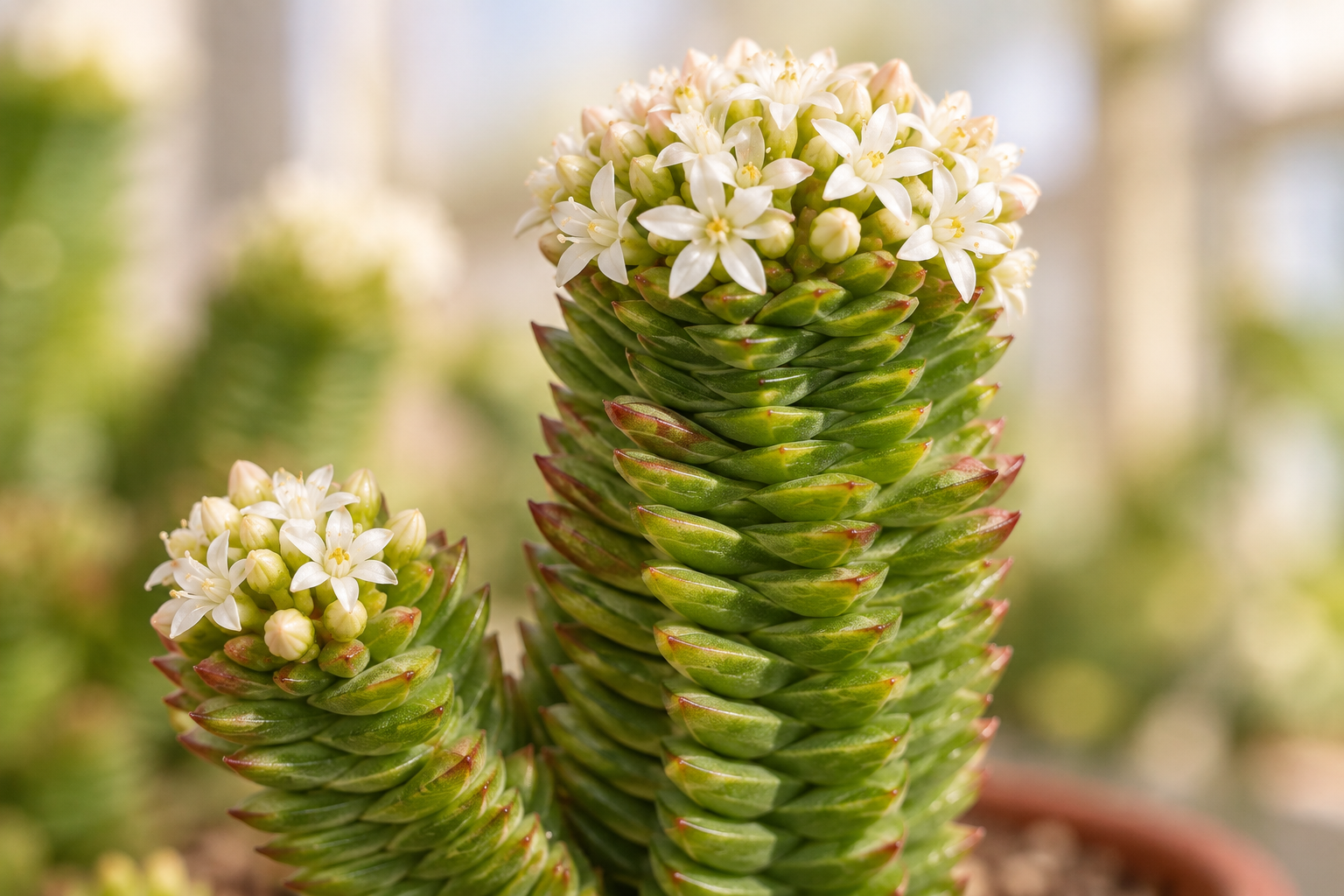
Crassula pyramidalis rewards a view from the side. Green leaves sit so closely against the upright shoot that the actual stem is hardly visible. Four leaf rows give the small structure its ordered column shape. Fleshy, rather oval leaves lie tightly above each other; young side shoots look even more compact. This makes a plant worth viewing close up beside simple ceramics or on a bright collection shelf.
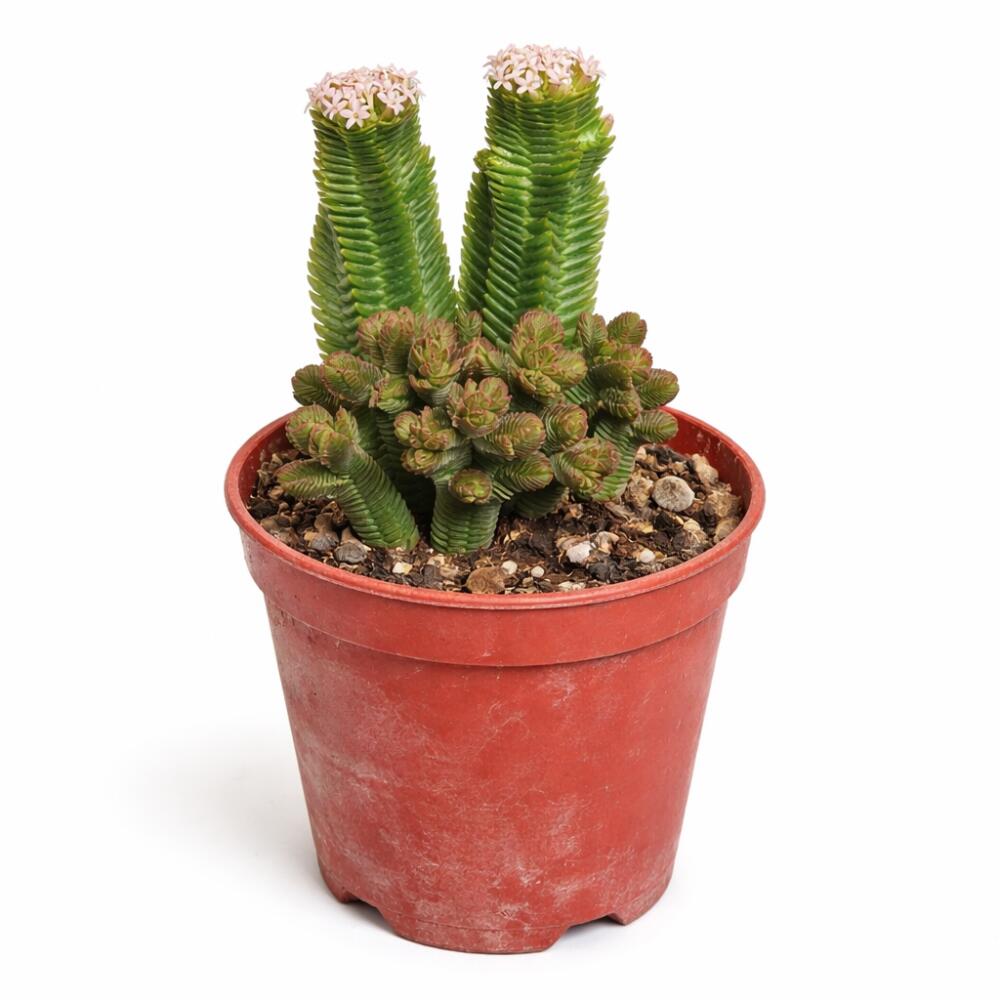
Crassula pyramidalis belongs to the stonecrop family. It is an evergreen succulent perennial. Leaves store water while the plant forms further shoot sections. The German name Pagoden-Dickblatt refers to this striking leaf order. Shop images show larger and smaller shoots together; some tips carry dense groups of pale flowers. These belong to a possible developmental phase. A flowering tip is not assumed at delivery. Strict symmetry is no standard for every grown plant either. Instead look for firm tissue, a stable base and root-ball condition.
Get to know the plant after unpacking
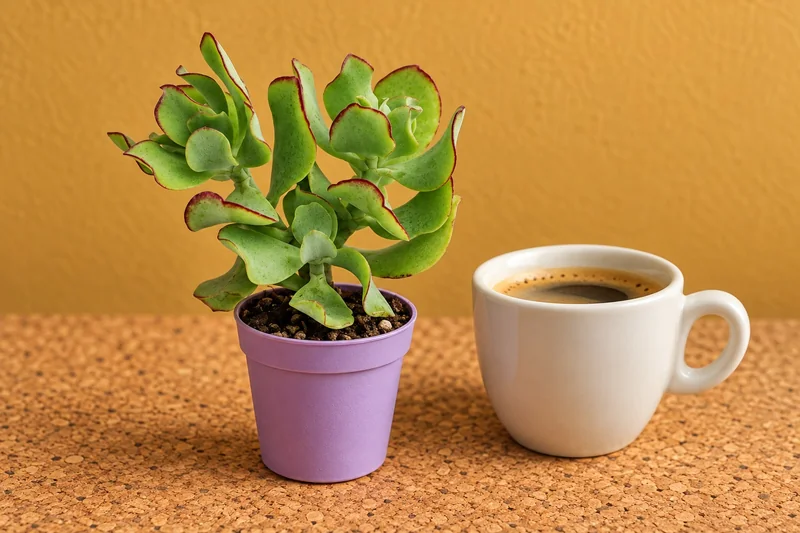
The offer is a potted plant with densely leafy shoots. The clean original view shows nursery pot and plant without the printed paper cover. Decorative covers and a photographed transport group do not set the design standard for your own plant. After unpacking, first choose a bright accessible place. There you can check the root ball and changes at the base without constantly moving the plant.
Hold the pot while working rather than pressing a leaf stack between your fingers. A small broken tip and soft dark tissue are different findings. Check also that water can drain unhindered. If the nursery pot sits in a closed cover, empty it after watering. Already moist soil receives no immediate extra sip by habit. Repotting and feeding can also wait if there is no specific problem. A calm observational start helps more than several simultaneous interventions. Observe and handle dense leaf structure carefully rather than wiping vigorously or pulling it apart.
Build bright light without overwhelming the plant
Crassula pyramidalis receives a very bright position. Bright filtered light or full sun suits cultivation under glass. This does not mean a newly received plant should immediately enter the hottest midday sun. Increase exposure gradually and observe leaf surfaces. A bright windowsill with space around the pot is usually easier to monitor than a deep shelf where the plant looks decorative but gets little daylight.
Notice the container surroundings too. Hot sun behind glass, a strongly warmed outer pot and very dry air may affect the plant together. Ventilation improves air exchange without needing constantly wet roots. A summer place on a sheltered terrace is possible if you monitor light transition, weather and drainage. The small succulent is not treated as a permanently planted garden perennial. In cool weather, return it to a bright frost-free place. Observe its actual conditions and bring it indoors before frost in good time.
Watering starts with drying soil
Check soil before reaching for the watering can. Let it dry well between supplies. During the active season, water moderately; outside it, sparingly. This creates no fixed weekly plan. Let the root ball dry noticeably and assess it together with plant firmness. A dry surface may appear before root space is actually drying. Pot weight and a cautious edge check help distinguish this.
When water is needed, apply to soil and let surplus drain completely. Constantly topping up an already wet mix prolongs the time with little air reaching roots. At the same time, storage leaves should not shrivel for weeks because the plant is entirely forgotten. A bright warm position may need more checks than a cooler winter place. Spraying cannot replace root-space supply. Aim at the pot edge so water does not unnecessarily spread between tight leaf layers. If the base becomes soft, check moisture and roots rather than automatically treating it as thirst.
Airy root space supports dense shoots
Soil should absorb water and then dry again. Crassula pyramidalis needs cactus compost and well-drained conditions. A suitable succulent mix with appropriate mineral components helps. Heavy dense substrate and missing drainage holes make checks harder: the surface may look dry while deeper soil stays very wet. First check actual drainage before wanting to change the mix with further ingredients.
Repotting makes sense when roots fill existing space or substrate has lost its loose structure. An active growing period, often spring, suits better than a rushed intervention on a resting plant. Choose only a suitably larger container. A large reserve of unrooted soil remains moist longer and makes watering harder to judge. Hold the root ball when removing it without squeezing columns. Retain previous planting depth; do not bury shoot bases under an extra layer. Afterwards observe condition and water as needed, not merely because a new pot is ready.
Supply growth and make winter quieter
While the plant forms new leaves and shoot sections, it can receive restrained suitable liquid feed. Set dose according to the product and actual activity. More food replaces neither brightness nor well-drained roots. With poor light, damaged roots or no growth, therefore do not simply increase feed. Water and nutrients must fit the plant in front of you.
Consumption may fall considerably in autumn and winter. Keep Crassula pyramidalis bright and frost-free, check the root ball less by summer standards and water more sparingly. Rest does not mean letting the plant dry completely unobserved. In a warm home it may behave differently from a bright cooler room. Look at actual growth, leaf firmness and soil drying. A cold wet mix is especially unsuitable. Adapt watering to root-ball drying and protect from frost.
Observe side shoots instead of constantly shaping
Crassula pyramidalis needs no regular shaping. A healthy plant may continue its densely leafy shoots and branch. Its pagoda-like structure is no reason to shorten tips routinely. If damaged tissue must be removed, work cleanly and selectively. Investigate the cause of a soft base first; cutting alone cannot remove unsuitable water supply.
Stem or leaf cuttings suit propagation in spring and early summer. For a first attempt, a healthy existing side shoot provides a manageable starting point. Let cut surfaces dry before planting so fresh wounds do not immediately enter permanently wet soil. Cutting material gets a loose mix and cautious moisture, not vigorous daily watering. Rooting and new development are not guaranteed. You need not propagate your plant to care for it properly. Often it is enough to observe its leaf rows and leave a stable position.
Look early for changes between leaf layers
Dense shoots merit regular careful checks. Mealybugs, aphids and vine weevils may occur as pests. Cotton-like accumulations at leaf bases or visible animals give a more specific clue than a single dull patch. Also inspect the base and root area if the plant becomes unstable despite suitable watering. Not every wilted leaf means pests; light, wetness and damaged roots may also be involved.
Temporarily separate an unusual plant from the collection before treating all neighbouring pots indiscriminately. With visible pests, the next steps follow the recognised problem. Repeated spraying or preventive strong feeding does not replace clarification. Pale flower groups, by contrast, are a possible natural appearance at shoot tips. They are clear in the shop originals but not made compulsory. Its special appearance remains without flowers: tightly placed green leaves, short side shoots and small upright columns. Light, controlled drying periods and free drainage let you accompany this structure attentively.
One plant, several views

Good to know
Why the German name Pagoden-Dickblatt?
Closely stacked leaf rows surround upright shoots and create the column-like structure.
Does it need direct sun?
Bright filtered light or full sun suits under glass. Build stronger sun gradually and observe warmth at the actual position.
When do I water again?
When soil has dried noticeably and the plant needs water. Surface and inner root ball may differ in moisture; no fixed weekly plan replaces checking.
Should I spray the leaves?
A spraying routine does not replace watering soil. Apply to substrate selectively and let surplus drain.
Why is the base soft?
First check wetness, roots and possible damage. Soft tissue is no reliable thirst signal and should not automatically receive more water.
Must I cut shoot tips?
No, regular shaping is unnecessary. Healthy shoots and side branches may develop.
Are flowers guaranteed at delivery?
No. Original images show pale flower groups at some tips as a possible condition. Even without flowers, leaf stacks make its appearance recognisable.
Can it winter in the garden?
It is cultivated brightly and frost-free. A warm sheltered outdoor summer place does not make it a permanently hardy garden plant.
Sources and editorial note
- Exotenherz: own plant and original images (05.10.2026)
- RHS: Crassula pyramidalis, species and cultivation (05.10.2026)
- RHS: indoor cacti and succulents, general cultivation
Plant name and original views follow the linked shop offer. Care combines the RHS species profile with general cultivation guidance; development and water needs depend on actual position.