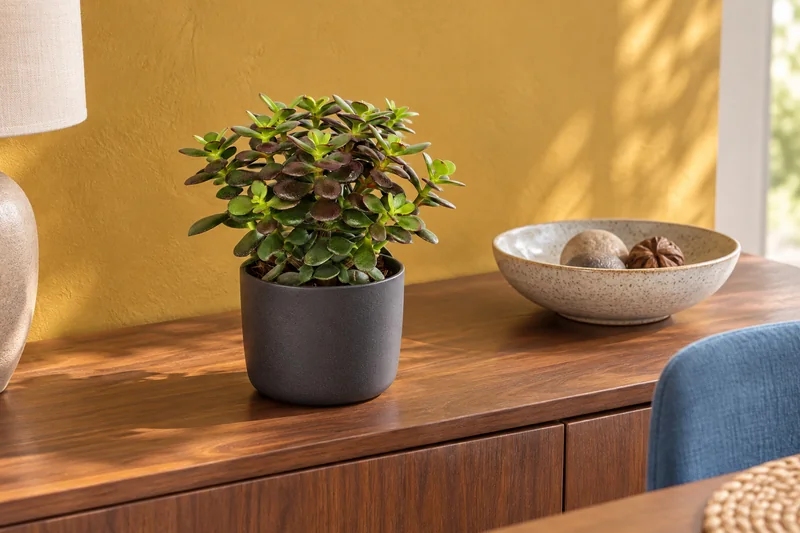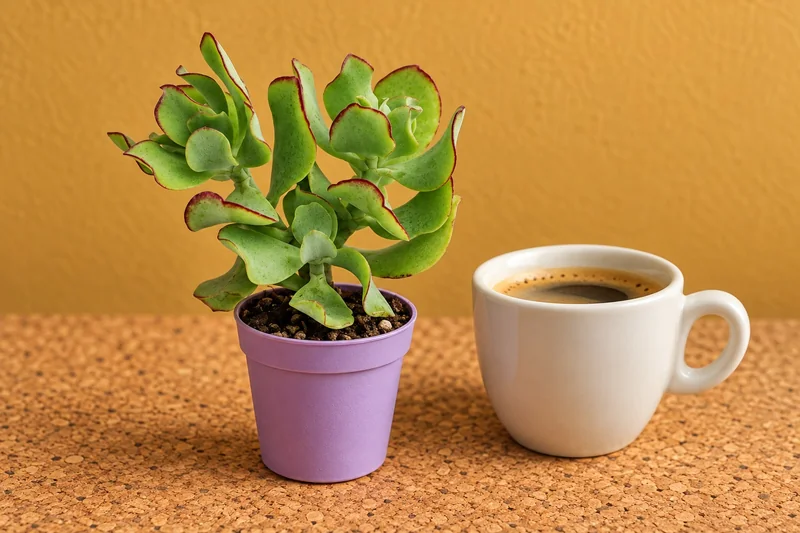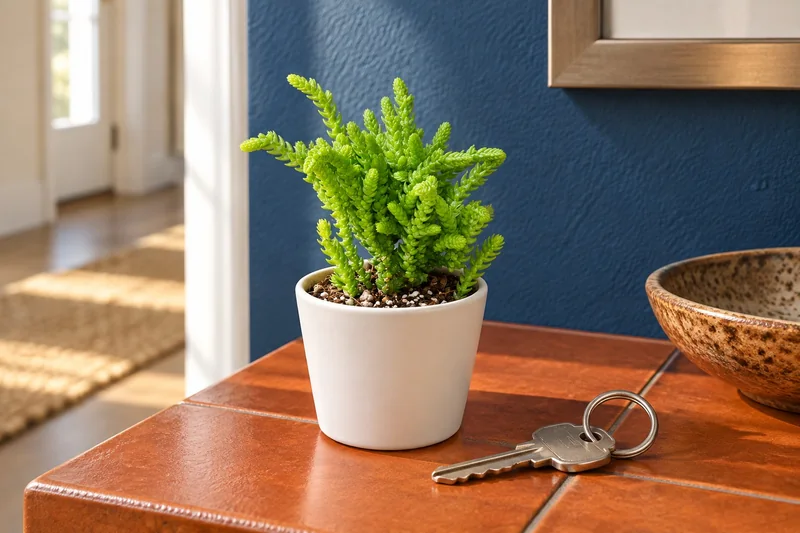
This plant at Exotenherz
Check the shop offer for current availability, price and what is included.
Check the shop for the price, current availability and what is included.
Your care table
| Topic | What to do | Why it helps |
|---|---|---|
| Light | Very bright; gradually acclimatise to sun. | Abrupt strong radiation may damage leaves. |
| Water | Let compost dry noticeably between waterings. | Succulent leaves store water. |
| Watering method | Water compost and remove excess. | Leaf hairs and shoot bases should not remain permanently wet. |
| Compost | Airy succulent mix with mineral content. | Roots need rapid drainage. |
| Pot | Repot only slightly larger with drainage. | Excessive wet soil remains unused for a long time. |
| Winter | Bright, frost-free and correspondingly less watering. | Little growth reduces water consumption. |
| Hairs | Do not rub off or treat with shine products. | The silvery covering is a natural feature. |
| Inspection | Check leaf bases for cotton-like pest nests. | Mealybugs may hide between shoots. |
Check the compost and pot weight. The care table explains how far the compost may dry.
Water only when needed. The water should reach the root ball without spilling over the rim.
Remove surplus water from the saucer or cachepot. Then return the plant to a suitable position.
The special feature lies on the leaf surface
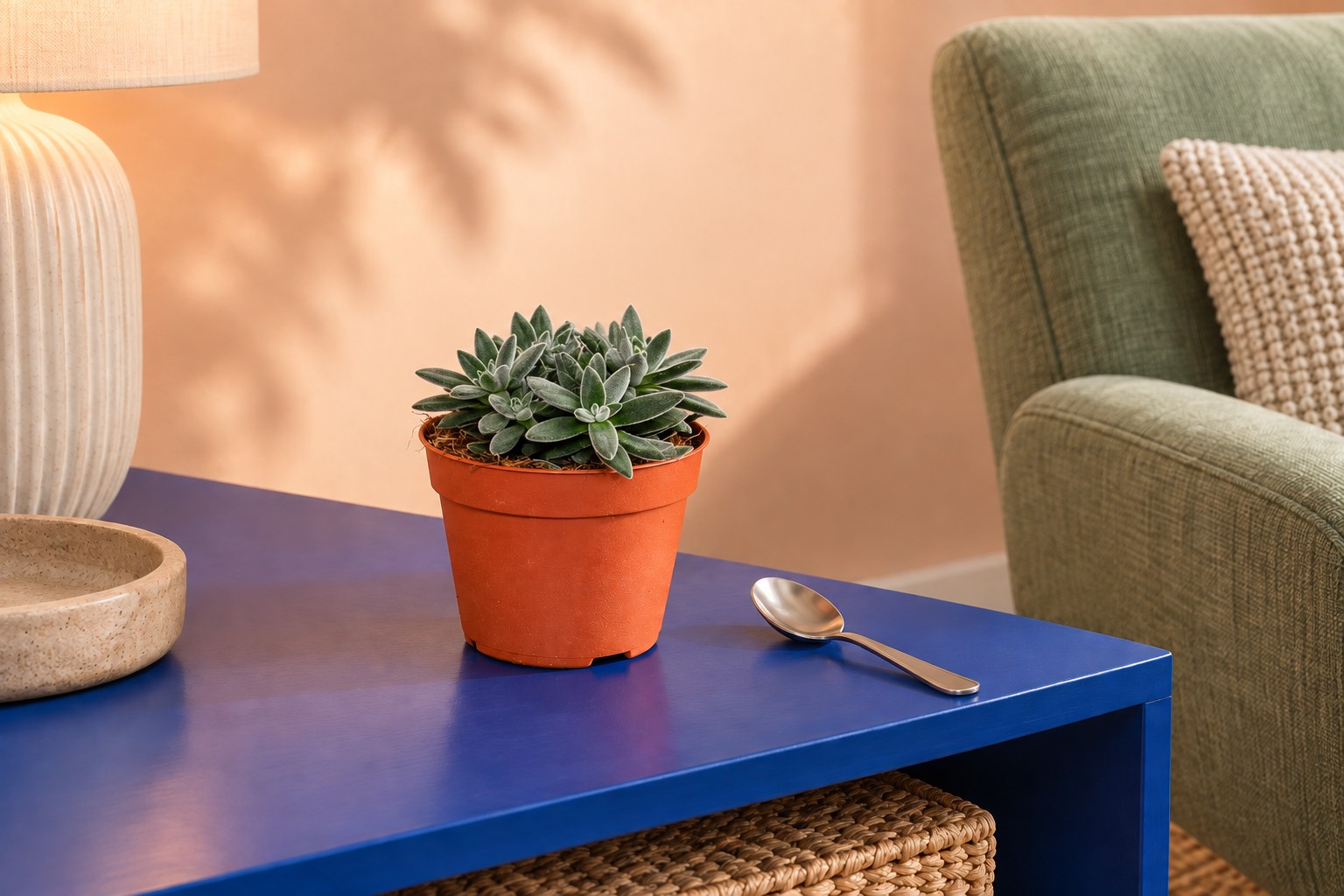
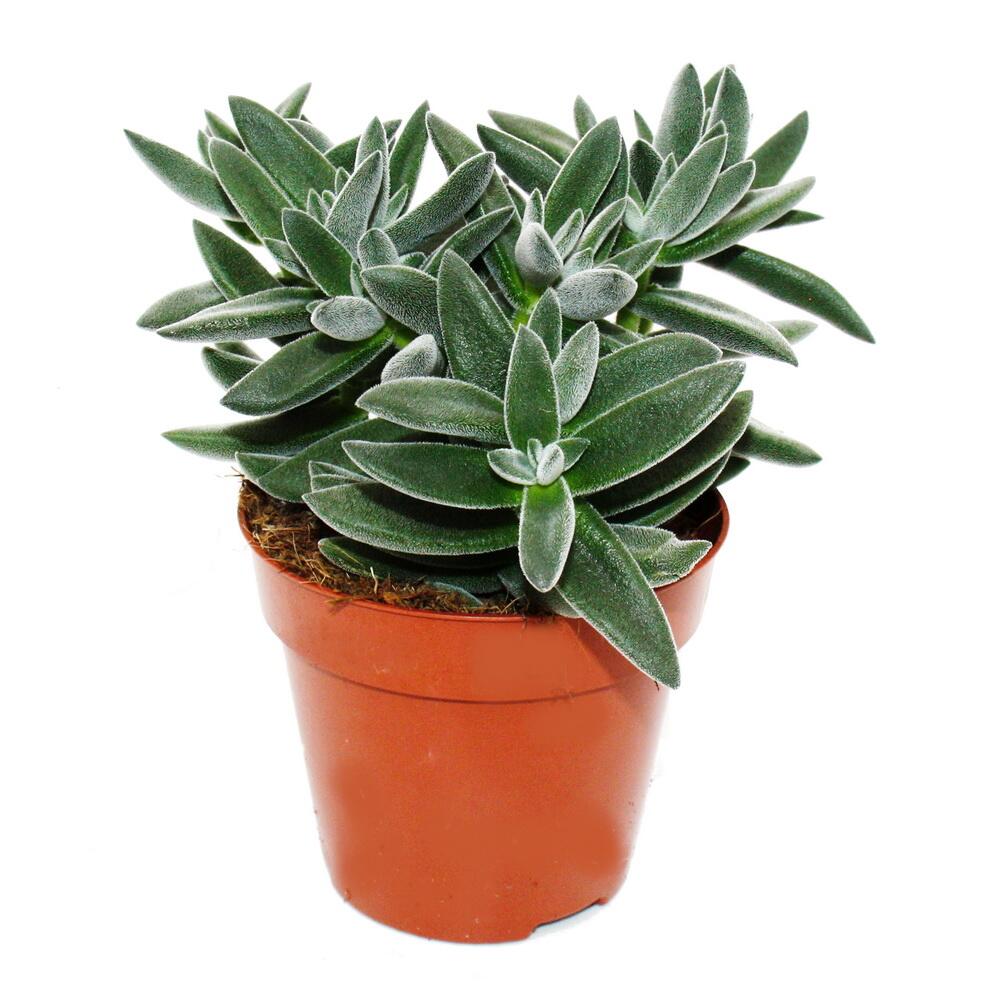
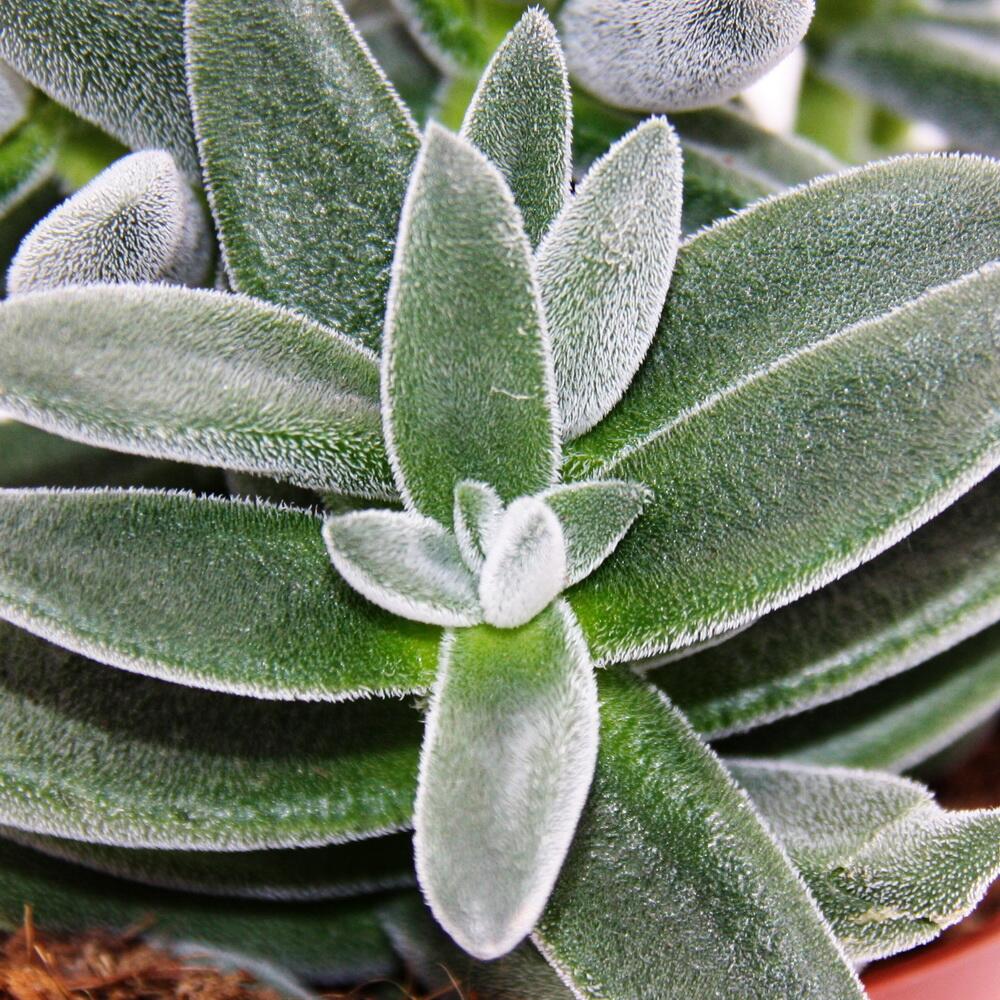
Elongated grey-green leaves sit in pairs on compact shoots. Fine pale hairs make the surface appear silvery. This natural covering belongs to the plant and is not dust to polish away. Tarantula is traded as a horticultural Crassula form. A particular species is not added here without sufficient confirmation. Belonging to the stonecrop family explains the succulent build: leaves store water and bridge drier periods.
The offered young plant has small proportions
A 12 cm pot and approximately 15 cm total height are stated for the offer. This is a low young plant, not a tall woody shrub. The scene was therefore designed with a low leaf cushion. The coloured cover pot and furnishing serve as styling and are not automatically included. Hold the pot when transporting or moving. Pressure on leaf tips and rubbing the hairs can leave marks that do not simply disappear again.
Keep brightness and change sun exposure gently
A very bright position supports compact growth. Direct sun may suit after gradual acclimatisation; do not suddenly place in hot midday sun after shipping or prolonged shade. Unusually long loose new shoots may indicate insufficient light. A living-area position is possible if enough light actually reaches it. This succulent is less suited to a room’s dark depths. Keep as bright as possible and frost-free in winter.
Check first, then supply the whole root ball
Let compost dry noticeably between waterings. Then water onto compost until the root ball is supplied and remove excess from the cover pot. Many small daily sips keep the upper area unnecessarily continuously damp. Hairy leaves need no regular shower. Water markedly less often in cooler conditions and low winter light. Soft translucent leaves combined with wet compost suggest a different problem from slightly reduced firmness with a dry root ball.
Airy roots and restrained nutrients
A free-draining succulent mix with mineral components helps drying. When repotting, provide only moderately more space and choose drainage. A large reserve pot dries slower than the small plant uses water. Sparing feeding following product instructions suffices during active growth. Do not fertilise a bone-dry stressed root ball. If possible, loosen dust with a soft dry brush without rubbing off natural hairs.
Observe without constantly touching
Check shoot forks and leaf bases for mealybugs. Their cotton-like clusters differ from the even fine natural hairs. Initially separate suspicious plants and clarify the cause. Suitable healthy shoot cuttings may propagate after the cut surface dries; the small young plant need not immediately be pruned for this. No flowering or fixed final size is guaranteed. Position the ornamental plant so children and animals do not nibble its leaves.
One plant, several views
Good to know
Are silvery hairs mould?
An even covering of fine hairs is normal. Irregular cotton-like clusters at shoot forks instead require closer inspection.
Must I spray the leaves?
No. The root ball is decisive for water supply; constantly wet hairy leaves are no care goal.
How large is the offered plant?
A 12 cm pot and approximately 15 cm total height are stated. The scene shows an appropriately low young plant.
Why is it suddenly growing long and loose?
Insufficient light is a possible cause. Check the position and improve brightness gradually.
Sources and editorial note
- Product and delivery contents: Exotenherz
- Grow Tropicals nursery: form and cultivation guidance
- Royal Horticultural Society: plant and care knowledge
Sources checked: 15 September 2026. Product information and delivery contents follow the linked shop offer. Care has been checked against the stated specialist sources and remains subject to plant condition, position and season.