This plant at Exotenherz
Check the shop offer for current availability, price and what is included.
Product and delivery details are given in the individual offer.
Your care table
| Topic | What to do | Why it helps |
|---|---|---|
| Light | Choose a sunny or shaded garden position according to soil and neighbours. | Czakor can grow in drier shade too, but first needs a good start. |
| Soil | Prepare moderately nutrient-rich, well-drained soil. | Permanent wetness does not suit the strong rhizomes. |
| Planting | Moisten the root ball, set at its previous height and water in. | The small delivered root ball first needs to connect with garden soil. |
| Spacing | Allow about 25 cm centre to centre as an offer guide. | Later spreading growth enlarges the small individual planting spots. |
| Water | Supply young plants during dry weather in their first spring and summer. | An older planting’s drought tolerance does not replace establishment care. |
| Pruning | Reduce old leaves and spent stems as needed. | This can make room for fresh growth and restore order to the appearance. |
| Feeding | Feed moderately only when necessary. | A strong garden perennial does not require extra nutrients solely because there are fewer flowers. |
| Division | Divide healthy plantings that have become too wide, preferably in spring. | Rooted pieces can be replanted and give neighbours room again. |
For young plants, feel the soil directly at the root ball. The surface and deeper soil may have different moisture levels.
Water thoroughly after planting; later, water according to the soil, weather and establishment rather than a fixed calendar.
Avoid standing water. For plants in containers, also check that water runs out of the drainage hole.
The flowers stand lightly above the leaf cushion
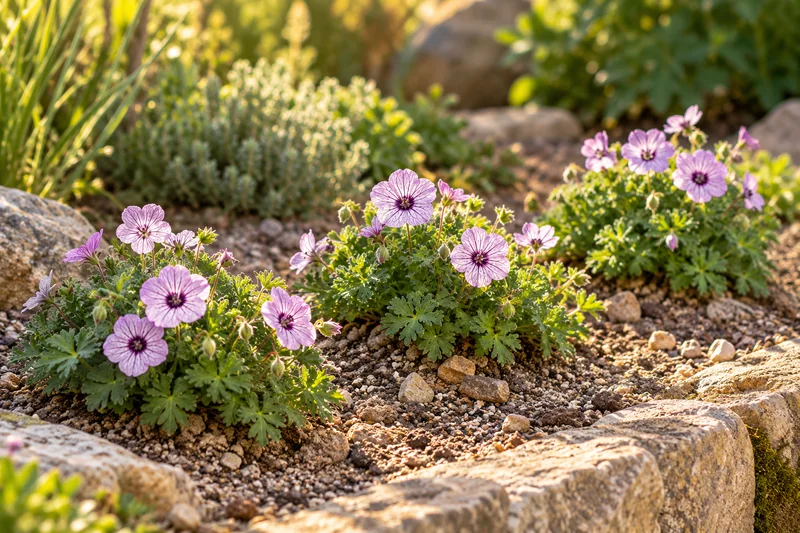
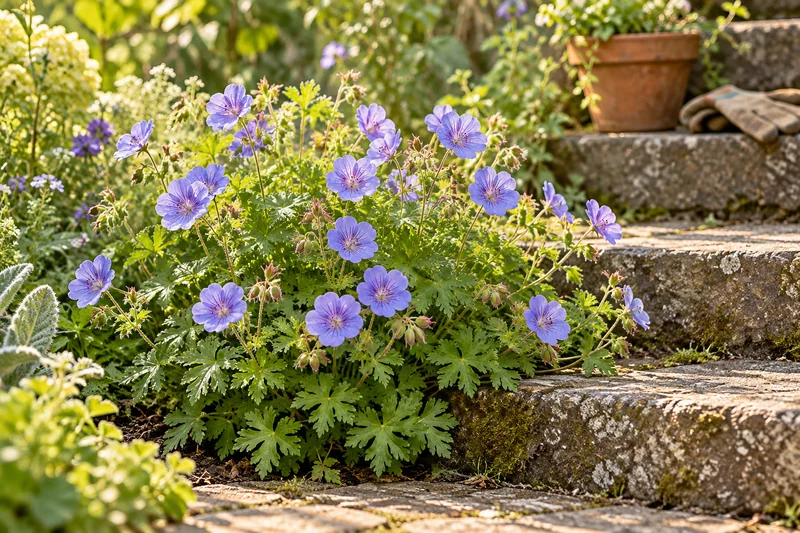
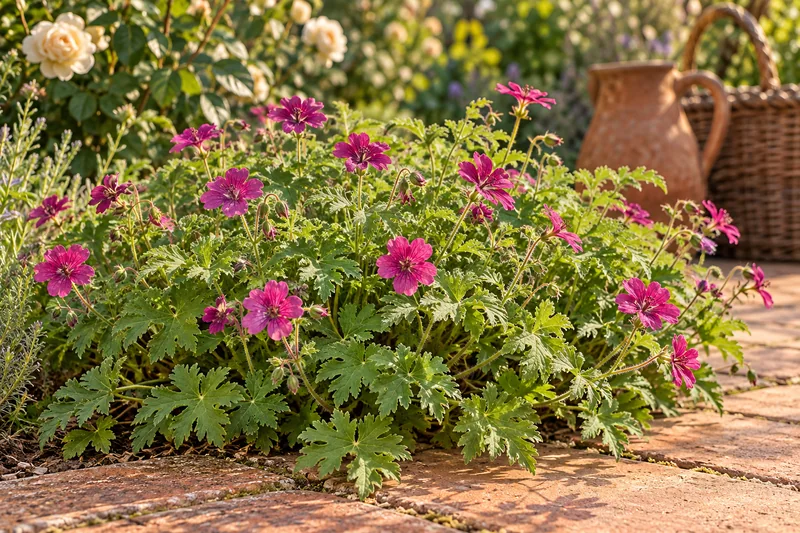
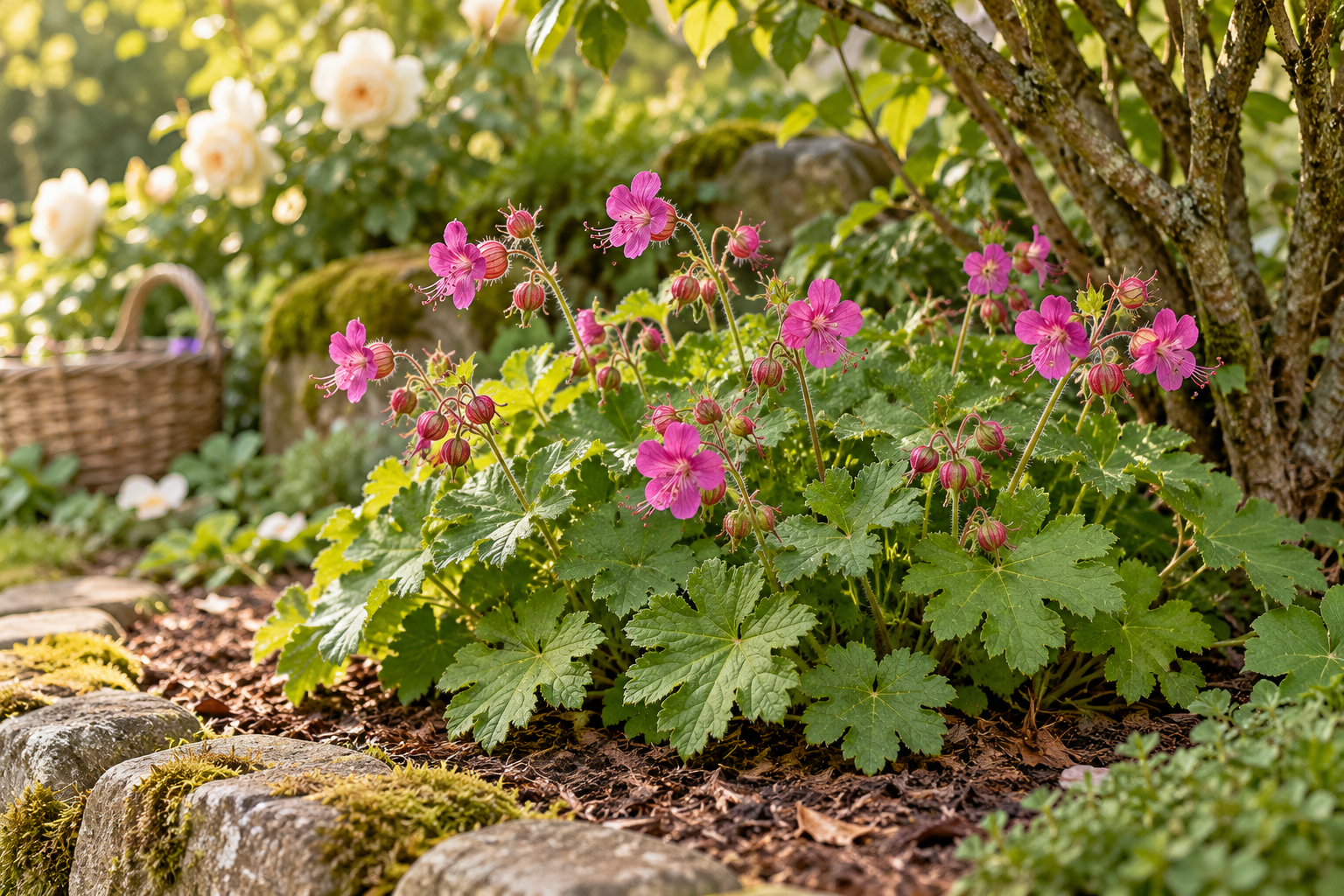
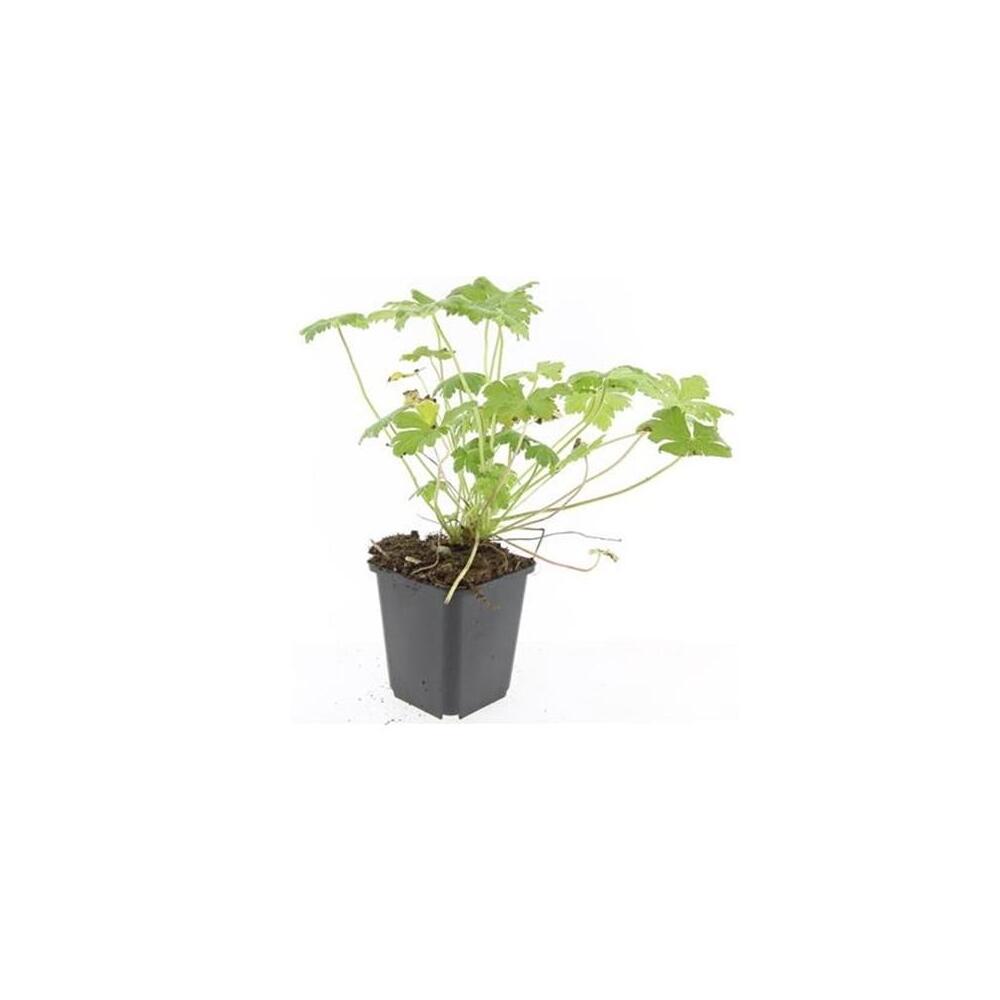
Czakor shows its purplish-pink flowers above green foliage without piling the border edge high. Their five petals, striking stamens and reddish calyces reward a close look. Below them are deeply lobed leaves with a slightly softer surface. Touching the plant gently also reveals its aromatic scent. For me, that combination of colour, foliage and smell belongs to the portrait. A picture of an older flowering garden planting, however, is not the beginning of every order. The offered set plants come in 9 cm pots, approximately 10–25 cm tall, and may still be without flowers on delivery.
Distinguish foliage height from flower height when planning
A garden cranesbill looks different when only the leaves are visible or the flowering stems have appeared. Czakor’s foliage stands at roughly 20–30 cm; with flowers, approximately 30–40 cm can be reached. Position and development affect these heights. A young potted plant therefore does not yet give a reliable impression of the later group. Growth spreads through rhizomes and can form connections between individual planting spots. This suits a woodland edge or a position in front of taller perennials. Beside small, slow-growing neighbours, however, I watch that their own space is preserved.
Dry shade is a position, not a waiver of care
Czakor is among the cranesbills that can cope with drier shade. That is useful beneath woody plants, but says nothing about how a newly planted specimen experiences its first summer. Large tree roots compete for water, and a dense canopy prevents some rain from reaching the soil. I would therefore check the ground at the actual planting spot. A light edge beneath an open woody plant can be more comfortable than a constantly parched, compacted spot directly beside the trunk. A sunny position is also possible, provided the initial water supply and soil conditions are right.
Lay the quantity sets out in the border
The offer gives roughly 25 cm spacing, or sixteen plants per square metre, as a guide. First I put the pots on the prepared area. This shows how a group can accompany the woodland edge and where it should leave the path clear. Then the root balls are moistened, set at their previous height and watered in. Soil should fit well around the root ball without burying it deeper than before. Spring is a good starting point. A suitable frost-free autumn can also work; on heavy ground that stays wet in winter, I would favour spring and first improve drainage.
The first flowering is not the whole year
The purplish-pink display belongs mainly to late spring and early summer, often May and early June. Afterwards, aromatic foliage remains the planting’s foundation. I would therefore not describe Czakor as a continuously flowering summer carpet. If old leaves and spent stems spoil the appearance, they can be reduced appropriately. Fresh growth restores order to the planting. A still-attractive green clump does not have to be cut down completely merely because of a fixed date. Before a stronger intervention, I look at weather and soil moisture so that the plant then finds suitable conditions for new growth.
Not every leaf change needs the same answer
An older yellow leaf among healthy greenery means something different from an entire wilting planting. I first look at young shoots, the root area and the course of the last few days. Has the root ball repeatedly experienced drought, or did the soil stay wet for a long time? Unusual spots, feeding marks or a coating prompt a closer look. Automatically adding more water and fertiliser together does not explain the change. Czakor is a robust garden perennial, but remains a living plant in a specific position. Attentive observation usually helps more than expecting a groundcover to get by without any checks as a matter of principle.
The garden planting changes in autumn too
Czakor is semi-evergreen. Some foliage can last through the cold season while older leaves change colour or die back. Its appearance depends on winter and planting position. In spring, unattractive remains are tidied and new shoots observed. Larger healthy plantings can be divided if their spread no longer fits the arrangement. Rooted sections then receive their own initial water supply again. In a container, conditions are tighter than in the border: the small root ball dries faster or becomes wet more easily. These differences belong to care even when the variety is already well rooted in the garden.
One plant, several views
Good to know
When does Czakor flower?
Mainly in late spring and early summer, often May and early June. Position and weather can shift the timing.
What flower colour is typical?
Purplish pink to strong magenta pink. The flowers stand slightly above the foliage.
How tall does the variety grow?
The foliage is usually approximately 20–30 cm; with flowers up to roughly 30–40 cm, depending on conditions.
Is Czakor perennial?
Yes, a perennial semi-evergreen garden plant. The winter state of the foliage varies.
Does it need no water in shade?
It does, especially while the young plant is establishing roots. Later tolerance is no substitute for establishment care.
How many plants fit in a square metre?
The offer gives roughly sixteen at approximately 25 cm spacing as a guide; plan for border shape and neighbours too.
Should I divide the planting?
If a larger healthy planting grows too far or needs redistributing, it can be divided, preferably in spring.
Sources and editorial note
- Exotenherz: Czakor, delivery size and directly checked quantity sets (01.10.2026)
- RHS: exact Czakor variety and cultivation (01.10.2026)
- Arbeitskreis Staudensichtung: Czakor, flowering and separate growth heights (01.10.2026)
- Morton Arboretum: Balkan cranesbill, rhizomes and varieties (01.10.2026)
- RHS: planting and caring for garden cranesbills (01.10.2026)
Direct shop check: 6/12/60 available,20/40 unavailable. German perennial trials distinguish foliage 25–30 from flowers 30–40 cm; RHS describes lower 20 cm growth. The text presents a site-dependent range rather than a false contradiction. Purplish-pink flowers in May/earlyJune. Semi-evergreen. Scene accepted against original: rounded deeply lobed foliage, five-petalled purplish-pink flowers, inflated reddish calyces and long stamens.