This plant at Exotenherz
Check the shop offer for current availability, price and what is included.
Check the selected shop offer for price, availability and delivery contents.
Your care table
| Topic | What to do | Why it helps |
|---|---|---|
| Light | Choose bright, filtered daylight. | Fine fronds should not dry out in hot sunshine. |
| Water | Water evenly after slight surface drying. | The inner rootball should not dry out completely. |
| Drainage | Remove remaining water after watering. | Moist compost still needs air. |
| Compost | Loose, humus-rich and well drained. | Roots need an evenly supplied foundation. |
| Rhizomes | Leave the hairy shoots on the surface. | They are not roots that need burying deeply. |
| Air | Protect from direct heated air and cold draughts. | Delicate foliage reacts to unfavourable room air. |
| Nutrition | Feed sparingly during growth. | A fern needs no strong nutrient boost. |
| Repotting | Increase modestly if necessary and protect rhizomes. | Above-ground shoots are delicate living plant parts. |
Check the compost and pot weight. The care table explains how far the compost may dry.
Water only when needed. The water should reach the root ball without spilling over the rim.
Remove surplus water from the saucer or cachepot. Then return the plant to a suitable position.
A fern with little silvery feet
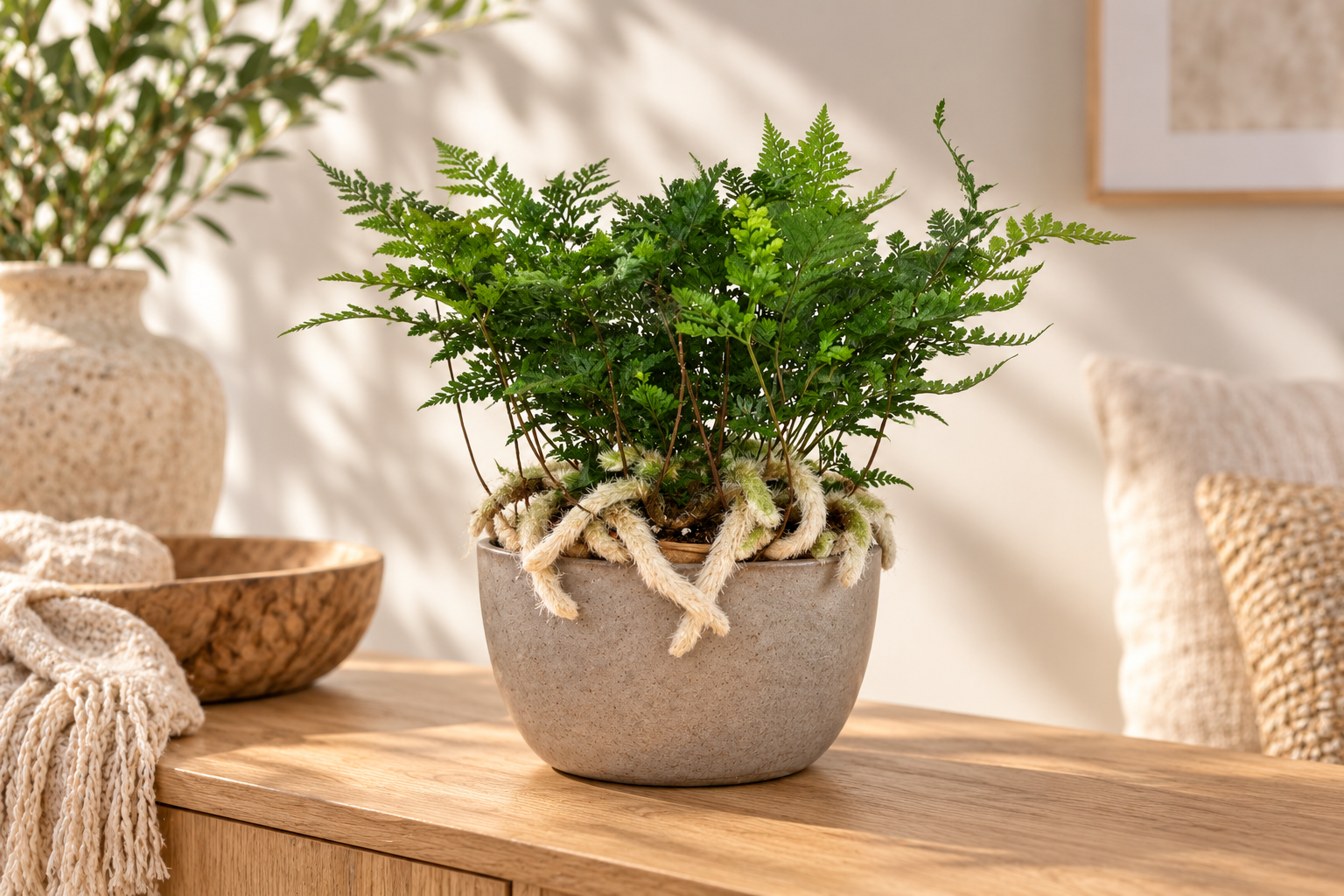
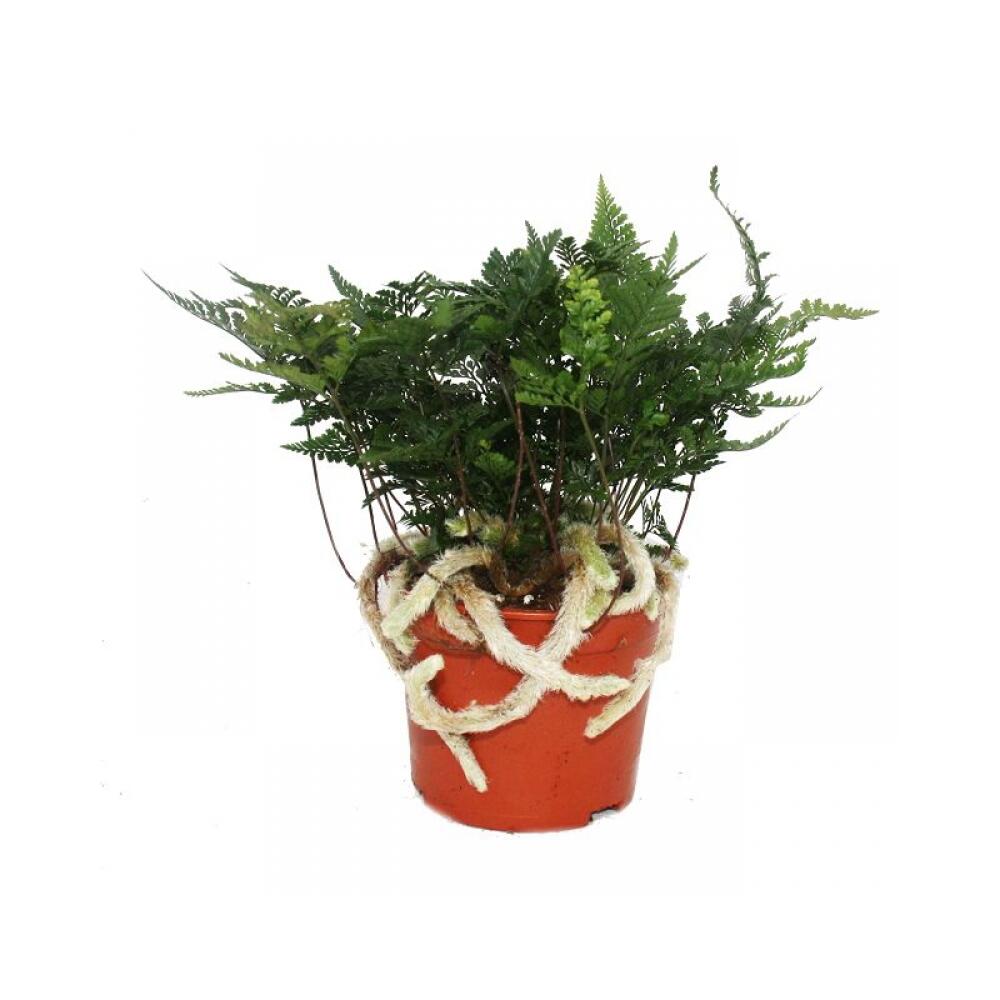
Among the finely divided green fronds are pale, hairy shoots that can creep across the compost and pot rim. They resemble small soft feet and give this fern its common name. I particularly like the contrast between delicate green and the silvery surface on a low, bright piece of furniture. The offer states a seventeen-centimetre pot but no reliably specified delivered height. The plant therefore receives no invented centimetre measurement here. The original photograph shows its actual form. Clear space around the pot rim allows both fronds and characteristic creeping parts to stand out well.
The feet are rhizomes, not exposed roots
The shop lists the plant as Humata tyermannii and mentions Davallia. Botanically, this rabbit’s foot fern is classified as Davallia tyermanii. Its hairy rhizomes are creeping stem axes from which fronds and roots can arise. They are not buried deeply simply because they are visible outside. This is one of the most important differences from an ordinary houseplant with a hidden rootball. In their natural way of life, such ferns may grow on other plants or suitable supports without using them for food. For pot cultivation, an airy, humus-rich foundation suffices, allowing the rhizomes to keep their place.
A bright place for fine foliage
Filtered daylight supports attractive frond development. Hot direct sunshine behind glass may instead quickly stress the fine parts. I choose an open, bright indoor position that is not deep in the shade of other plants. Although a fern is often associated with shady woodland images, it still needs light indoors. A low table or console allows a view of the entire plant. A place directly over a heater is unsuitable. When ventilating, the fern also stays outside cold draughts. Even conditions are more helpful than constantly switching between a dark bathroom and a very sunny windowsill.
Slightly moist does not mean standing in water
The inner rootball should be evenly supplied and not regularly dry out completely. I check the surface and pot weight before watering. After slight surface drying, the compost is thoroughly and controllably moistened. Remaining water must not stay in the cover. Rhizomes are not placed under a powerful stream every time. A permanently wet, heavy rootball is unfavourable despite the moisture-loving foliage. If fronds become limp, I therefore check actual moisture first. A wet plant can also wilt with damaged roots. More water then does not solve the problem and may make it worse.
Airy compost and a respectful pot change
Loose, humus-rich, well-drained compost holds water while retaining air around the roots. When repotting, size increases only modestly if the plant uses its existing space well or the compost has lost structure. I support the rootball and leave hairy shoots as undamaged as possible. They are not cut off because they cross a rim, or hidden under a thick new compost layer. Feeding can be restrained during active frond development. A strong dose is unnecessary. Fresh pre-fertilised compost contributes to the supply so that fine roots are not burdened by unnecessary extra nutrients.
Consider room air and fronds together
Very dry heated air can stress the fern’s delicate foliage. I then move the plant away from direct warm airflow and look for a bright, stable place. Occasional misting is no lasting substitute for suitable conditions, and standing wetness among all the fronds is not a goal either. A soft, dead leaf is removed cleanly without pulling on the rhizome. Dust can be taken off carefully or gently rinsed under suitable conditions, accounting for additional rootball wetness. If many fronds turn brown, light, air and root condition are checked together. A single old frond, by contrast, may simply have reached the end of its life.
Guide the creeping structure with patience
In winter, the rabbit’s foot fern remains frost-free and as bright as possible. With reduced activity, watering is reduced without leaving compost completely dry for a long time. I occasionally examine rhizomes for damage and watch for new frond beginnings. Their slow movement over the rim belongs to the plant and is not disorder that must be removed. A suitable pot with accessible compost makes this inspection easier. Accompanying the fern in this way reveals its two faces: a light green crown above and silvery creeping shoots below. This distinctive character makes it an attractive addition beside houseplants with firm, large leaf surfaces.
One plant, several views
Good to know
What are the hairy feet?
They are rhizomes, or creeping stem axes. They belong visibly at or above the compost surface.
Should I bury them?
No. They are not hidden under a thick compost layer when repotting.
How tall will the delivered plant be?
No reliable delivered height is stated in the offer. The 17 cm pot is confirmed; the original photograph shows the shape.
How moist does the fern need its compost?
Slightly moist in the centre, with brief, slight surface drying. No standing water left behind.
Can it stand in full sunshine?
Hot direct sunshine is unfavourable. Choose bright, filtered daylight.
Why do fronds turn brown?
Check dry heated air, rootball moisture, light and roots. Individual old fronds may age naturally.
May it remain outdoors in winter?
No. The plant must stand frost-free and protected from unsuitable draughts.
Sources and editorial note
- Exotenherz: offer and original photographs (01.10.2026)
- Jardin botanique Montréal: Davallia (01.10.2026)
- Decorum: Humata tyermannii (01.10.2026)
Shop offer, SKU, GTIN and availability checked live on 01.10.2026. Original photograph unchanged. Independently researched gardening texts and an individually reviewed scene.