This plant at Exotenherz
Check the shop offer for current availability, price and what is included.
Check the shop for the price, current availability and what is included.
Your care table
| Topic | What to do | Why it helps |
|---|---|---|
| Light | Filtered daylight to moderately bright conditions | Hot sun damages frond surfaces |
| Water | Keep slightly moist and let the surface dry a little | The fern does not tolerate prolonged root-ball dryness |
| Drainage | Remove remaining water after watering | Moist roots still need oxygen |
| Room conditions | Warm, sheltered from draughts and preferably in humid air | Dry heated air encourages brown tips |
| Compost | Choose a humus-rich, loose mix that holds its structure | Roots must not sit in compacted soil |
| Rhizomes | Leave close to the surface and do not bury deeply | This preserves the natural growth habit |
| Fertiliser | Feed sparingly during growth according to the label | Too many salts burden the roots |
| Inspection | Regularly inspect frond undersides and rhizomes | Distinguish spore clusters from pest infestation |
Check the compost and pot weight. The care table explains how far the compost may dry.
Water only when needed. The water should reach the root ball without spilling over the rim.
Remove surplus water from the saucer or cachepot. Then return the plant to a suitable position.
A fern with a bold leaf structure
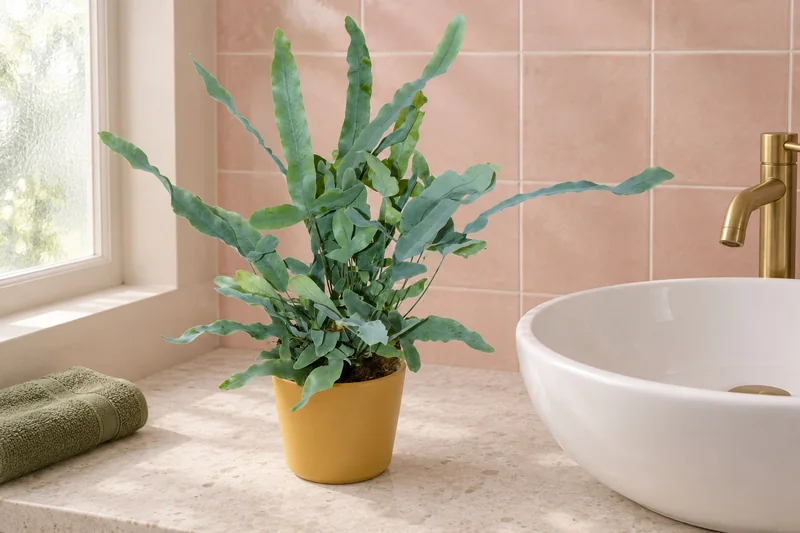
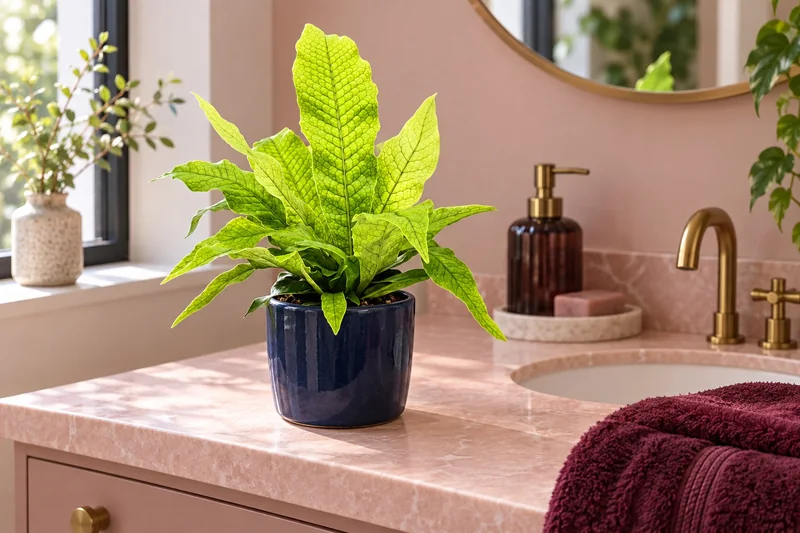
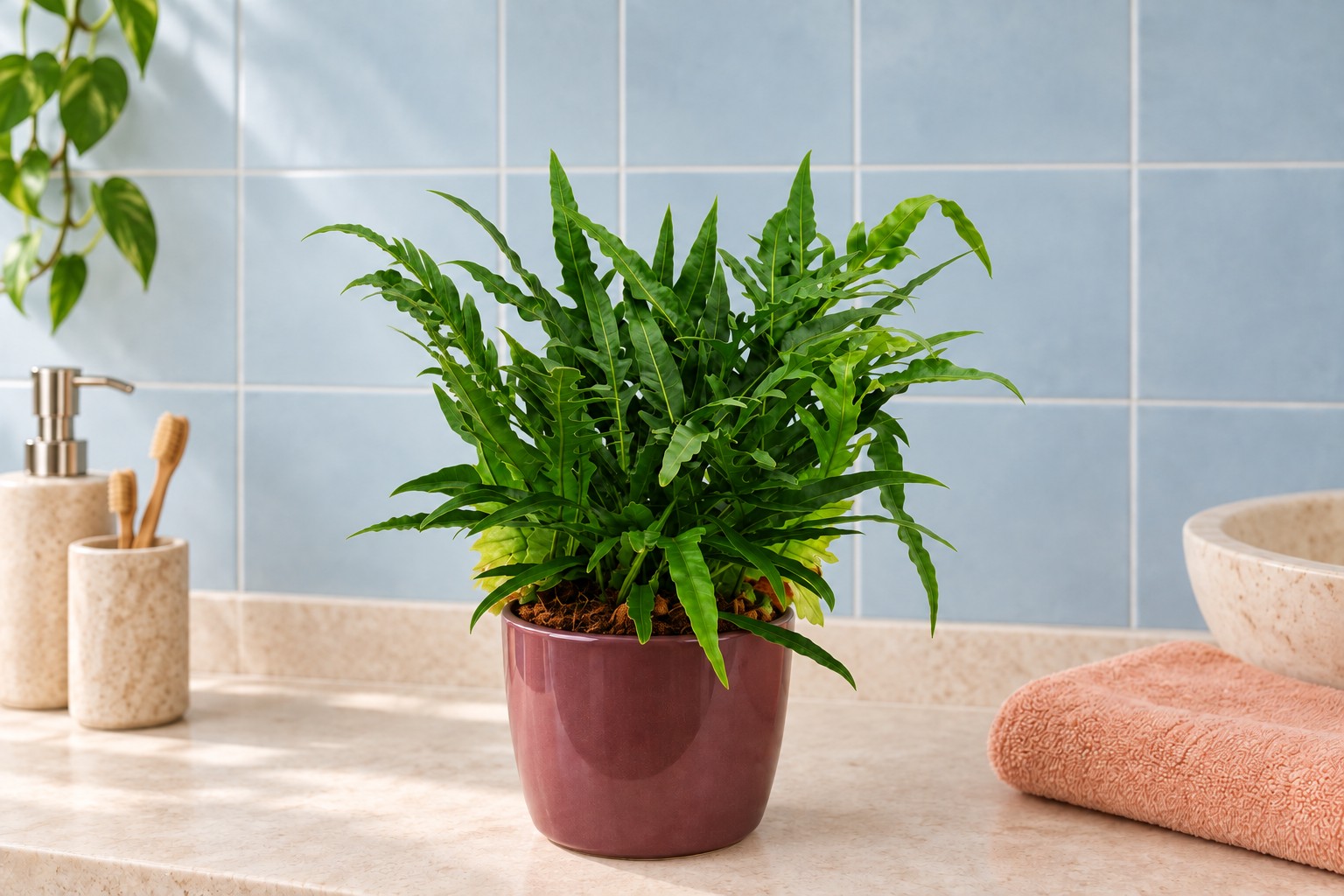
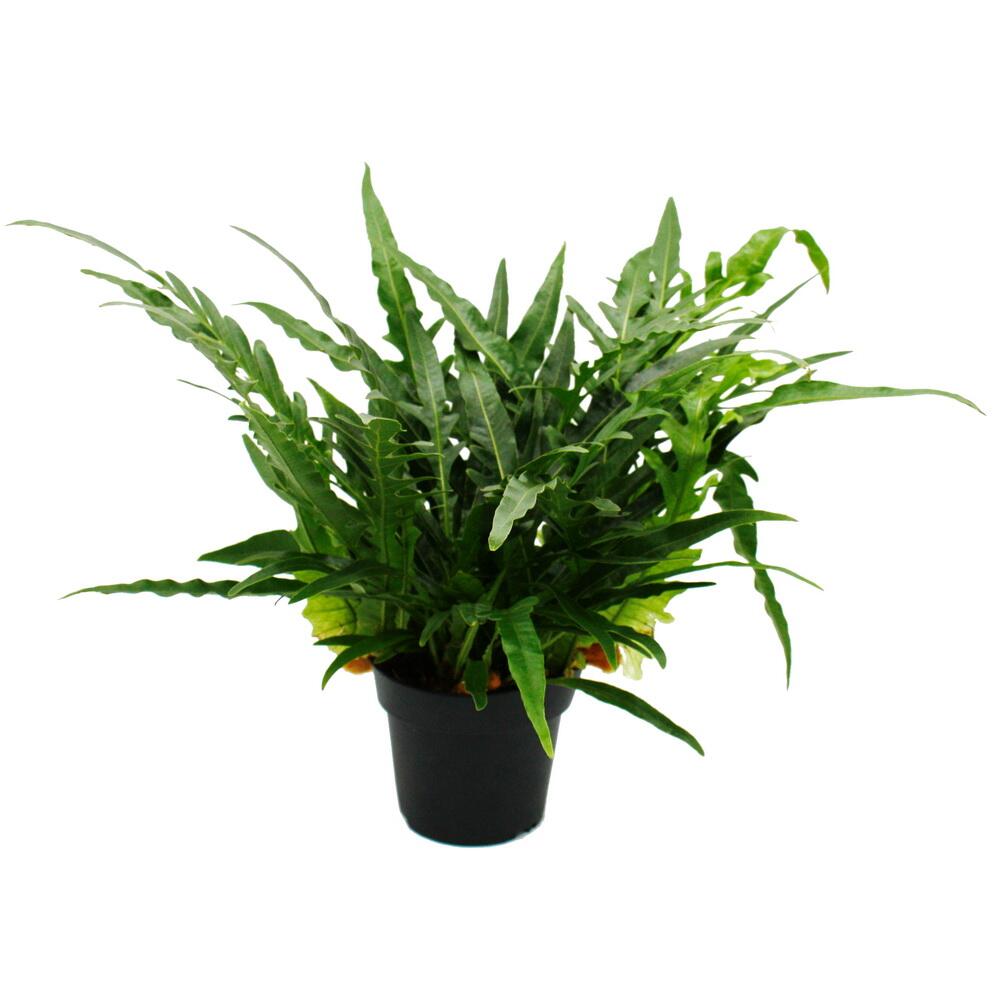
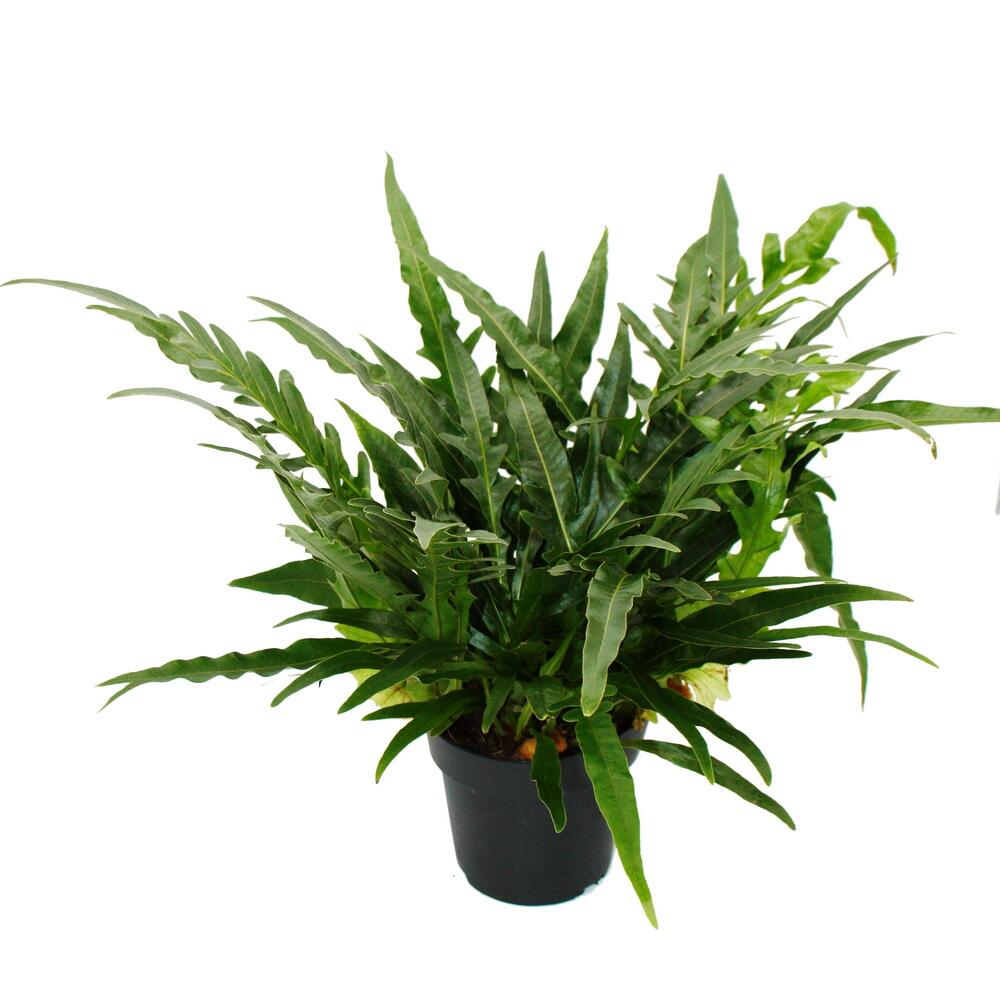
The green fronds are distinctly lobed and have a stronger structure than the delicate leaflets of a sword fern. Scaly rhizomes may become visible at the surface. The shop lists the plant as Aglaomorpha coronans Jim; Kew currently treats the species as Drynaria coronans. Both names help identify it. The nickname rabbit’s-foot fern is ambiguous and also refers to other ferns. This portrait therefore specifically concerns the species shown here, from the polypody family.
A young fern will later need more width
The offer specifies a 17 cm pot and approximately 35 to 45 cm overall height. The young plant therefore looks compact, but with good conditions it can develop larger fronds and a wider clump. Allow space on either side so new fronds can unfold freely. A bright chest of drawers or an adequately lit bathroom may work. A windowless bathroom does not become a suitable position through humidity alone. Carry the pot when moving it and do not use the rhizomes as handles.
Filtered daylight and steady warmth
Bright indirect light or a protected moderately bright position suit it well. Hot direct sun can damage fronds. Warmth and higher air humidity support development; cold draughts and a position above dry heat from a radiator are unfavourable. Steady indoor temperatures around 18 to 24 °C are practical. Frost must be ruled out. Misting raises room humidity only briefly and does not replace a suitable position. Continue ventilating a more humid room without exposing the fern to cold draughts.
Keep slightly moist while allowing air to the roots
Once the surface has dried a little, water the root ball in a controlled way. It should neither become completely hard and dry nor stand in a water bath. After watering, check the decorative pot and remove surplus water. Low-lime water at room temperature is a good choice. With reduced winter growth, water more cautiously and observe the actual drying pattern. Many brown tips may indicate dry air, drought stress or salt accumulation; they are not definitive proof of just one cause.
Let the rhizomes grow near the surface
When repotting, choose a loose, humus-rich and structurally stable mix. The pot needs free drainage. Do not push surface rhizomes deeply under wet soil: they should retain their natural direction of growth. A moderately larger container is usually enough. Feed sparingly during the growing season according to the label. Only strong healthy rhizome sections with roots and fronds are suitable for division. Stabilise a small weakened plant first rather than immediately cutting it into many pieces.
Distinguish spores, old fronds and genuine damage
Ferns do not produce flowers. Regularly arranged spore clusters on frond undersides can be a natural part of development. They can be distinguished from irregular pest gatherings and sticky deposits. Cleanly remove completely dry old fronds, but do not force open newly curled fronds. Soft dark rhizome areas together with wet compost call for a prompt root-zone check. Watch for spider mites in dry indoor air too. A healthy new frond is a better sign of success for us than an old leaf made briefly shiny by misting.
One plant, several views
Good to know
Is Jim a Davallia rabbit’s-foot fern?
No. The ambiguous nickname does not replace botanical classification. This offer belongs to Drynaria coronans, also called Aglaomorpha coronans.
Can it stay in a windowless bathroom?
Not permanently without suitable plant lighting. High humidity does not replace the light it needs.
Should I cover visible rhizomes with soil?
Do not bury them deeply. Surface rhizomes are part of this fern’s growth habit.
Are dots beneath the fronds always pests?
No. Regular spore clusters may be natural. Irregular deposits, webs or moving animals need separate inspection.
Sources and editorial note
- Product and delivery contents: Exotenherz
- Royal Horticultural Society: plant and care information
- Royal Botanic Gardens, Kew: botanical classification
Sources checked: 15 September 2026. Product information and the contents of delivery follow the linked shop offer. Care advice was checked against the cited specialist sources and should still be adapted to the plant’s condition, position and season.