This plant at Exotenherz
Check the shop offer for current availability, price and what is included.
Check the shop for the current price, availability and offer contents.
Your care table
| Topic | What to do | Why it helps |
|---|---|---|
| Position | Bright filtered light with an accessible pot. | Green relief needs light; hot sun behind glass may stress it. |
| Water | Allow substrate to dry largely, then moisten evenly. | RHS advises pronounced drying phases rather than continuous wetness. |
| Drainage | Let drain well and pour out residual water. | Firm leaves do not change the roots’ need for air. |
| Soil | Loose peat-free houseplant mix with good drainage. | A climber needs water retention without a compact wet rootball. |
| Support | Offer suitable support if upright growth is desired. | Adhering roots and shoots can follow an appropriate surface. |
| Pruning | Selectively shorten long tips during growth if needed. | Careful tip pruning may encourage branching. |
| Feeding | Moderate suitable feed by label during active growth. | Nutrients accompany shoots but do not replace daylight. |
| Leaf care | Gently remove dust using a soft damp cloth. | Do not scrub deep veins with strong pressure. |
Check the compost and pot weight. The care table explains how far the compost may dry.
Water only when needed. The water should reach the root ball without spilling over the rim.
Remove surplus water from the saucer or cachepot. Then return the plant to a suitable position.
Green surfaces with pronounced relief
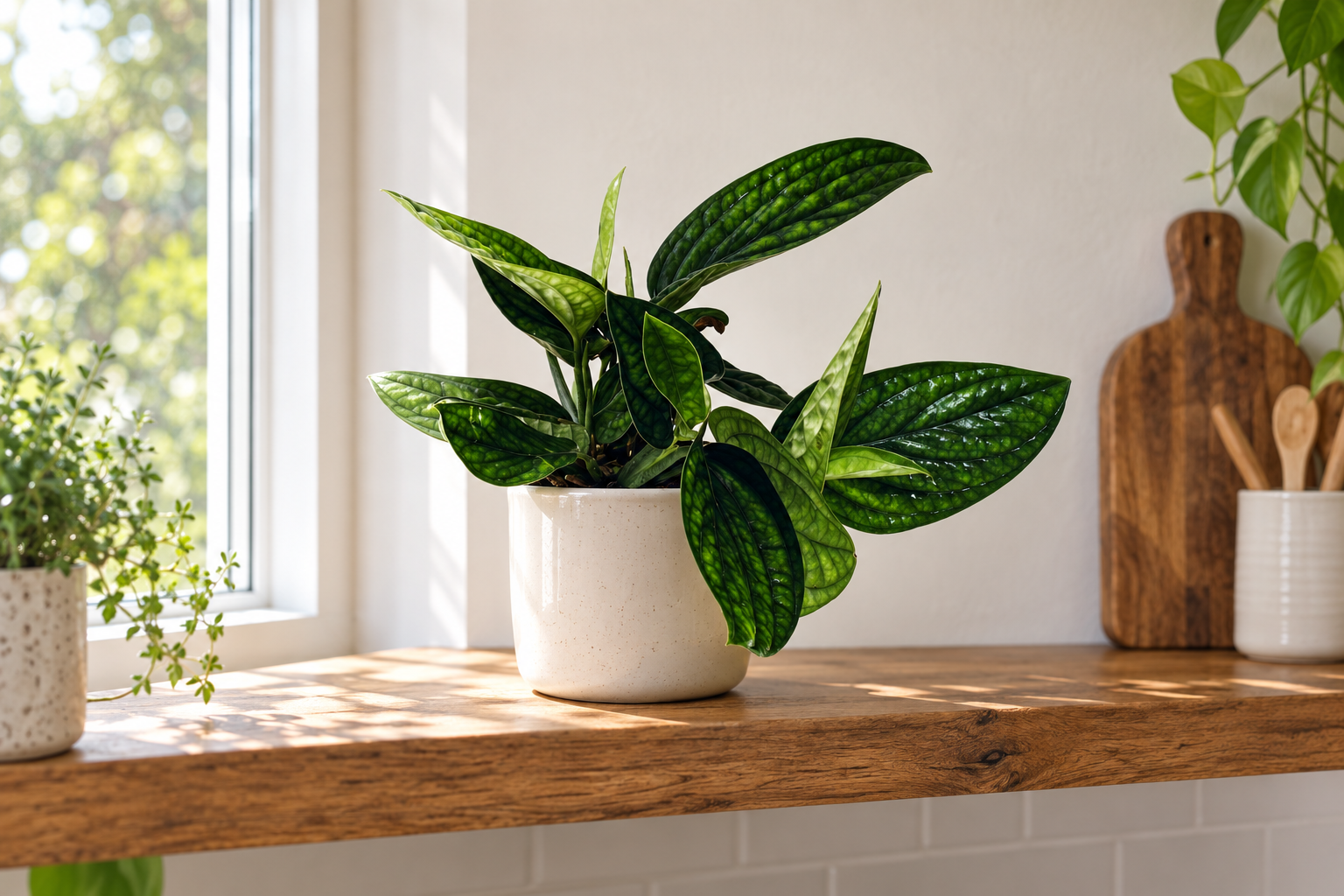
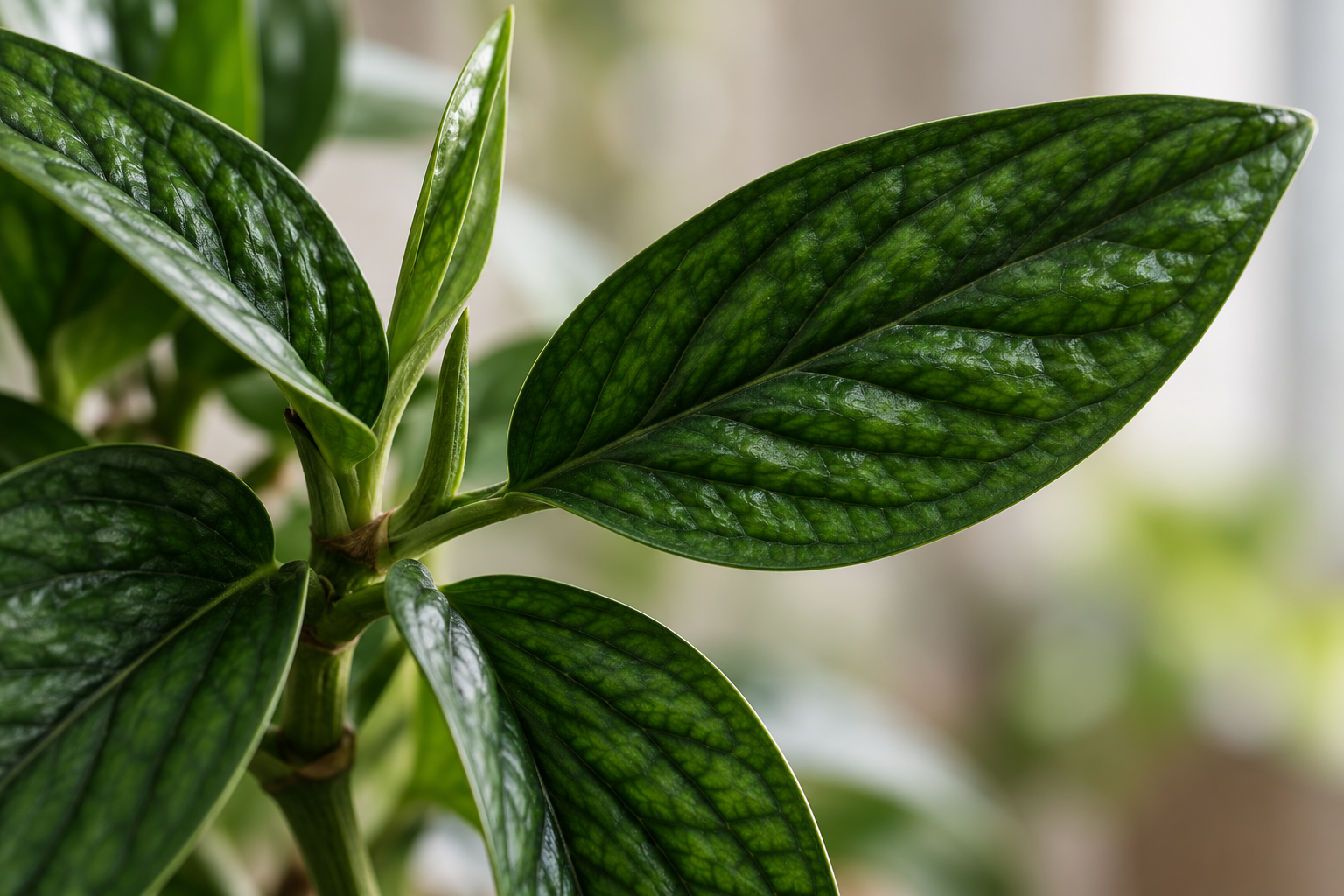
Marble Planet carries its pattern not just as colour. Darker veins are deeply impressed in firm green surfaces, creating a little network of raised fields. The relief catches window light differently from different angles. The original shows a few long to oval pointed leaves on a small young plant. White variegation, large holes or deep divisions of an ordinary big Monstera are not part of this checked pattern. A simple pale outer pot gives space to the green structure. Position it where individual surfaces can be viewed closely. Its decoration is visible before a long climbing shoot develops.
A trade name with several labels
The shop calls it Epipremnum pinnatum Marble Planet. RHS lists this entry and gives Ppiepi003, Monstera karstenianum and Monstera Peru as other names for the same trade selection. These names help recognise the same plant on different labels, without deriving unconfirmed botanical origins or a pure wild species. Epipremnum belongs to Araceae and includes tropical climbers. Its special firm green structure distinguishes the offer from familiar striped pothos. This offer shows green entire leaf surfaces; white areas are not described for the pictured plant.
The shop measurement means individual shoots
The current offer describes a 12 cm pot and individual shoots about 10–15 cm in total length. This explicitly is not the total height of an upright plant. The original shows a little structure with few leaves. Later shoots may lengthen, trail or climb suitable support. Leaf size and form change with development and cultivation; large mature leaves are no delivery promise. Do not pull young shoots by leaves when unpacking. Hold the pot and release wrapping with space around tips. Then choose an accessible place for checking soil and drainage. A little shelf near light is better than a deep dark compartment.
Bright light supports this textured plant
A bright filtered-daylight position is a good starting point. Do not suddenly expose it to very hot direct sun behind glass after shipping. A light curtain protects during strong midday hours without darkening the whole area. Low light slows growth and complicates care as soil stays moist longer. A warmly lit living-room scene is no replacement for actual light on leaves. Keep the tropical houseplant evenly warm and protected from cold draughts. Allow distance from cold winter glass. Shoots must not become trapped when opening curtains. An accessible bright plant spot permits everyday observation without constant moving.
Allow substantial drying between doses
Firm leaves can invite opposite mistakes: almost no water or preventive always-moist soil. RHS advises allowing Marble Planet substrate to dry largely between doses. Check below and learn pot weight rather than just looking at the top pale crumb. When water is needed, moisten the existing rootball evenly and let drain well. Pour out outer-pot surplus. Suitable room-temperature water low in salts if possible avoids unnecessary stress. If the rootball remains wet for a long time, check light, soil and drainage first. A soft or yellow leaf does not automatically need more water. Disturbed roots in wet soil need a different correction from a dry pot.
Accompany climbing and branching calmly
Marble Planet may trail over the rim or climb a suitable support. Offer support early enough without tightly squeezing young shoots. Adhering roots can use an appropriate surface as part of the climbing structure. During active growth, selectively shorten long tips if a denser shape is wanted. Sections with nodes suit a cutting attempt; a severed leaf alone does not confirm a new complete plant. Moderate feed accompanies new shoots. When well rooted, move to a little more space and loose peat-free soil. Do not severely trim everything, remove large roots and heavily feed together to replace a single damaged surface.
The leaf relief stays interesting in winter
Carefully remove dust between raised areas using a soft slightly damp cloth. Support underneath without rubbing hard into deep veins. Occasionally inspect undersides, nodes and junctions for mealybugs, scale or webs. Keep warm and as bright as possible in winter. Lower water use prolongs drying, so adjust a summer calendar. A damaged leaf does not regain its old surface, but healthy new growth shows improved conditions. This is a foliage offer without promised flowers. Parts are not intended for consumption; wear gloves when cutting and keep away from chewing children or pets.
One plant, several views

Good to know
Is Marble Planet an ordinary Monstera?
The portrait follows the named green-relief Epipremnum trade selection. Monstera Peru appears as an RHS trade synonym.
Does 15 cm mean total height?
No: the shop gives about 10–15 cm total length for individual shoots.
Should the young plant have leaf holes?
The clean original has firm entire leaves. Large later forms are no delivery promise.
Does it need support?
Helpful for desired upright growth; alternatively shoots may trail.
How moist should soil be?
Let it dry largely between doses, then moisten and remove surplus.
Is the white form the same delivery plant?
This portrait expressly covers the checked green offer, without promising white areas.
Can one leaf root?
A cutting needs a suitable shoot node for a new complete plant. A loose leaf is not reliably enough.
How do I clean relief?
With a soft slightly damp cloth, little pressure and support underneath.
Sources and editorial note
- Exotenherz: offer and originals (03.10.2026)
- RHS: Marble Planet, synonyms and individual culture (03.10.2026)
- RHS: current Epipremnum cultivation (03.10.2026)
Offer, article number, GTIN, availability and originals directly checked 03.10.2026. Specialist sources directly read. RHS Marble Planet/Ppiepi003 identity supported, no unconfirmed Monstera wild-species assertion. 10–15 cm is total shoot length. White form without independent cultivar identity excluded.