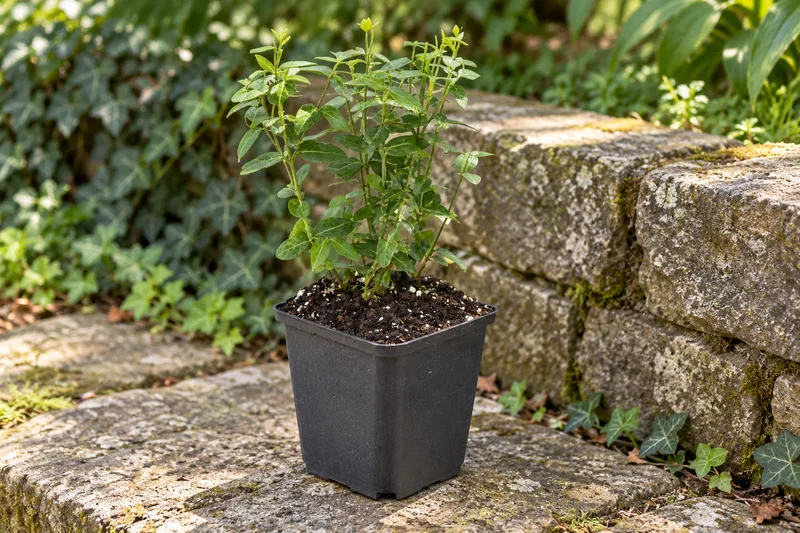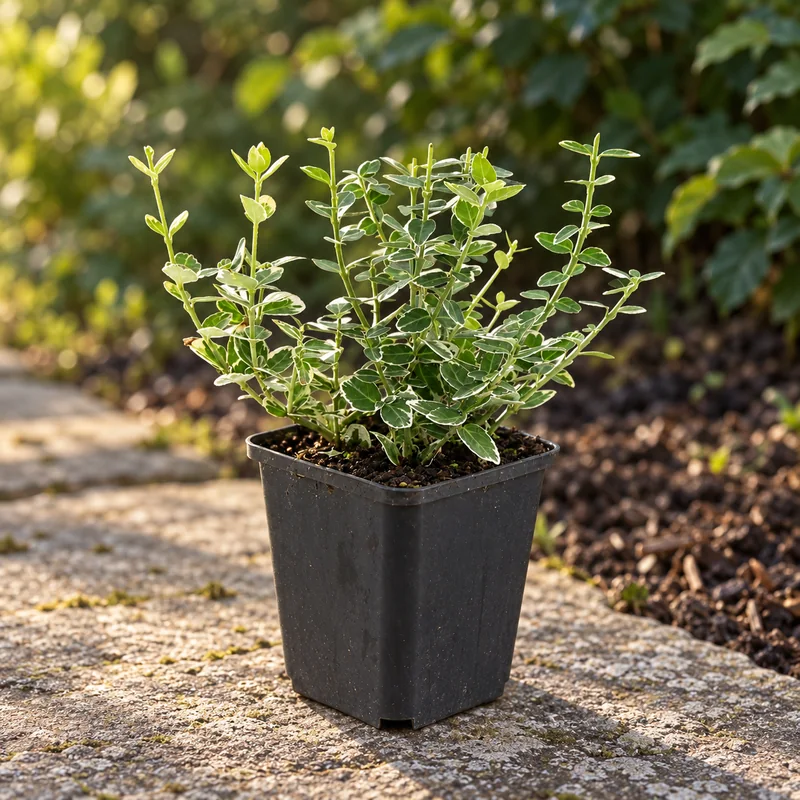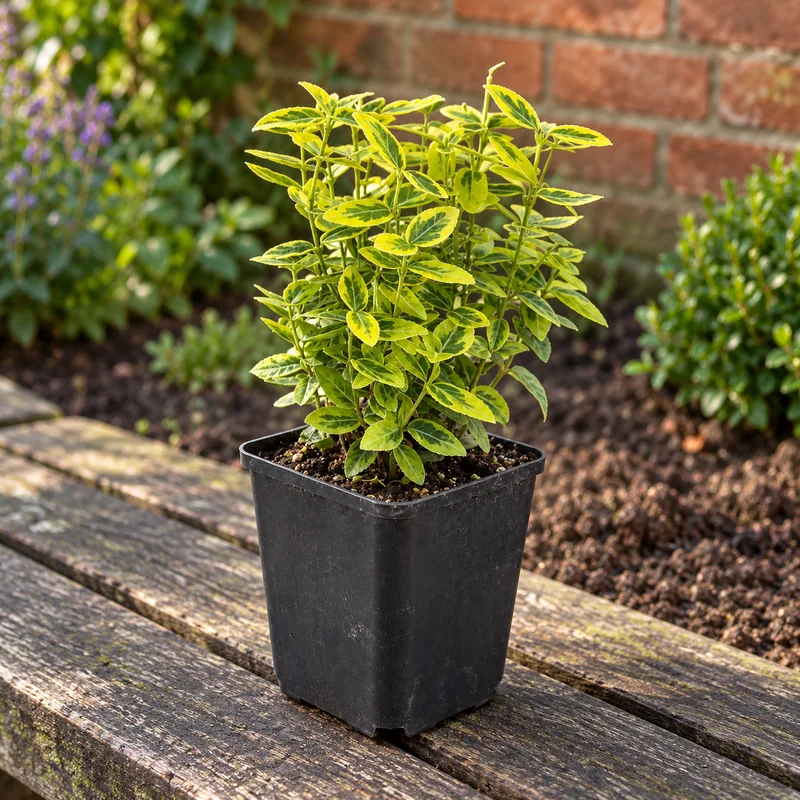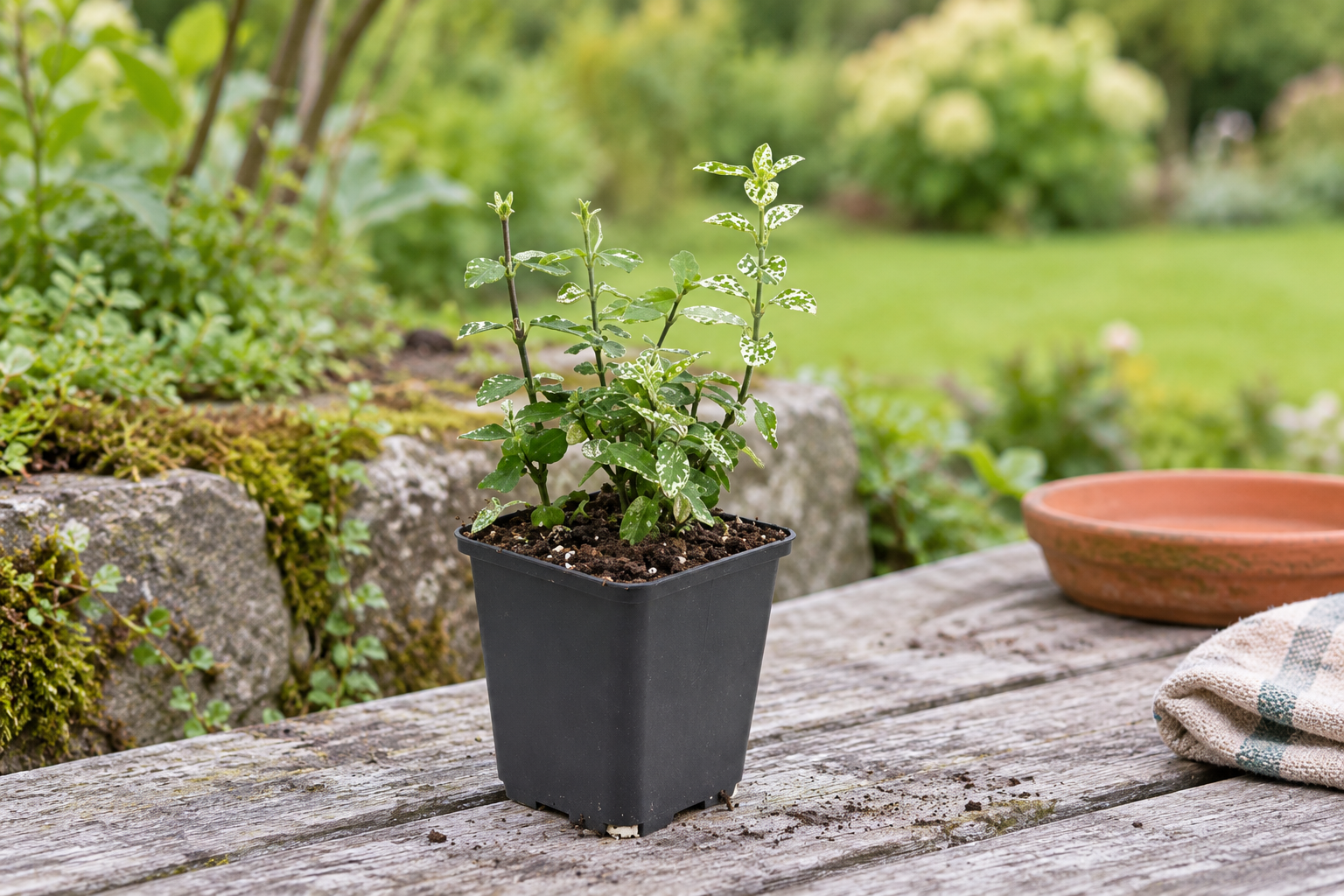
This plant at Exotenherz
Check the shop offer for current availability, price and what is included.
Product and delivery details are given in the individual offer.
Your care table
| Topic | What to do | Why it helps |
|---|---|---|
| On arrival | Check each small root ball and hold it when unpotting. | Fine branches should not carry root weight. |
| Position | Choose sun to partial shade with accessible root space. | Pale leaves and small root balls need suitable care. |
| Soil | Prepare moisture-retentive free-draining soil. | Standing water and dust-dry paving edges stress young plants. |
| Planting | Plant frost-free in spring or autumn at the previous level. | Soil contact and watering in support new roots. |
| Spacing | Use 40–50 cm as the shop’s guide, considering later width and paths. | A young pot does not yet form a closed edging. |
| Watering | Check root ball and neighbouring soil and slowly moisten when needed. | New roots and containers have limited reserves. |
| Pruning | Shape individual branches in spring and remove entirely green reverted shoots at their origin. | Normally speckled green leaf areas are retained. |
| Winter | Protect containers, secure free drainage and frost-free moisture checks. | Evergreen foliage remains active even in dry winter periods. |
| Problems & handling | Check coatings, scales and feeding marks; wear gloves. | The fixed pale pattern is not fungal coating; do not eat plant parts. |
For young plants, feel the soil directly at the root ball. The surface and deeper soil may have different moisture levels.
Water thoroughly after planting; later, water according to the soil, weather and establishment rather than a fixed calendar.
Avoid standing water. For plants in containers, also check that water runs out of the drainage hole.
Creamy speckles run through the whole leaf
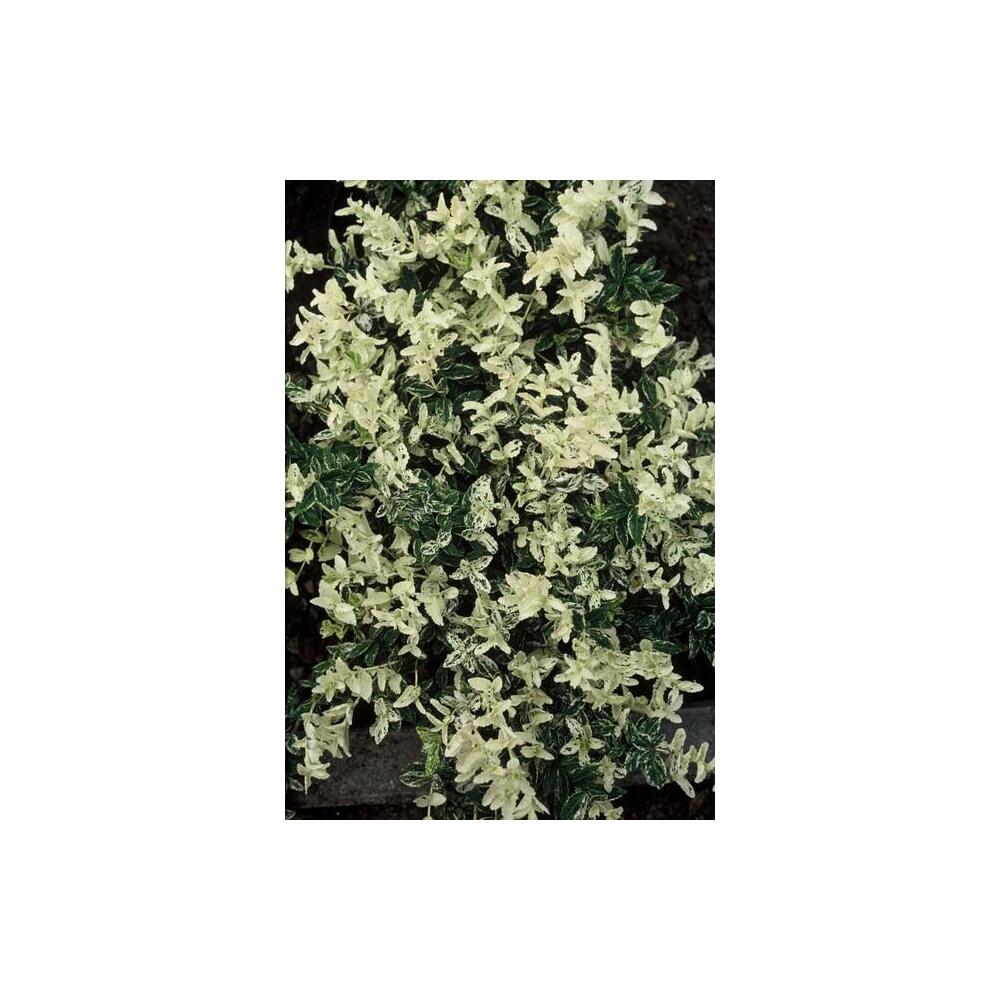
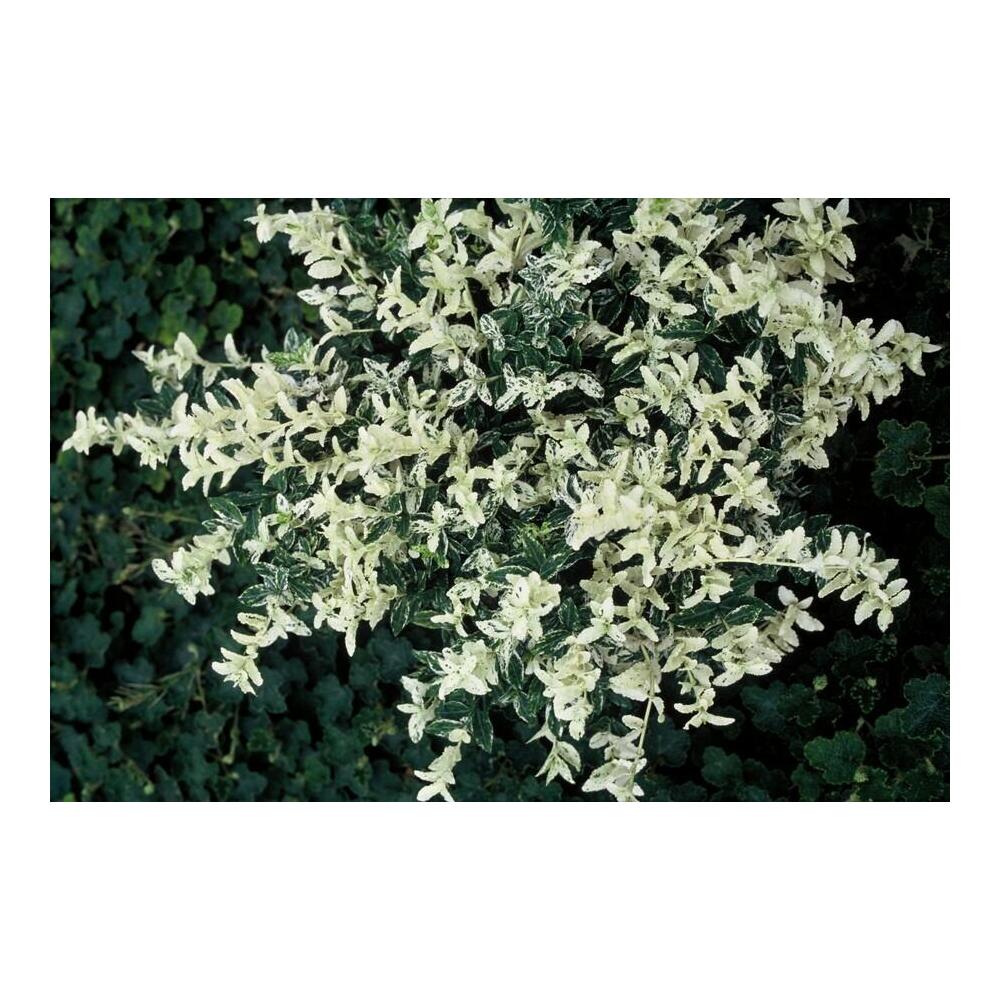
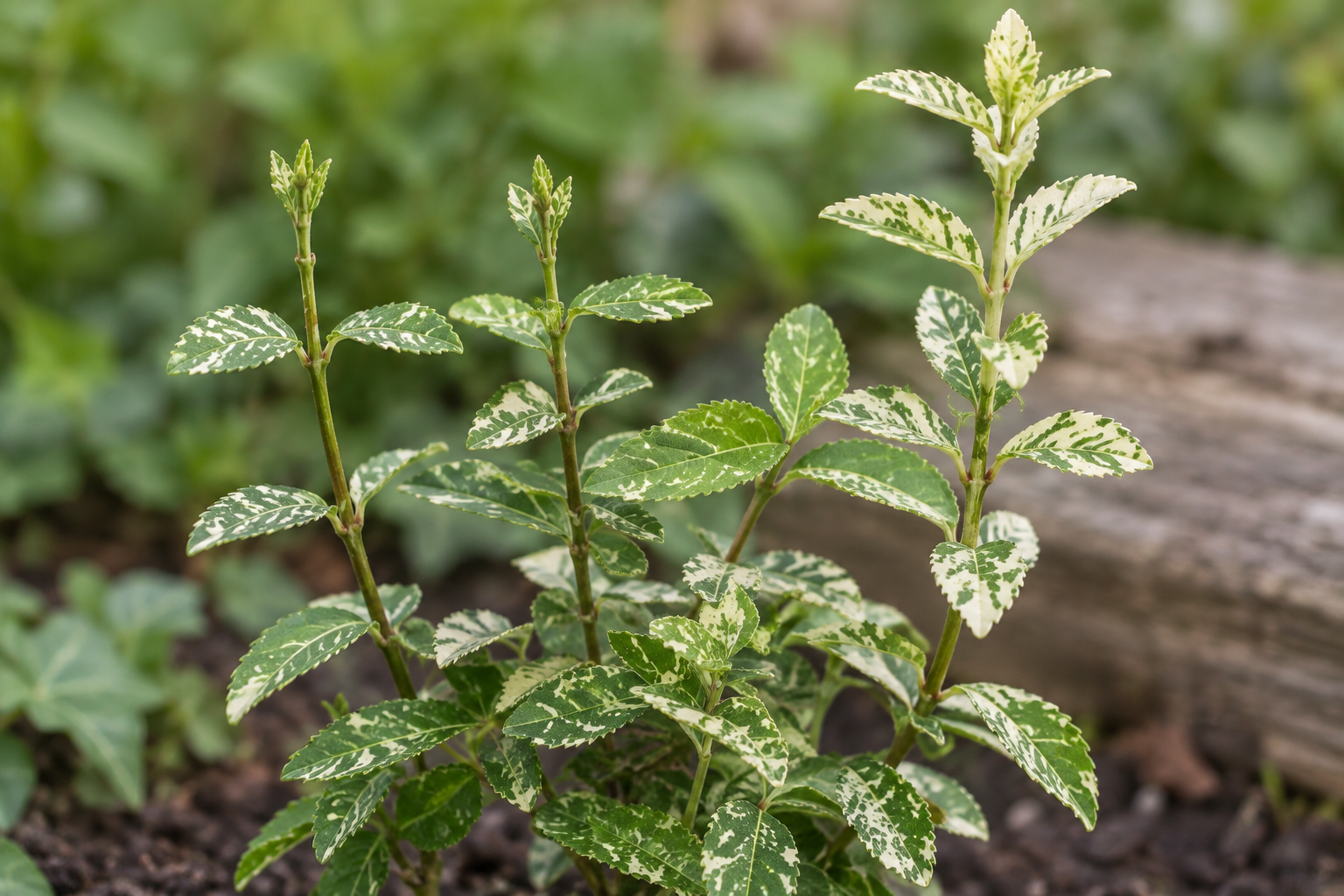
Harlequin shows a changing pattern of green areas and creamy speckles. On the small narrow elongated leaves, markings are not only at the edge; they spread irregularly across the leaf surface. White can be especially noticeable at young tips. Leaves stand in opposite pairs on fine branches, and the plant develops as a low evergreen shrub. Harlequin is a named cultivar of Euonymus fortunei, wintercreeper. Its foliage accompanies a border even without striking flowers. A pink tint may be added in autumn and winter. Its strength depends on conditions; do not plan a constantly pink delivery. Small green areas belong to the pattern and are not automatically reverted growth.
A young plant does not anticipate the later shrub
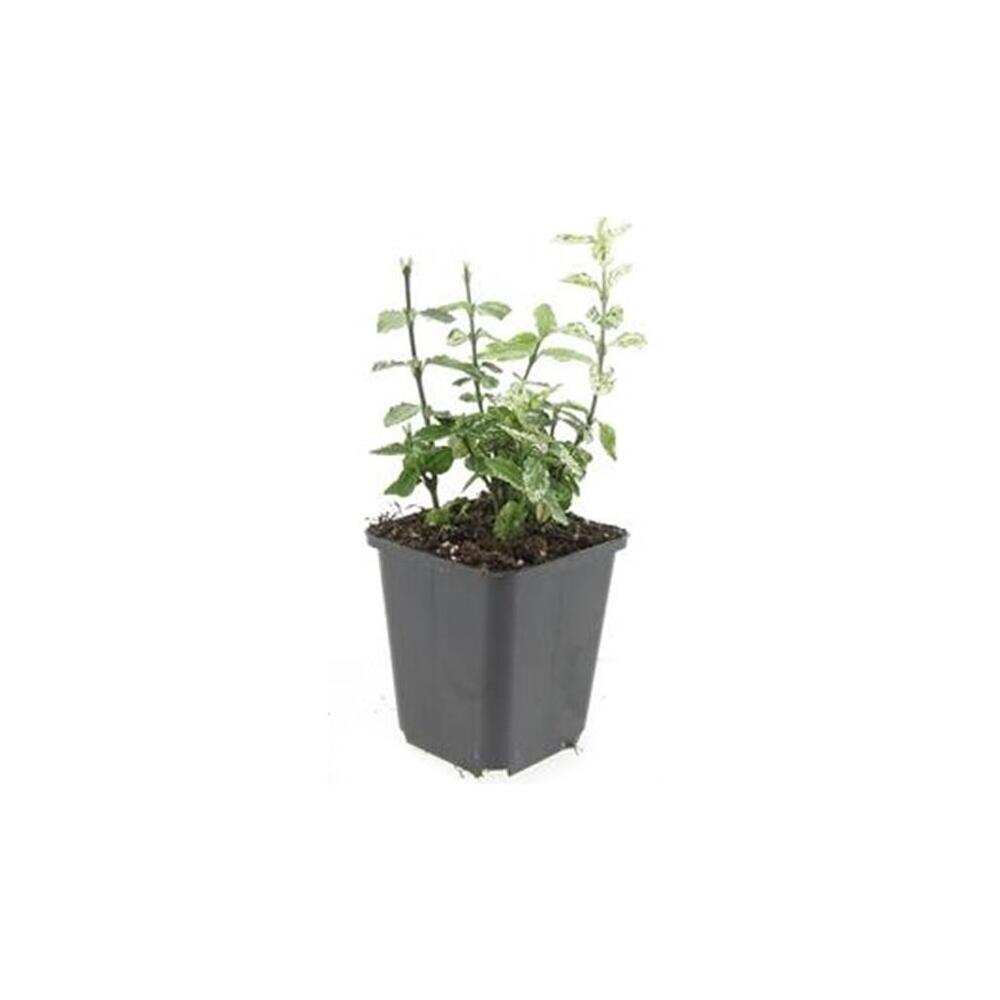
The offer states 9-cm pots and about 10–25 cm total height including pot. Quantity follows set selection. The clean young-plant picture shows individual fine upright branches in a black square pot. When unpotting, carefully hold the root ball rather than using upper speckled branches as a handle. A developed Harlequin is described as a low shrub about 60 cm tall; for space planning a range of about 0.5–1 m height and width is sensible. These garden dimensions may develop over five to ten years and are affected by position and pruning. They are not delivery measurements. Place young pots provisionally before planting: growth lies between sparse young shoots and a low closed edging.
Plant brightly and consider the soil too
Sun to partial shade suits Harlequin if soil holds moisture and drains excess water. Pale foliage should be well lit, but a dry hot paving edge can unnecessarily stress the small root ball. Find a position with connected root space. Beneath a large woody plant, its root competition is part of the assessment even if light seems pleasantly soft. In a permanently wet hollow, a brighter position alone does not help. Loosen compacted soil sufficiently and check whether rainwater can drain. The small wintercreeper suits a low group or edging; a pale pot can also display it. Plan later width and branches that remain reachable when choosing a container.
Lay out the group and connect every root ball
Spring and autumn in frost-free workable soil are favourable planting times. Slowly moisten dry root balls rather than putting dry soil straight into a wet hole. Preserve the previous root-ball level. The shop gives about 40–50 cm spacing as a group guide. Use this when setting out young plants and additionally check later width and the path edge. It promises no date when the group becomes dense. Water thoroughly after planting and observe whether water reaches the old root-ball core too. Loose cover between shrubs can accompany open soil; branch bases and accessible border edge remain free. In a container, structurally stable compost and free drainage matter more than a closed decorative outer pot.
Decide by moisture during establishment
In dry periods first check the original small root ball, then soil beside it. Their moisture may differ. When water is needed, water slowly at the root area and moisten soil rather than briefly spraying leaves. Established wintercreepers cope better with temporary dryness, yet the new 9-cm root ball needs a reliable start. Reserves remain limited in containers later too. Heat, wind, rain and roof shelter change demand; a calendar alone helps little. A small amount of water does not mean little care work. Frequent extra feeding is usually unnecessary in well-supplied garden soil. With weak shoots, first check soil, moisture and light. Supply container plants during growth according to need and the fertiliser label.
Distinguish speckled growth while pruning
Individual targeted spring cuts can keep Harlequin in its low form. Shorten intrusive branches with sharp shears so small leaves remain whole where possible. Cutting across all leaves can create brown cut edges. Before working, check a dense shrub for occupied nests. If a permanently entirely green strong branch develops, trace it to its origin and remove it there. Individual green areas on an otherwise white-speckled leaf are normal patterning instead. Observe the whole shoot rather than one leaf. Flowers are secondary for this foliage shrub; an exact recurring Harlequin flowering time is unnecessary for its garden effect. The pattern and an orderly edge carry the design.
Separate winter colouring from damage and coatings
Creamy speckles do not disappear simply because the cold season begins. A pink flush can be added; individual older leaves are still replaced. In dry wind and with pots under roofs, check root-ball moisture on frost-free days. A small container is more exposed to winter conditions than established roots in soil and gets a sheltered position with free drainage. Fine feeding notches, leaf loss or small scales on branches justify closer pest checks, for example for vine weevils or scale insects. A white coating lying on the surface is distinct from fixed leaf patterning. Check lasting wetness and dryness first before adding fertiliser. Plant parts do not belong in the kitchen; wear gloves when pruning and transplanting.
One plant, several views
Good to know
Is Harlequin white only at the leaf edge?
Creamy patterning is described as strong speckling and blotching through the narrow leaves. Remaining green areas belong to the changing pattern.
Does it turn pink every winter?
A pink flush is possible in autumn and winter. Strength and occurrence depend on conditions; an always identical pink colour is not promised.
Is 10–25 cm its garden height?
No. That is young total height including pot. A developed shrub may later become about 0.5–1 m tall and wide.
How do I remove a green reverted shoot?
Observe whether the entire strong branch remains permanently pure green. Then trace it to the origin and remove it there. Retain green areas on speckled leaves.
Does a newly planted wintercreeper need little water?
The small root ball needs controlled moisture while establishing. Older roots explore more soil; pots still rely on regular checks.
Can I simply shear the low form?
Targeted branch cuts retain whole leaves. Heavily cross-cut leaves can develop brown edges; check for occupied nests before pruning.
What should I do with a white coating?
Creamy leaf patterning is fixed tissue. A coating lying on the surface calls for a separate check of leaves, ventilation and condition; it is not automatically normal speckling.
Sources and editorial note
- Exotenherz: offer, set selection and originals
- RHS: accepted Harlequin cultivar profile
- RHS: complete Euonymus care guide
Young speckled delivery form, a later larger garden form and possible winter colouring are described separately. Check availability and set selection in the shop.