This plant at Exotenherz
Check the shop offer for current availability, price and what is included.
Check the shop for the current price, availability and offer contents.
Your care table
| Topic | What to do | Why it helps |
|---|---|---|
| Position | Place in brightness and filter sun if needed. | Pale leaf areas benefit from good illumination. |
| Watering | Let the upper soil layer dry. | A constantly wet root ball harms roots. |
| Drainage | Remove remaining water from the decorative pot. | Heavy containers easily hide waterlogging. |
| Growing medium | Loose, freely draining houseplant compost. | The root ball needs air as well as moisture. |
| Feeding | During growth, moderately according to instructions. | Nutrient additions are matched to new growth. |
| Leaves | Wipe with a soft damp cloth. | The broad leaf surface visibly collects dust. |
| Repotting | Move a dense root ball to a slightly larger pot. | Overlarge pots dry very slowly. |
| Pruning | Only selectively, with gloves and clean tools. | The milky sap released is irritating. |
Check the compost and pot weight. The care table explains how far the compost may dry.
Water only when needed. The water should reach the root ball without spilling over the rim.
Remove surplus water from the saucer or cachepot. Then return the plant to a suitable position.
Pink borders the green
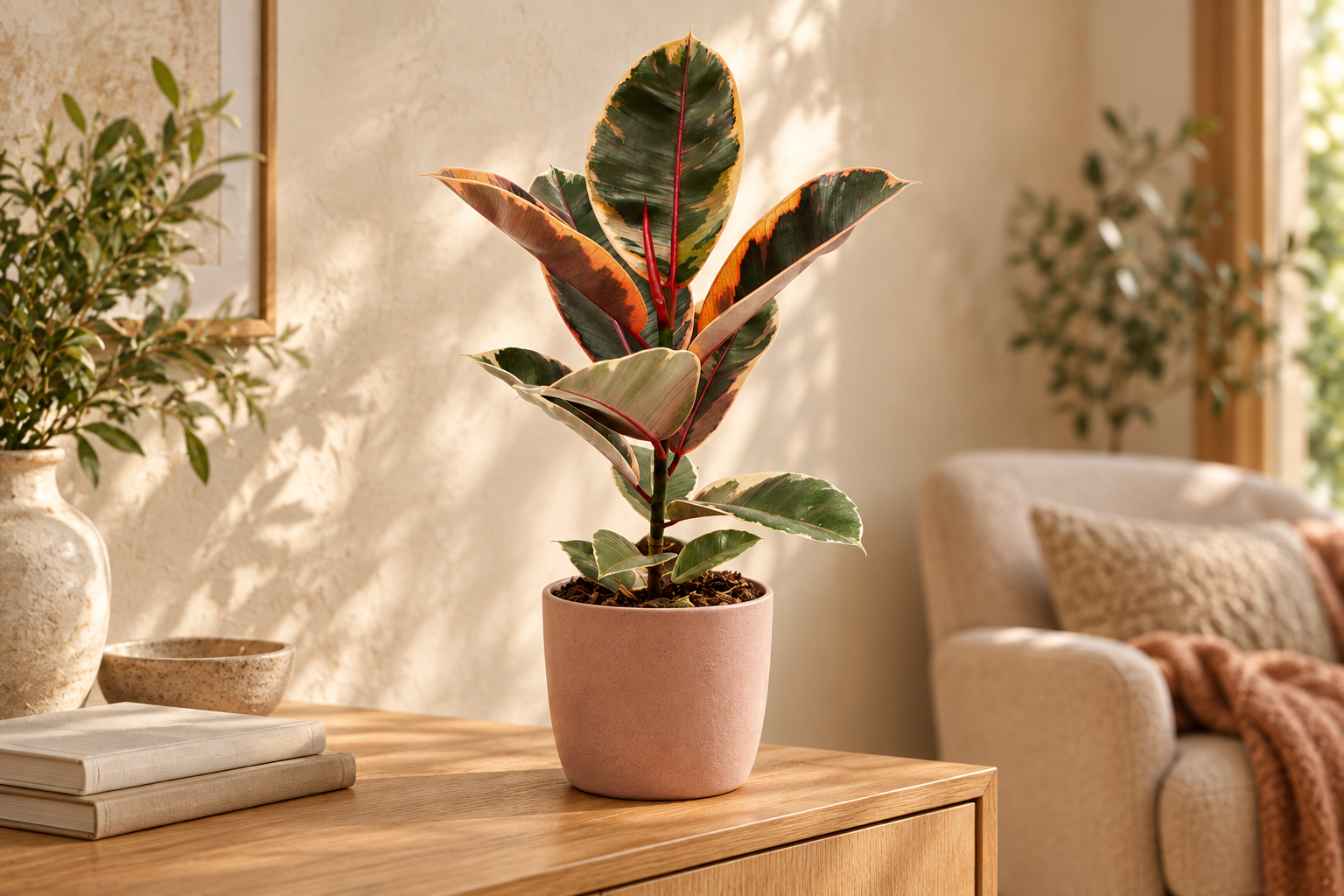
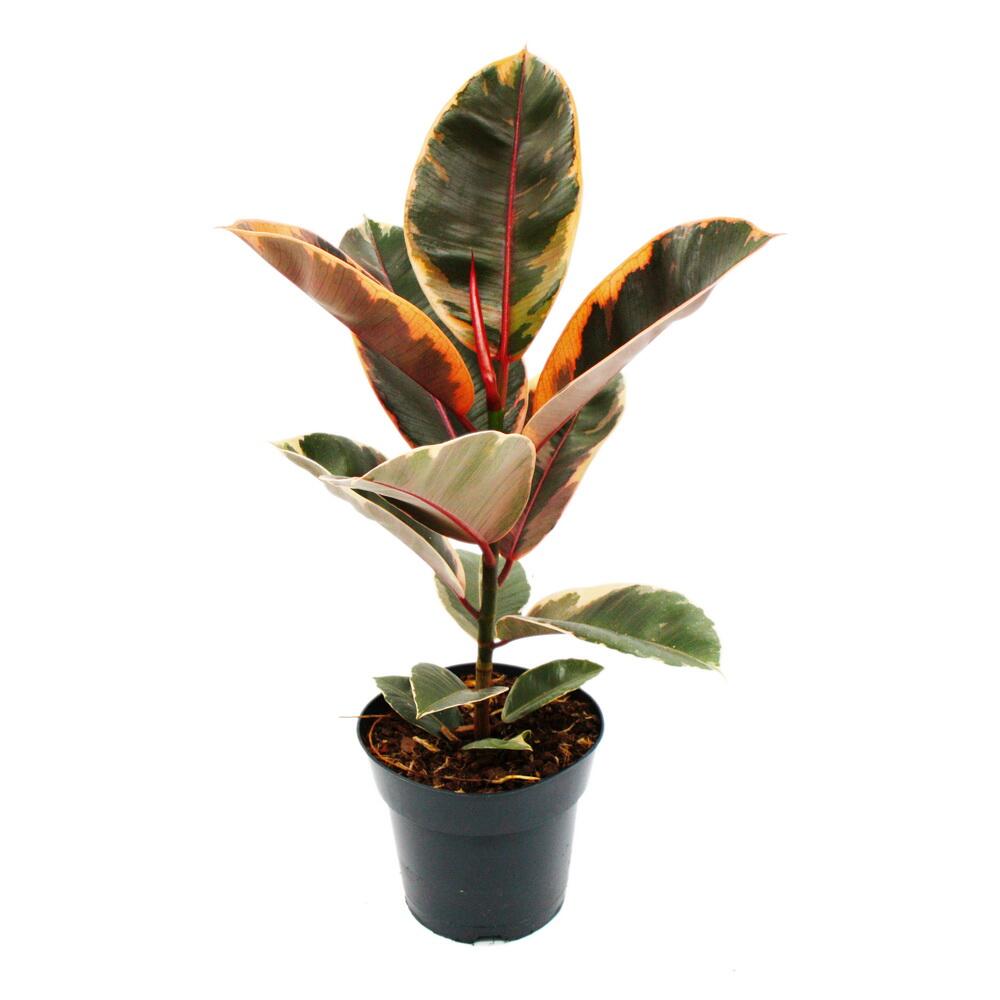
Belize shows how much colour a single rubber-plant leaf can contain. Darker green areas lie among cream patches, pink edges and a reddish midrib. The thick oval leaves bring a calm shape. Beside light wood and a plain wall, the plant already has an effect without further decoration. The shop offer names a seventeen-centimetre pot and an overall height of around fifty to sixty centimetres. This young size can be viewed well on a sideboard. For further cultivation, however, clear space should remain above and to the sides, because a rubber plant does not permanently stay as small as the delivered plant.
The pattern needs a good light supply
A bright position with filtered daylight suits Belize. The pale leaf portions contribute less to feeding the plant than green areas, so a very dark position is not a good stage for new foliage. Unprotected hot sun can also damage leaf surfaces, however. I select a position with gentle light and accustom the plant to changes rather than abruptly placing it on a hot windowsill. Leaves must not touch the glass. Especially in winter, this can be a cold surface even when the rest of the room feels comfortably warm. Frequent cold draughts are likewise unsuitable for the rubber plant.
Give it a calm arrival
After unpacking, the root ball is checked first. A plant that is still moist does not immediately need additional water. The existing pot can stay if the compost drains and the roots have enough room. Young leaves emerge from a sheath and unfold gradually; they are not pulled. I observe how the rubber plant stands in its new position before moving it repeatedly. A single damaged older leaf may tell of transport, not fundamentally wrong care. Several quickly falling leaves, however, deserve a check of warmth, root-ball moisture and position changes.
Check the heavy pot too
Before watering, I feel the upper soil layer and lift the nursery pot as far as this is safe. Slight drying at the top is wanted; complete drying through all the roots is not the regular care goal. Then water thoroughly and remove excess water. A heavy decorative pot in particular can conceal remaining water. A rubber plant with a sodden root ball cannot be put upright by more watering. Room-temperature water avoids unnecessary cold shocks. How quickly the pot becomes lighter again depends on light, temperature, compost and root mass. A fixed number of weeks cannot reliably represent these differences.
New compost only when really needed
A rooted root ball receives a pot only slightly larger with good drainage in spring. Loose houseplant compost stays airier inside than a compacted heavy mixture. The stem is not planted deeper to make the plant look smaller. During visible growth, I support Belize with moderately dosed fertiliser. Newly added compost and extra nutrients are coordinated. During dark winter weeks with barely any new growth, feeding remains restrained. Strong feeding does not reliably produce pink markings. Leaf colour, age and light work together; the plant is not a uniformly printed decorative object.
Care gently for leaves and form
Broad leaf surfaces collect dust. I support them from underneath and gently wipe them with a soft damp cloth. Scrubbing, polish and leaf-shine spray are unnecessary for this natural surface. If an overlarge rubber plant is to branch later, targeted pruning can help. It belongs to deliberately planned shaping, however, not a weekly routine. The milky sap released may irritate skin and eyes; gloves and protection of the work surface are sensible. Cuttings remain inaccessible to children and pets. Even a seemingly fallen leaf is not a toy or food.
Follow the seasons
In winter, Belize stays frost-free and as bright as possible. The root ball often dries more slowly even if heating makes the room air drier. Brown edges or yellow leaves are therefore not automatically answered with more water. I check roots, decorative pot and leaf undersides and look for sticky patches or unusual coatings. A normally ageing leaf surface differs from rapid general decline. With a consistent position and this calm attention, the young delivered plant develops into a characterful rubber plant. Its pink accents may look different from leaf to leaf and tell of growth precisely through that variation.
One plant, several views
Good to know
Why are the edges pink?
The pink and cream parts belong to the variegated cultivar Belize; young and older leaves can appear different.
Does Belize need more light than a green rubber plant?
A bright position is particularly important for the pale leaf parts. Still avoid unprotected hot midday sun.
When should I water?
After slight drying of the upper compost. Water thoroughly and remove remaining water.
Why are leaves falling?
Cold, position changes and an unsuitable water balance are possible causes. Check conditions rather than immediately watering more.
How large does it become?
Delivery height is about 50–60 cm. Belize can become much larger over the years; space and pruning if needed limit indoor cultivation.
Can I polish the leaves?
Gentle wiping with a damp cloth is enough. Leaf-shine products are unnecessary.
What matters when pruning?
Clean tools, gloves and keeping milky sap away from skin and eyes. Do not allow pruning scraps to be eaten.
Sources and editorial note
Shop offer, SKU, GTIN and availability checked live on 01.10.2026. Original photograph unchanged. Our own researched gardening texts and individually approved scene.