This plant at Exotenherz
Check the shop offer for current availability, price and what is included.
Check the selected shop offer for price, availability and delivery contents.
Your care table
| Topic | What to do | Why it helps |
|---|---|---|
| Light | Place very bright; increase direct sun gradually. | Light supports a firm well-leaved structure. |
| Water | Let upper soil dry slightly, then supply the root ball thoroughly. | Firm leaves justify neither permanently wet soil nor prolonged root-ball dryness. |
| Drainage | Keep drainage holes open and remove water from the decorative pot. | Wet roots may cause leaf loss. |
| Substrate | Choose structurally stable potting soil with good drainage. | Roots need air between waterings. |
| Feeding | During recognisable growth, feed sparingly according to the label. | A slowly growing shrub needs no strong permanent feeding. |
| Repotting | Choose a slightly larger pot only when clearly densely rooted. | Unrooted soil in a large reserve container stays wet longer. |
| Pruning | Shorten individual long branches selectively; use gloves. | A calm crown structure remains; escaping sap may irritate skin. |
| Winter | Keep bright and frost-free; protect from cold glass and radiator air. | Low growth reduces water consumption. |
Check the compost and pot weight. The care table explains how far the compost may dry.
Water only when needed. The water should reach the root ball without spilling over the rim.
Remove surplus water from the saucer or cachepot. Then return the plant to a suitable position.
A look at the little things
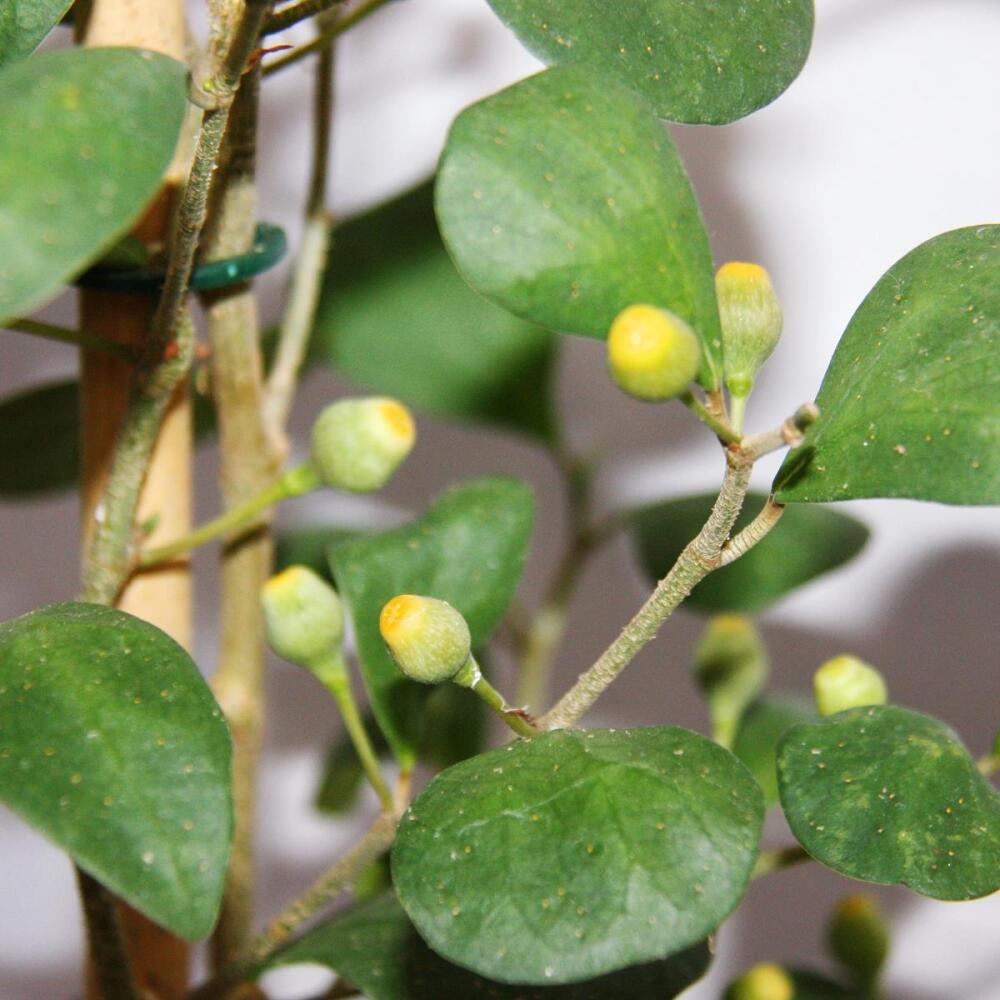
With the mistletoe fig, coming closer is worthwhile. Small firm leaves sit on finely branched shoots; tiny rounded figs may appear between them. Precisely this interplay of leaf surfaces, branch lines and fruit beads makes Ficus deltoidea interesting. It looks as attractive beside a bright reading spot as in a well-lit conservatory. Its calm comes from fine structure, not an enormous leaf surface. As gardeners, we therefore give it a place where light reaches the lower branches and its natural shape stays visible.
Understand the offered plant correctly
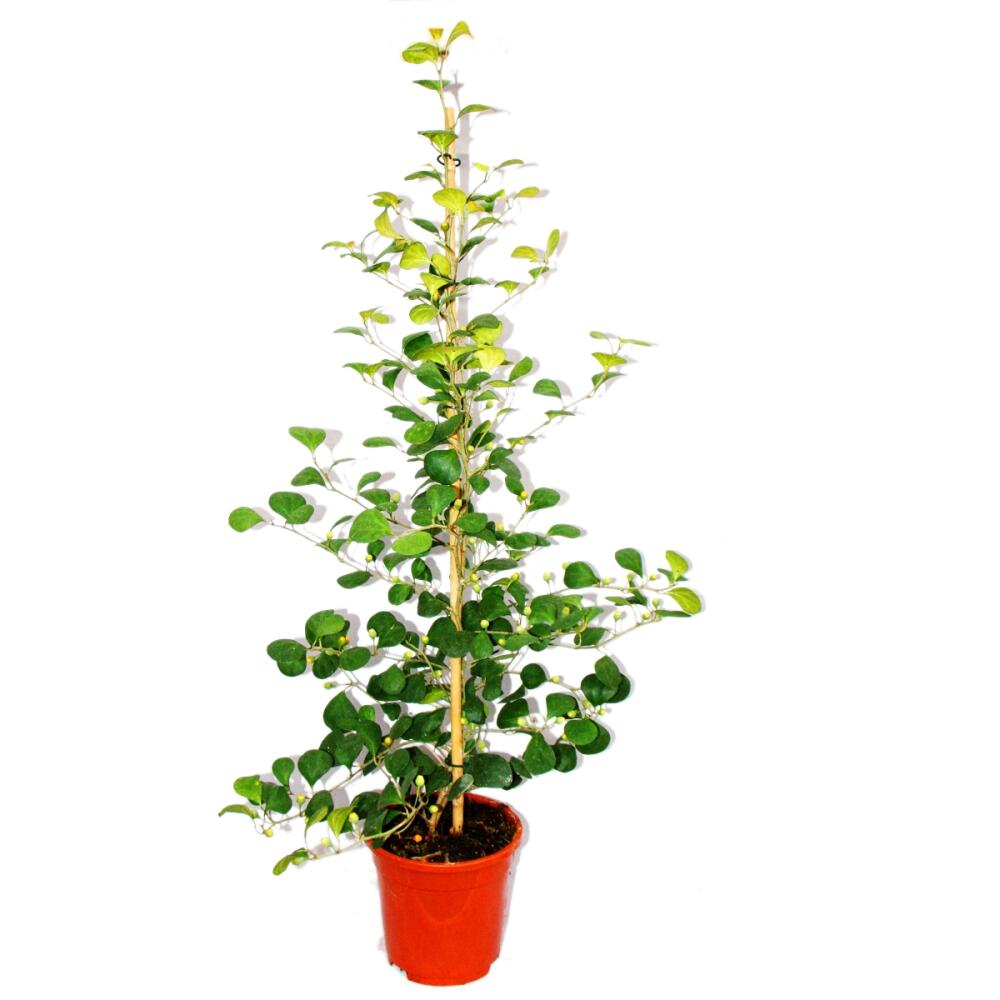
In the linked offer, the mistletoe fig grows in a 17 cm pot. The detailed specification gives about 60 to 80 cm overall height; the title describes the plant as about 80 cm. We use the stated size range including pot. A bamboo cane may support the young upright form. Later development stays separate: the species is a shrub that becomes considerably larger in favourable conditions. In indoor cultivation, root space, light and targeted pruning limit its structure. The original picture shows the specific young shop form, no promise of constantly identical fruit coverage.
Plenty of daylight makes a compact structure easier
Choose a very bright position with enough natural light. After transport or longer cultivation behind glass, increase new strong sunshine slowly. A protected summer spot outside is possible in warm weather if the plant is accustomed carefully. The position must also suit the growing shrub later: a bright shelf must not hide its lower branches permanently under a dark board. Provide a frost-free well-lit winter position in good time. Avoid cold draughts when ventilating and heat immediately above a radiator.
Firm leaves still need supplied roots
The mistletoe fig tolerates short dry periods better than many soft-leaved houseplants. That is no reason, however, to let the entire pot dry completely again and again. Check upper soil and pot weight. Once the surface has dried slightly, water slowly until the root ball is moistened. Let water drain and check the decorative pot. In summer, the same shrub may drink faster than during dark winter weeks. If it loses lower leaves, check root-ball moisture and drainage first. More water is particularly no helpful standard response when soil is already wet.
Small steps with soil, fertiliser and pruning
Structurally stable well-draining potting soil supports moisture checks. Repotting becomes sensible when roots clearly fill the root ball or grow through drainage holes. A slightly larger pot size is sufficient initially. An oversized reserve container adds wet space that young roots do not yet use. During actual growth, feed sparingly according to the fertiliser label; consider pre-fertilised fresh soil. Overlong branches can be shortened selectively rather than frequently clipping the whole plant strictly. Wear gloves and avoid sap contact. Good branching may develop gradually without every new shoot immediately disappearing again.
The fruit beads are ornamental
The fig’s inconspicuous flowers lie within special little flower structures that appear as figs. Their colour may change with development stage. We enjoy them without making a harvest promise or a food offer: the mistletoe fig is introduced here as an ornamental plant. Even a plant without visible fruits is not automatically cared for incorrectly. Observe fresh growth and healthy leaf surfaces instead. If you want to document changes, photograph the same branch occasionally in similar light. Development of the small details becomes especially recognisable that way.
In winter, do less but look more closely
If the position stays bright and frost-free, the shrub can be accompanied well through the low-light period. Water after checking moisture and do not simply keep feeding when growth stalls. Check leaf undersides and branch bases for scale insects, mealybugs or fine webbing. One older falling leaf carries a different significance from suddenly bare branches. With problems, consider timing, position changes and water balance together, then first improve the identifiable cause. The next healthy growth is a better guide than trying to make an already damaged leaf look flawless again.
One plant, several views
Good to know
Is this a fig for fruit harvesting?
This offer is treated as an ornamental plant. The small fruit structures are no promise of an edible harvest.
Is around 80 cm its ultimate height?
No. That is approximate delivery height; the detailed specification is 60 to 80 cm including pot.
Why do lower leaves fall?
Check moisture, drainage and light. A constantly wet root ball in particular can encourage foliage loss.
Does it need a large container immediately?
No. Give more room carefully only when densely rooted. A very large pot makes moisture checks harder.
Must every plant constantly carry small figs?
No. Fruit coverage and colour change with development and cultivation. A photograph describes a moment.
Can it stay on the terrace in winter?
No. For our pot cultivation, a bright frost-free winter position is provided.
Sources and editorial note
- Exotenherz: offer and original images (02.10.2026)
- RHS: Ficus deltoidea (02.10.2026)
- NParks: Ficus deltoidea, indoor cultivation (02.10.2026)
- GardeningSG: mistletoe fig (02.10.2026)
Shop offer, article number, GTIN, availability and original images checked directly on 02.10.2026. Specialist sources read directly. Shop title about 80 cm within detailed range 60–80 cm. Tropical outdoor specifications not adopted as German winter hardiness. No consumption or fruit-coverage promise.