This plant at Exotenherz
Check the shop offer for current availability, price and what is included.
Check the shop for the current price, availability and offer contents.
Your care table
| Topic | What to do | Why it helps |
|---|---|---|
| Light | Choose a bright position and acclimatise slowly after transport. | Pale leaf edges deserve protection from sudden heat. |
| Water | Water evenly after the upper soil dries. | Long drought and constant moisture can encourage leaf loss. |
| Drainage | Empty the outer pot after watering. | Water must not stand hidden at the roots. |
| Stability | Avoid frequent major changes of position. | Constant suitable conditions make acclimatisation easier. |
| Soil | Use loose free-draining houseplant compost. | The root ball needs moisture and air. |
| Food | Feed moderately during growth following product instructions. | Fresh pre-fertilised soil is accounted for. |
| Pruning | Shape if needed with a clean tool and hand protection. | Escaping milky sap can irritate. |
| Winter | Keep bright, warm and out of cold draughts. | Consumption is still checked at the root ball. |
Check the compost and pot weight. The care table explains how far the compost may dry.
Water only when needed. The water should reach the root ball without spilling over the rim.
Remove surplus water from the saucer or cachepot. Then return the plant to a suitable position.
Triangles give the foliage its own rhythm
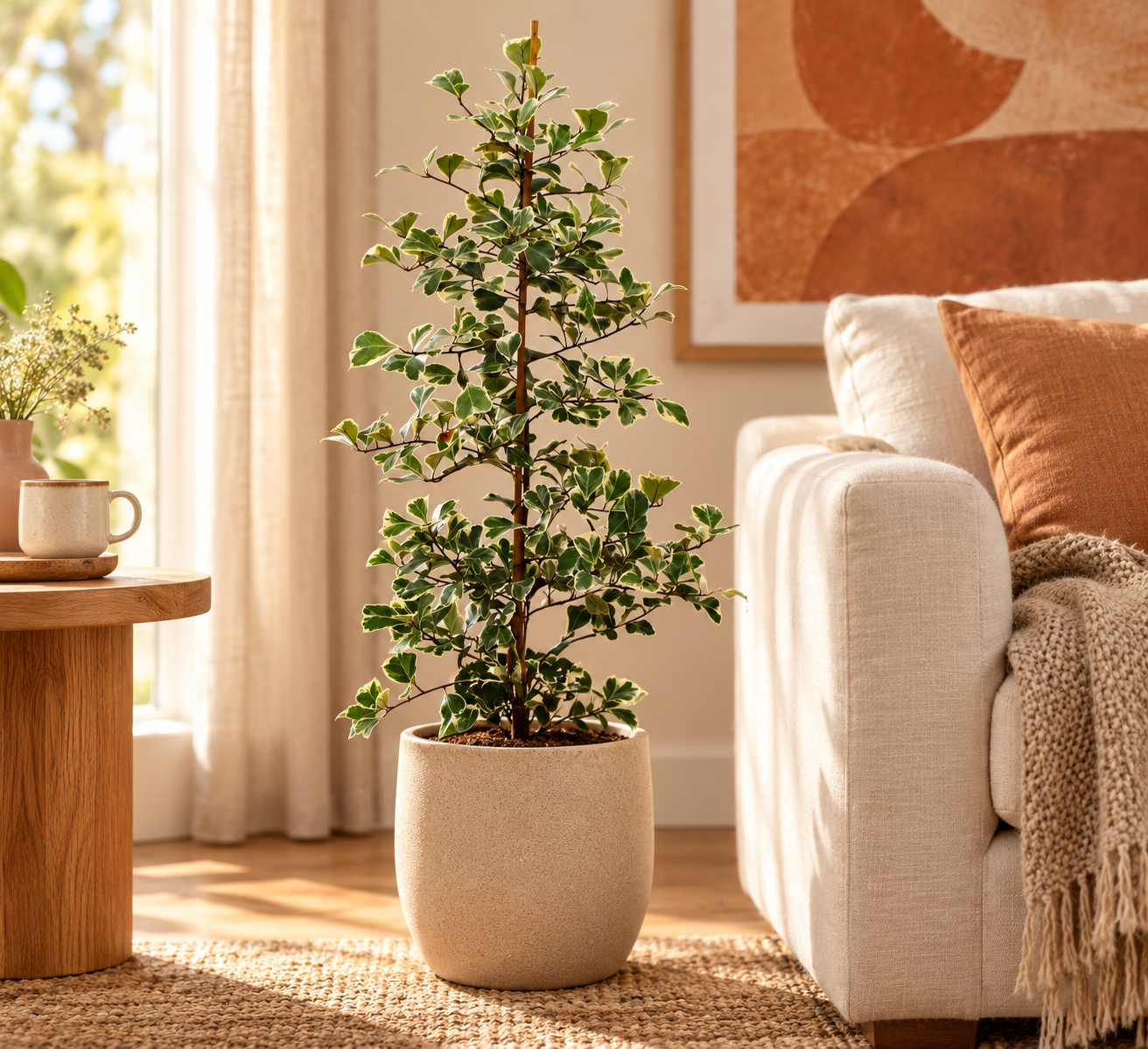
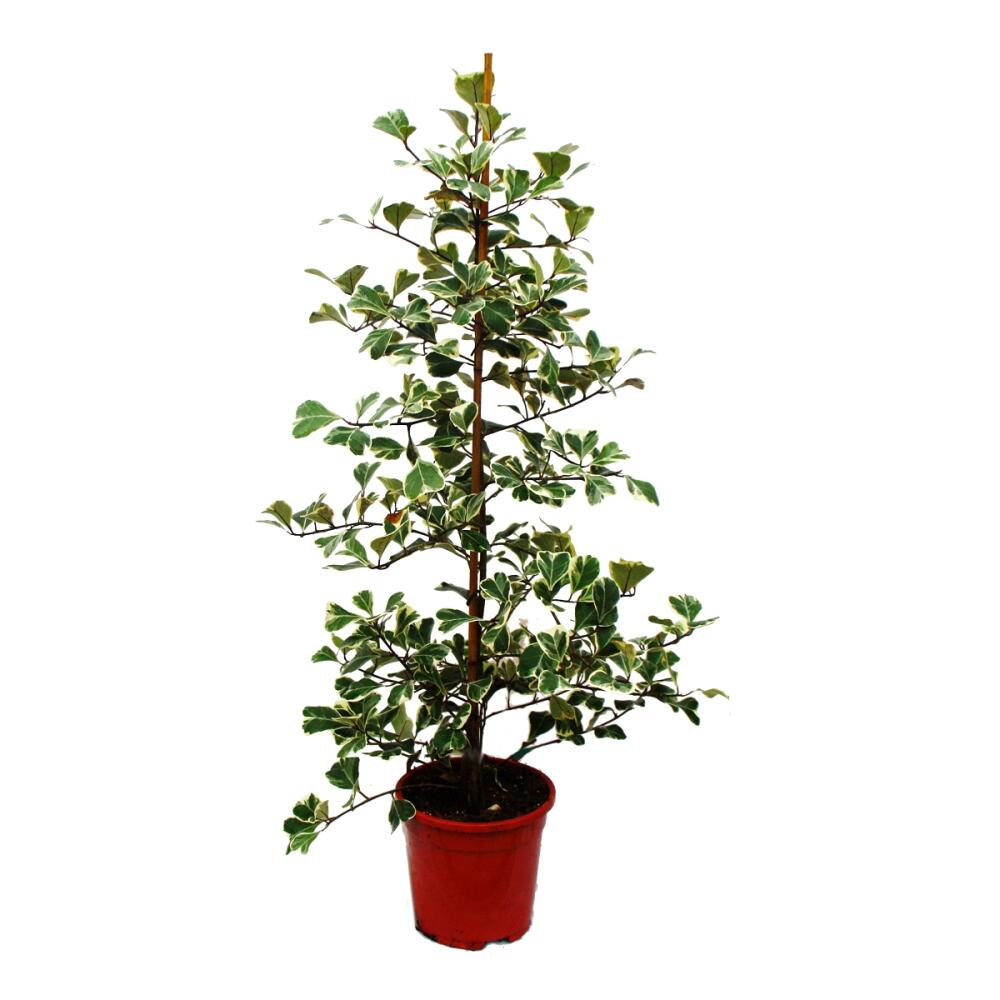
Ficus triangularis stands out through an unusual shape rather than huge leaves. The small thicker leaf surfaces look triangular; pale areas line the edges of the offered variegated form. A green centre remains between them. That pattern is easily seen against a quiet background. I give the young shrub a bright spot beside a seating area rather than squeezing it among many similarly sized foliage plants. The offer states seventeen centimetres pot size and about eighty to ninety centimetres height. The scene shows this slender starting form, not an indoor tree crown already several metres tall.
A ficus does not need to move constantly
After transport the plant needs time to adjust to room conditions. I therefore first find a suitable bright warm position and let it settle there calmly. Repeated moves between sunny window, dark hallway and cool corner make development harder to assess. One lost older leaf does not yet trigger another move. If many leaves are shed, light, root-ball moisture and temperature are considered together. A cold airflow during ventilation may also contribute. The plant is not placed directly in the path of a frequently opened outside door.
Pale edges need good light
A bright position protected from unprepared hot sun fits the variegated foliage well. After transport direct sun is assessed gently and filtered if needed. In a dark room interior the plant may look decorative but does not automatically get enough daylight. I watch new growth and its leaf spacing. Pale patterning cannot be deliberately intensified with strong extra feeding. It belongs to leaf development of the offered form. A nearby window can help; what matters is actual light at the plant, not merely that some glass exists somewhere in the room.
Water according to soil and weight
The upper soil layer may dry between waterings. Remaining moisture and root-ball weight are also considered beforehand. A heavy still-wet pot needs no further precautionary watering. When supplied, soil receives water evenly; excess then drains away. Nothing remains in the outer pot. A bright warm summer position uses more than that same position in a grey winter week. A fixed weekday therefore cannot reliably replace checks. Long complete drought is avoided just as much as a permanently wet root ball, even though both care mistakes arise from very different intentions.
Roots determine the next pot
When repotting, how thoroughly the existing root ball is rooted matters. Loose free-draining houseplant compost and a slightly larger container with drainage are enough if needed. I do not bury the stem more deeply simply to make the young shrub look steadier. Existing support can stay initially and is checked for constricting ties. Feeding is moderate during active growth; fresh pre-fertilised soil already counts as supply. Weak growth in a dark position is not answered with food alone. Roots need a suitable balance of air and moisture, not as much permanently wet soil as possible.
Shape it with respect for its sap
If individual shoots later grow awkwardly into the room, they can be selectively shortened with a clean tool. Milky sap comes out when cut and is kept away from eyes and sensitive skin. Hand protection and a protected working area make care manageable. The ficus stands where children or pets cannot nibble its foliage; it is not an edible plant. Leaves are gently freed of dust without needing leaf-shine products. Any small fig structures serve no promise of an edible harvest here. This portrait concerns a decorative indoor shrub, not a substitute for a fruiting garden fig tree.
Put leaf loss into perspective calmly
With many yellow or falling leaves I check conditions first. A dry light root ball needs a different response from wet soil in a cool position. Visible pests beneath leaves and at shoot bases are also considered without interpreting every colour difference as infestation. An identifiable cause is corrected specifically and subsequent growth observed. Light, warmth and freedom from draughts remain important in winter. The gallery’s original photograph shows the actual offered plant; the warm living scene adds one possible setting and promises no supplied furniture or decorative outer pot.
One plant, several views
Good to know
Are triangular leaves normal ?
Yes. The unusual leaf shape defines Ficus triangularis.
What does Variegata mean ?
The offered form shows pale areas on its foliage; their distribution may vary.
Why does it lose leaves after moving ?
Check the move, light, temperature and root-ball moisture; do not automatically keep watering.
Must the soil always be wet ?
No. The upper layer may dry, and water is removed from the outer pot.
Will the shrub stay under a metre ?
Shop size describes the starting condition; further growth is possible later.
What matters when pruning ?
Use a clean tool and keep milky sap away from skin and eyes.
Are any small fruits meant for eating ?
This portrait concerns an ornamental plant and makes no promise of edible fruits.
Sources and editorial note
- Exotenherz: offer and original images (01.10.2026)
- NParks: Ficus triangularis (01.10.2026)
- RHS: caring for ornamental figs (01.10.2026)
Shop offer, SKU, GTIN and availability checked live on 01.10.2026. Original photograph unchanged. Our own researched gardening texts and individually accepted scene.