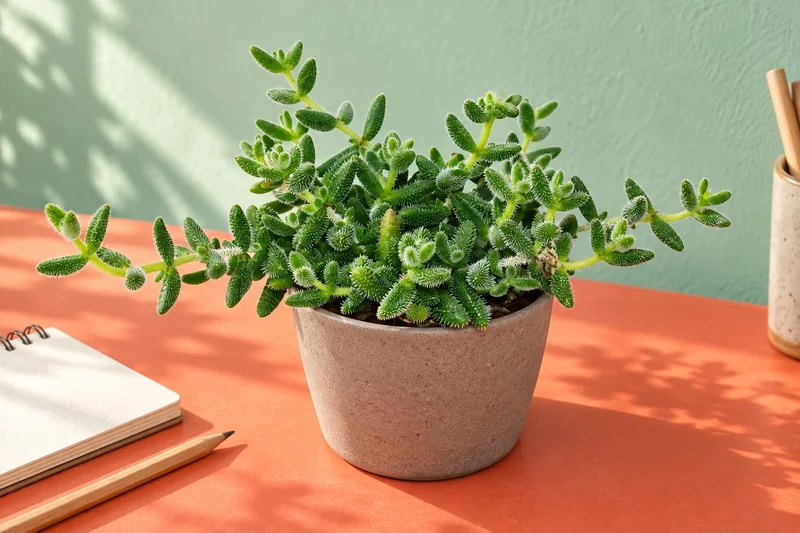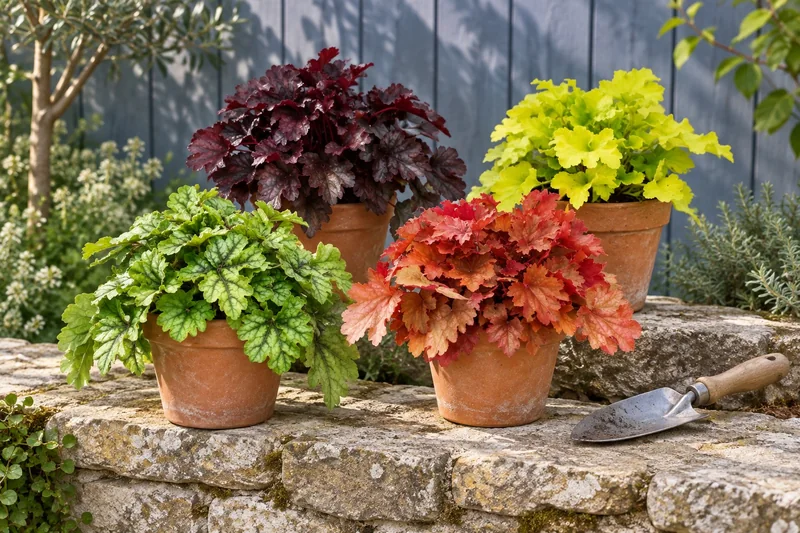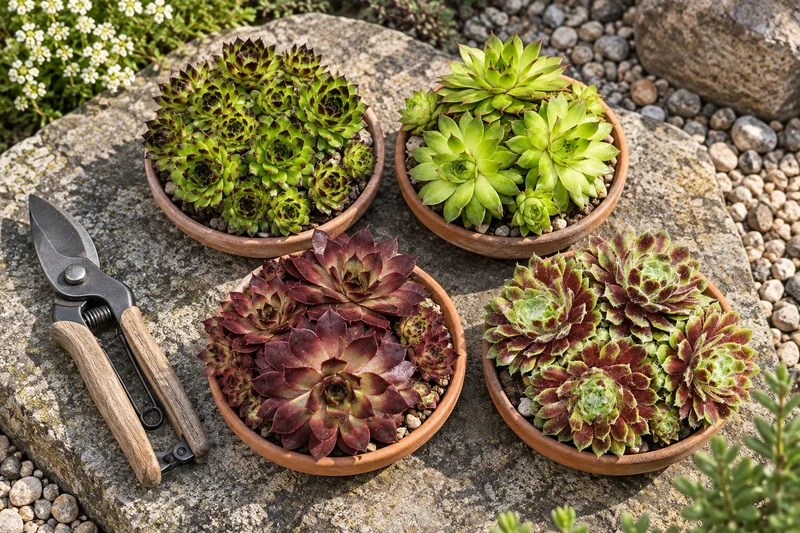
This plant at Exotenherz
Check the shop offer for current availability, price and what is included.
Check the shop for the price, current availability and what is included.
Your care table
| Topic | What to do | Why it helps |
|---|---|---|
| Position | Sunny and open outdoors. | Light supports compact cushions and flower formation. |
| Growing medium | Loose, with mineral components and reliably drained. | Stagnant wetness is unfavourable especially in winter. |
| Establishment | Check root balls before planting and water in afterwards. | Young plants are not yet deeply rooted. |
| Water | Later sparingly after a dry phase; continue checking containers. | Stored water cannot replace supply when completely dried out. |
| Feed | Dose sparingly during growth. | Abundant nutrition does not automatically produce more flowers. |
| Spacing | Allow for growth habit and later spread. | Final area depends on delivered varieties. |
| Winter | Avoid winter wetness and protect small containers. | No general frost limit is known for the unnamed mix. |
| Pruning | Gently remove dry remains and preserve healthy cushions. | Young shoots must not be cut accidentally. |
Check the compost and pot weight. The care table explains how far the compost may dry.
Water only when needed. The water should reach the root ball without spilling over the rim.
Remove surplus water from the saucer or cachepot. Then return the plant to a suitable position.
Eight small plants for a lively play of colour
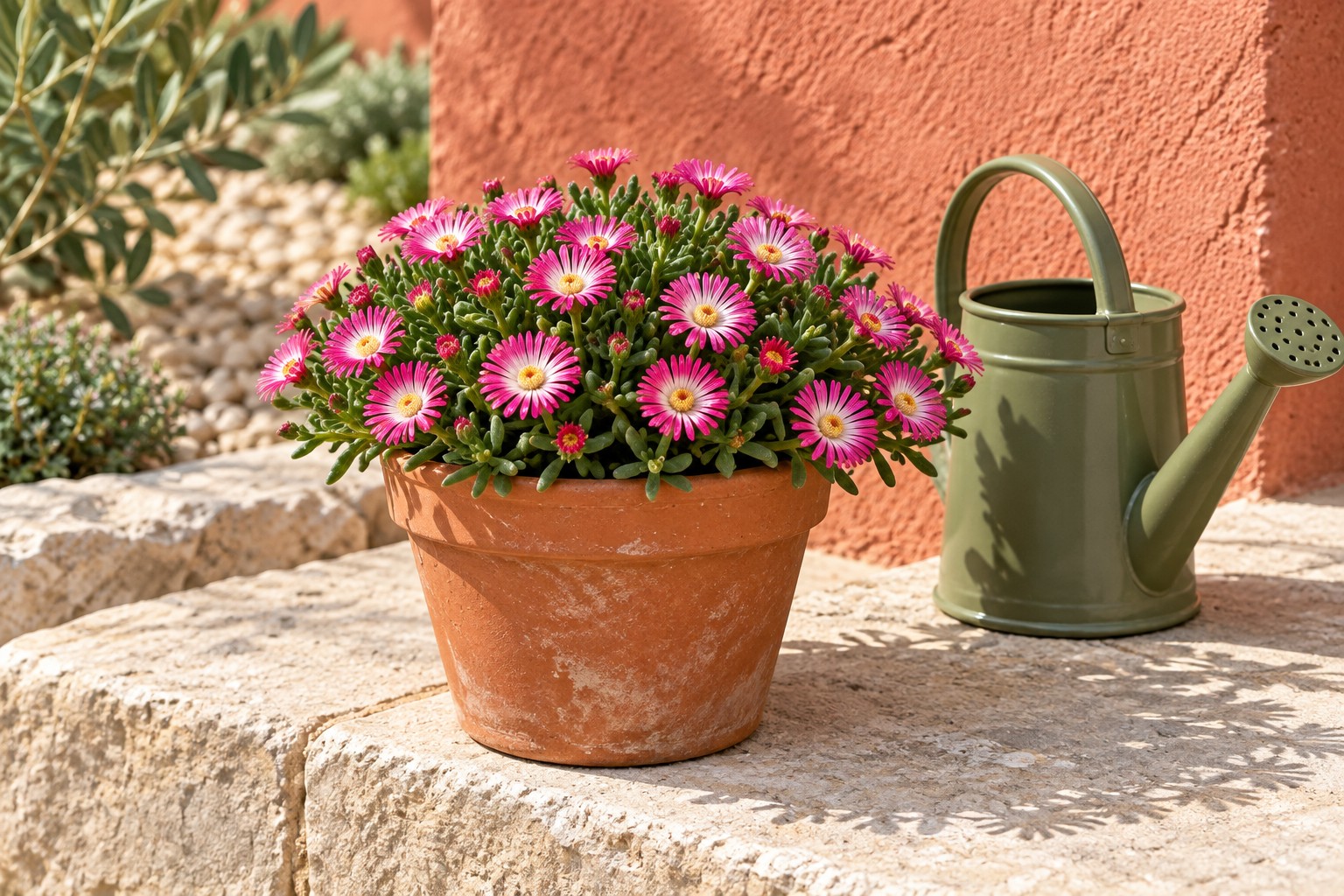
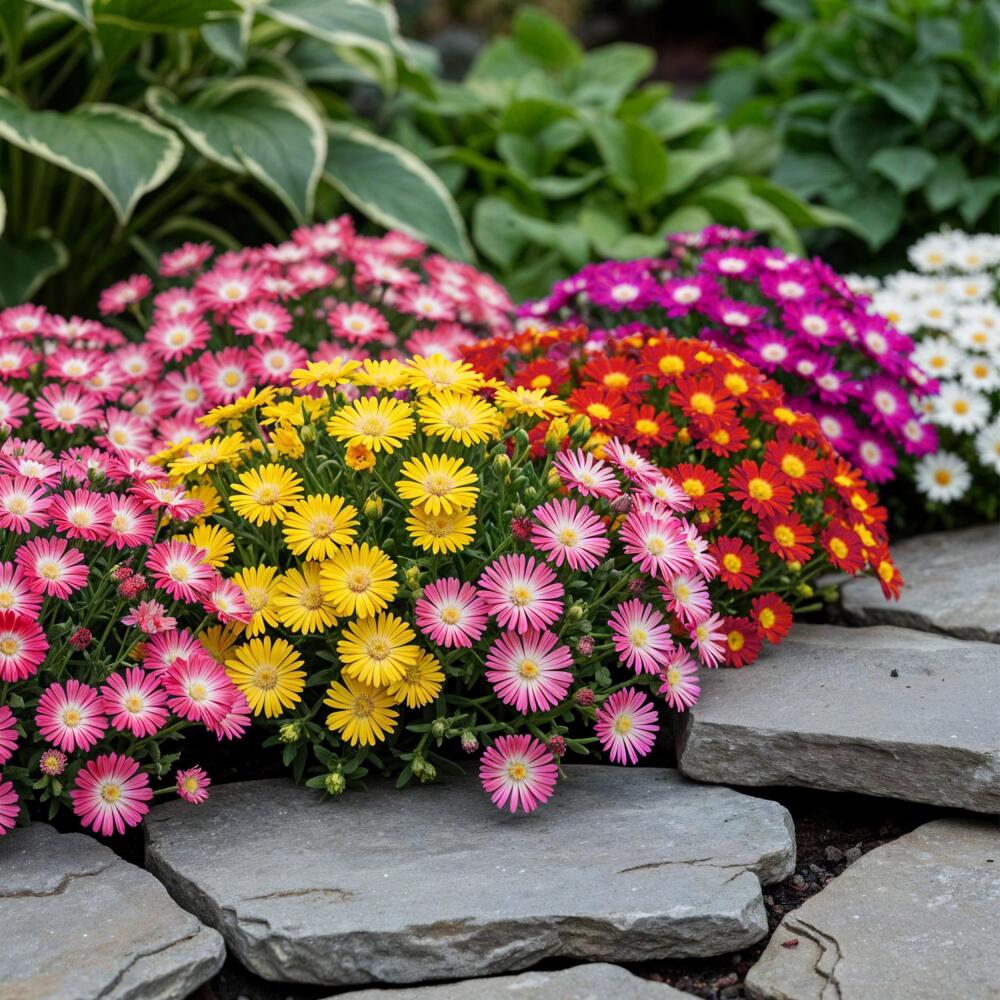
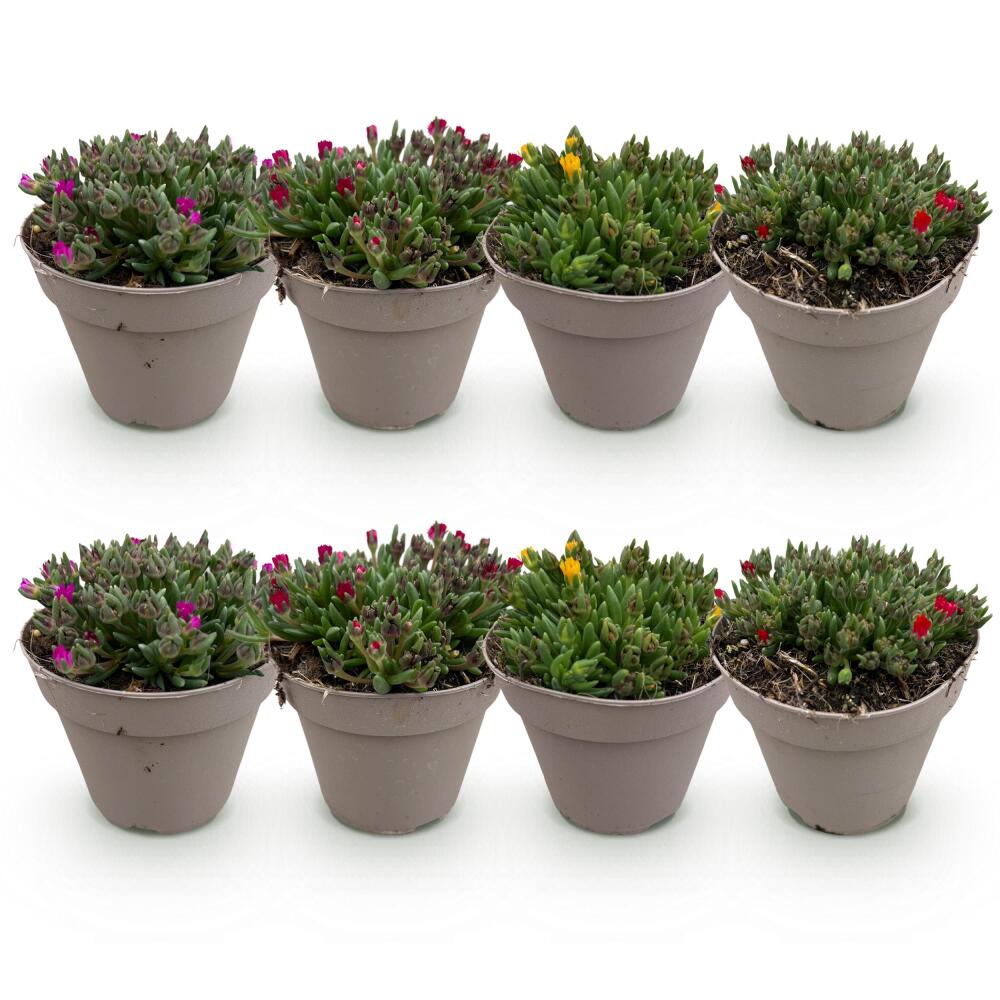
The offer comprises eight ice plants in 14 cm pots with approximately 17 cm overall height each. The colour mix combines different flower tones without promising a fixed named variety list. Each flower and growth habit develops differently over the season. A photo of profusely flowering cushions therefore shows a possible garden effect, not a permanently identical delivery condition. Our new scene deliberately shows only one compact example plant from the mix. The eight plants and the chosen planting area must be considered separately.
Succulent leaves and sun-loving flowers
Delosperma belongs to the ice-plant family. Narrow fleshy leaves store water while stems form low cushions and spread sideways. The many fine petals open particularly effectively in sunshine under suitable conditions. Cloudy weather or evening can considerably change the floral display. This does not mean a diseased plant. The genus includes different species and cultivated forms. The frost sensitivity of another indoor delosperma cannot be transferred to this garden mix, nor vice versa.
Sun needs soil that lets water leave again
Choose a sunny rock garden, well-drained wall top or free-draining container. Soil structure matters particularly in wet-winter regions. Heavy compacted soil retains moisture longer than a loose mineral mixture. Improve the rooted area and drainage instead of simply scattering decorative gravel on top. Container openings must remain free. A rain-sheltered position may also be airy and bright. Permanent shade and waterlogging are poor conditions for dense freely flowering cushions.
Support small root balls during establishment
Even a drought-tolerant ice plant needs water after planting out. Check the root ball, plant at its previous depth and water specifically. Afterwards check whether the plant is establishing in surrounding soil. A tiny dry delivery root ball may need water although the rest of the ground still feels cool. Established plants are watered much more sparingly. Continue observing during long summer droughts or in small containers. Do not constantly spray leaf cushions wet; watering should preferably reach the root area. The pot must then drain freely.
Spreading and flowering need some patience
Arrange the eight pots over the area before planting. Close spacings in the offer are not universal final distances for every later variety. Allow more room for vigorous growth so cushions do not immediately crowd one another. Restrained feeding during the growing period is usually enough. More feed does not automatically lead to more flowers. Faded or dead remains can be removed gently. Strongly overhanging healthy stems may be shortened when needed. Work without injuring the firm older plant core and young shoots.
Hardy is no promise against every winter situation
The shop offers the mix as hardy. Since individual varieties are unnamed, no common exact sub-zero limit is guaranteed here. Experience with Delosperma cooperi chiefly shows how critical wet winters may be; it does not automatically determine the species of this mix. Ensure good drainage and protect containers in severe cold. A cold bright covered position may help more sensitive specimens. In spring check dead areas before removing them. Partial foliage decline and living shoots at the base must be distinguished from soft rot.
One plant, several views
Good to know
Does the new image show all eight plants?
No. It shows one small flowering example plant. The shop offer contains eight plants, each in a 14 cm pot.
Are all delospermas hardy?
No. Genus, species and variety must be distinguished. This offer is listed as a hardy garden mix.
Why do flowers close in cloudy weather?
The floral display depends strongly on sunshine, time of day and plant condition. Closed flowers are not automatically a care mistake.
What sub-zero temperature does the mix reliably tolerate?
Without an exact variety list, one guaranteed temperature cannot responsibly be stated. Soil moisture and protection of root balls also play a major role.
Sources and editorial note
- Product and delivery contents: Exotenherz
- NC State Extension: plant profile
- Royal Horticultural Society: plant and care knowledge
Sources checked: 15 September 2026. Product information and delivery contents follow the linked offer. Care has been checked against the stated specialist sources and remains subject to plant condition, position and season.