This plant at Exotenherz
Check the shop offer for current availability, price and what is included.
Product and delivery details are given in the individual offer.
Your care table
| Topic | What to do | Why it helps |
|---|---|---|
| Light | Choose a sunny to partly shaded position. | Cambridge suits light woodland edges and open borders. |
| Soil | Prepare loose soil with drainage. | Permanently wet roots are unfavourable. |
| Planting | Water the root ball, set at its previous height and water in. | The young plant first needs to root beyond its pot root ball. |
| Spacing | Consider the offer’s 25–30 cm alongside later spread. | Paths and weaker neighbours need free space. |
| Water | Check regularly during establishment, later during prolonged drought. | Drought tolerance of older plantings is not a young-plant characteristic. |
| Feeding | Feed moderately in spring when needed. | Excessive nutrients are unnecessary for a quiet edging. |
| Pruning | Remove spent stems and disruptive foliage as needed. | The whole group does not need drastic cutting after every flowering. |
| Winter | Ensure drainage and assess foliage development according to weather. | Semi-evergreen can mean visible leaf loss in severe winters. |
For young plants, feel the soil directly at the root ball. The surface and deeper soil may have different moisture levels.
Water thoroughly after planting; later, water according to the soil, weather and establishment rather than a fixed calendar.
Avoid standing water. For plants in containers, also check that water runs out of the drainage hole.
Pink flowers on a low cushion of foliage
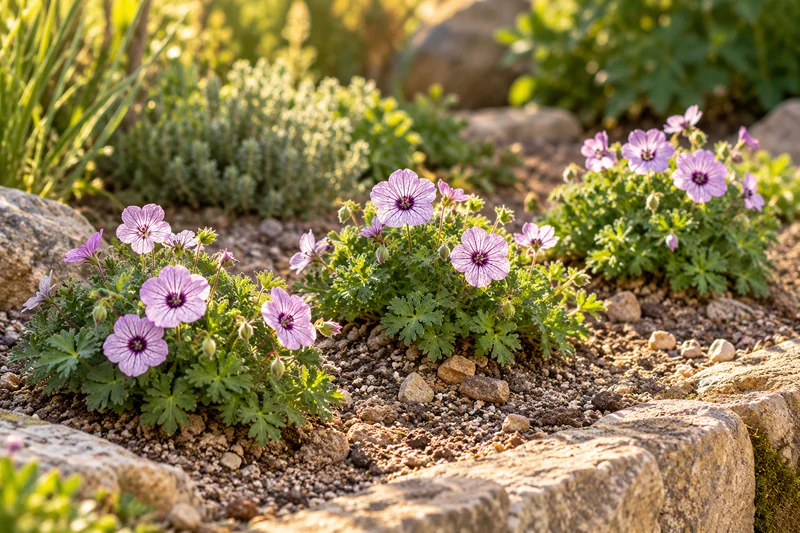
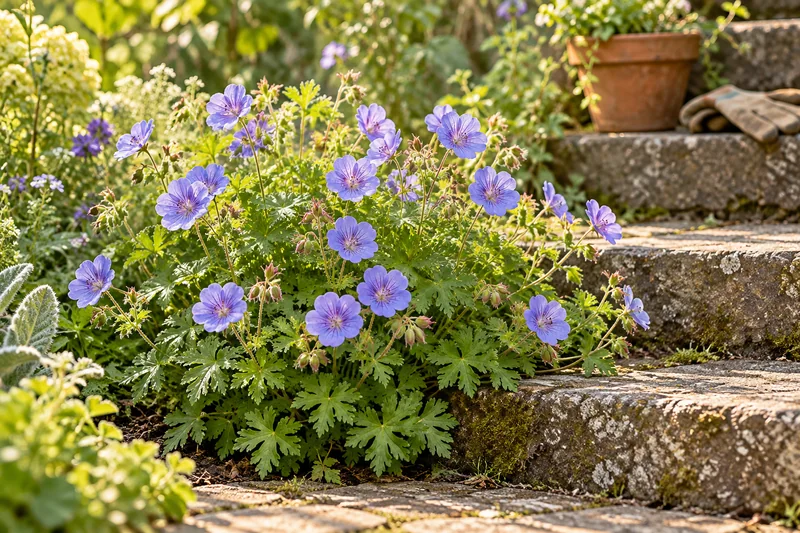
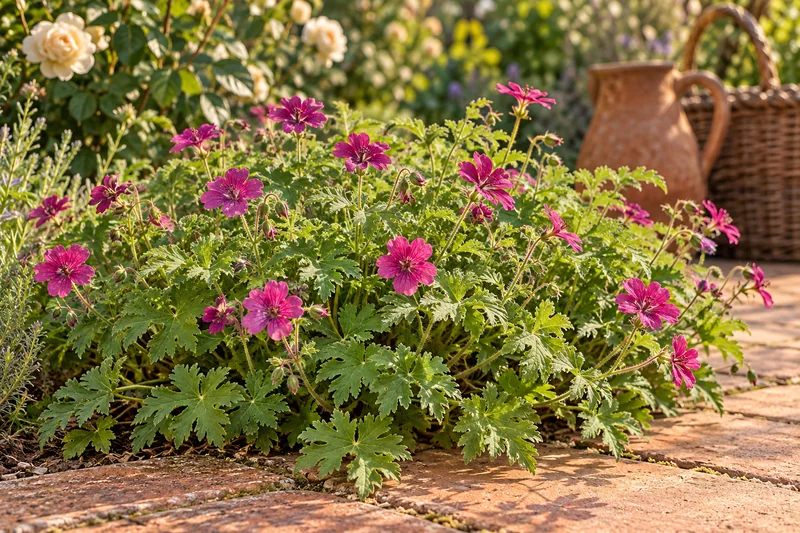
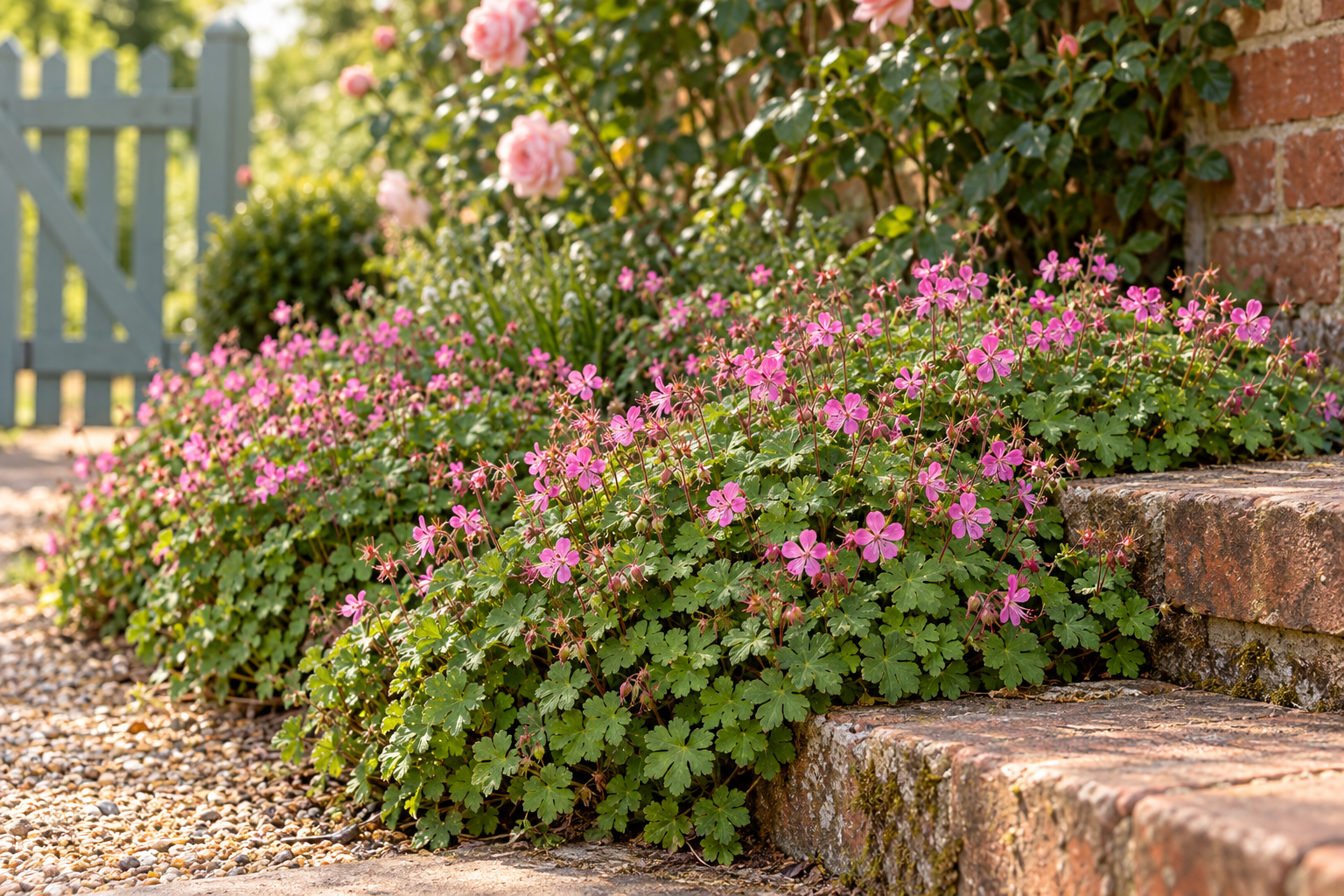
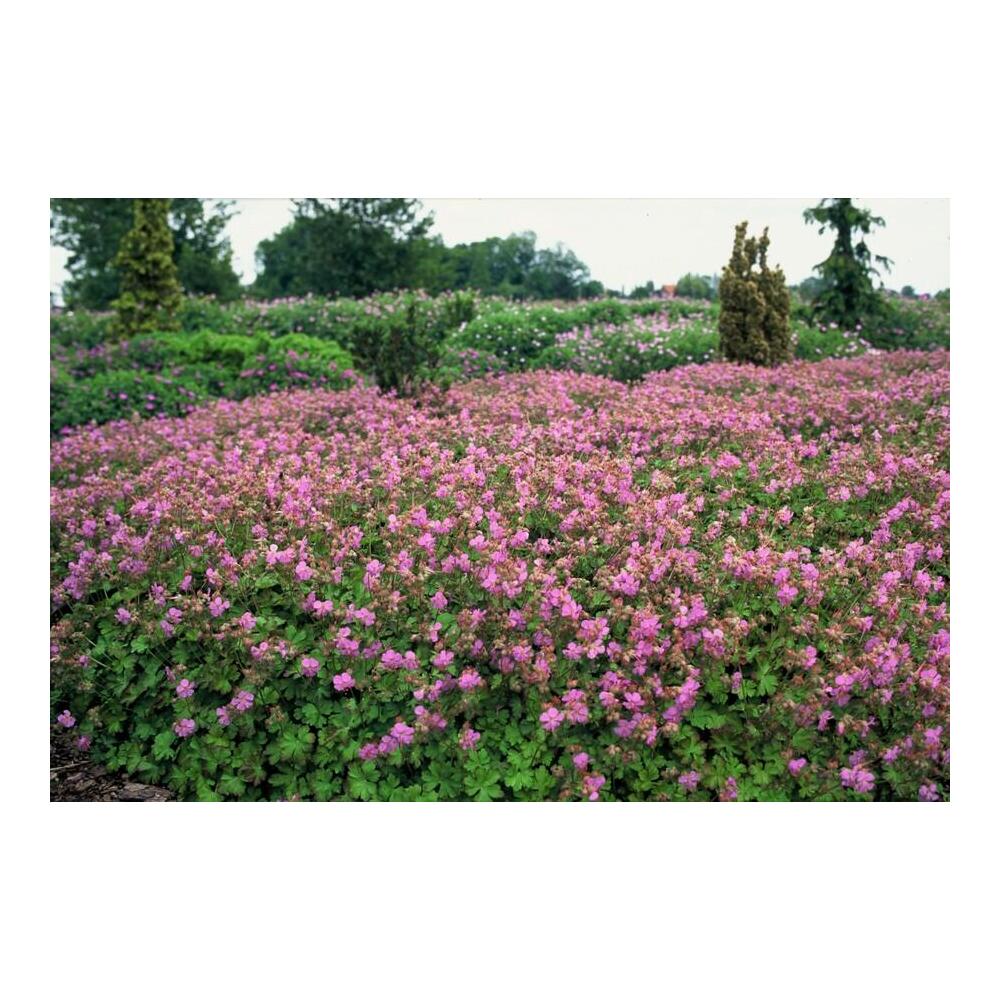
Cambridge is a cranesbill for quiet transitions in the garden. Its low leaf cover connects a path with the border without hiding taller plants behind it. Rounded lobed leaves sit closely together and smell aromatic when touched. Strong pink flowers appear above them in late spring and early summer. Five petals, darker flower centres and projecting stamens give them an open friendly shape. I like to plant Cambridge where people pass nearby and can see those details. Developed height is approximately twenty to twenty-five centimetres; position and growth can also produce somewhat larger plants. A living edging remains more flexible than a cut rigid boundary.
An edging for roses, paths and light woodland
Sun to partial shade suits this cranesbill. Beside a rose, the foliage can accompany the lower area without immediately aiming for the same height. Along a garden path, I leave room for later spreading; distance from the edge prevents constant stepping on outer shoots. Light woodland edges are also possible, but existing tree roots can make supplies harder. A shady spot is therefore not automatically moist. I consider light and soil together. Small neighbouring perennials are not set in the middle of an already dense group, but receive a free area of their own. This creates an orderly planting whose individual parts remain visible.
Understand the soil before planting
Cambridge copes with various garden soils if water can drain reliably. Compacted permanently wet soil is improved before planting or a different position chosen. A small loosely filled planting hole in a water-retaining area is not always enough. In very poor soil, a moderate organic addition can help, but the whole area should not become over-rich. Before planting, I remove stronger competing wild plants and loosen the intended area. The later leaf cover does not retrospectively take care of that preparation. Open gaps still need tending during establishment too. A dense planting develops with time and good conditions, not merely because groundcover appears in the name.
Nine-centimetre pots become an area
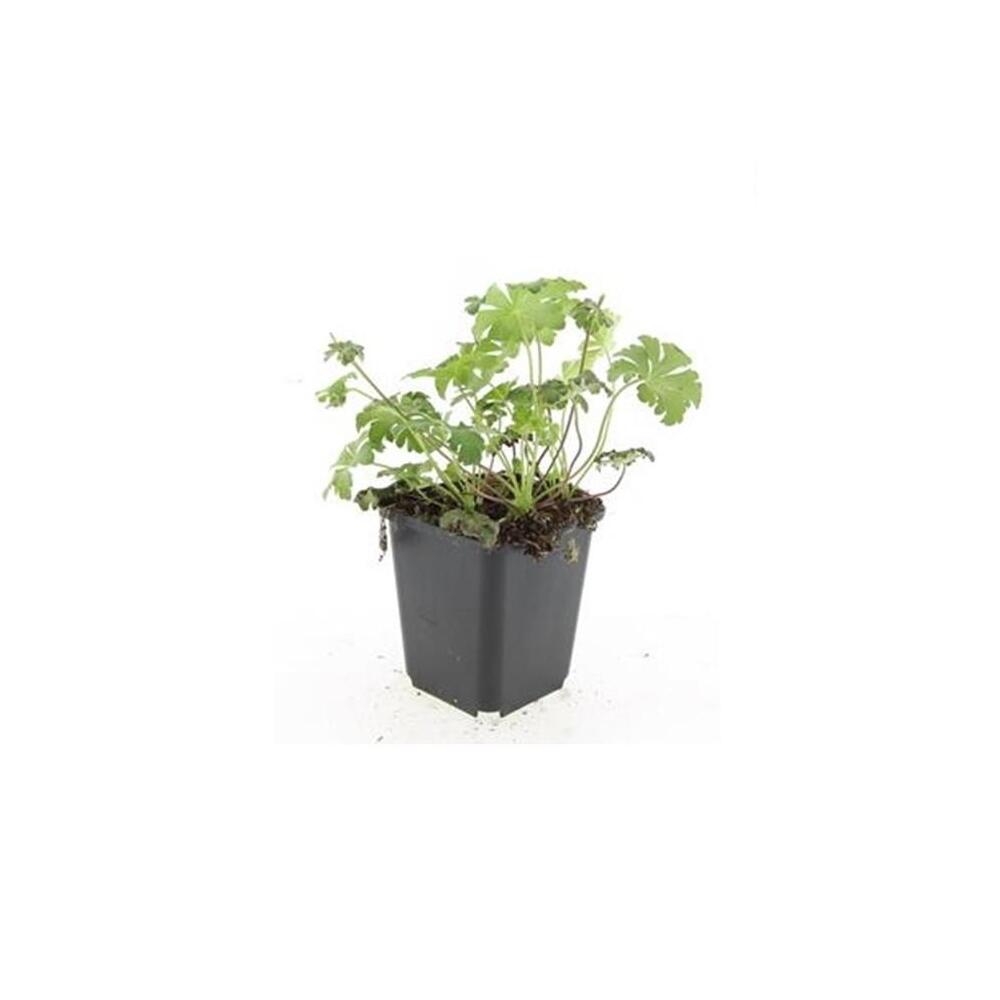
Young plants are delivered in nine-centimetre pots and at approximately ten to twenty-five centimetres tall. Set quantities provide a practical planning basis. The shop states twenty-five to thirty centimetres spacing; I initially distribute pots loosely so that the line, path edge and neighbours work together. After moistening, they are set at their previous height, lightly firmed and watered in. Spring and early autumn offer good opportunities when soil and weather suit. Distribution for a long narrow edging differs from a broad group beneath woody plants. The later border scene therefore shows a design, not a supposedly complete delivered set area.
Water according to the roots’ stage
In the first weeks, I check the original root ball especially carefully. Water in surrounding soil does not always mean the small pot compost is already well supplied. Conversely, watering is withheld when everything is still wet. Rooted plants can survive drier spells better; with persistent drought, condition and soil are nevertheless watched. Containers have smaller reserves than borders. Moderate spring feeding is enough when needed. Lots of fertiliser is no necessary condition for an attractive low edging. I want even healthy foliage and appropriate flowers, rather than pushing unnecessarily soft disorderly growth with continually renewed applications.
Accompany flowering and foliage care calmly
The main display usually lies in May and June. Weather and position determine the exact course; uninterrupted continual flowering is not promised. Spent stems or unattractive leaves can be removed if they disturb the overall picture. Major complete cutting is unnecessary after every flowering. With hard cutting, the plant needs time to rebuild and suitable care. In spring, old or damaged leaves are considered before fresh shoots are accidentally removed. Foliage can remain partly in mild winters and die back under harsher conditions. Semi-evergreen describes this development more accurately than expecting a green carpet that looks identical in every season.
Care for boundaries and renew older groups
Cambridge gradually grows wider through short spreading shoots. Where a group reaches a path or weaker plants, its boundary can occasionally be reduced. Strong older plantings can be divided and redistributed at a suitable time; sections are afterwards watered in and observed like young plants again. I avoid such interventions in the middle of hot dry weather. A few damaged leaves do not immediately call for division of the whole area. Check light, moisture and possible pests first. The gallery shows a genuine young shop plant and an original flowering view. Beginning and later development thus remain understandable, while the designed garden scene adds the possible effect in the border.
One plant, several views
Good to know
Is Cambridge perennial?
Yes, a perennial. The quantity of retained winter foliage depends on the weather.
How tall does it grow?
In a developed planting, approximately 20–25 cm, sometimes around 30 cm depending on conditions.
When do the pink flowers appear?
Mainly May and June, in early summer.
Can it grow beneath woody plants?
In suitable partial shade with well-drained soil; consider root competition and moisture.
Do new plants need water?
Yes. Drought tolerance of established groups does not replace establishment care.
Must everything be cut off after flowering?
No, remove disruptive stems and foliage as needed.
Is the border picture the delivery?
No. Sets contain young plants in 9 cm pots; the scene shows later development.
Sources and editorial note
- Exotenherz: offer and direct set variants (01.10.2026)
- Fehrle Stauden: Cambridge, flower colour, height and position (01.10.2026)
- RHS: planting and caring for cranesbills (01.10.2026)
Shop name and direct child offers individually checked live with SKU/GTIN. Unavailable sets inactive in the register. Originals unchanged and without unverified advertising seals; scenes explicitly show later garden growth. Flowering, height, lifespan, planting time and spacing separate from delivery size.