This plant at Exotenherz
Check the shop offer for current availability, price and what is included.
Check the shop for the price, current availability and what is included.
Your care table
| Topic | What to do | Why it helps |
|---|---|---|
| Light | Bright with indirect or filtered light. | Hot direct sun can damage foliage. |
| Water | Keep the root ball slightly moist; do not let it dry completely. | Leaves react to strong moisture fluctuations. |
| Water quality | Use low-lime room-temperature water where possible. | Sensitive leaf margins benefit from adapted care. |
| Drainage | Remove surplus water after watering. | Evenly moist does not mean permanently wet. |
| Warmth | Evenly warm, preferably not below approximately 16 °C. | Cold draughts strain tropical foliage. |
| Humidity | Protect from proximity to dry heating. | Persistently dry air encourages brown margins. |
| Fertiliser | Only during active growth, moderately according to the label. | Demand falls in low-light rest. |
| Checks | Look regularly at leaf undersides and new tips. | Spider mites often become apparent there first. |
Check the compost and pot weight. The care table explains how far the compost may dry.
Water only when needed. The water should reach the root ball without spilling over the rim.
Remove surplus water from the saucer or cachepot. Then return the plant to a suitable position.
The colour is also in the bracts
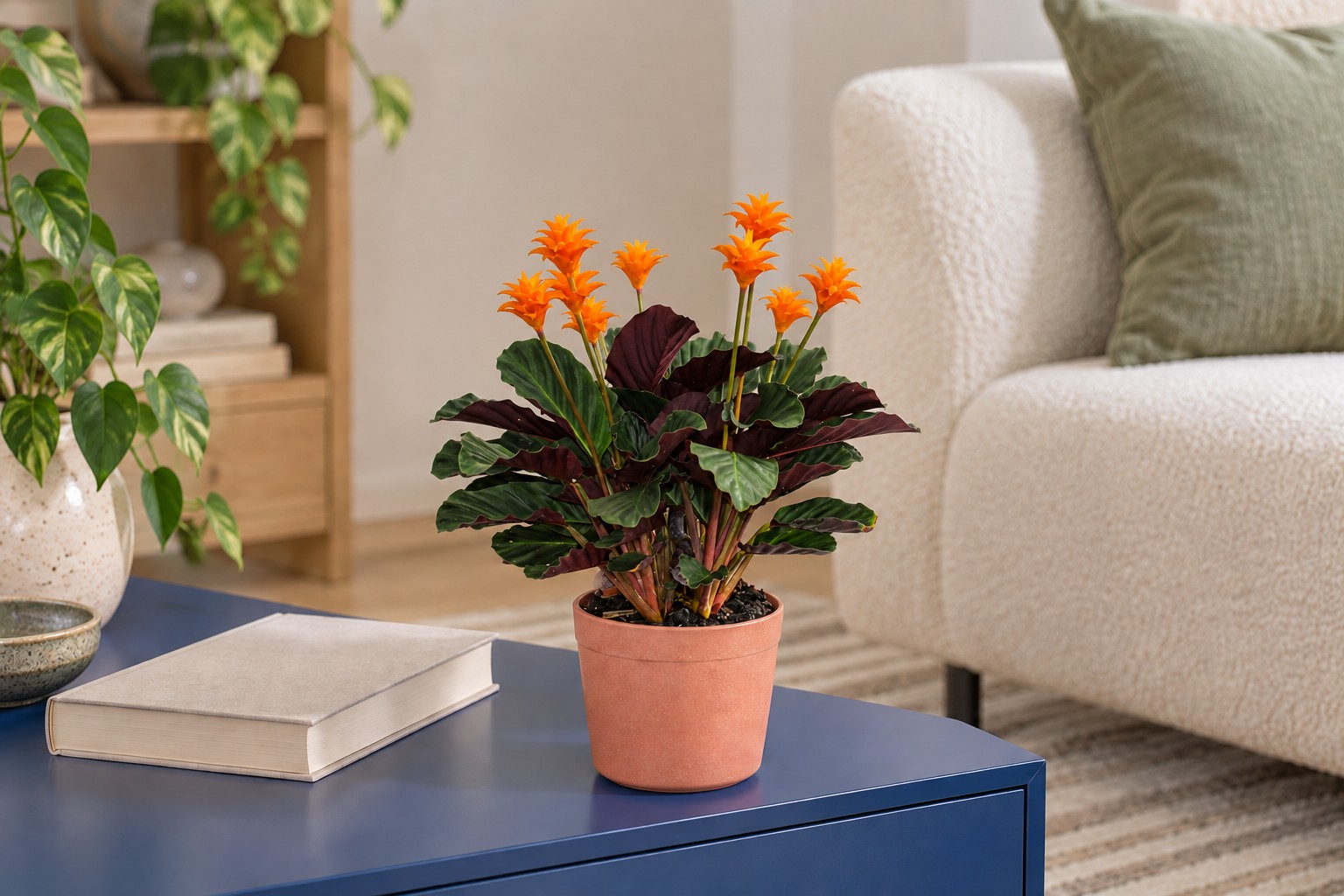
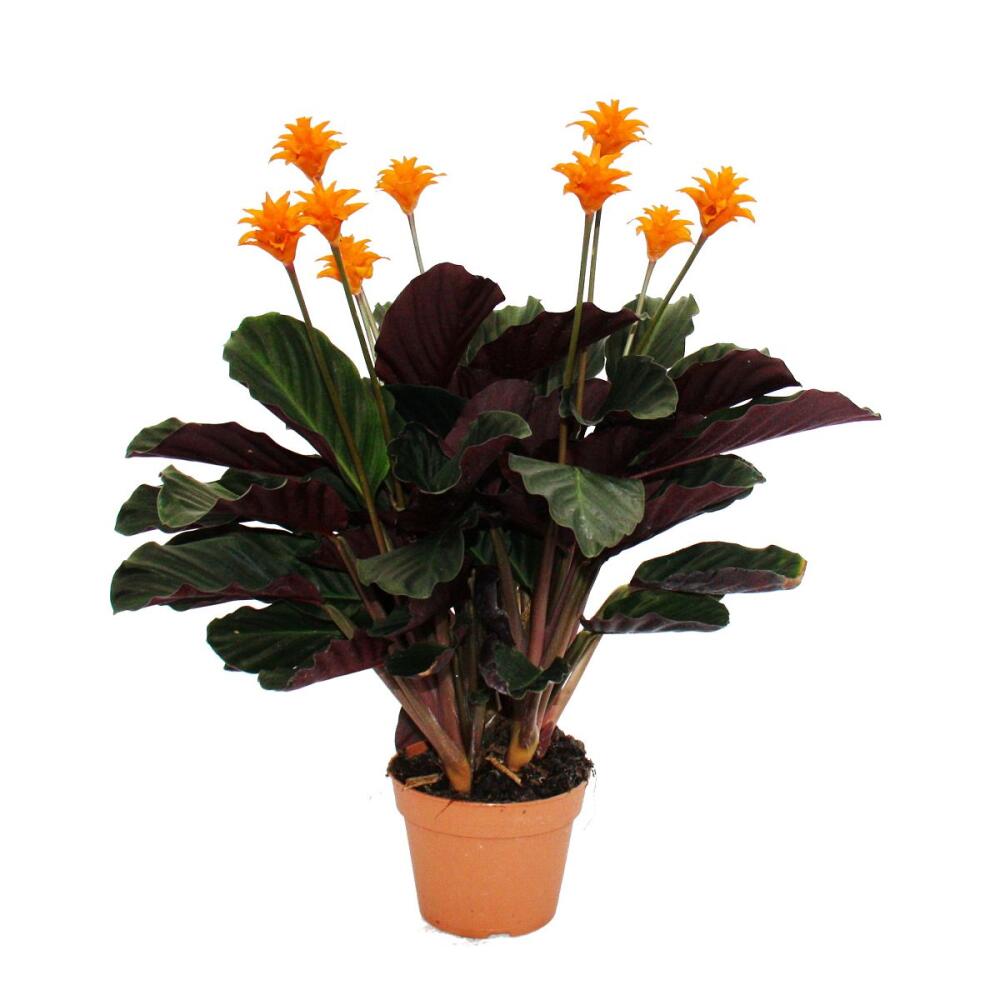
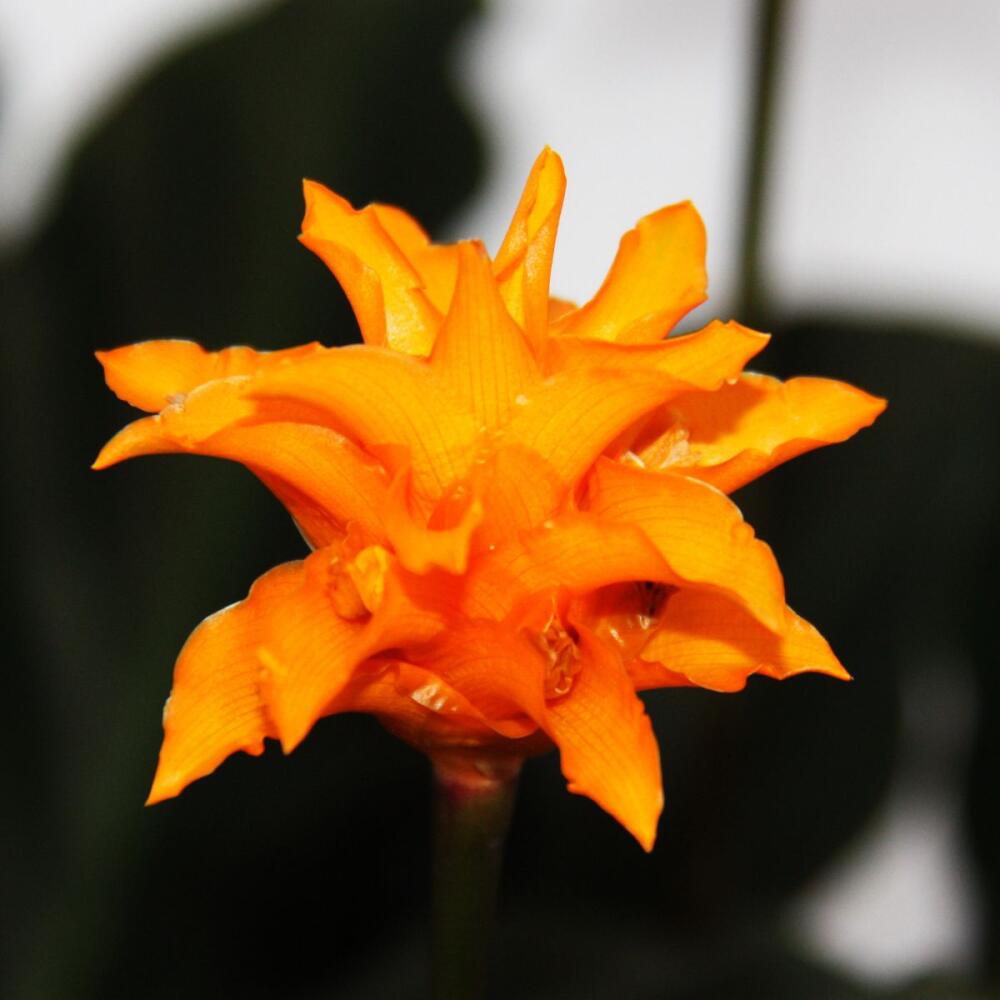
Calathea crocata is botanically known today as Goeppertia crocata. Both names denote the same prayer plant from Brazil. Striking orange flower heads rise above the dark leaves. Bright bracts contribute significantly to their long-lasting colour impression; they must not be confused with individual large petals. The foliage also deserves attention: its undersides shimmer reddish to purple, and leaf position changes during the day. The name eternal flame does not promise continuous permanent flowering.
A compact focal point on a bright surface
The offer describes a 14 cm pot and approximately 35 cm overall height. This size suits a well-lit console or a small table. Leave space around leaves so they can move without rubbing furniture edges. Leaf count, individual stem height and flower-head number vary in living plants. The scene shows a styling example at a young size; it does not replace a binding promise of every visible detail. Outer pot and furnishings are decorative additions.
Shade tolerance does not mean no light
The prayer plant cannot tolerate hot direct midday sun but needs sufficient daylight. A bright position behind a translucent curtain may suit it. A dark hallway without good daylight, however, is unsuitable. Keep temperature as even as possible in the warm indoor range and avoid falling below approximately 16 °C. Cold window draughts and direct radiator heat strain foliage. Higher humidity supports the plant; frequent misting alone does not compensate for a permanently dry or unfavourable position.
Soft water and an evenly supplied root ball
During growth, soil should remain slightly and evenly moist. Check before watering rather than keeping the pot permanently wet. Use low-lime room-temperature water where possible and let excess drain. In winter the surface may dry a little, but the entire root ball must not dry completely. Simply letting hard tap water stand does not make it low in lime. If leaves curl, check temperature, sun and possible pests alongside moisture. More water is not an appropriate immediate solution when soil is already wet.
Preserve the floral display and give the plant time
Faded stems can be removed near the base with clean tools without injuring neighbouring young leaves. Cut brown leaf remains selectively too. Repotting makes sense in spring or summer when the root ball is well filled; a loose moisture-retaining yet freely draining mix suits it. Choose a new pot only moderately larger. Feed sparingly during active growth according to the label. Freshly pre-fertilised soil initially needs no additional heavy feed. New flowers do not develop reliably according to a fixed indoor calendar.
Distinguish leaf movement from care problems
Regular raising and lowering belongs to the prayer plant. Persistently limp foliage, curled leaves or spreading spots, however, are reasons to check. Brown margins may result from dry air, water stress or unsuitable water quality. Fine pale speckles and webs fit possible spider mite infestation. Inspect undersides in good light. Larger healthy clumps can be divided during repotting if each section retains sufficient roots and several leaves. A single cut-off leaf does not replace such a division.
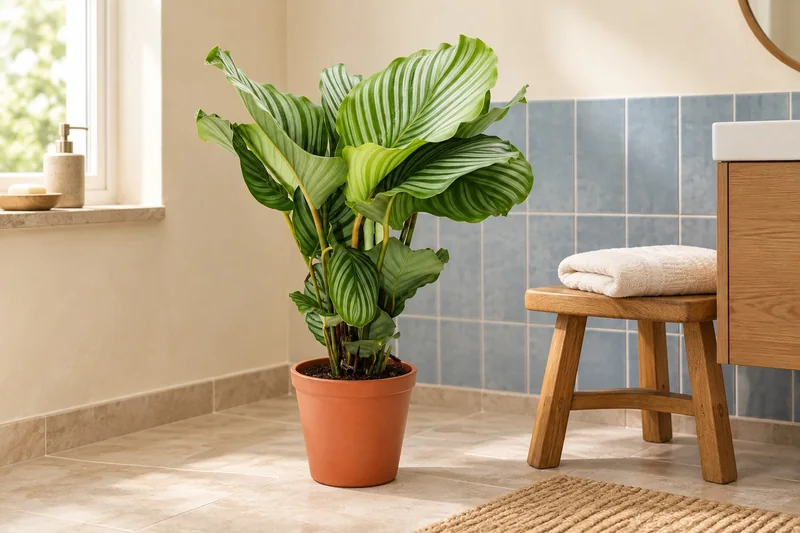
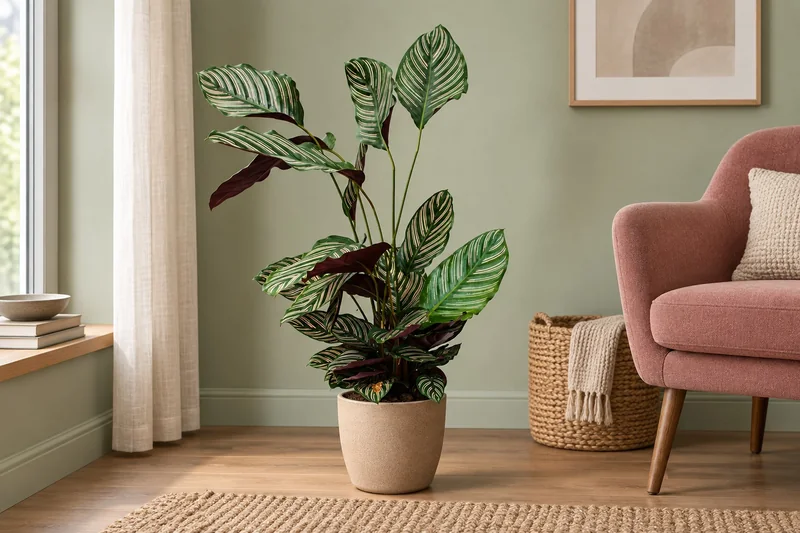
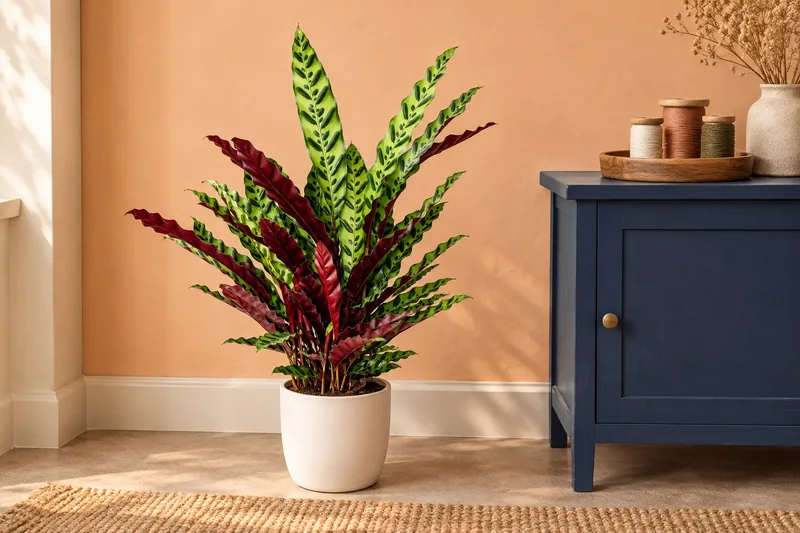
One plant, several views
Good to know
Are Calathea crocata and Goeppertia crocata the same plant?
Yes. Goeppertia is the botanical genus used today; Calathea remains very common in the trade.
Does eternal flame really flower all the time?
No. The name describes the striking colour impression. Flowering phases and their duration depend on development and cultivation.
Can it stand in a dark hallway?
Not permanently without sufficient light. The plant wants filtered daylight even when protected from direct sun.
Why do the leaves move in the evening?
Changing leaf position belongs to the natural daily movement of many prayer plants and is not on its own a sign of water shortage.
Sources and editorial note
- Product and delivery contents: Exotenherz
- Royal Horticultural Society: plant and care information
- Royal Horticultural Society: plant and care information
Sources checked: 15 September 2026. Product information and the contents of delivery follow the linked shop offer. Care advice was checked against the cited specialist sources and should still be adapted to the plant’s condition, position and season.