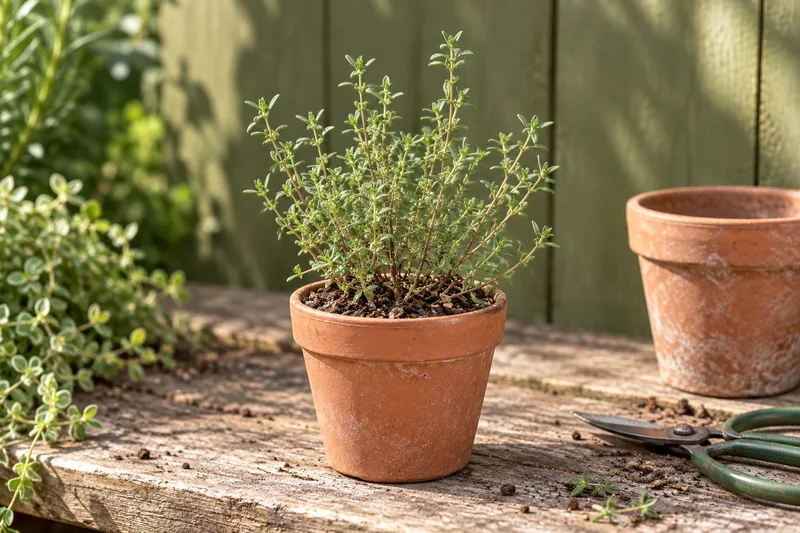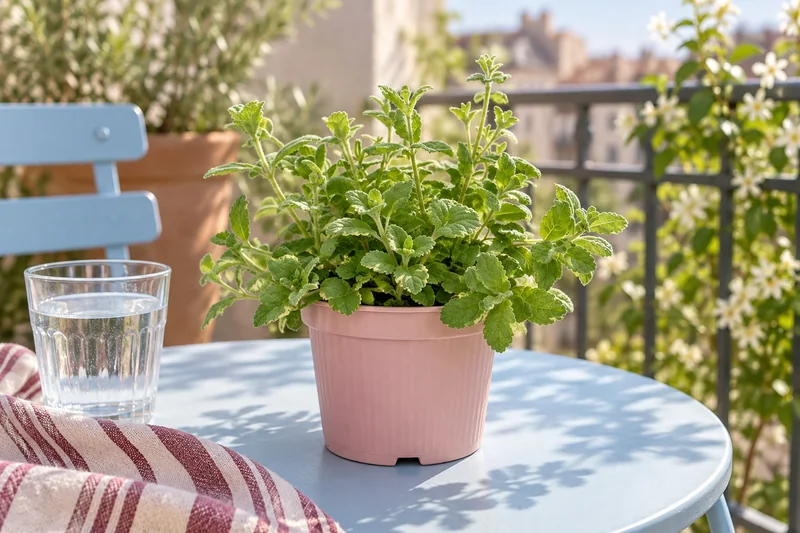
This plant at Exotenherz
Check the shop offer for current availability, price and what is included.
Check the selected shop offer for price, availability and delivery contents.
Your care table
| Topic | What to do | Why it helps |
|---|---|---|
| Position | Provide sun to light partial shade and room for a large clump. | The supplied plant does not remain a little pot herb permanently. |
| Soil | Choose deep humus-rich soil with reliable moisture and good drainage. | Strong growth needs a supplied root zone. |
| Planting | After acclimatisation, plant the well-rooted young plant at its existing level. | A calm transition helps establishment. |
| Water | In the first year and during dry spells, check and water the root ball. | New roots use soil reserves only gradually. |
| Container | Choose a larger stable container with drainage and check regularly. | Tall shoots and limited soil increase care needs. |
| Harvest | Take young leaves sparingly with clean tools. | The plant keeps enough foliage to continue growing. |
| Pruning | Selectively cut back old foliage when leaf harvest declines. | Healthy new growth can renew the harvest. |
| Winter | Remove dying foliage, preserve the root position and shelter pots. | The perennial reshoots from its underground base. |
For young plants, feel the soil directly at the root ball. The surface and deeper soil may have different moisture levels.
Water thoroughly after planting; later, water according to the soil, weather and establishment rather than a fixed calendar.
Avoid standing water. For plants in containers, also check that water runs out of the drainage hole.
Fresh green with a strong character
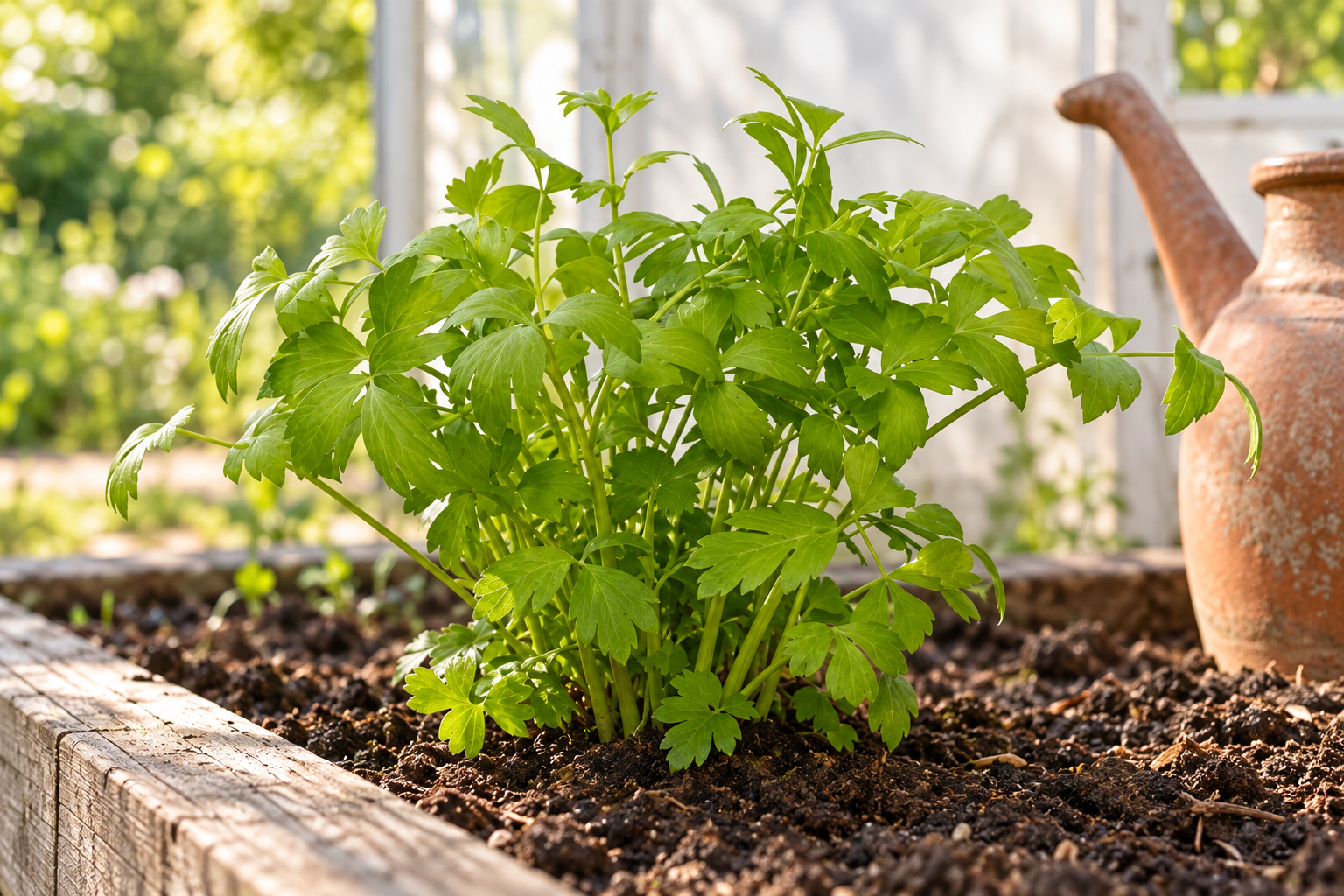
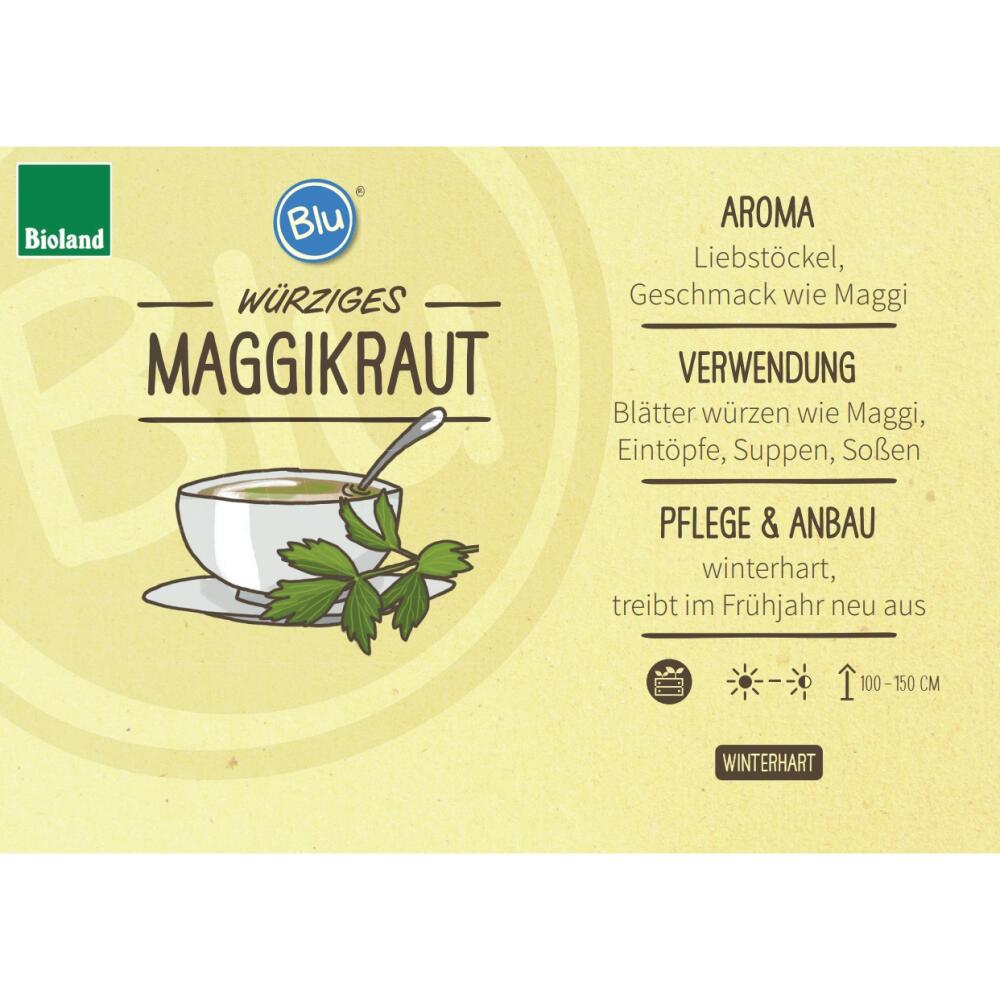
For us, lovage is one of the herbs that shapes a garden position through foliage alone. Green leaves are deeply divided and resemble celery in structure; their flexible stalks bring the young plant to life. The familiar German name Maggikraut describes its strong seasoning aroma, not an ingredient in a prepared seasoning mixture. One leaf can already make a considerable impression in the kitchen. We like placing the young greenery somewhere accessible but think beyond the first harvest: a long-lived perennial with a distinctly larger future grows here.
A small pot is only the beginning
The linked offer lists a 12 cm pot but no specific delivery height. The original photograph shows a young plant already in leaf. The garden scene presents it as freshly planted, not a huge finished clump. Over several years, lovage can occupy considerable space, with flowering stems up to about two metres. This later height does not describe delivery. Width matters for permanent planting too. Initially 30 to 45 cm spacing is enough; in the long term, a clump may become about a metre wide.
Plan generous root space
A position in sun or light partial shade suits it if soil is humus-rich, deep and reliably supplied. Persistently wet ground is still avoided. Late spring to early summer is a good planting period for young plants; first accustom specimens from protected cultivation to outdoors. Water the root ball, plant at its existing level and water in. Do not put lovage directly between small slow-growing herbs that may later lack light and room. An open bed area makes harvest, checks and further development easier.
Continue watching moisture after establishment
In the first year, we check the original root ball regularly. Particularly in warm weather, it may be drier than surrounding soil suggests. Water thoroughly as soon as needed without waterlogging the position. An established clump uses more soil reserves but still needs attention during longer dry spells. Container reserves are always limited. Choose a stable container with drainage and enough space; a small 12 cm pot is no permanent foundation for mature flower stems. Pot weight and moisture help the decision.
Harvest without stripping the young clump
Young healthy leaves suit seasoning soups or other dishes. We begin sparingly, clean suitable plant parts and observe treatment instructions. Leave the young plant enough foliage. The strong aroma already invites cautious use. If older leaves decline in summer, selective cutting back may encourage fresh growth. Work with clean tools and do not cut into the underground base. A good harvesting position is one where care happens easily alongside it: when cutting, leaf undersides and new stems can be checked too.
Umbels change the plant’s appearance
Greenish-yellow flower umbels may later appear above the foliage. Depending on cultivation and weather, flowering falls in late spring or summer; no fixed date is promised for the young supplied plant. Tall stems need space and stability, especially in a container. Those chiefly harvesting leaves accompany development accordingly through pruning and watering care. Slower leaf growth does not always mean nutrient shortage. First check moisture, light and development stage. Flowering belongs to the perennial’s life cycle and shows a different character from young kitchen foliage.
The plant remains underground in winter
Lovage is perennial and hardy, but its above-ground foliage dies back in the cold season. A bare bed position therefore does not automatically mean the plant has disappeared. Mark its place so the base survives the next digging. Dead foliage can be removed; protect small containers against severe root cold and secure drainage. New growth may appear the following spring. A quick photograph or note of width helps keep room free in time. The small herb plant then remains a familiar companion for many garden seasons.
One plant, several views

Good to know
Is lovage hardy and perennial?
Yes. It dies back above ground in winter and, with suitable cultivation, regrows from its underground base.
Does it remain as small as in the delivery pot?
No. Established plants become large, with flower stems potentially about two metres tall. Delivery height is not fixed in the offer.
How much spacing does it need?
30–45 cm is listed initially. For long-term planning, consider that an older clump may become about a metre wide.
When do I plant the young plant?
Especially from late spring to early summer, after acclimatisation to outdoor conditions.
Can lovage remain in a pot?
Yes, in a sufficiently large stable container with drainage and regular moisture checks. The small delivery pot is no permanent final size.
Why is its position bare in winter?
Above-ground dieback belongs to its life cycle. Preserve the marked plant base in soil and assess the next growth first.
Sources and editorial note
- Exotenherz: offer and original images (02.10.2026)
- RHS: growing lovage (02.10.2026)
- NC State Extension: Levisticum officinale (02.10.2026)
Shop offer, article number, GTIN, availability and original images checked directly on 02.10.2026. Specialist sources read directly. Delivery height unknown. Flowering time not narrowed to fixed months because sources differ climatically. Delivery size, later flower height and long-term clump width separated.