This plant at Exotenherz
Check the shop offer for current availability, price and what is included.
Check the shop for the price, current availability and what is included.
Your care table
| Topic | What to do | Why it helps |
|---|---|---|
| Light | Place brightly in filtered daylight. | Variegated foliage needs light and protection from heat. |
| Water | Let upper compost dry slightly then water evenly. | Persistent wetness can cause root damage. |
| Drainage | Remove remaining water from the outer pot. | Air must return to the root zone. |
| Compost | Cultivate loose and structurally stable. | Fleshy roots tolerate no compacted continual wetness. |
| Warmth | Steadily warm without cold draughts. | Tropical young plants are sensitive to chilling. |
| Feed | Moderately during growth according to the label. | More feed does not reliably produce stronger variegation. |
| Support | Add safe loose support when needed. | Stems should grow without constriction. |
| Handling | Do not eat; position protected from children and animals. | Calcium oxalate crystals are irritating. |
Check the compost and pot weight. The care table explains how far the compost may dry.
Water only when needed. The water should reach the root ball without spilling over the rim.
Remove surplus water from the saucer or cachepot. Then return the plant to a suitable position.
Aurea here describes the offered yellow-variegated form
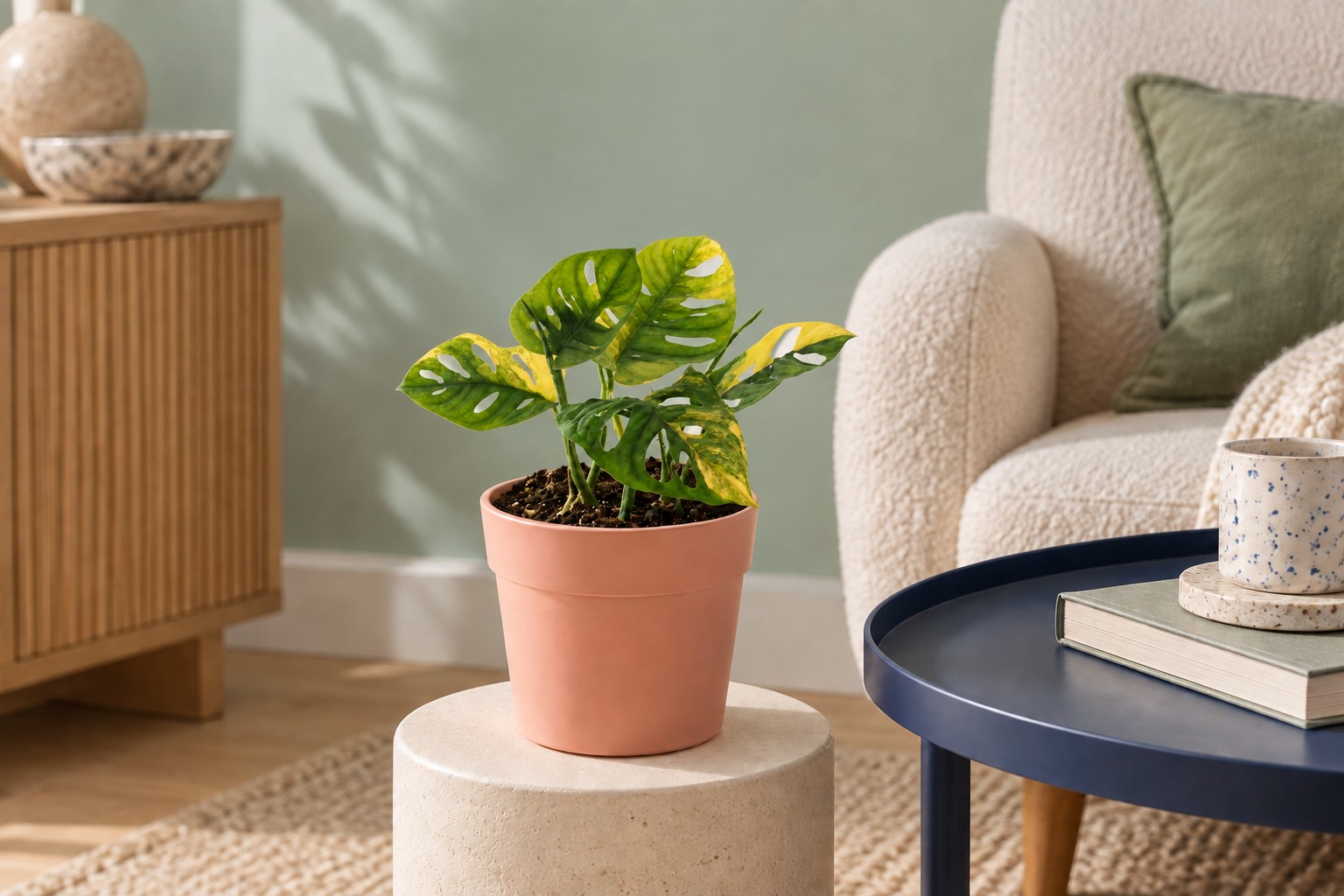
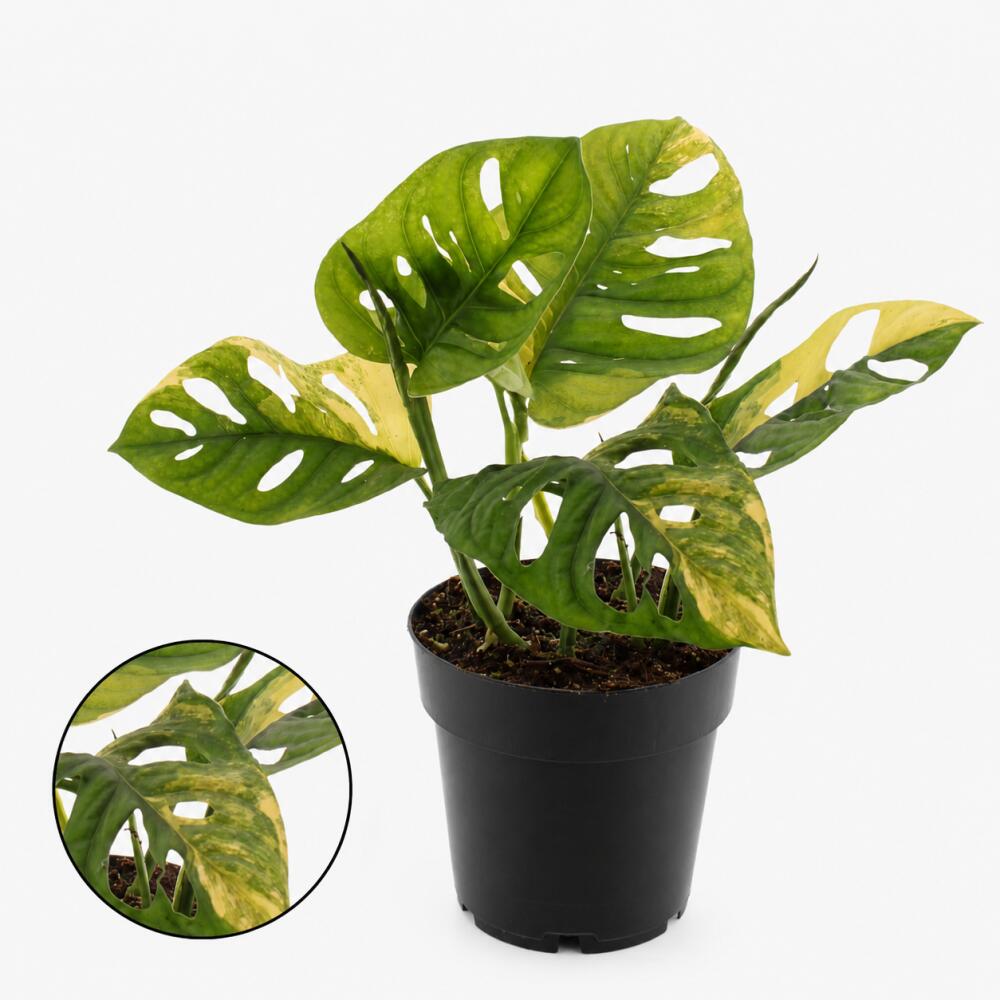
The shop uses Monstera aurea alongside a German name meaning white-variegated monstera. The original image instead shows green and yellowish areas and elongated oval leaves with internal openings. This does not establish a reliable species identification. This portrait therefore stays with Monstera as the genus and Aurea as the trade name. It adds neither unsupported deliciosa identification nor the large deeply split leaves of another Monstera.
A young plant in a 14 cm pot
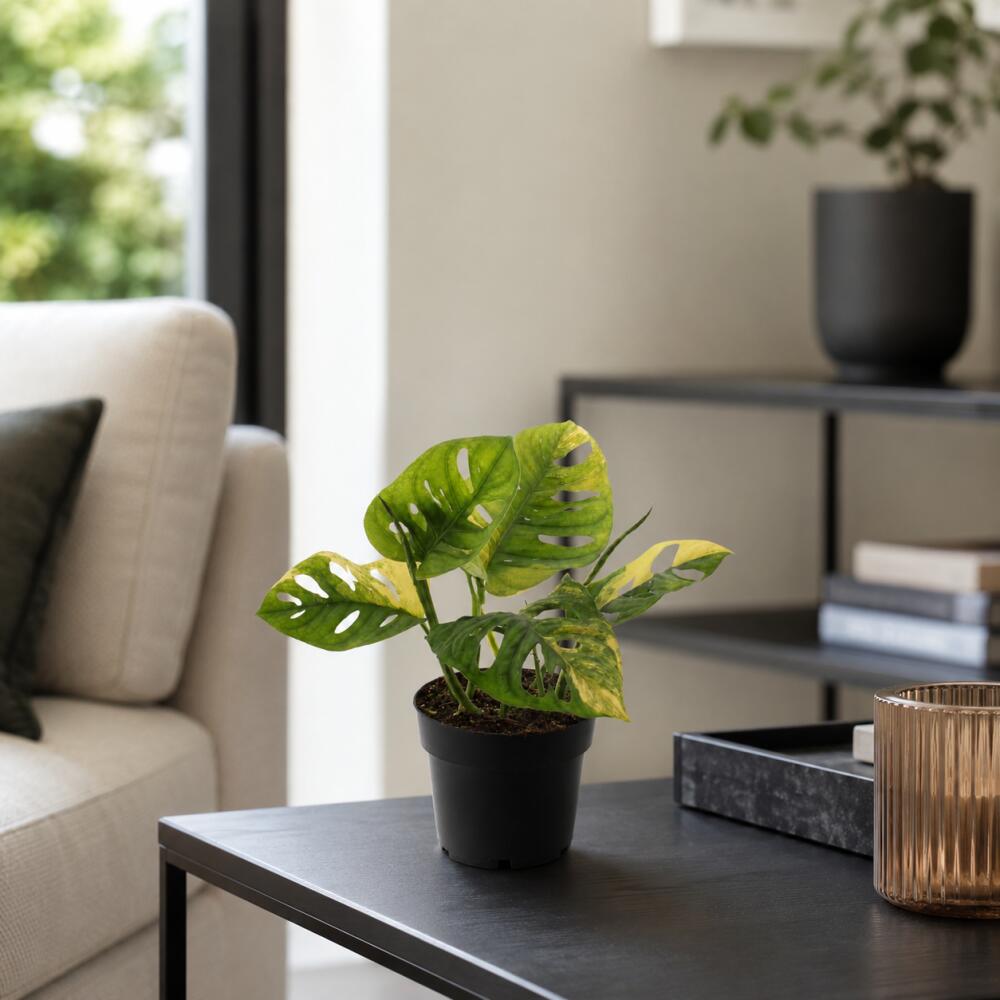
A 14 cm pot and approximately 30 cm total height are given. The scene was matched to this young size. Leaf number, holes and proportion of yellowish areas may vary in living plants. No leaf must exactly repeat the photograph. As growth continues, a suitable support may help. The stem should receive loose support without tightly fastening leaf stalks. Coloured outer pot, pedestal and furniture are a design example, not additional delivery contents.
Pale pattern needs gentle light
A bright position with filtered light supports the plant. Hot direct sun can particularly damage paler leaf areas. A very dark position is also unfavourable for a variegated form. Steady warmth and protection from cold draughts help it settle after shipping. Variegation cannot be forced with extra fertiliser. New leaves may change their colour impression as they develop; overall health matters more than chasing the largest possible pale patches.
Combine moist compost with air at the roots
Let upper compost dry a little before the next watering. Then supply the root ball evenly and remove excess. A loose structurally stable houseplant mix prevents fleshy roots remaining in compacted continual wetness. Demand usually falls in winter with reduced growth. Distinguish natural yellow variegation from new general yellowing. If whole formerly green leaves become soft and yellow, check root ball, drainage and position together.
Support growth rather than constantly altering it
Repot only slightly larger when roots clearly fill the pot. Feed moderately during active growth according to the label. Gently dust leaves with a soft damp cloth, supporting them. A new support should not tear existing stems apart. Aerial roots are normal parts of climbing monsteras, not grounds for routinely cutting all away. Plan major pruning only after the plant establishes well and its stem structure remains clearly recognisable.
Read new leaves and small warning signs carefully
Brown pale leaf areas may result from dry air, sun, water problems or sensitive tissue. Already brown areas will not turn green. Correct the cause and judge healthy new growth. Regularly check leaf undersides for pests. A cutting capable of propagation needs a node; a single leaf is insufficient for a new vine. Monstera contains irritating calcium oxalate crystals. This portrait associates it with neither edible use nor particular measurable air purification.
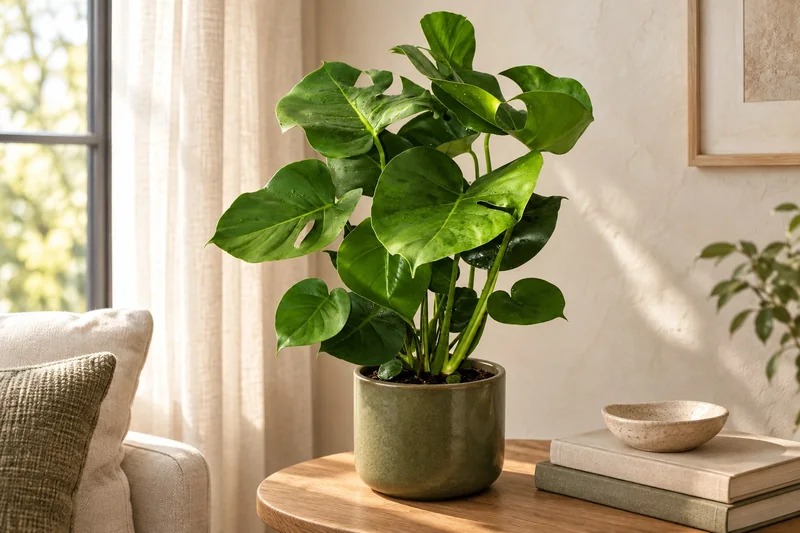
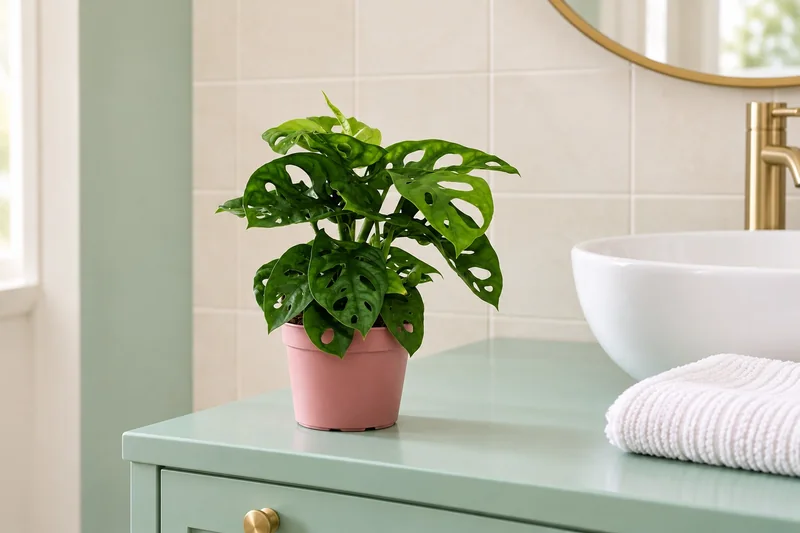
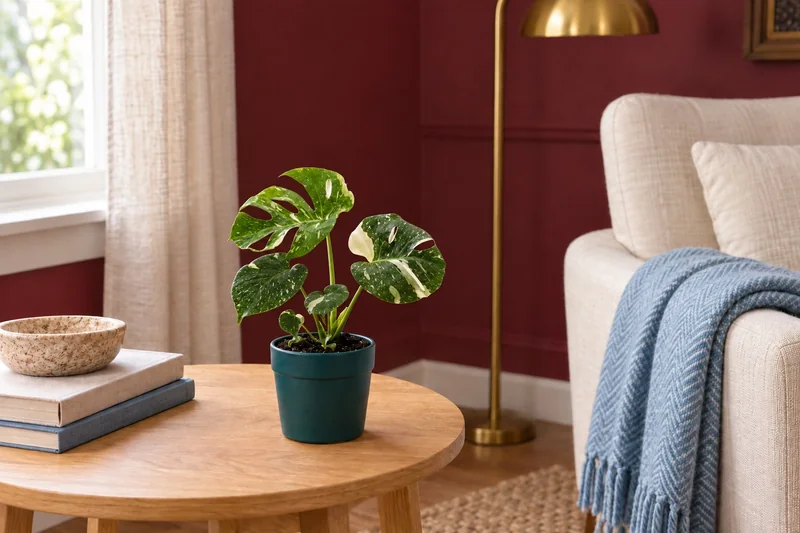
One plant, several views
Good to know
Is this definitely Monstera deliciosa Aurea?
That species identification is unconfirmed for this shop offer. The portrait therefore uses only the established genus and trade name.
Is it white- or yellow-variegated?
The original shows green and yellowish areas. The contradictory white-variegated name is not translated into an incorrect image colour here.
Can I increase the yellow pattern with feed?
No. A suitable position helps health; extra feed cannot selectively determine variegation distribution.
How large is the offered specimen?
A 14 cm pot and approximately 30 cm total height are stated.
Sources and editorial note
- Product and delivery contents: Exotenherz
- Royal Horticultural Society: plant and care knowledge
- Royal Horticultural Society: plant and care knowledge
Sources checked: 15 September 2026. Product information and delivery contents follow the linked shop offer. Care has been checked against the stated specialist sources and remains subject to plant condition, position and season.