This plant at Exotenherz
Check the shop offer for current availability, price and what is included.
Check the shop for the price, current availability and what is included.
Your care table
| Topic | What to do | Why it helps |
|---|---|---|
| Light | Position brightly with indirect light. | Delicate juvenile leaves need protection from hot sun. |
| Warmth | Steadily warm without cold draughts. | Tropical climbers react to chilling. |
| Water | Let upper compost dry slightly; keep the root ball moderately moist. | Wet roots and complete drying stress the plant. |
| Drainage | Remove excess water. | Airy roots remain important with regular moisture too. |
| Climbing surface | Keep the board stable and extend upwards when needed. | The young vine develops its shingling growth against a surface. |
| Leaves | Do not forcibly pull away attached leaves. | Attached parts and young tips can be injured. |
| Feed | Sparingly during active growth according to the label. | Quiet winter periods need less supply. |
| Handling | Do not consume; avoid skin contact during cutting. | Calcium oxalate crystals are irritating. |
Check the compost and pot weight. The care table explains how far the compost may dry.
Water only when needed. The water should reach the root ball without spilling over the rim.
Remove surplus water from the saucer or cachepot. Then return the plant to a suitable position.
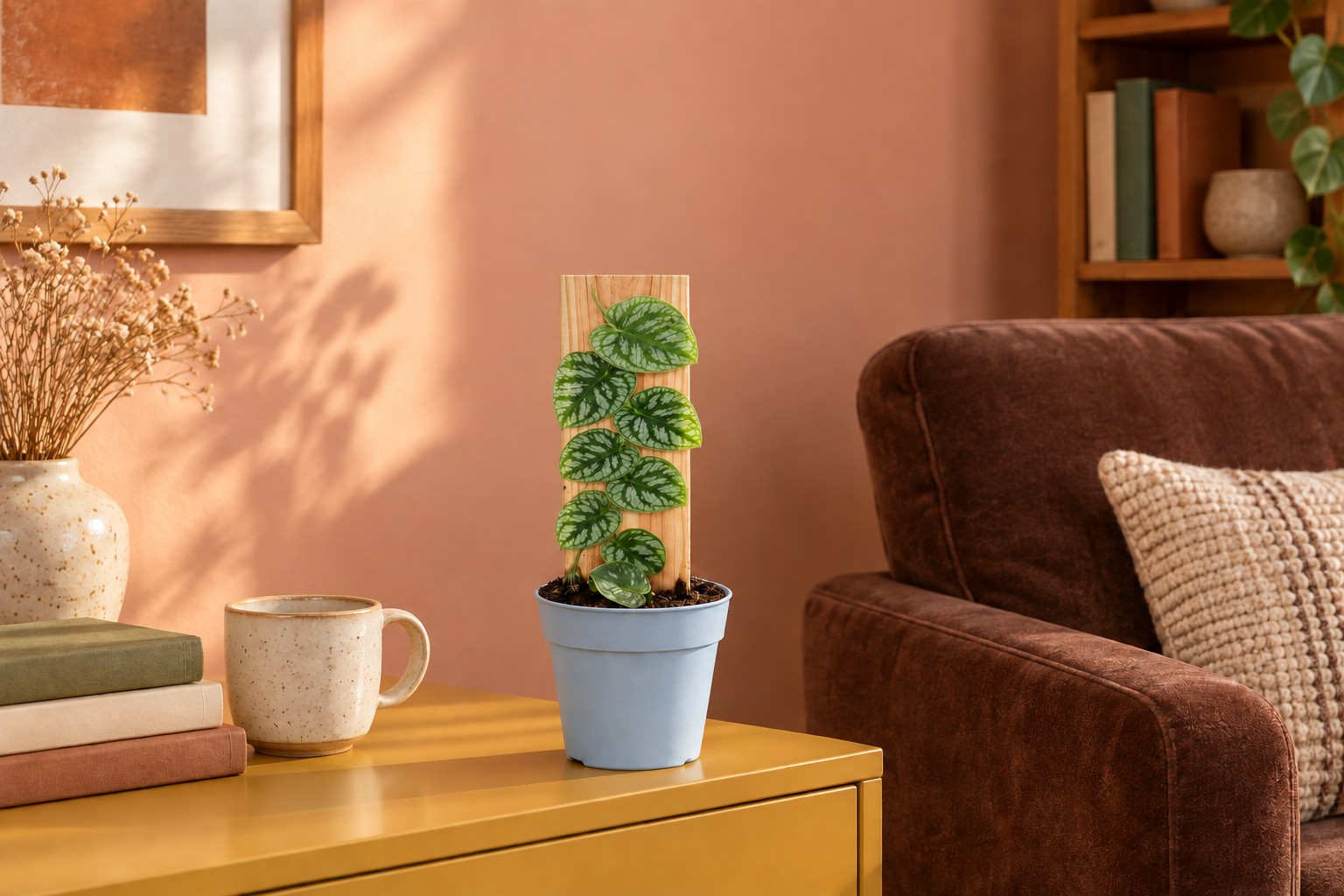
Leaves lie flat like small shingles
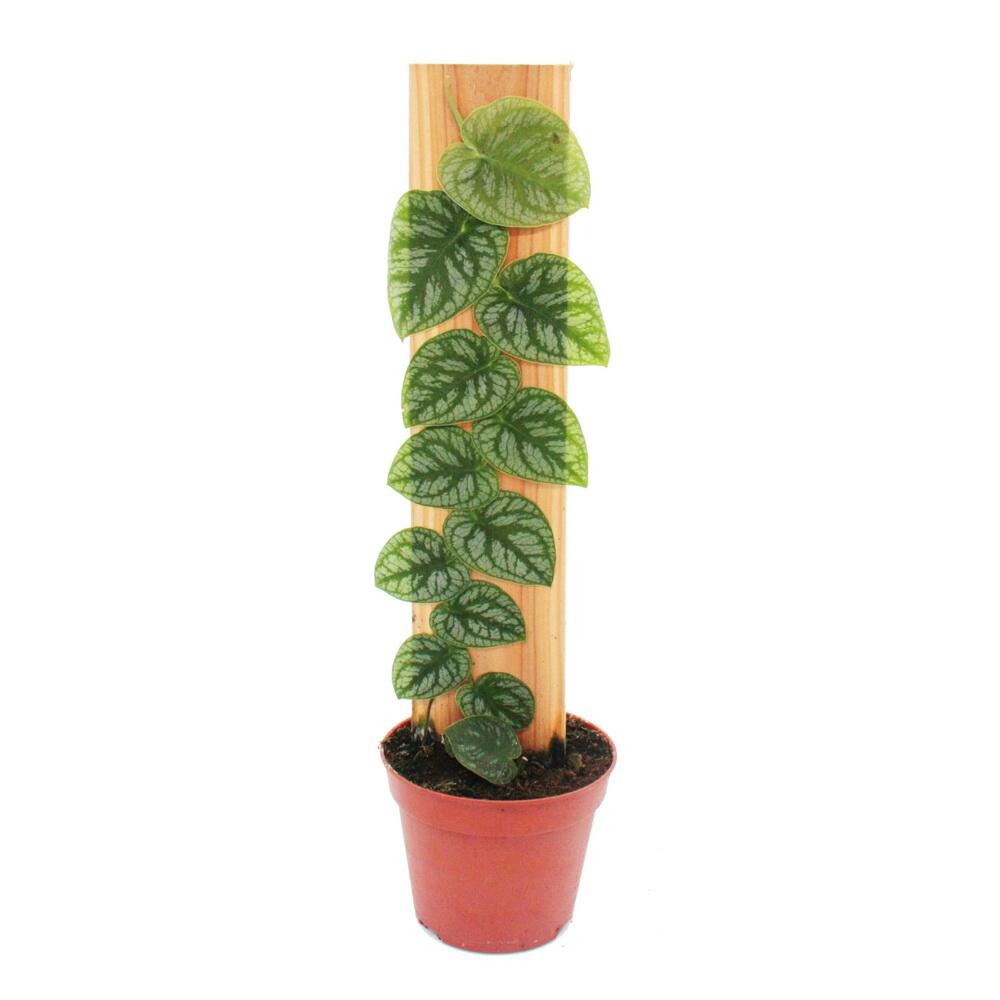
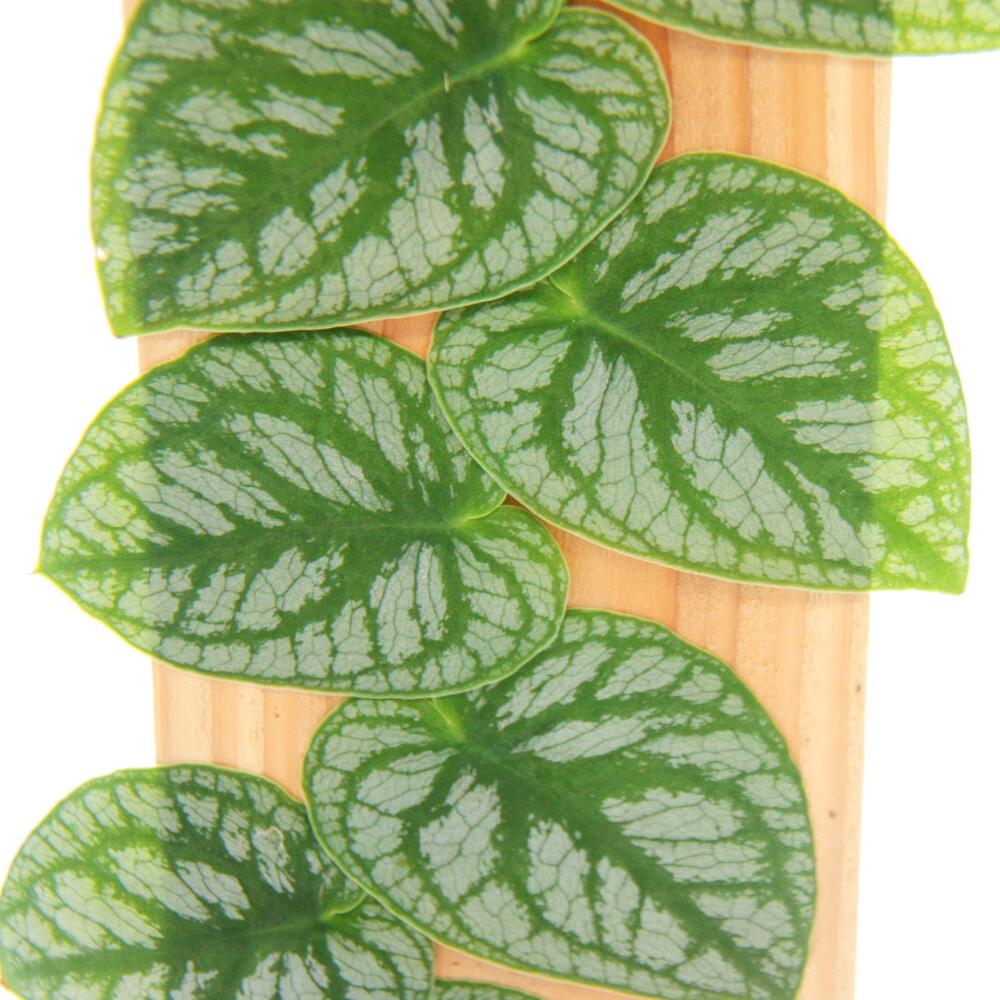
Heart-shaped juvenile leaves show silvery-green surfaces and a darker green vein network. They lie close to their support, creating typical shingling growth. The pattern is striking from the front; from the side the young plant looks very flat. Monstera dubia comes from tropical America; the shop’s Southeast Asia origin is not adopted. The species belongs to the aroid family and uses other structures for climbing without being a parasite.
The board belongs to the young plant’s growth appearance
The offer states a 14 cm pot and approximately 35 to 40 cm total height on a wooden board. The scene shows these young proportions rather than a mature climber metres long. The board provides a climbing surface along which leaves can align. When the stem reaches the top, plan a suitable extension in time. Do not forcibly pull already attached parts from the surface. A stable pot prevents the board tipping with every touch.
Filtered light and sheltered warmth
A bright position with indirect light suits well. Hot direct sun can damage delicate juvenile foliage; lasting darkness slows development. Moderate to higher humidity and steady warmth help cultivation. Avoid dry radiator proximity and cold draughts. A decorative board cannot replace good room conditions. If new stems leave their support, first check direction, support and light rather than pressing leaves onto wood.
Roots in the pot remain the main watering point
Keep the root ball moderately moist during growth and let upper compost dry slightly before the next watering. Then water thoroughly and remove excess. A dry board does not automatically mean the root ball needs water. Constantly soaking wood is no substitute for suitable root supply. In winter with reduced demand, water less often and keep the root ball lightly moist. Limp leaves together with wet compost require root inspection rather than more water.
Repot, feed and clean gently
A loose structurally stable houseplant mix keeps air in the root ball. When roots clearly fill the pot, move into a moderately larger pot while stabilising the climbing surface. Feed sparingly during growth according to the label. Gently support leaves when dusting and do not release young tips from the board. A healthy stem section with a node suits propagation; a single leaf without a viable node does not produce a complete new climbing plant.
The juvenile form is not the whole plant’s life
With increasing maturity, foliage can change considerably and produce larger leaves with openings. The young silvery shingle form therefore need not remain unchanged forever. A specific final size or transition time is not guaranteed. Houseplants rarely flower. Inspect leaf edges and protected bases for scale insects and spider mites without releasing the entire vine. Consider irritating compounds when handling; this portrait makes no air-purification or edible-use promises.
One plant, several views
Good to know
Why do the leaves lie so flat?
This is natural shingling growth during the juvenile phase. The vine hugs a surface.
Do all leaves stay small and silvery?
No. Older plants can develop markedly different larger foliage with openings.
Must I constantly keep the board wet?
No. Suitable root-ball watering and air humidity matter. Wood cannot replace root care.
Does Monstera dubia come from Southeast Asia?
No. The specialist source names tropical America from Mexico to Bolivia and Trinidad.
Sources and editorial note
- Product and delivery contents: Exotenherz
- Royal Horticultural Society: plant and care knowledge
- Royal Horticultural Society: plant and care knowledge
Sources checked: 15 September 2026. Product information and delivery contents follow the linked shop offer. Care has been checked against the stated specialist sources and remains subject to plant condition, position and season.