This plant at Exotenherz
Check the shop offer for current availability, price and what is included.
Product and delivery details are given in the individual offer.
Your care table
| Topic | What to do | Why it helps |
|---|---|---|
| Light | Position near a window in bright indirect light. | Strong new leaf development needs light; hot sun can damage the thin leaf surfaces. |
| Water | Water thoroughly after the root ball has begun to dry appreciably, then let it drain. | Roots need air and do not tolerate a constantly wet outer pot. |
| Compost | Use a loose well-draining mix and free drainage. | A functioning root ball should retain moisture without remaining compacted and wet for long. |
| Climbing support | Provide a stable support and tie main shoots loosely. | Weight is carried by the shoot; leaf stalks are not attachment points for tight pulling. |
| Warmth | Grow warm throughout the year at about 18–25 °C without cold draughts. | Cold wet conditions stress tropical climbing growth and roots. |
| Nutrients | During active growth, feed moderately according to the houseplant fertiliser label. | New leaves need nutrients, but additional fertiliser does not replace light. |
| Pruning | If necessary, cut the shoot in spring with clean tools. | Cuttings need a node; a severed leaf stalk alone is not a complete plant. |
| Checking | Regularly inspect leaf undersides, stem nodes and the root ball. | Pests or wetness damage can then be recognised before greater leaf loss. |
Check the compost and pot weight. The care table explains how far the compost may dry.
Water only when needed. The water should reach the root ball without spilling over the rim.
Remove surplus water from the saucer or cachepot. Then return the plant to a suitable position.
Large windows leave a fine green network
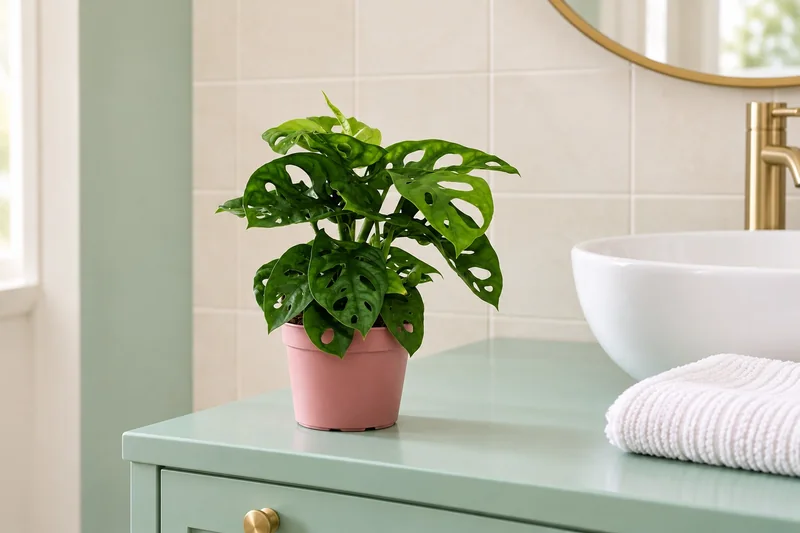
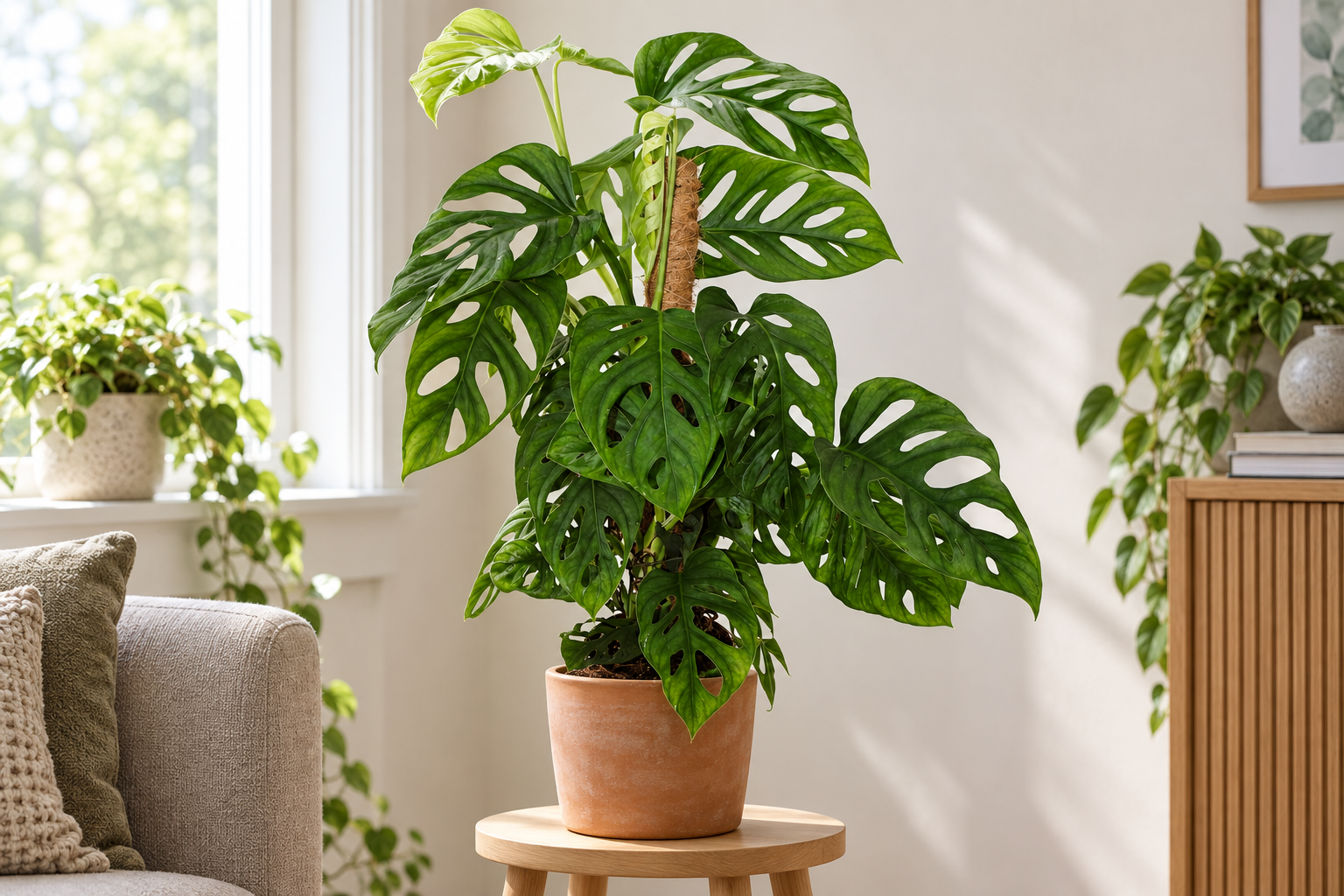
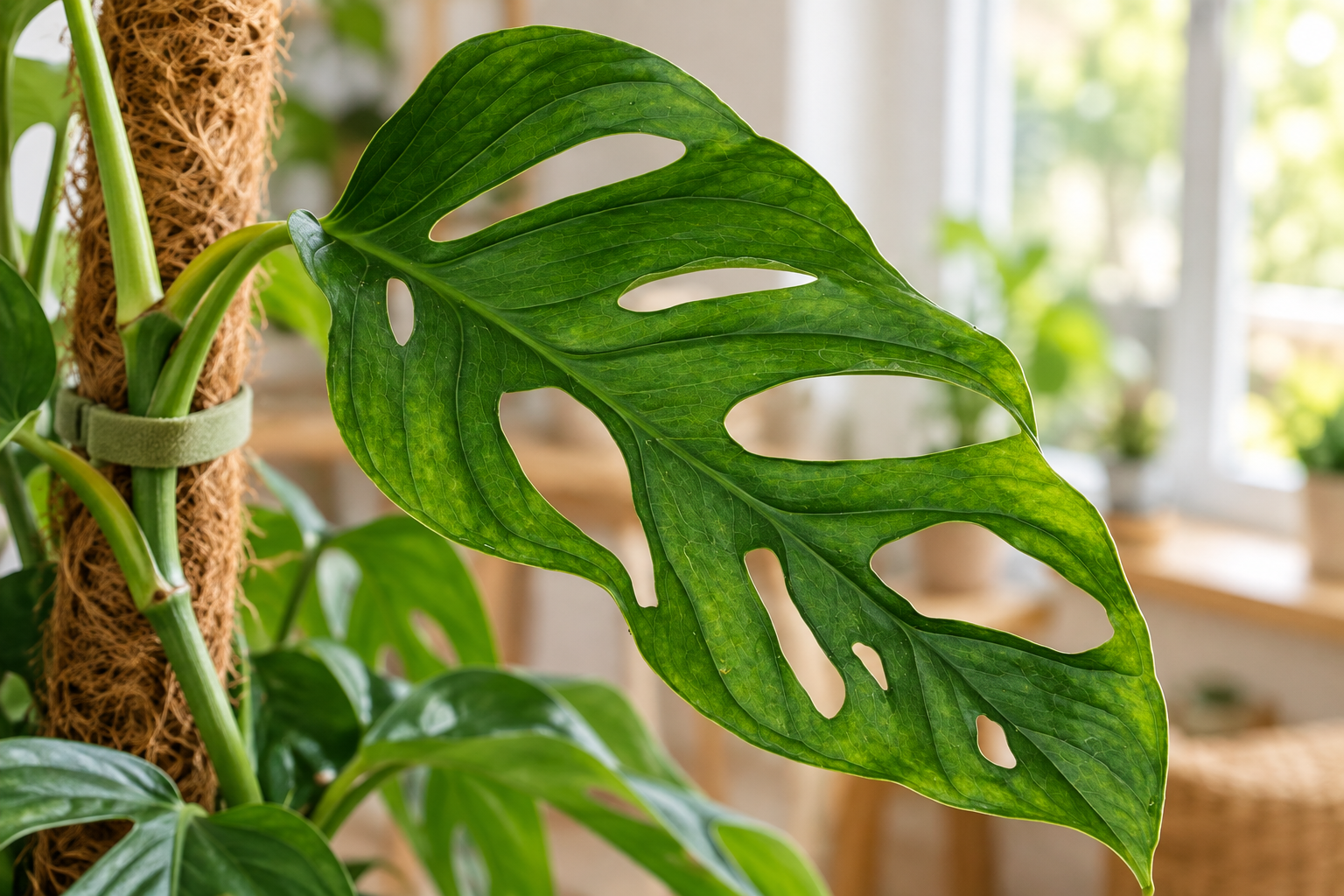
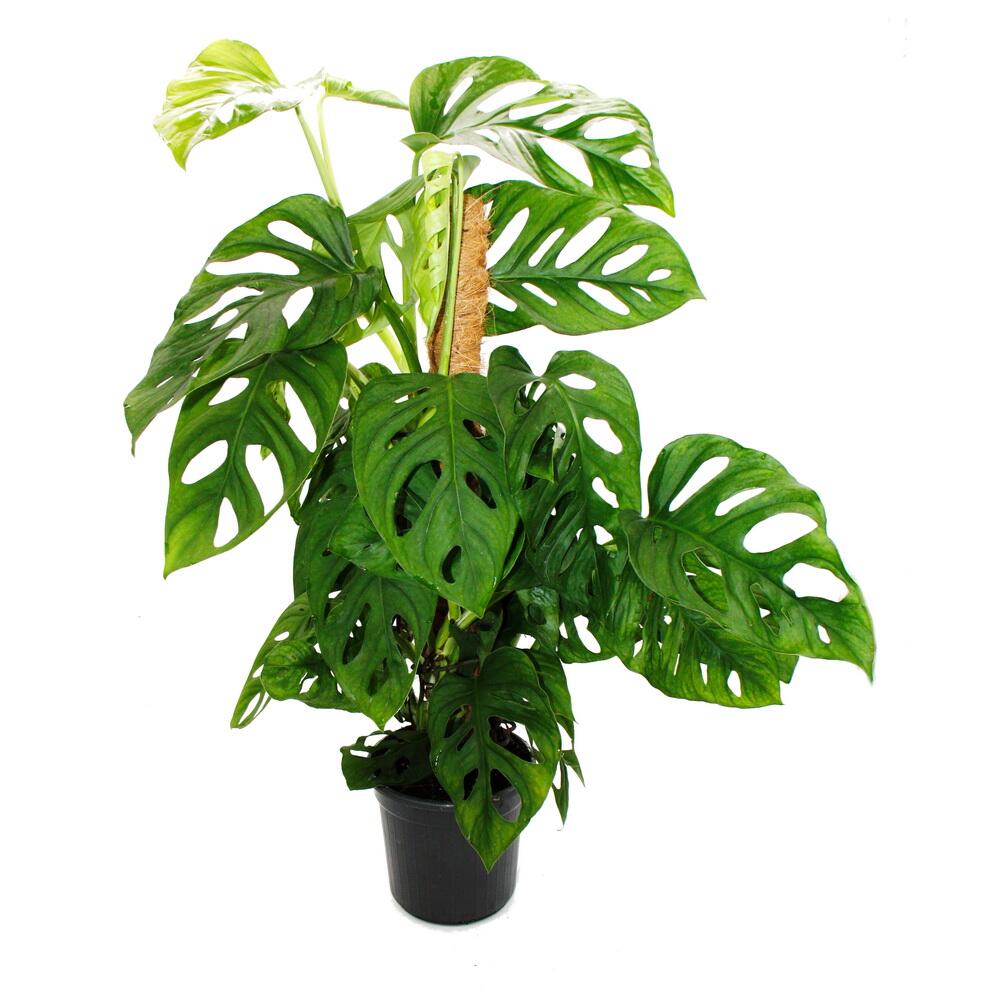
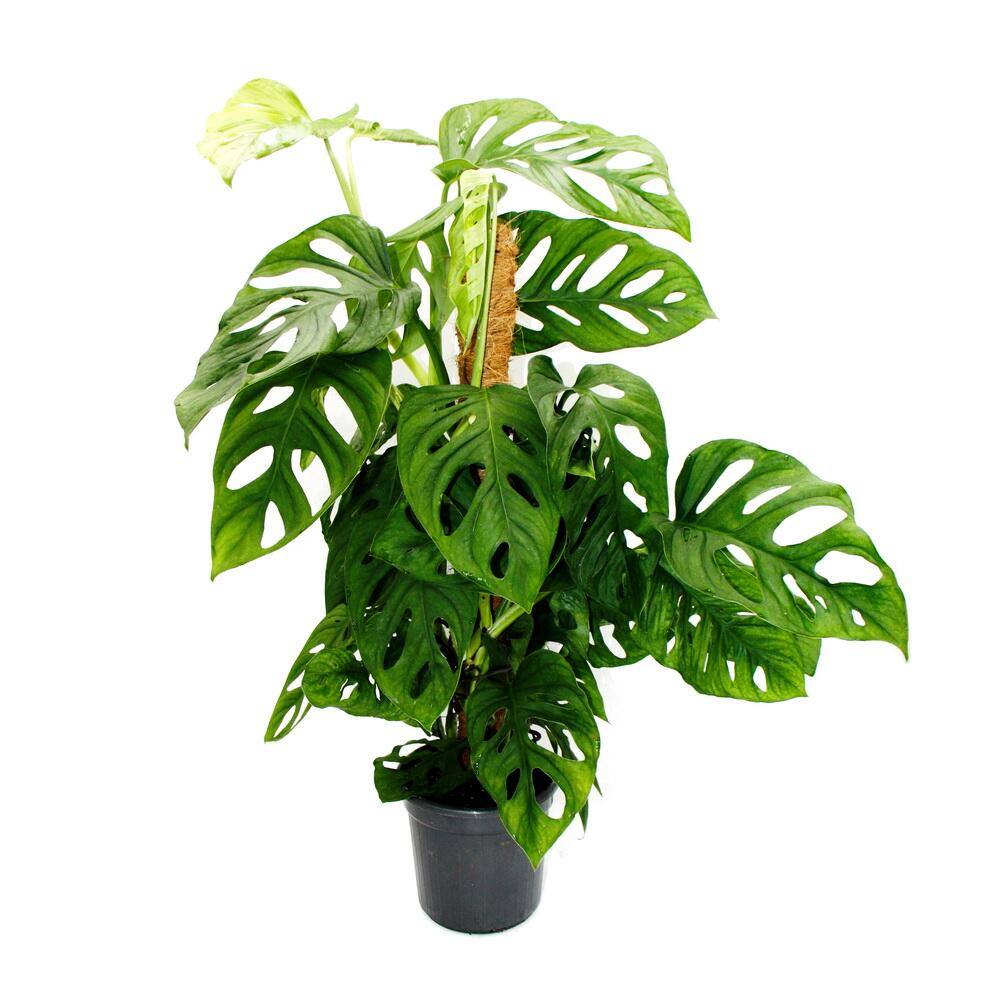
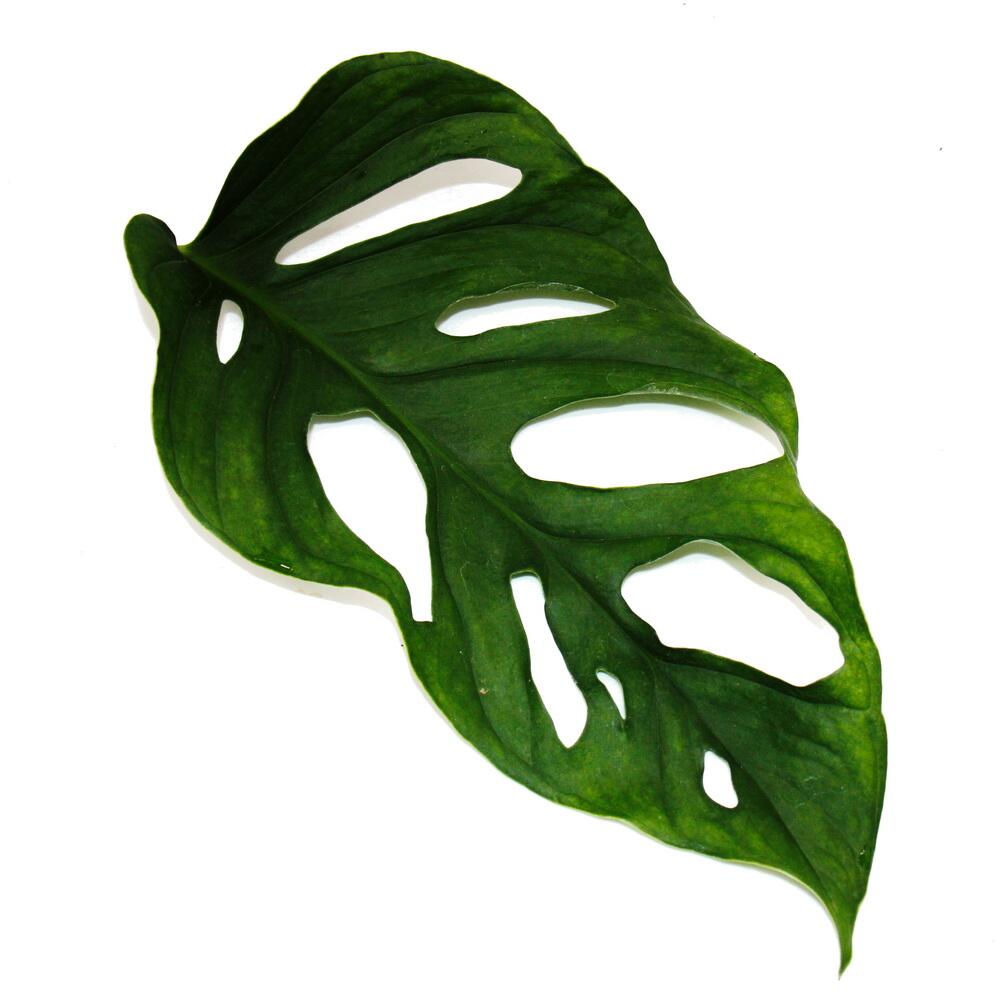
Escaletto draws the eye through its leaves. Large and smaller inner openings sit beside each other on the pointed elongated oval surfaces. Green strips and a strong network of veins remain between them. The leaf outline is often still closed; the striking windows lie inside. The own original already shows this structure in a young plant with several leaves on a support. Depending on the viewing direction, open areas overlap so light and background become part of the leaf appearance. A quiet background shows the structure well. The openings are a natural feature, not holes that must have been eaten by a pest. Damaged brown edges or new irregular feeding marks are of course checked nonetheless. Do not grasp delicate leaf areas as a handle when moving: the narrow remaining surfaces bend more easily than a closed thick leaf blade.
A selected Monstera with a climbing structure
This portrait describes the specific Monstera Escaletto offered in the shop as a horticultural commercial selection. The genus Monstera belongs to the arum family and comes from tropical America. Its climbing growth explains the support already carried by the offer. The own offer states a 16 cm pot and approximately 80 cm total height. This size refers to the offered plant, not eventual mature height or the length of each leaf. New shoots can climb further with time, and leaf shape changes with development and cultivation. Allow space above the young tip and stand the pot securely. A narrow shelving gap with a low ceiling is less practical for the next growth than a free bright corner near the window. The plant is introduced by its specific commercial name without deriving an additional wild species or undocumented particular cultivar ancestry from it.
Brightness and warmth for the next leaf development
A bright position with indirect light is the most reliable foundation. Near an east- or west-facing window there is often more plant light than several metres further into the room. Suddenly hot midday sun behind glass can nevertheless damage the thin open leaf surfaces. After transport, gently acclimatise the plant to its new place and avoid cold draughts or a direct stream of heating air. Warm cultivation around 18 to 25 degrees suits tropical climbing growth. In very little light, new growth can weaken; extra feeding does not force healthy large leaf windows. Nor can a particular number of holes per new leaf be ordered. Development depends on age, light, roots and support together. Observe a new leaf after it has fully unfurled and hardened rather than pulling open a still-rolled tip or measuring it too early against a desired pattern.
Let the root ball dry slightly rather than fill the outer pot
Check the root ball before each watering. The surface and pot weight together show whether sufficient moisture remains better than a fixed weekday. After appreciable initial drying, water thoroughly and let all excess water drain. Afterwards empty the saucer or take the nursery pot out of a closed outer pot for watering. A constantly wet root ball can cause root damage even though the large leaves seem to need more water. Water the soil rather than only the climbing support. A suitable dampened moss support can give aerial roots a hold, but does not replace checking the soil roots. With less winter light, water is often used more slowly; intervals change accordingly. Soft dark patches and yellow leaves first call for inspection of the root zone. A dry old leaf edge does not become undamaged after watering, even when subsequent care fits well.
Airy substrate and a load-bearing climbing support
A loose well-draining mix provides the root ball with moisture and air. Coarse structurally stable components in a suitable houseplant mix help prevent the soil becoming a permanently wet compact block. Free drainage remains important. If the pot is well rooted or the structure becomes top-heavy, repot into a suitably larger container in spring. A much larger soil reserve remains unrooted and moist for a long time. Check the support too: it should stand firmly and not pull the stem sideways when the pot is moved. Tie the main shoots loosely and check ties as stems thicken. Leaf stalks should remain mobile and are not tightly constricted. Aerial roots may orient themselves towards a suitable support. A dense wooden or coir-based support mainly provides a hold; it does not have to be maintained as a constantly wet water reservoir. Nutrients are added moderately during visible growth according to the fertiliser label.
Keep leaves clean and choose useful cutting points
Dust on leaf surfaces can be carefully removed with a soft slightly damp cloth. Support the leaf underneath a stronger vein and do not wipe with pressure over a narrow bridge between two windows. Constant spraying is not a requirement for suitable room air and does not automatically make a dry heating position appropriate. A bright warm place away from drying heat and without permanently wet leaves matters more. If a shoot later becomes too long, targeted pruning in spring can limit its structure. Work with gloves and clean tools; arum family plants are not for consumption and can irritate on contact. Propagation requires a healthy shoot segment with at least one node. A single attractive leaf on its stalk does not automatically have the necessary stem node. After pruning, new leaves may initially be smaller until the plant develops a load-bearing climbing structure again.
Observe new leaves and distinguish stress signs
A well-supplied Escaletto unfurls new leaves at the shoot tip. Give them time to open; young tissue is initially softer and more sensitive than a hardened leaf. If a new section is conspicuously weak, check brightness, root space and support rather than immediately applying different products. Brown dry edges after hot sun have a different background from soft dark patches in very wet soil. Regularly look at leaf undersides and node angles. Sticky deposits, cottony nests or fine webs deserve closer inspection and separation from other plants if necessary. In winter, the pot stays bright and warm; less growth often means less water and fewer nutrients. Plan a position where doors, curtains or playing hands will not strike the large perforated leaves. Out of reach of small children and nibbling animals, the lively green leaf network can keep growing undisturbed.
One plant, several views
Good to know
What does the name Escaletto describe?
It is the specific commercial name of the Monstera offer linked here with large and small inner leaf windows.
Are the holes damage?
The inner leaf windows are part of its appearance. New brown damage, conspicuous deposits or actual feeding marks are checked separately.
Is 80 cm its final size?
No. The offer states approx. 80 cm total height on a support. New shoots can continue growing beyond it.
Must the climbing support be constantly wet?
No. The support initially provides a hold. The root ball needs its own watering check according to demand and must not remain permanently wet.
Can I propagate a single leaf?
A suitable shoot segment needs a node. A leaf stalk alone is not a reliable basis for a complete new climbing plant.
How do I prevent weak new growth?
Check bright indirect light, healthy roots and a load-bearing support. More fertiliser does not compensate for low light or wetness damage.
Sources and editorial note
- Exotenherz: complete own offer and unchanged original gallery
- RHS: complete Monstera growing guide
- Danziger: Foliage Plants 2026/27, Monstera form comparison on page55
Sources compared: 4 October 2026. The complete own shop offer and clean original gallery were read and viewed. Offer measurements describe the young plant offered and are not its eventual mature size.