This plant at Exotenherz
Check the shop offer for current availability, price and what is included.
Check the selected shop offer for price, availability and delivery contents.
Your care table
| Topic | What to do | Why it helps |
|---|---|---|
| Light | Choose a bright indoor position with indirect daylight. | Leaves growing below pot need light too. |
| Water | Let upper soil dry somewhat and check rootball. | Moist roots need air at same time. |
| Hanging pot | Take down for watering and check saucer. | Hidden remaining water can then be removed. |
| Soil | Use loose, freely draining houseplant mix. | Compacted constantly wet soil does not suit roots. |
| Warmth | Keep warm throughout year without cold draughts. | Tropical climber has no cold dry dormancy. |
| Feed | Feed moderately by label during visible growth. | Fertiliser cannot replace daylight. |
| Shoots | Allow to trail or guide loosely on support. | Climbing conditions affect later leaf form. |
| Pruning | Work selectively with clean tools and gloves. | Sap can irritate; nodes matter for cuttings. |
Check the compost and pot weight. The care table explains how far the compost may dry.
Water only when needed. The water should reach the root ball without spilling over the rim.
Remove surplus water from the saucer or cachepot. Then return the plant to a suitable position.
Silver lies between green veins
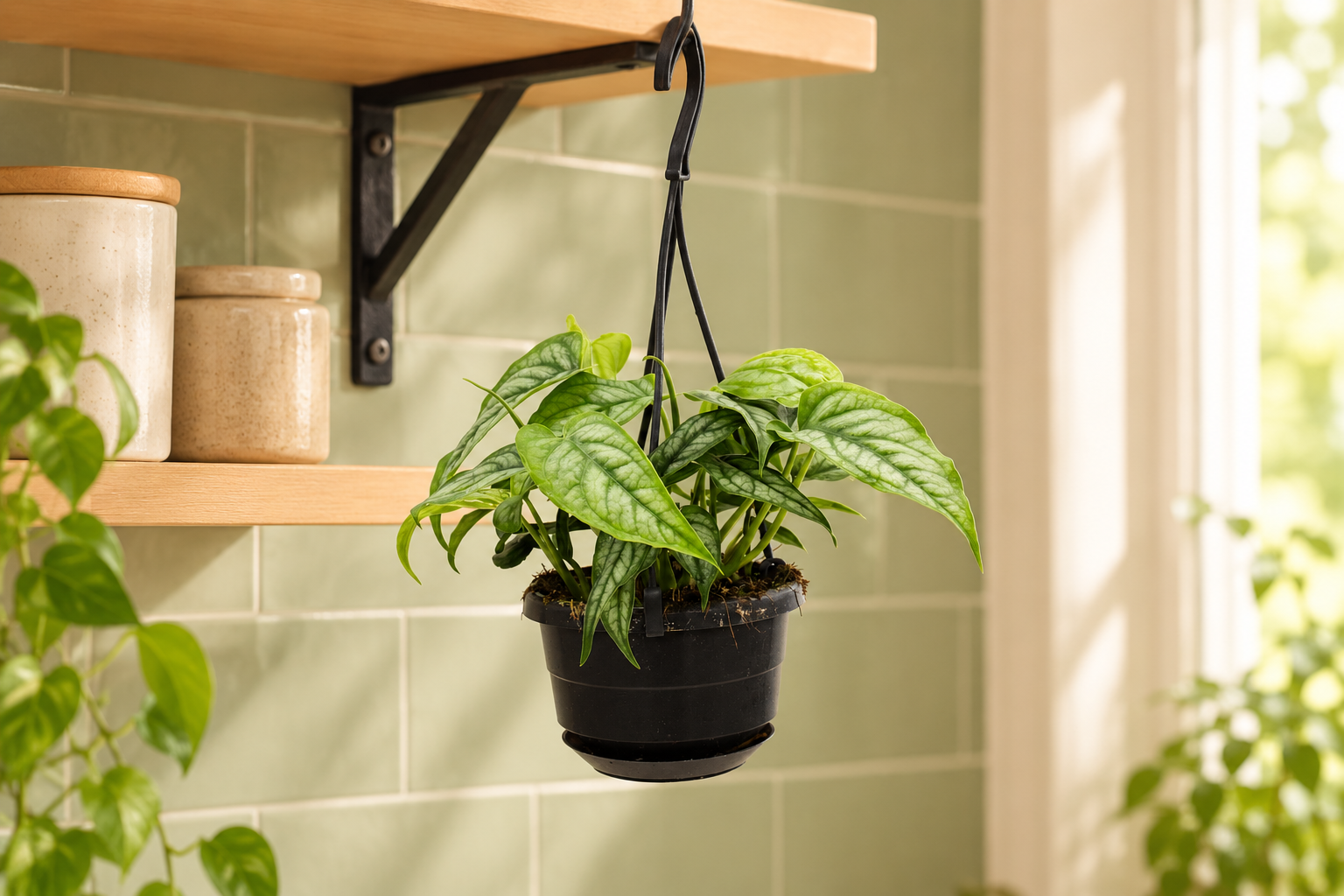
Young Monstera siltepecana shows a leaf pattern especially attractive at close range. In clean original, silver-green areas lie between darker midrib and finely branched side veins. Elongated pointed leaves have slightly wavy surfaces and remain fully closed. Small new leaves can initially appear lighter green. Compact structure above hanging-pot rim belongs to young stage. We therefore show neither metre-long vines nor large perforated adult leaves as delivery plant. Looking beneath also reveals thin stems and actual attachment of each leaf.
A small hanging pot begins a climbing plant
Species belongs to aroid family and comes from humid tropical Mexico and Central America. Botanical name is Monstera siltepecana. Offer describes a 12 cm mini hanging pot and about 15 cm total height, not a specified length for every shoot or fixed eventual size. In nature plant uses other plants as climbing support. Indoors shoots can trail or rise on suitable support. Small pot initially needs free space around crown. Support pot and check hanger when unpacking; delicate stems are not handles.
Hanging position and leaf development belong together
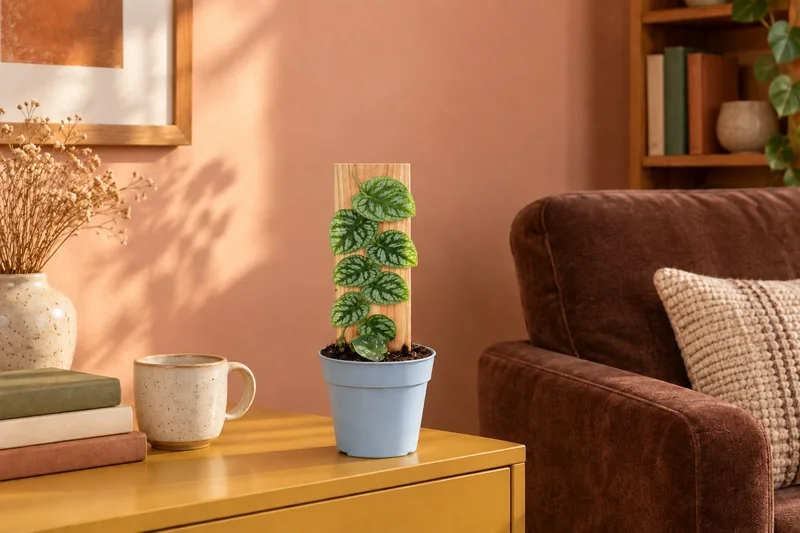
As trailing plant siltepecana may retain silver juvenile pattern for long time. Strong shoot with climbing support and appropriate conditions may later develop larger greener leaves with openings. Individuals vary in pace, so no particular leaf size or first-hole date is promised. Decide by space and desired habit: compact hanging plant visible from several sides, or support guiding later growth upward. Fasten shoots loosely without trapping leaf stalks. New soft leaves should unfold themselves; pulling with fingers may damage them.
Daylight must reach above the shelf
Choose bright warm position with mainly indirect daylight. Hanging pot can sit beside light source but should not vanish in dark corner well above window. Kitchen shelf may work away from cooker heat, grease mist and cold draughts. After relocation initially protect from hot sun through glass. Leaves later growing below pot also need light rather than hiding behind tall cupboard. Somewhat higher air humidity suits tropical culture, but this makes neither constantly wet leaves nor windowless room appropriate.
Take down, check, water and rehang
Take hanging pot down for moisture checks and watering. Assess upper soil and remaining rootball moisture; after light drying water evenly as needed. Allow water to drain fully and inspect small saucer. Foliage should not live above unseen supply keeping roots permanently wet. Loose draining houseplant mix aids air exchange. Slower winter growth usually needs less water, but roots should not dry out completely. Rehang only once drips cannot fall on furniture or paths and hanger is securely attached.
New shoots need feed and suitable root space
Visible growth is good reason to consider nutrients. Use suitable liquid fertiliser sparingly by label while accounting for compost pre-feeding. Weak winter shoot first needs light and warmth checked. Densely rooted ball merits slightly larger pot with clear drainage holes. For climbing change install support then, avoiding later blind pressure among roots. Overlong shoots can be shortened selectively. Healthy stem section with node suits propagation attempts; loose decorative leaf cannot replace living shoot section.
Separate natural silver from new damage
Silver-green pattern belongs to juvenile leaves. New pale pinpoints, fine webs or sticky areas instead call for checking undersides and stem bases. Scale insects, mealybugs and spider mites can hide there. With many yellow leaves evaluate moisture, roots and position together: both dryness and over-wet roots may cause trouble. Remove dust gently with soft damp cloth. Irritating calcium oxalate crystals mean plant is unsuitable for eating. Keep away from chewing children and pets and avoid sap contact when pruning. Attractive pattern stays easy to observe.
One plant, several views
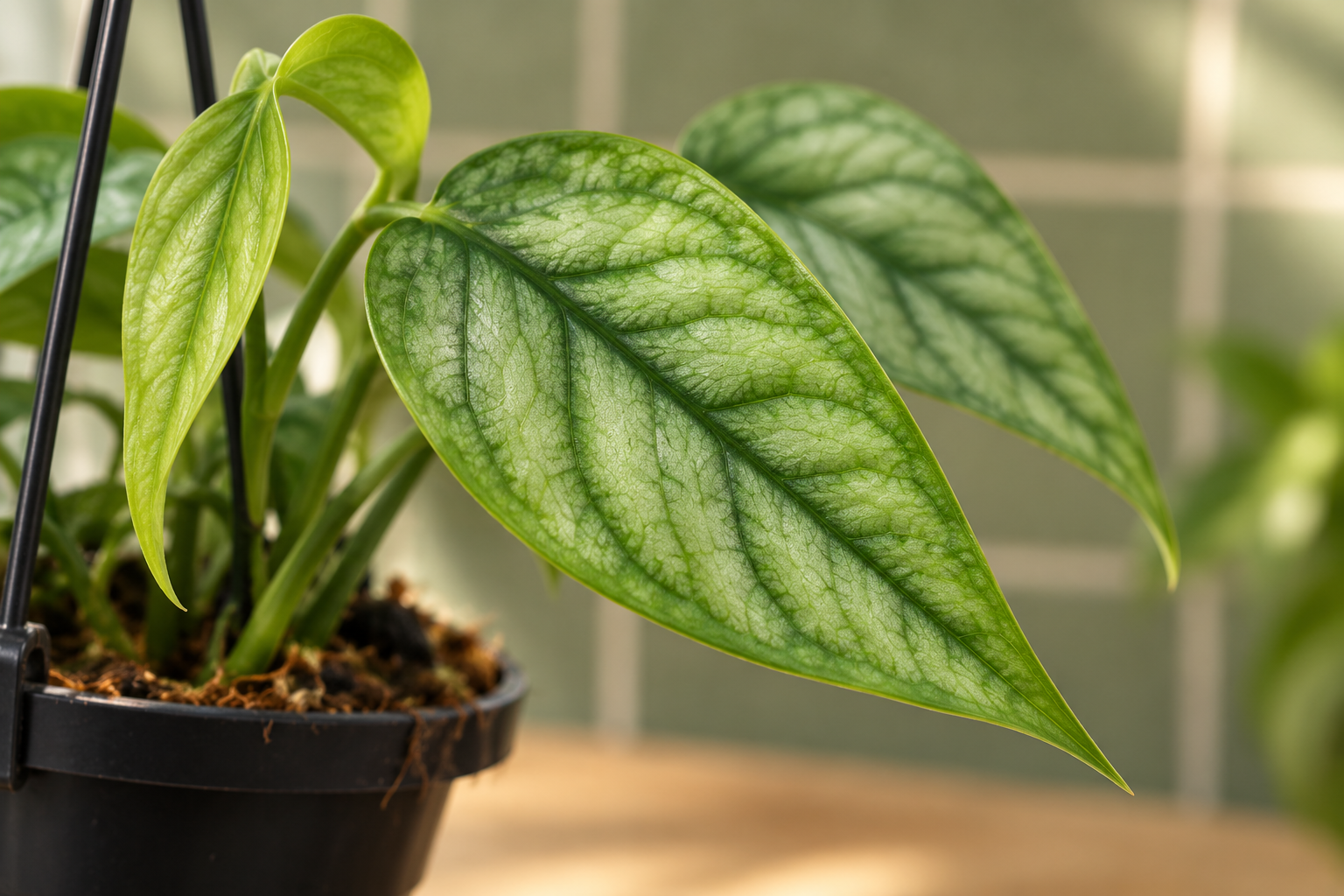
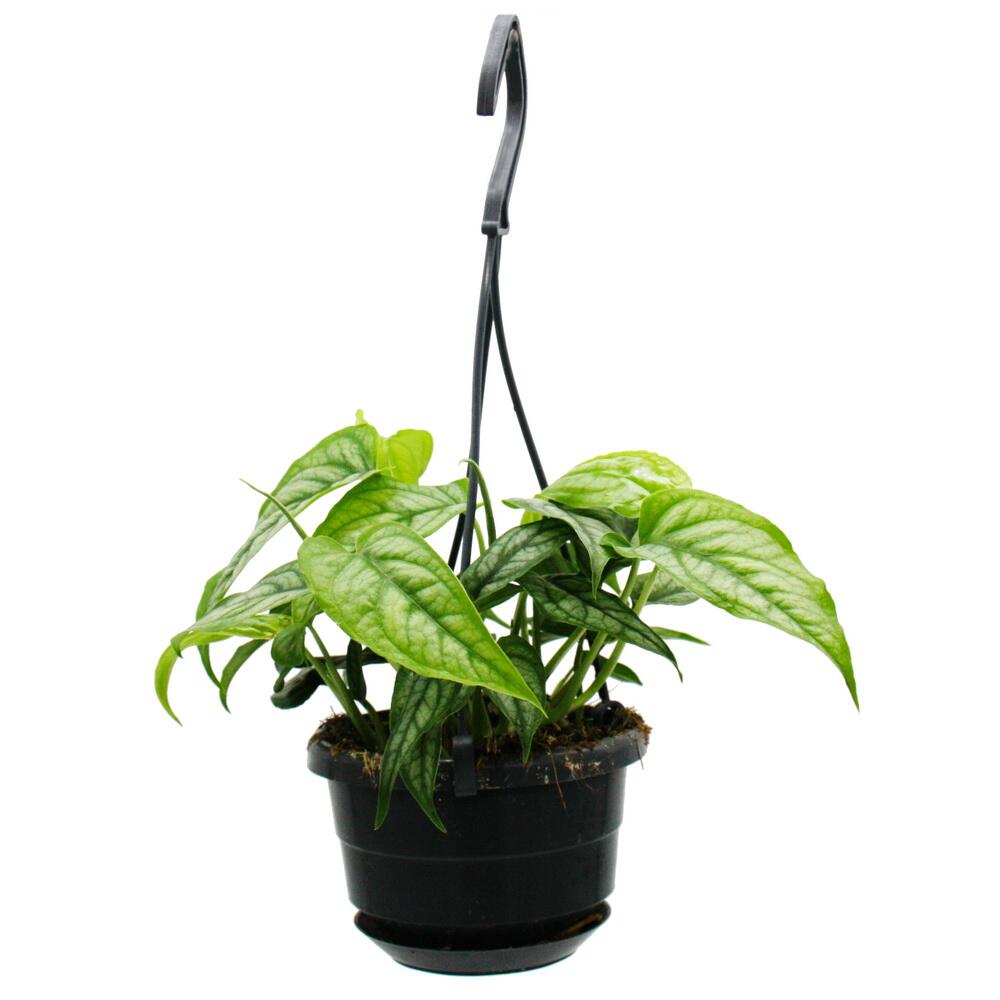
Good to know
Why does my siltepecana have no leaf holes?
Closed silver juvenile leaves are normal. Larger greener leaves with openings may develop with appropriate maturity and climbing culture.
Are silver areas pest damage?
Regular juvenile pattern between dark veins belongs to plant. New speckles, webs or sticky deposits need separate checks.
How large is offered hanging plant?
Shop describes 12 cm mini hanging pot and about 15 cm total height. This guarantees no metre-long shoots.
Must it have a moss pole?
It may grow hanging. Suitable support is an option for strong shoots to climb and accompany further leaf development.
Can one leaf grow a new plant?
Use healthy stem section with node. Leaf alone cannot replace necessary living shoot section.
Does it suit a household with chewing pets?
Keep out of reach. Irritating constituents mean plant parts are not suitable for eating.
Sources and editorial note
- Exotenherz: directly checked offer and delivery dimensions (03.10.2026)
- Kew POWO: accepted species and distribution (03.10.2026)
- RHS: whole species profile and indoor culture (03.10.2026)
- NC State Extension: juvenile/adult foliage, water and household guidance (03.10.2026)
Product and specialist sources read directly on 03.10.2026. Current own shop HTML evidence with identifiers, availability and basket retained; older search copies may differ. Sources, original and AI images assessed separately. Website and publication acceptance coordinated centrally.