This plant at Exotenherz
Check the shop offer for current availability, price and what is included.
Check the selected shop offer for price, availability and delivery contents.
Your care table
| Topic | What to do | Why it helps |
|---|---|---|
| Light | Choose sun or light partial shade giving foliage adequate light. | Late variety must not disappear early beneath dense neighbouring foliage. |
| Soil | Prepare humus-rich moderately fertile soil with good drainage. | Fresh growing conditions must not become waterlogging. |
| Planting time | Plant promptly if possible in autumn while soil is workable. | Roots should develop before flowering year. |
| Depth | About three actual bulb heights as guidance for permanent planting. | Commercial grade and actual height are different dimensions. |
| Spacing | At least two bulb widths; loose groups about 10–15 cm apart. | Offsets gain room for later development. |
| Water | Check during prolonged dryness with green foliage and water additionally. | Flowering containers dry faster than established beds. |
| Feed | Supply by need and label during sprouting. | Nutrients should accompany living leaf phase. |
| Foliage | Only cut or mow after natural yellowing. | Early leaf removal weakens bulb supply. |
| Handling | Wear gloves and keep bulbs separate from food. | Daffodils are harmful if eaten and can irritate skin. |
For young plants, feel the soil directly at the root ball. The surface and deeper soil may have different moisture levels.
Water thoroughly after planting; later, water according to the soil, weather and establishment rather than a fixed calendar.
Avoid standing water. For plants in containers, also check that water runs out of the drainage hole.
A little crown holds attention
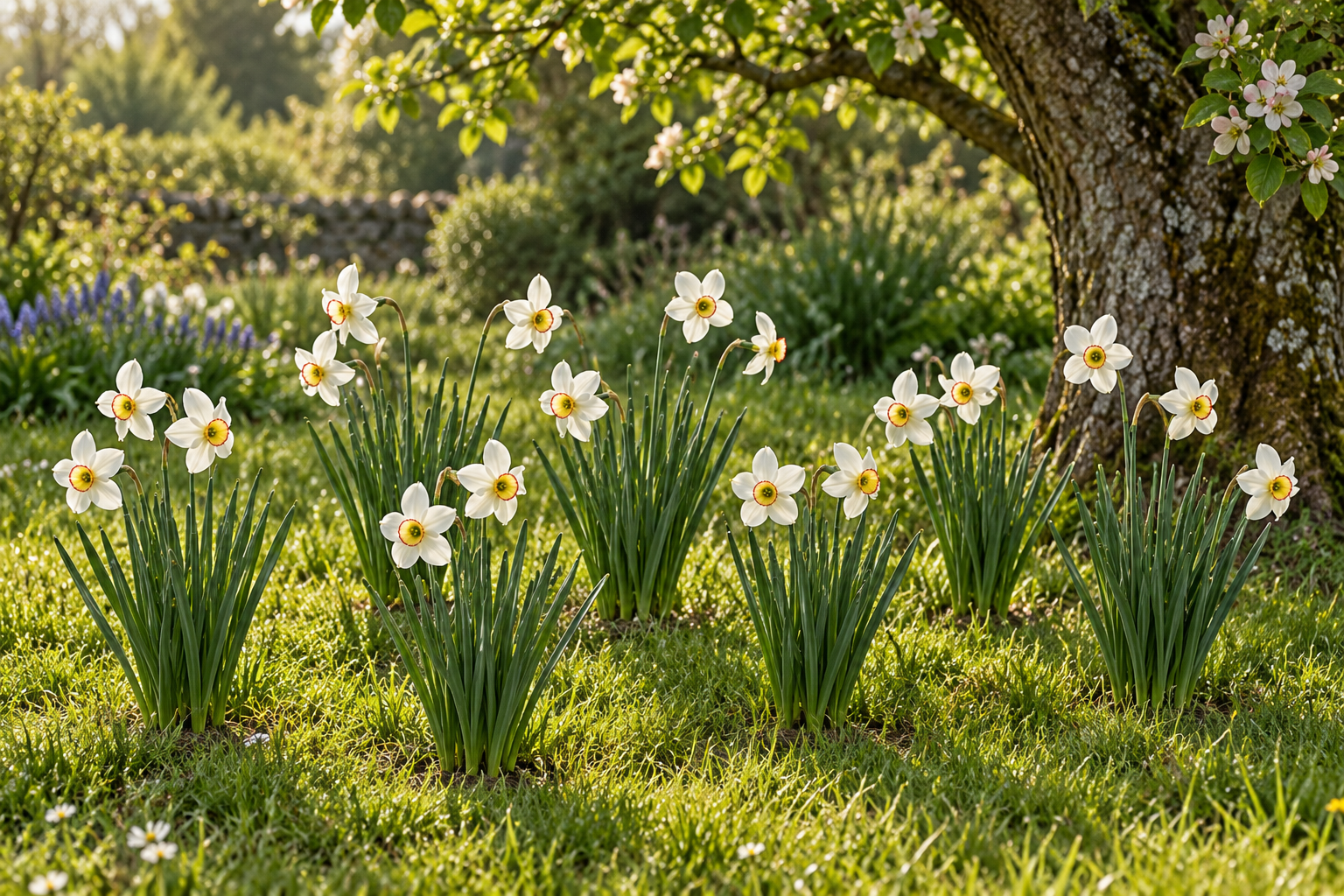
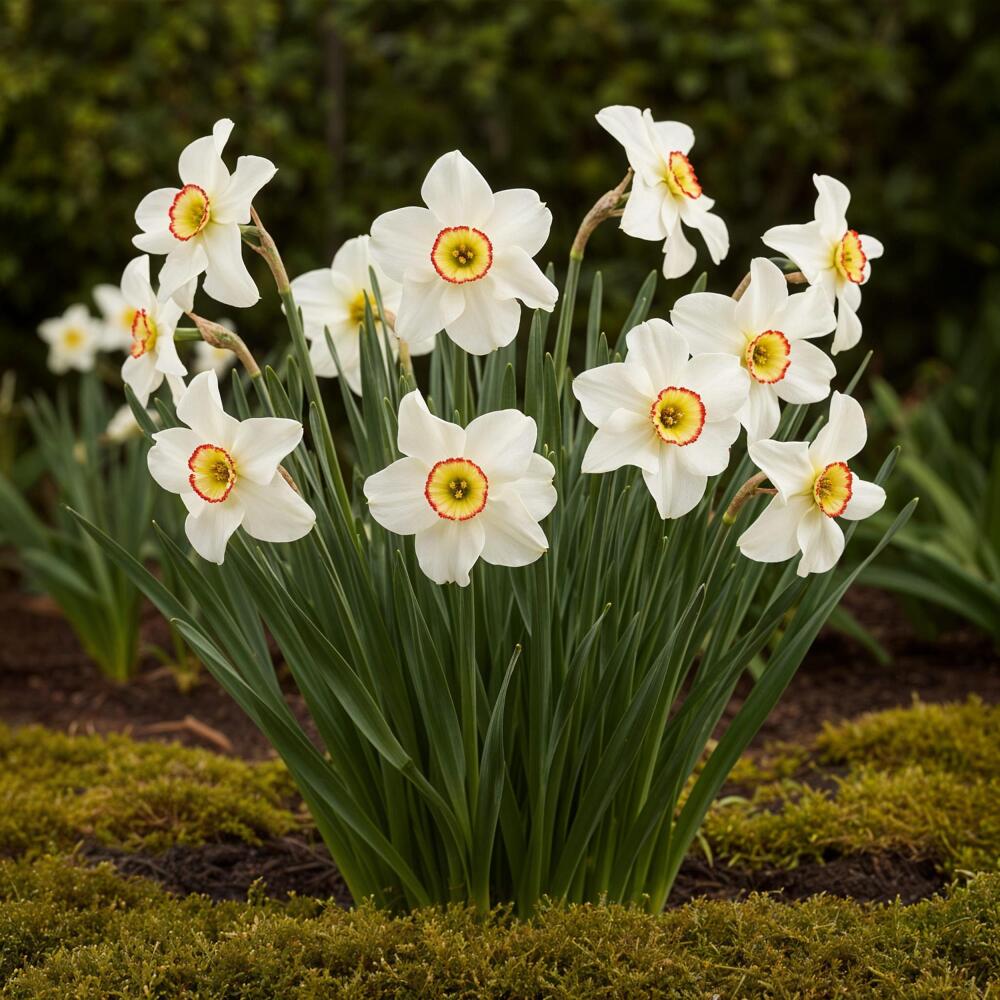
Six white outer petals surround remarkably small centre in Recurvus. Flat yellow crown has narrow red rim with green eye inside. Slightly curved-back petals animate white surface without creating double flower. Delicate scent and late flowering suit garden path you often pass in spring. Narrow grooved grey-green leaves rise from ground. Developed flowering stem usually carries individual flower rather than large cluster of trumpets.
Recurvus has a long garden history
Poet’s daffodil belongs to Amaryllidaceae. Older garden trade often uses Narcissus poeticus var. recurvus. RHS cultivar register now names long-cultivated garden plant Narcissus poeticus ‘Recurvus’. Both spellings help find same familiar garden form. Current offer contains ten planting bulbs. Clean shop view shows grown flowering group. Flowering potted plant or fixed delivery height is not included; about 35–40 cm describes later flowering growth in suitable place.
Late flowering determines position
Recurvus opens in later spring, often April to May towards end of daffodil season. Plan position not covered by large perennial leaves before it blooms. Sun or light partial shade work when leaves receive sufficient light. Humus-rich moderately fertile soil can stay fresh during growth but must drain excess. Light lawn edge is possible if you mow there much later. Set group beside mown area instead of path needing constant clearance in May.
Plant bulbs in autumn with tips upward
Plant early in autumn where possible while soil remains workable. Check firmness and unusually soft or mouldy patches. Grade 12/14 is commercial circumference size, not measured bulb width. About three actual bulb heights provides practical depth guidance for permanent garden planting; account for packaging and soil. At least two real bulb widths apart, about 10–15 cm in loose groups, leaves later room for offsets. Watering dry soil helps settle it around bulbs. Wear gloves and keep daffodil bulbs separate from food.
Water and nutrients accompany living foliage
Spring rainfall often suffices in established beds. After prolonged dry weather check soil and water root area while leaves are green. Containers require more frequent checks. Consistently fresh leaf-growing conditions suit better than repeated drying followed by flooding. Feed as needed with suitable product by label, especially in limited container space. Start during sprouting and end additional supply when leaves die back. Stronger feed merely for one missing flower overlooks possible early leaf cutting, shade or crowded group.
After flowers the bed stays green a while
Remove spent heads if seed formation is unwanted and retain foliage. Narrow leaves should not be tied or prematurely cut. They need light to supply bulbs for next season. Resume mowing lawn planting only after natural yellowing. This often takes several weeks after flowering; visible leaf ripening is more reliable than fixed date. Small marker stone recalls planting spot after dieback so group is not accidentally dug up or overplanted in summer.
White group may gradually grow larger
Recurvus is perennial daffodil and may form offsets over time. If group crowds and flowers decline, divide gently after foliage dies back and replant strong bulbs with enough space. New bed likewise needs light and reliable drainage. Container plans include protection from constant winter wetness and entirely frozen small root area. Unusual spots, distortions or soft bulbs merit closer checks instead of treating every flowerless year as normal rhythm. Daffodils are harmful if eaten and can irritate skin; ornamental plants belong beyond chewing pets.
One plant, several views

Good to know
Is Recurvus an early miniature daffodil?
No. Around 35–40 cm and late spring flowering are appropriate garden guidance.
What is delivered?
Ten bulbs for planting. Flowering group in images shows later development.
Why might packaging say var. recurvus?
Older garden and trade spelling. RHS register now names long-cultivated garden plant Narcissus poeticus ‘Recurvus’.
Can leaves be tied after flowering?
Better leave loose. They need light to supply bulb and should only be removed after natural yellowing.
Can variety grow in lawn?
Yes, in suitable bright position. Mow spot only after daffodil leaves naturally turn yellow.
Is daffodil edible or suited to chewing animals?
No. Daffodils are harmful if eaten and can irritate skin. Store bulbs separately from food and use gloves.
Sources and editorial note
- Exotenherz: current bulb offer and original gallery (03.10.2026)
- Directly read specialist reference: recurvus register (03.10.2026)
- Directly read specialist reference: recurvus RHS (03.10.2026)
- Directly read specialist reference: recurvus grower (03.10.2026)
- Directly read specialist reference: daffodil growing (03.10.2026)
Identity and product SKU checked against Canon742 and shared/isolated portraits. Current public bulb offer and whole sources read directly 03.10.2026; exact URL and file hashes isolated. Dormant bulbs distinguished from later growth; grade not used as diameter. Sets and colours not additional identities. No publication approval at that historical stage: Root coordinates shared page build and acceptance.