This plant at Exotenherz
Check the shop offer for current availability, price and what is included.
Product and delivery details are given in the individual offer.
Your care table
| Topic | What to do | Why it helps |
|---|---|---|
| Position choice | Keep in a safe bright place away from everyday reaching paths. | White tufts look soft but can release fine barbed bristles. |
| Light | Very bright to sunny; slowly increase stronger sun after shipping and winter. | New flat pads need enough light for firm structure. |
| Water | Let the ball dry between supplies; water evenly during growth and ensure free drainage. | Storage pads tolerate dry intervals; persistent root wetness encourages damage. |
| Compost | Use freely draining granular cactus compost and a pot with drainage hole. | A permanently moist heavy ball does not suit drier cultivation. |
| Handling | Work by container or ball; use suitable bristle protection and do not stroke pads. | Small glochids detach easily and also adhere to working materials. |
| Fertiliser | Feed sparingly during active growth according to label, pausing during rest. | The plant needs supply for new pads, not forced winter extension. |
| Repotting | When needed in spring, plant stably and only suitably larger. | Branched pads can become top-heavy; extra wet soil does not help. |
| Winter | Overwinter very bright and frost-free; keep nearly dry with cool resting cultivation. | Slow consumption in coolness prolongs moisture and increases wet-damage risk. |
Check the compost and pot weight. The care table explains how far the compost may dry.
Water only when needed. The water should reach the root ball without spilling over the rim.
Remove surplus water from the saucer or cachepot. Then return the plant to a suitable position.
Green ears with many white stars
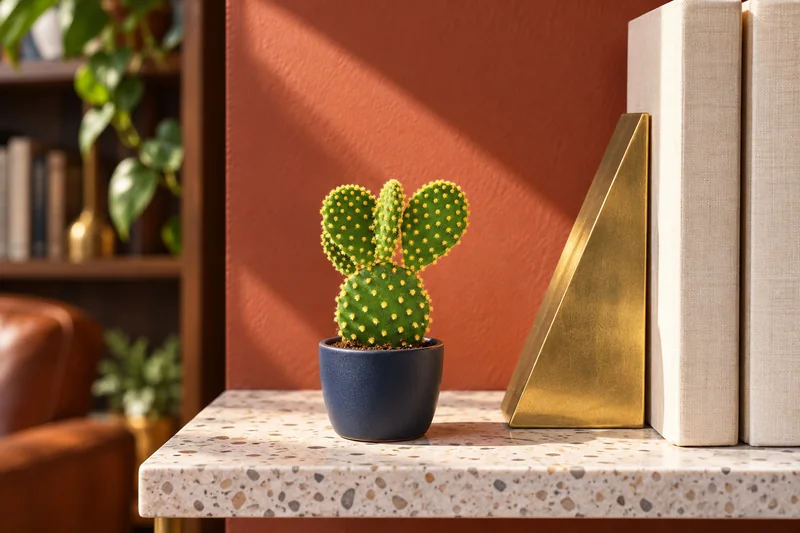
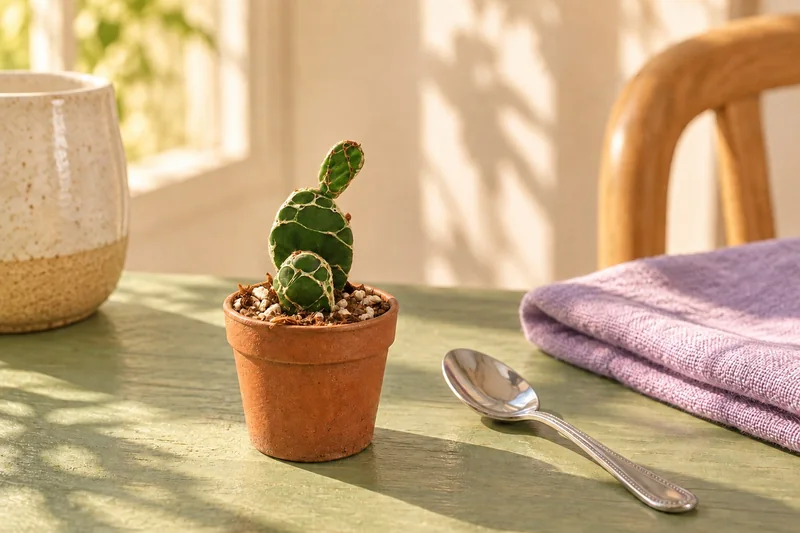
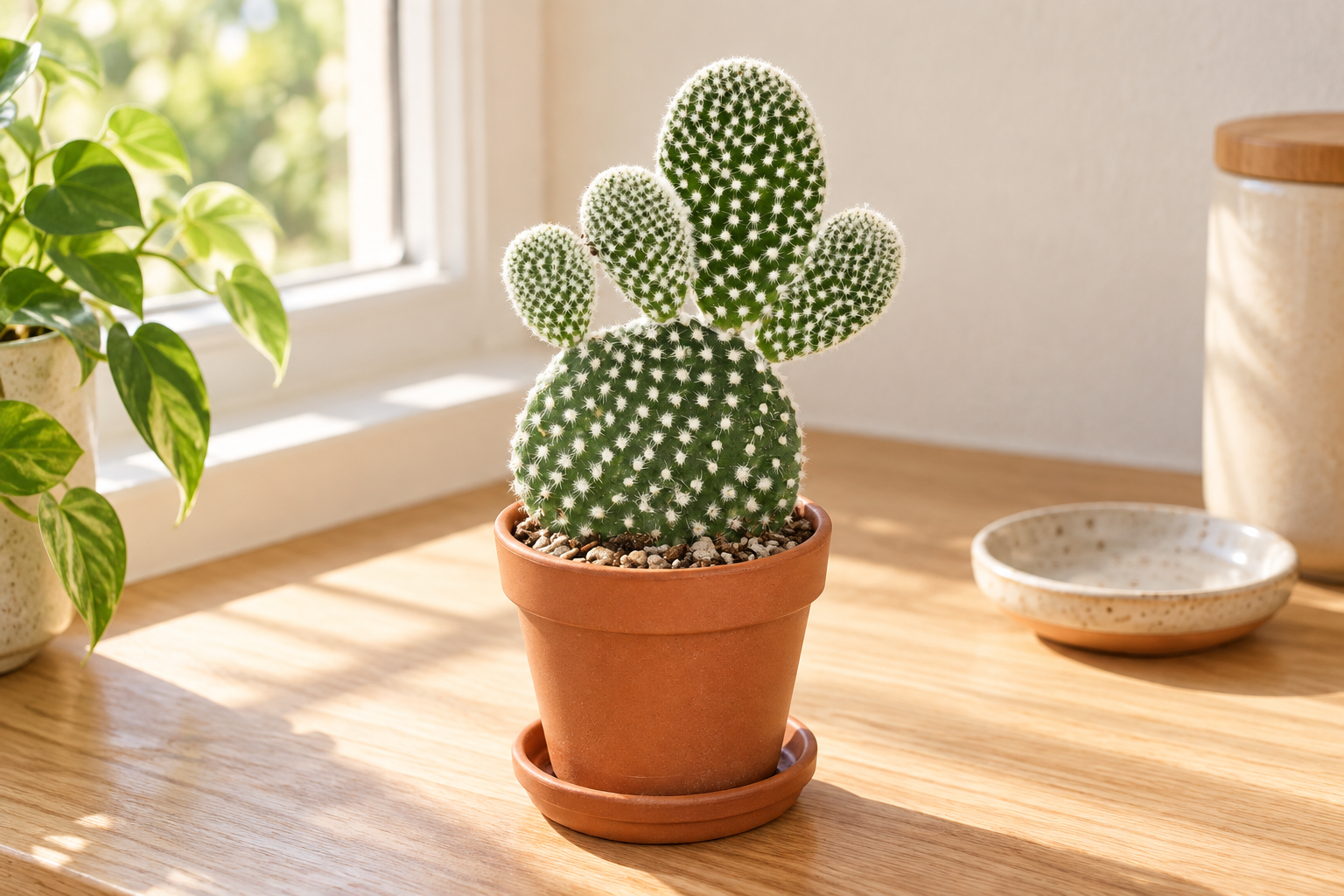
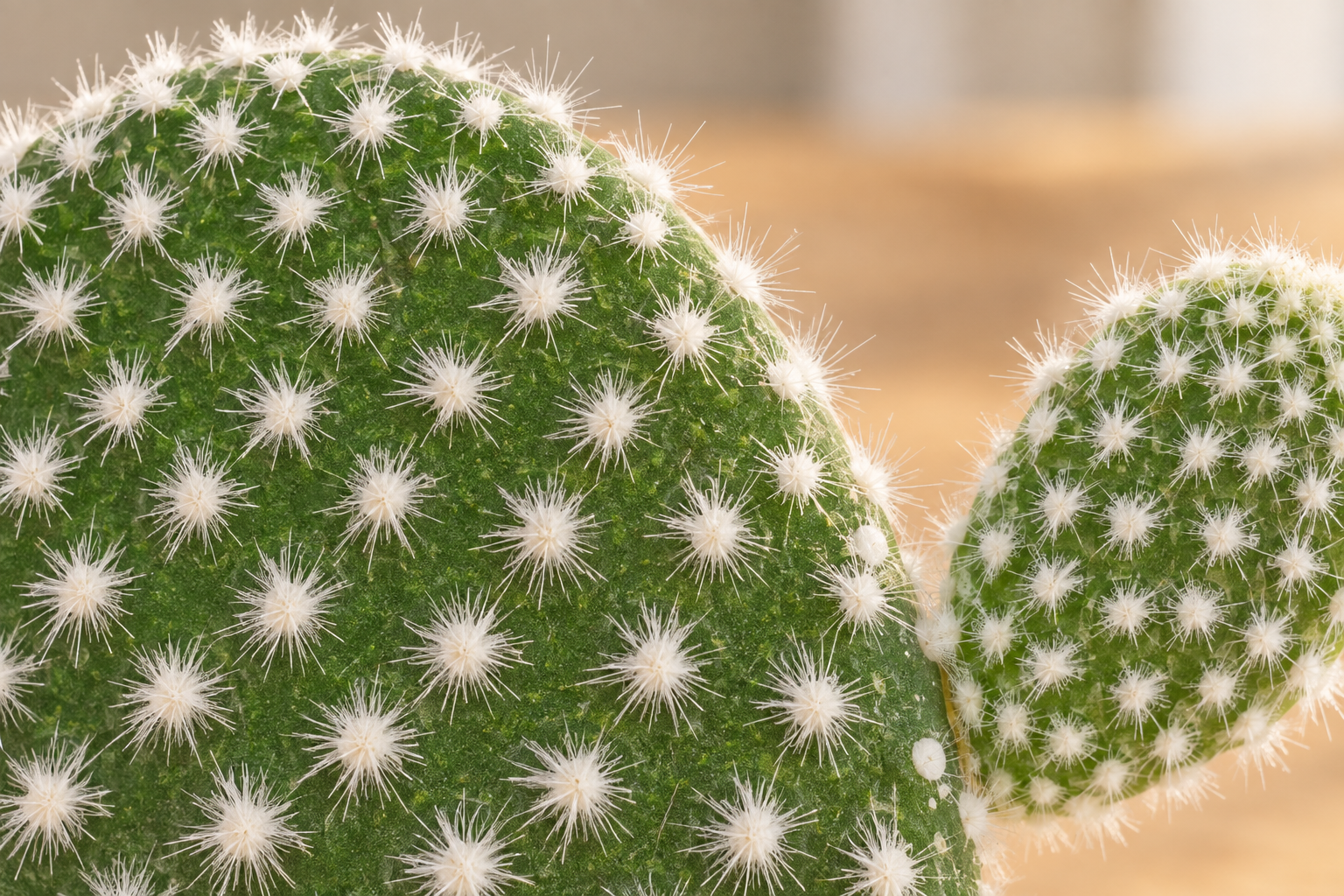
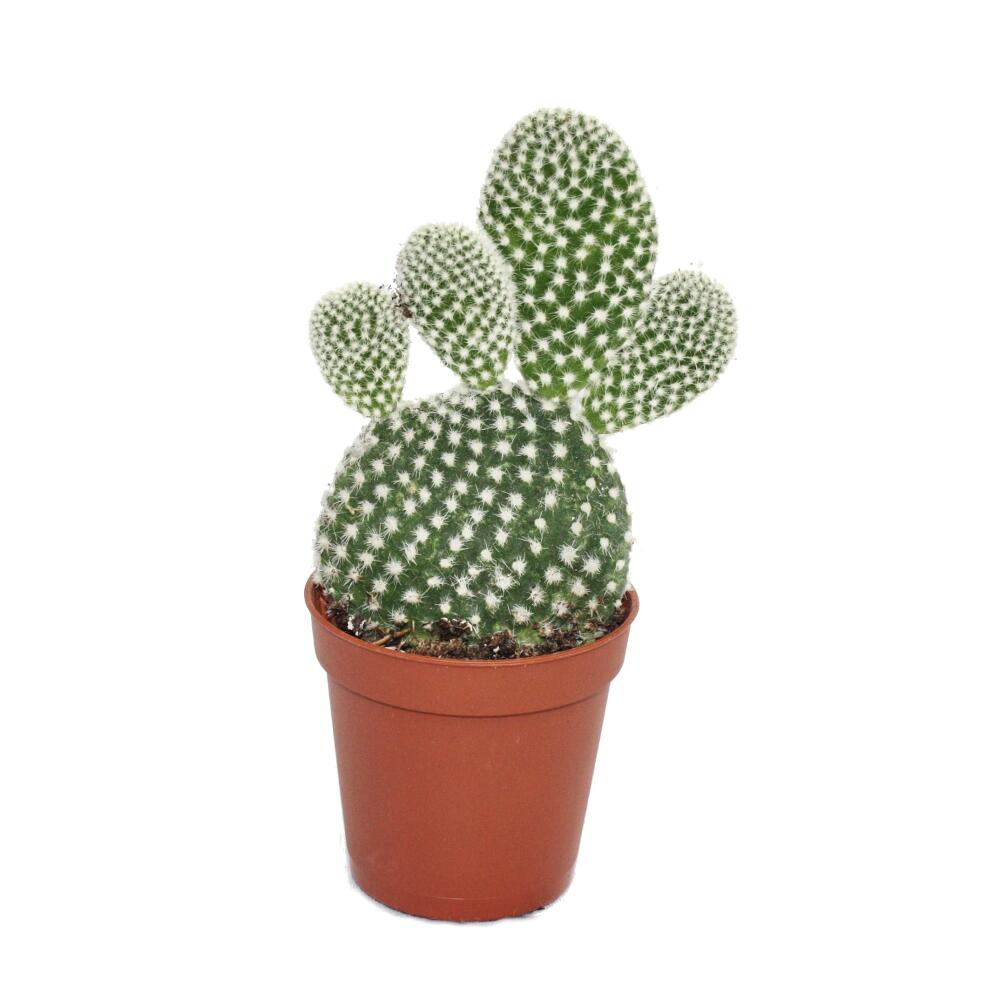
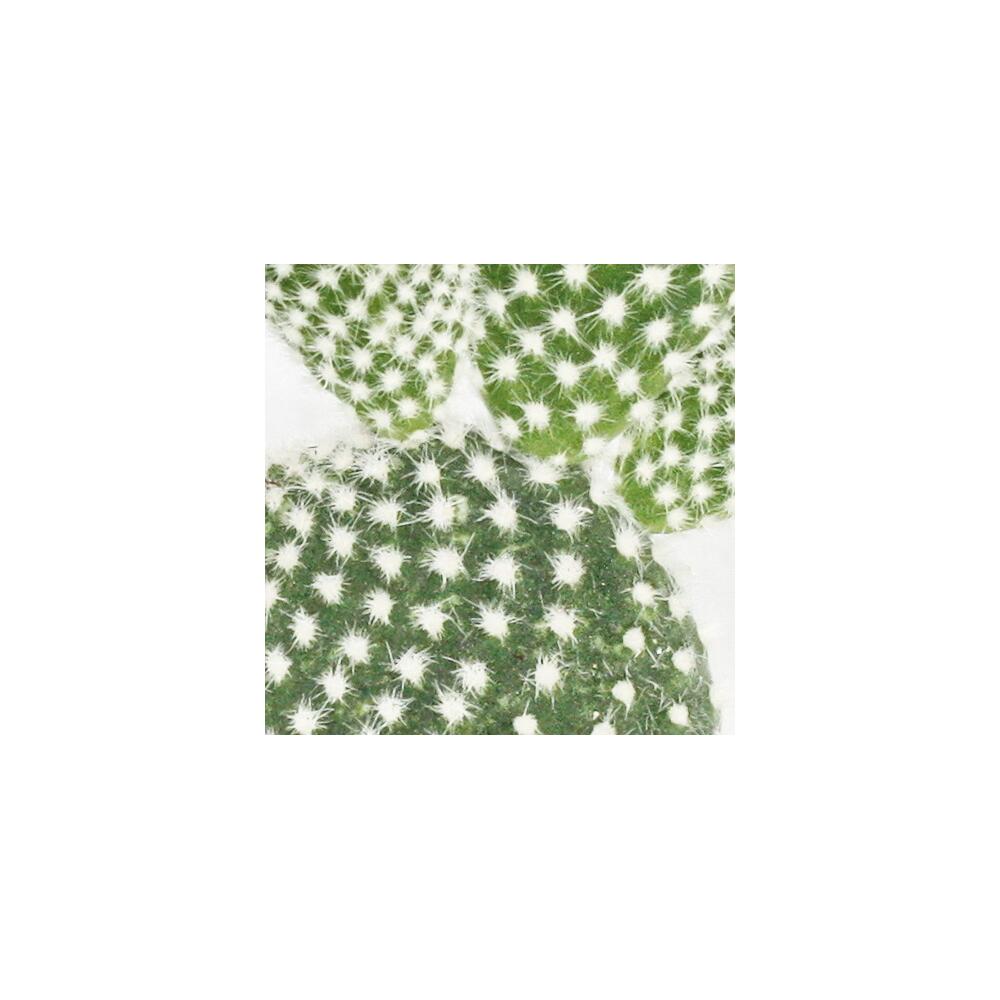
Albata draws small white stars on green surfaces. Young pads are flat, rounded to oval, standing at different angles above a stronger lower pad. Fine pale bristle tufts sit at many densely distributed points. Their colour lightens the contours. They are not leaves, and softness is no invitation to stroke. These tufts are glochids, small barbed bristles that can detach. Friendly ear silhouette and attentive handling define its care. The original shows a small individual branched plant in a growing pot without flowers or fruit. Place it to view white dots and flat pads without brushing past with arm or hand daily.
Albata is the white-bristled Opuntia microdasys selection
Albata denotes the white-bristled horticultural selection of Opuntia microdasys. Angel’s Wings is also documented as another garden name. The species belongs to Mexican opuntias; flat segmented shoots are typical of this cactus group. Albata’s clusters remain white while other garden forms may have yellowish or reddish bristles. This helps recognition without replacing care observation. Over years young structure can become a wider branched shrub. The RHS profile describes around 60 cm height and 10–50 cm width as guidance. Those are not offered specimen dimensions or fixed promised final size. Pale-yellow flowers are possible later but no reliable annual indoor event. This portrait initially accompanies the distinctive young pad plant.
The right place begins with safe unpacking
The specific offer gives an 8.5 cm pot and 12–18 cm total height. That describes the young potted plant, not a later crown. Open packaging on a clear surface before finding space among containers. Hold the pot and avoid pad pressure. Fine glochids adhere to skin, clothing and working material, so avoid skin and eye contact. A thin fabric layer does not automatically make handling safe. Use suitable protection, work calmly by container or ball and check the surface afterwards. Narrow routes, frequently moved curtains and reaching areas are poor permanent positions. A small cactus on the edge of a busy shelf is touched more readily than a slightly set-back plant in a safe bright place.
Light keeps new pads in good shape
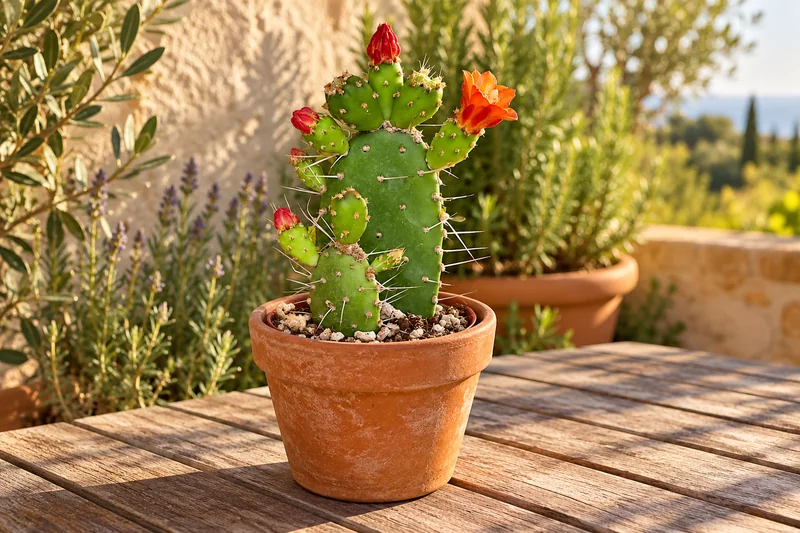
Albata needs a very bright to sunny position. After shipping or lower-light winter increase stronger direct sun gradually. Suddenly hot window conditions may damage even a cactus. Especially observe emerging pads: conspicuously narrow elongated growth may indicate insufficient light. More fertiliser does not correct that. A protected balcony is possible in frost-free seasons after light acclimatisation, with pot drainage and persistent wetness avoided. White bristles say nothing about German outdoor hardiness. Plan bright frost-free winter accommodation. Supply then follows the actual potted plant rather than applying foreign garden descriptions to every balcony.
The root ball may dry between waterings
Flat pads store water but roots still need controllable supply. Check ball and pot weight before watering. If soil has dried and the plant grows actively, water the ball evenly. Excess drains completely and is removed from saucer or outer pot. A small pot dries rapidly in sun; in cool conditions identical soil can stay surprisingly moist. Next watering follows condition, not a fixed weekday. Slight folds with a very dry ball may prompt supply. Soft dark base areas in moist soil instead require drainage and root checks. Do not mist preventively to make white-bristled cactus surfaces look fresh. Direct watering towards soil.
Stable pot and gentle propagation
Freely draining granular cactus compost supports drying and includes a free drainage hole. With further branching stability matters more than a very large reserve pot. If roots fill space or soil is unsuitably compact, repot suitably larger in spring. Work by ball and avoid unnecessary tuft contact. Healthy pads need no regular shaping cut. A healthy pad separated for propagation may root in freely draining compost after thoroughly drying its wound. This is a later care project with suitable handling, not reason to immediately divide the young delivery. Sparse cactus feeding according to label suffices during active growth. If new growth remains soft and weak check light and water before more nutrition.
A bright calm winter rather than wet darkness
Winter cultivation stays frost-free and very bright. A cooler place around 10–18 °C can support rest provided light and dryness match. In actually cool rest keep nearly dry and do not feed. A warm room with visible growth instead calls for observation rather than a blanket months-long water ban. A dark cellar does not replace light even at suitable temperature. Occasionally inspect base, remaining moisture and noticeable shrinking. Distinguish new deposits from natural white glochids: mealybugs may hide in corners while evenly distributed typical tufts belong to the plant. Slowly adapt supply in spring with more light and activity. Later outdoor stays begin anew with sun acclimatisation and safe placement away from everyday contact.
One plant, several views
Good to know
Are white tufts soft like cotton?
They look soft but consist of fine barbed glochids. Do not stroke; avoid skin and eye contact.
What differs from yellow-bristled bunny ears cactus?
Albata has white glochid clusters on flat green pads. Basic bright drier potted cultivation remains similar.
Which measurements does the linked offer have?
8.5 cm pot diameter and 12–18 cm total height according to supplier. Later shrub dimensions are separate.
Can it stay on the balcony in winter?
This portrait plans a bright frost-free winter position. White bristles do not prove outdoor winter hardiness.
Why do new pads become narrow?
Insufficient light may encourage weak elongated growth. Check position and supply, still acclimatising gradually to stronger sun.
When do I water Albata?
After the actually checked ball dries. Water evenly and drain during active growth; keep nearly dry in cool winter rest.
Sources and editorial note
- Exotenherz: complete own offer and original gallery
- RHS: Opuntia microdasys Albata, accepted selection and cultivation
- NC State Extension: Opuntia microdasys, Albata and glochids
Source comparison: 4 October 2026. Complete own offer and both unchanged originals directly checked. White-bristled Albata documented by RHS and NC State; independent 8.5 cm offer has consistent measurements.