This plant at Exotenherz
Check the shop offer for current availability, price and what is included.
Product and delivery details are given in the individual offer.
Your care table
| Topic | What to do | Why it helps |
|---|---|---|
| Safe position | Place away from narrow handling routes on a stable bright surface. | The fine barbed glochids detach easily when touched. |
| Sunshine | Very bright to sunny; after shipping and winter, gradually acclimatise to stronger sunshine. | New segments need light, but an abrupt move to hot sunshine can still cause damage. |
| Watering | Let the root ball dry, then water thoroughly during active growth and allow to drain. | Water-storing stems allow dry intervals; standing water threatens the roots. |
| Soil | Use gritty free-draining cactus compost and an unobstructed outlet. | The small pot should dry in a controllable way after watering. |
| Feeding | During active segment formation, feed sparingly following the cactus fertiliser label. | The plant needs nutrients for its new structure, not a constant supply while resting. |
| Repotting | When roots fill the pot, move to a suitably larger pot in spring, working at the root ball. | Stability and drainage matter more than a large reserve of wet soil. |
| Handling | Hold the container, use suitable protection and do not stroke the segments. | Small bristles can cling to skin, clothing and equipment. |
| Winter | Keep very bright and frost-free; during cool rest, water much less and do not feed. | When growth is slight, water is used more slowly; wet cool conditions favour damage. |
Check the compost and pot weight. The care table explains how far the compost may dry.
Water only when needed. The water should reach the root ball without spilling over the rim.
Remove surplus water from the saucer or cachepot. Then return the plant to a suitable position.
Rusty accents on a small ear-like outline
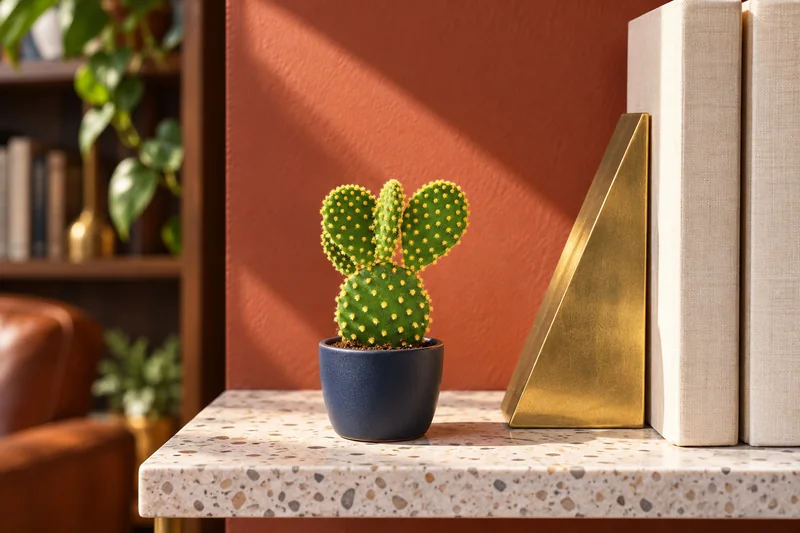
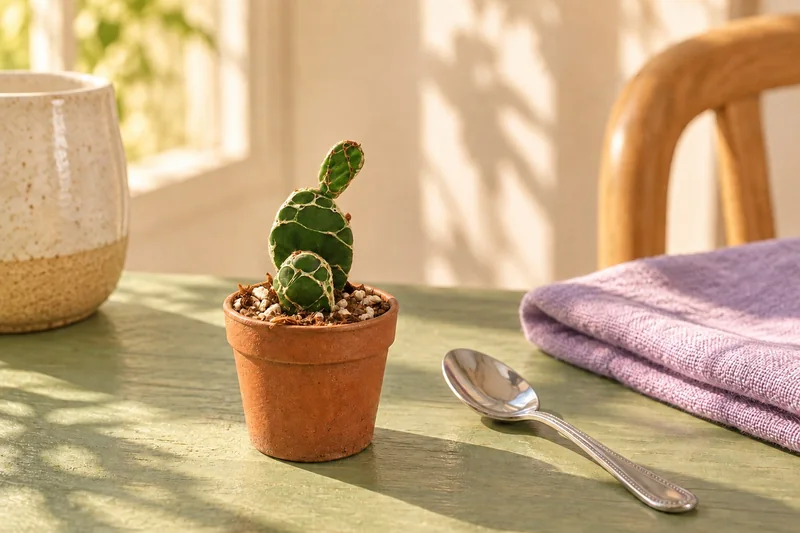
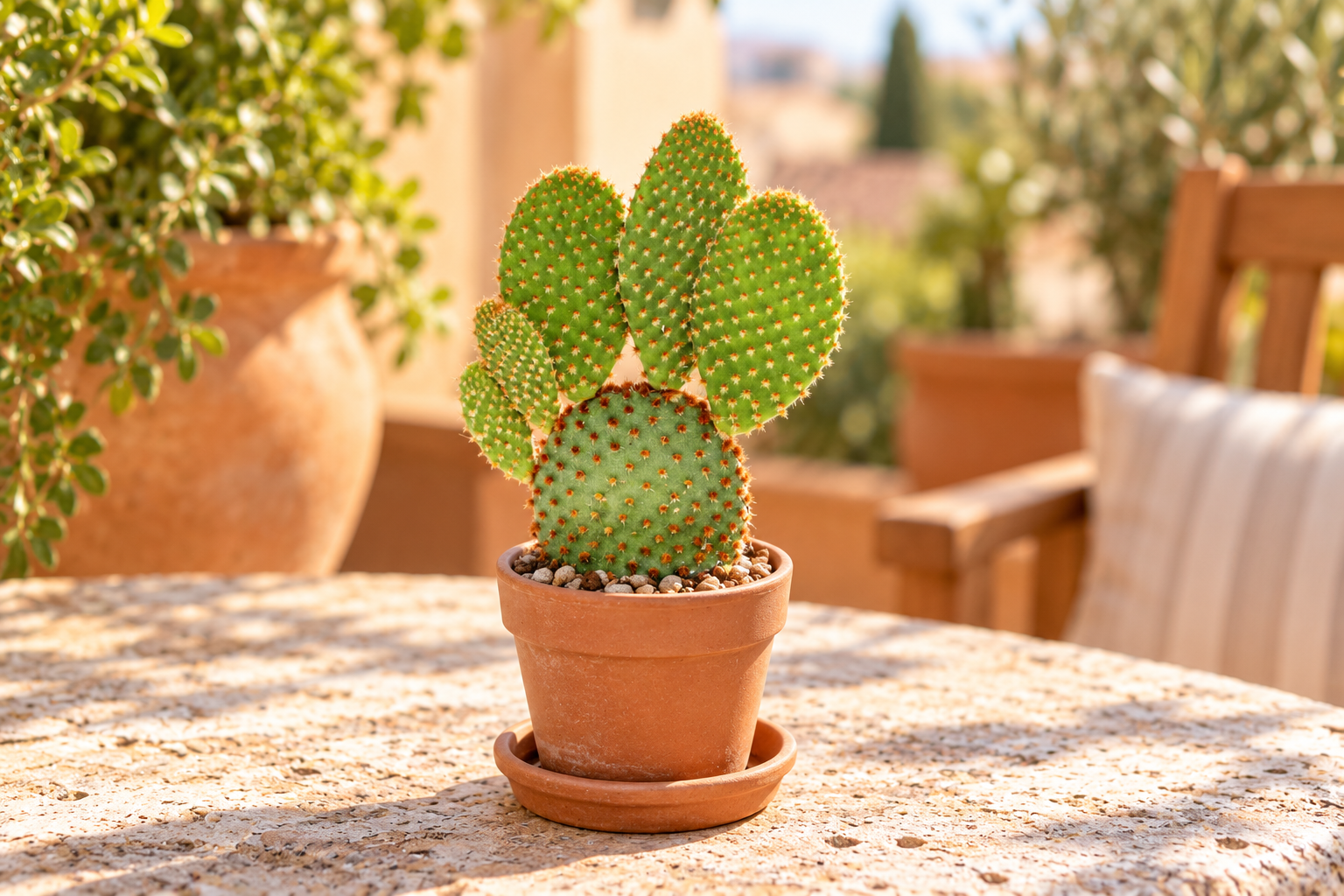
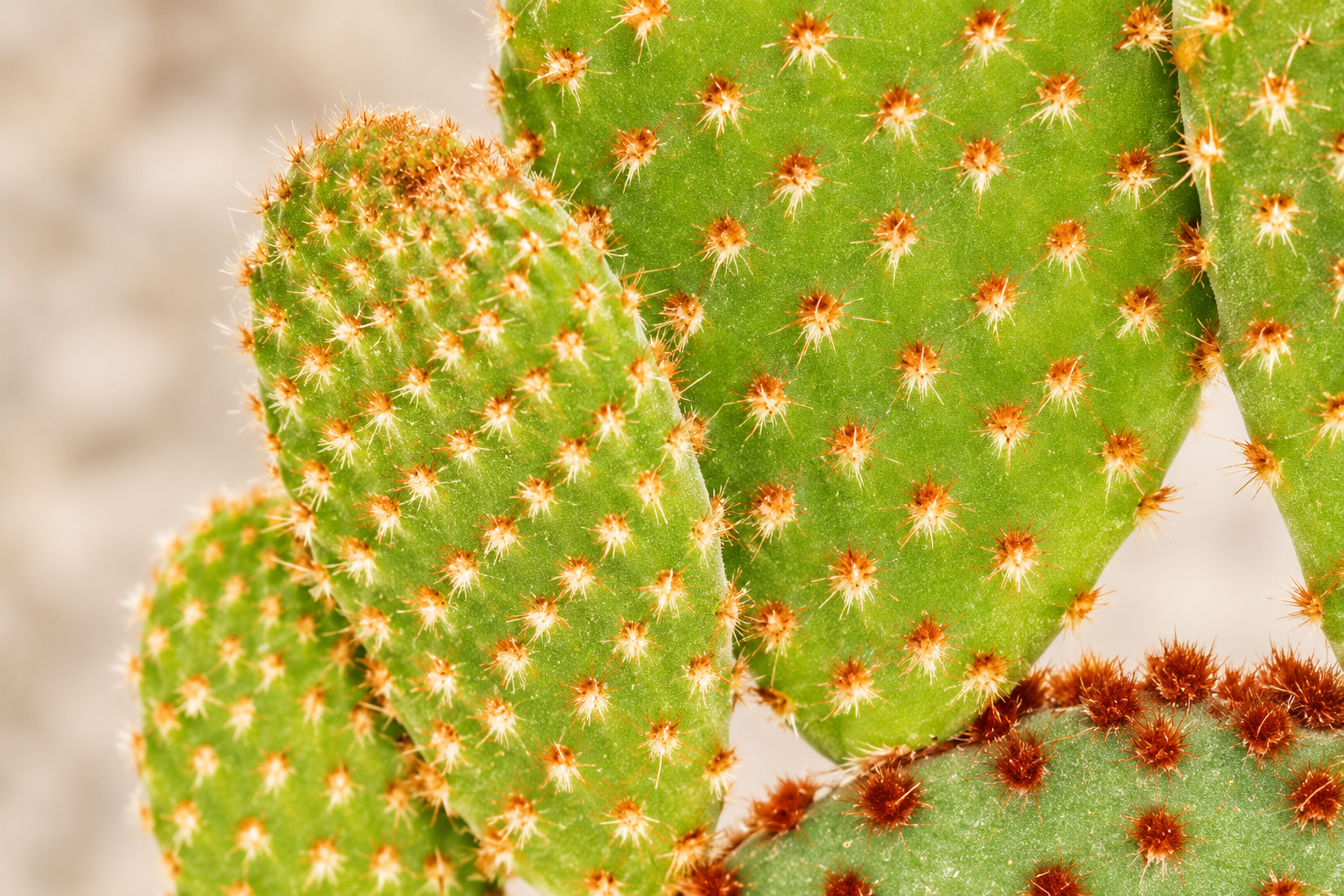
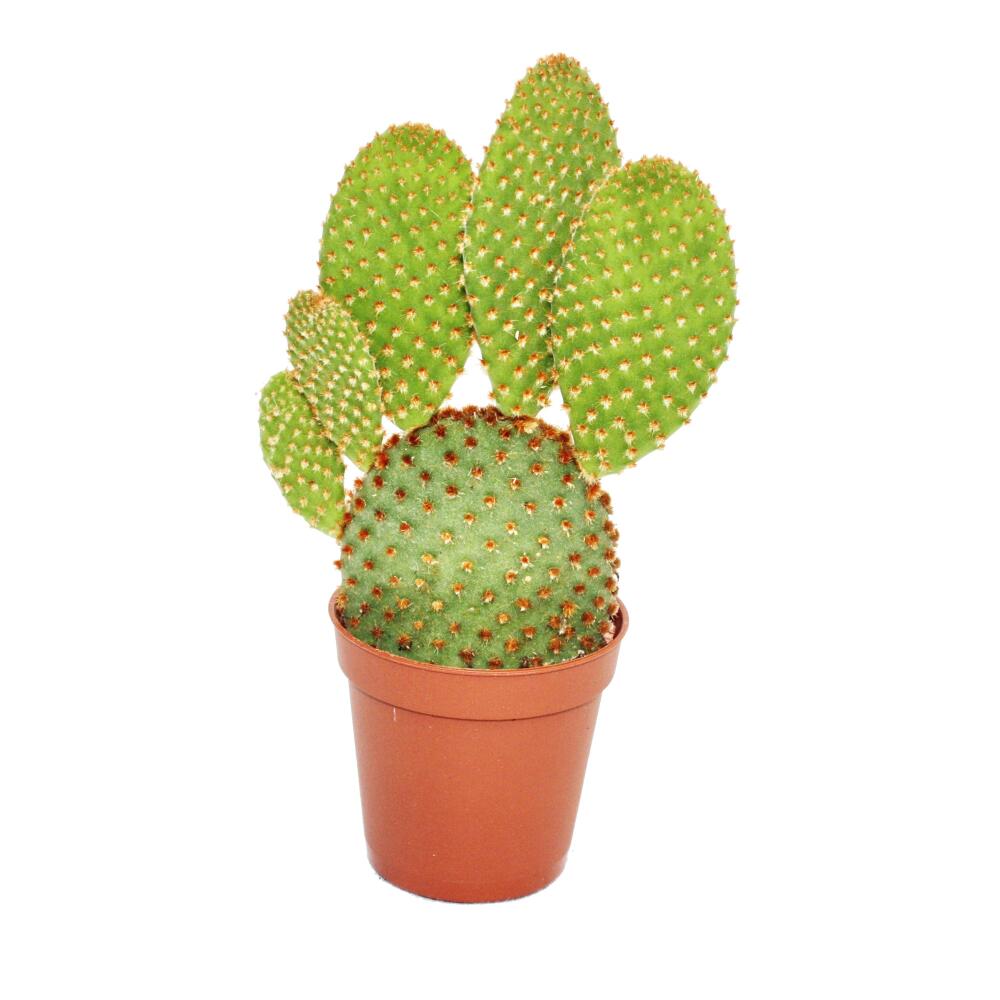
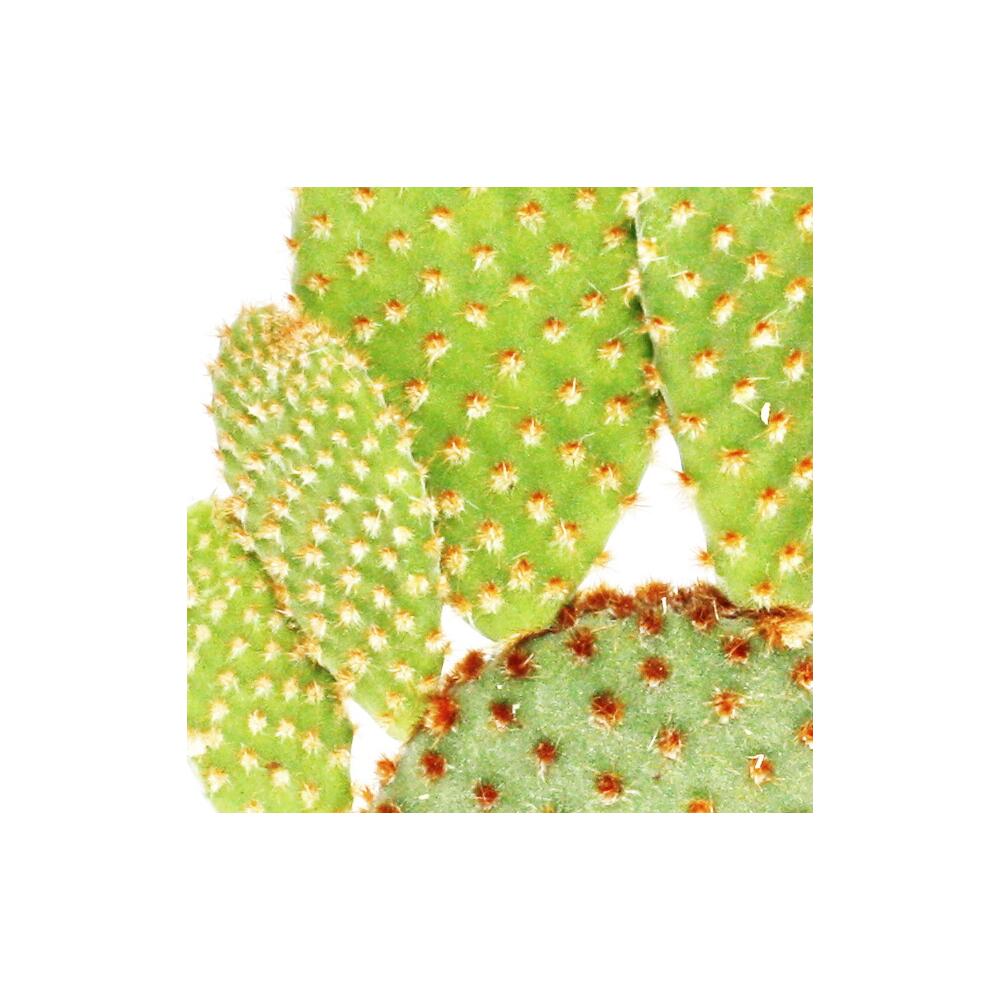
Rufida draws its pattern with many small warm-coloured dots. Tufts ranging from orange-brown to rusty brown sit on the flat green segments; individual pale bristles project beyond them in places. A stronger lower segment supports several rounded oval ears, together forming a small branched structure. Close up, the coloured dots are clearly not painted spots. They contain fine glochids, small barbed bristles. Their dense distribution makes the plant interesting but calls for a position where it is rarely touched. The original shows Rufida as one young potted plant without flowers or fruits. A bright safe planting table makes its segments easy to see. Between frequently moved curtains or on the edge of a narrow passage, the same small cactus would be less suitably placed.
An opuntia with its own botanical name
In the shop you encounter Rufida as Opuntia microdasys rufida. Botanically the plant is listed as Opuntia rufida; Opuntia microdasys var. rufida is a documented synonym. The species originates in southwestern Texas and northeastern Mexico and belongs to the cactus family. Its flat segments are stem parts that store water and provide the green part of light use. They are not unusually thick leaves. With more segments, the young plant can branch increasingly and become more shrubby later. It therefore does not permanently remain a miniature only ten centimetres tall. The size of the structure in a container depends on light, root space and care, among other factors. This portrait focuses on recognising the reddish-brown tufts and safely growing the young segmented plant.
Unpacking without collecting the bristles
The specific offer states a pot diameter of 5.5 cm and about 10–12 cm total height. Before opening the packaging, prepare a clear work surface where no sleeve or cloth brushes the plant. Hold the container, loosen packaging slowly and avoid pressing on the segments. Small glochids can detach easily and stick to skin or material. Its friendly appearance therefore says nothing about how pleasant touching it would be. Suitable protection and calm handling are sensible even with a small plant; an arbitrary thin layer of fabric does not replace them. After unpacking, check the root ball’s condition and water drainage. Do not water automatically as a welcome. An already moist root ball first needs a good position and time to dry.
Build up sunshine gradually and watch new segments
A very bright to sunny position supports firm segment growth. After transport or a less bright winter, increase intensity slowly. A hot window with sudden midday sunshine can overwhelm even an opuntia. New segments provide a guide: if they become unusually narrow, long and weak, check light first. More fertiliser is no substitute. In frost-free summer, a sheltered outdoor position is possible if stronger sunshine is introduced gradually and the pot does not remain constantly wet in rain. A balcony without drainage or with permanent rainwater in the outer pot is unsuitable. The species’ origin is not translated here into a blanket winter-hardiness promise. For pot culture, plan a bright frost-free retreat before cold nights surprise the plant.
The small root ball decides the next watering
The green segments hold water in reserve, yet the roots in the small pot still need observation. Check soil and pot weight before watering. During active growth, a dried root ball may be moistened evenly. Excess water then drains completely; no reserve remains in the saucer. Sunshine and air movement can dry the small root ball rapidly, while cool conditions and denser compost prolong moisture. A fixed weekly routine does not represent these differences. Slight shrinking in very dry soil is assessed differently from a soft dark base with a wet root ball. In the latter case, look first for wetness damage and blocked drainage. The rusty tufts do not need spraying either. Water belongs on the soil and serves the roots, not a shiny surface.
Stability grows with the segmented structure
Gritty free-draining cactus compost and a container with an open drainage hole suit Rufida. As new ears grow sideways, the plant becomes wider and possibly top-heavy. When repotting later, therefore choose a stable container that offers only suitably more root space. An oversized pot holds moisture unnecessarily long. If needed, spring allows careful work at the root ball without repeatedly touching the segments. Healthy stems do not need regular shaping cuts. For later propagation, a healthy segment can be rooted in free-draining compost after its cut surface has dried well. Protection from glochids remains important here too. During active segment formation, sparing feeding according to the label is sufficient. Excess nutrients do not turn a poorly lit plant into a strong compact cactus.
A bright winter and a calm look at the base
In winter, Rufida stays bright and frost-free. In a cooler position with little growth, reduce care inputs considerably; soil must be dry before watering. Feeding pauses during this quiet phase. A warm room with visible growth needs more observation than a blanket ban on water for months. Occasionally inspect the base and segment angles. A dark soft patch with lingering wetness is a different signal from dry firm older tissue. Mealybugs or scale insects can also hide among the natural bristle points. The evenly arranged rusty tufts themselves belong to the plant and are not removed. When light and activity increase again in spring, gradually adjust water and nutrients. A later move outside starts afresh with sunshine acclimatisation and a safe position where little handling occurs.
One plant, several views
Good to know
Why does the shop call the plant Opuntia microdasys rufida?
This trade name corresponds to the also documented name Opuntia microdasys var. rufida. Kew and RHS list it as Opuntia rufida.
Are the rusty dots harmless hairs?
No. They are fine barbed glochids that can detach. Avoid skin and eye contact and work at the container.
How large is the linked offer?
The supplier states a pot diameter of 5.5 cm and about 10–12 cm total height. Later branching growth is separate from this.
Can Rufida go on the balcony in summer?
In a sheltered frost-free position after gradual sunshine acclimatisation. Drainage and protection against lasting wetness remain important.
When is water needed again?
After the actually checked root ball has dried, according to activity. During cool winter rest, much less water is supplied.
Why is a new shoot long and thin?
Check light in particular. Too dark a position can favour weak elongated segment growth; more fertiliser does not solve that.
Sources and editorial note
- Exotenherz: complete own offer and original gallery
- Kew Plants of the World Online: Opuntia rufida and synonyms
- RHS: Opuntia rufida, cinnamon cactus
- RHS: complete growing guide for indoor cacti and succulents
Sources compared: 4 October 2026. Entire own offer and both unchanged originals checked. Kew and RHS list Opuntia rufida; the shop name Opuntia microdasys rufida is explained objectively. Care follows the directly read RHS growing guide without transferring other plants’ outdoor hardiness.