This plant at Exotenherz
Check the shop offer for current availability, price and what is included.
Check the shop for the current price, availability and offer contents.
Your care table
| Topic | What to do | Why it helps |
|---|---|---|
| Light | Bright indirect daylight, shield hot sun. | Enough light at actual leaf height. |
| Warmth | Warm frost-free, away from cold draughts. | Tropical growth cannot take German outdoor winter. |
| Water | Moisten after slight drying and drain. | A lightly moist root zone should still contain air. |
| Tray | Remove all surplus. | No standing water under the pot. |
| Climate | Avoid direct heating and constantly wet leaf contact. | Air moisture and root water are different tasks. |
| Mix | Loose humus-rich peat-free soil, open holes. | Retention needs drainage too. |
| Feeding | Balanced moderate feeding about monthly during growth. | Food supports shoots, not lack of light. |
| Shoots | Selectively shorten during growth if needed. | Keep hanging pot accessible and safely handled. |
Check the compost and pot weight. The care table explains how far the compost may dry.
Water only when needed. The water should reach the root ball without spilling over the rim.
Remove surplus water from the saucer or cachepot. Then return the plant to a suitable position.
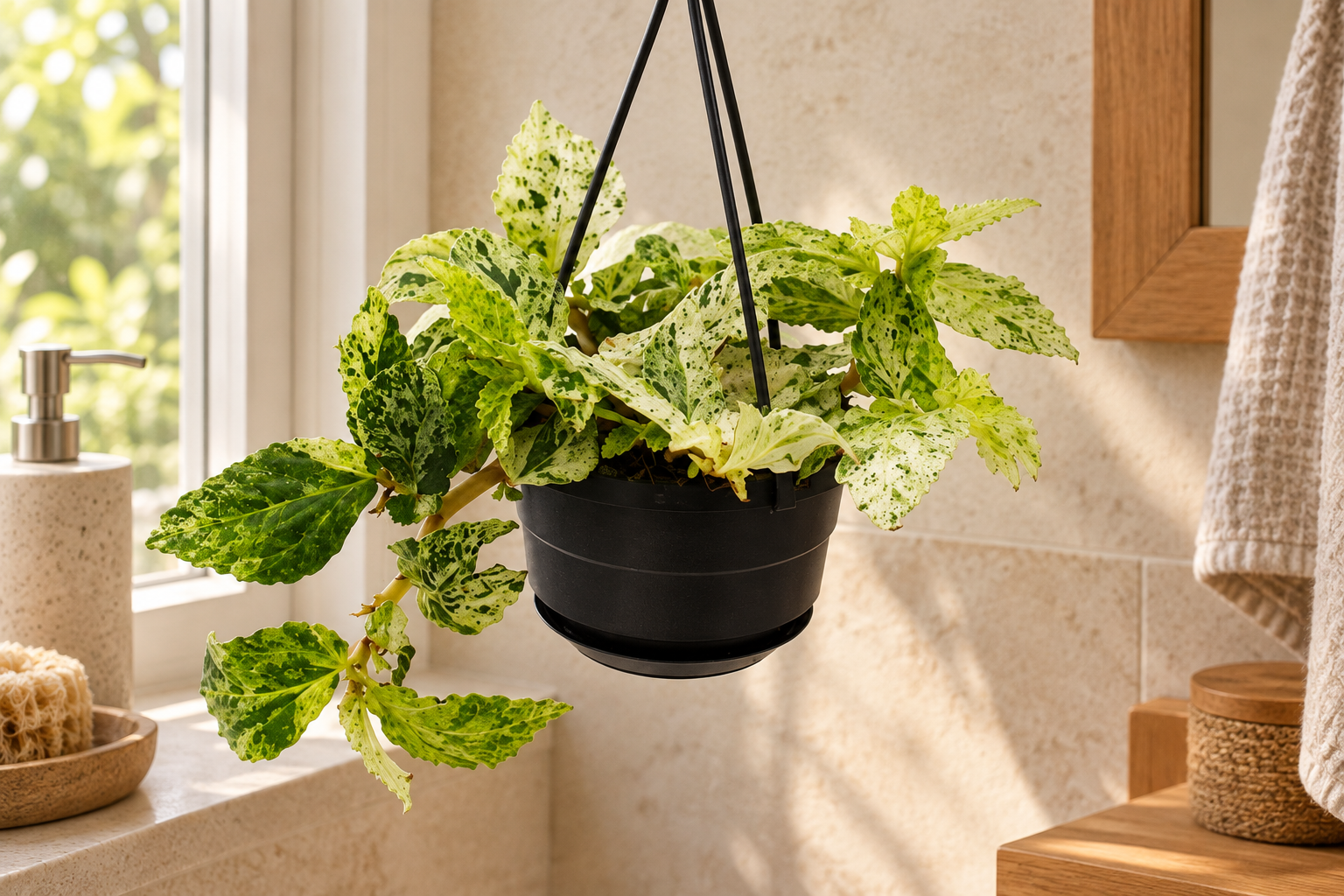
Marbling on short trailing shoots
No leaf quite matches the next: dark green areas and fine speckles on cream-to-pale green, larger pale patches or denser green. Unequal halves and wavy toothed edges add movement. Short branched shoots spill over the little rim. A pale quiet wall shows pattern without flowers. Bathroom daylight matters, without darkness or constant shower spray. A few loose stems suffice without an adult cascade. Watch new leaves between attachments too.
Trade Pellionia, botanical Procris
The shop says Pellionia repens variegata. Pellionia repens is a synonym of Procris repens, Urticaceae from tropical Asia including southern China. The familiar name makes the variegated trade form understandable without inventing a wild species or extra cultivar. The 12 cm mini hanger and about 15–20 cm length are not height including hook or fixed eventual size. Support the pot and release hangers without pulling leaves; untangle gently. A soft stem is no carrying handle.
Indirect light at hanging height
Bright without hot direct sun supports shoots. Tropical partial shade is not a windowless room. Check where leaves actually hang: a deep ceiling or tall furniture can leave them much darker than a nearby sill. East windows or filtered daylight are good starts. Shield strong summer sun behind glass and avoid abrupt changes after transport. Keep warm without cold draughts. Secure level hanging still needs access to soil and bases; a beautiful high spot where watering is guessed is impractical.
Moist, but empty the catcher
The root zone needs evenly light moisture; active growth may use more than the small pot suggests. Check surface and weight. After slight drying moisten gently, drain and inspect any tray. Neither routine total drying nor standing water. Provide a place to take down and water without dripping on furniture or electrics, then rehang safely. Limp shoots are no definite watering order: light dry and heavy wet balls need different answers. Light, warmth, roots and season govern demand, not daily or weekly automatic routines.
Tropical humidity differs from wet soil
It comes from moist tropical habitat and also suits terrariums or bottle gardens, without requiring closed glass. A bright hanging spot away from direct dry heating is useful. Spraying cannot replace root water. Terrarium growth, light and water management must fit; constantly waterlogged soil remains wrong there. Keep leaves from wet glass and condensation. Natural cream-green is not automatically deficiency. New brown dry patches warrant assessing light, heat, root-ball moisture and surroundings together; one spot proves no sure cause.
Loose soil, food and selective stems
Loose humus-rich peat-free compost retains and drains water, with clear holes. A rooted-full ball needs only slightly larger pot at existing depth, not large wet reserves. Balanced liquid feed about monthly in active growth by dosing instructions, accounting for pre-fed mix. Extra food replaces neither light nor roots. Selectively trim overlong shoots cleanly to retain handling without pulling others. Root cuttings are also described for the species; do not dismantle a small offer immediately, first build healthy rooting.
Watch actual winter growth
Winter stays frost-free and bright indirect, avoiding ventilation cold and chilly glass contact. Short days often lower use, but maintain controlled light moisture. Check trays after every dose; feed for active growth, not habit during rest. Lift shoots gently without leaf pulling and cleanly remove dead parts. Marbling varies naturally; a photograph of the same hanging-pot side tracks new shoots better than random-leaf comparison. Note light and watering observations to understand moves without treating each normal difference as trouble.
One plant, several views
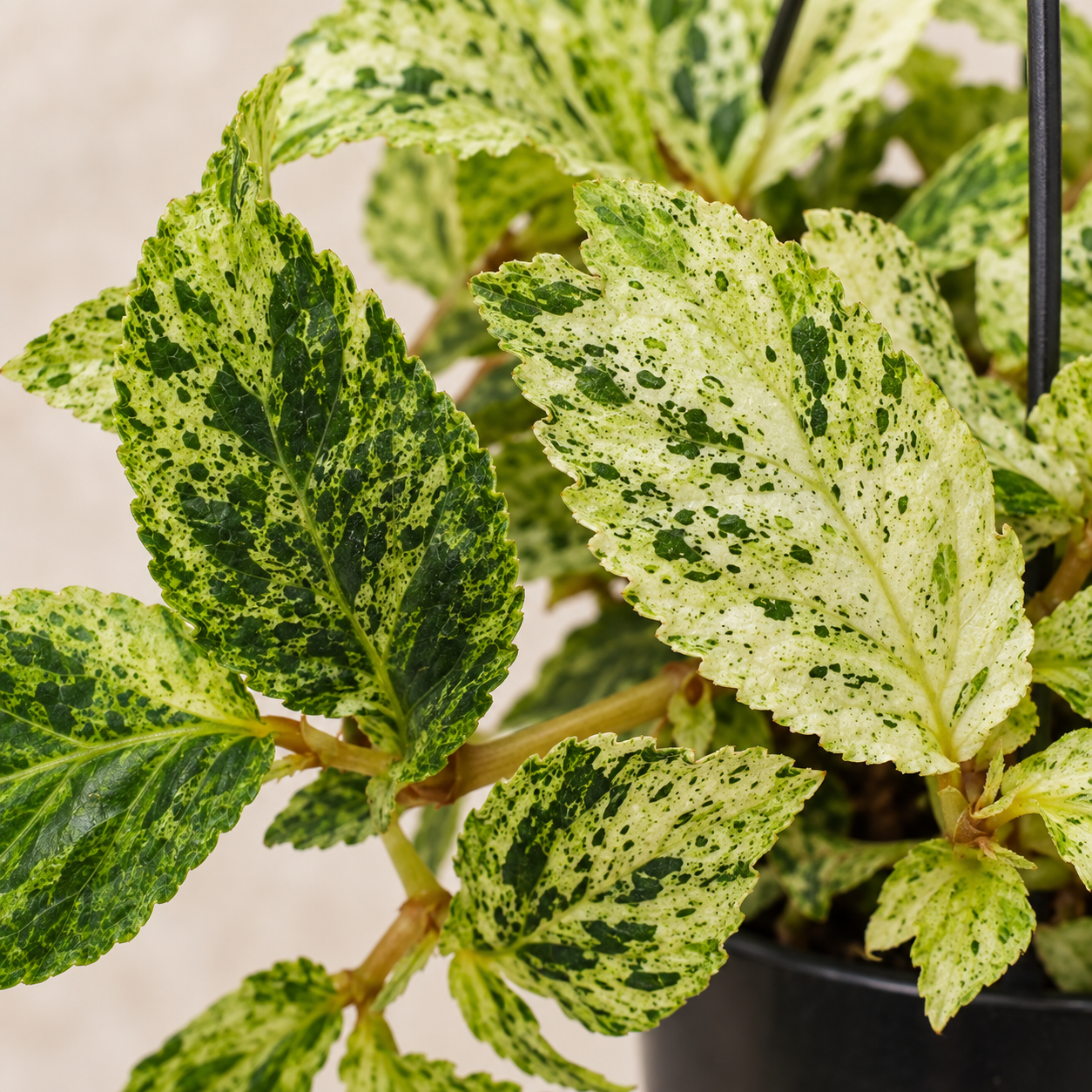
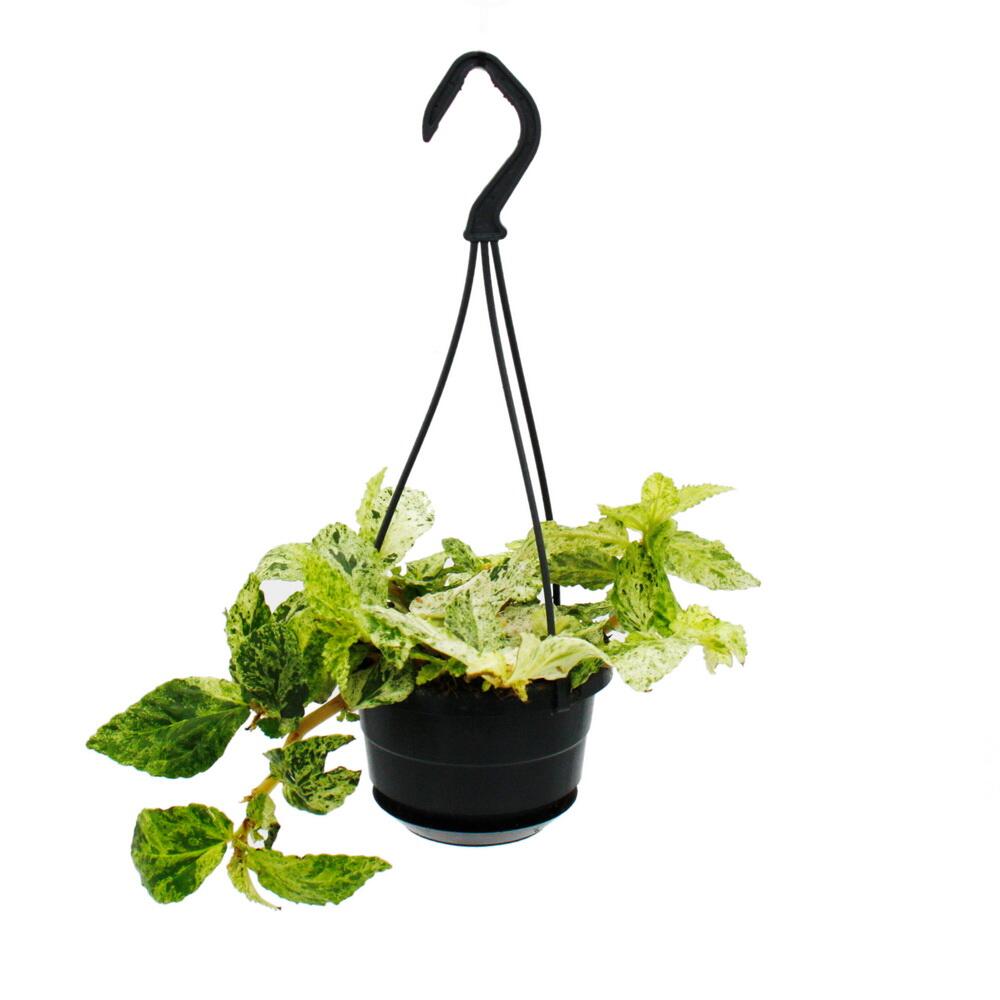
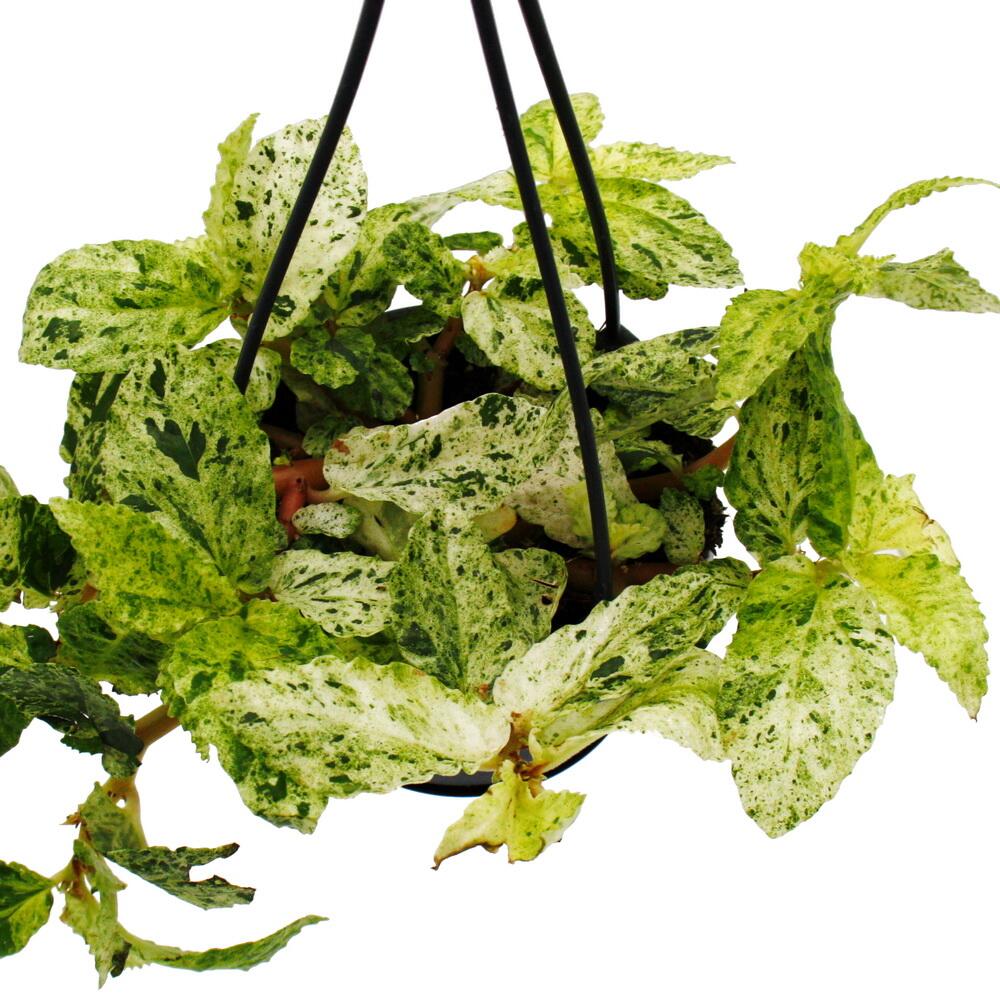
Good to know
Are Pellionia and Procris repens the same?
Pellionia repens is a botanical synonym of Procris repens; usual trade name for variegated form.
Does 15–20 cm include the hook?
The offer gives length, not overall height with hanger or eventual size.
Windowless bathroom?
Unsuitable permanently: leaves need bright indirect daylight.
Closed terrarium required?
No. Suitable bright sheltered hanging culture also works.
How dry can the root ball get?
Surface may dry slightly, ball stays evenly lightly moist, not routine total drying.
Why paler leaves?
Marbling naturally varies. Check new brown dry patches in the whole setting.
Sources and editorial note
- Exotenherz: complete offer and unchanged gallery
- RHS: Pellionia repens, form and complete care
- Kew POWO: Pellionia repens as synonym
- Kew POWO: Procris repens, accepted name and origin
- Floricode: documented variegated trade form Pellionia repens Variegata, code131352
Sources checked on 4 October 2026. Complete offer and clean original gallery read and viewed. Young measurements, not eventual size.